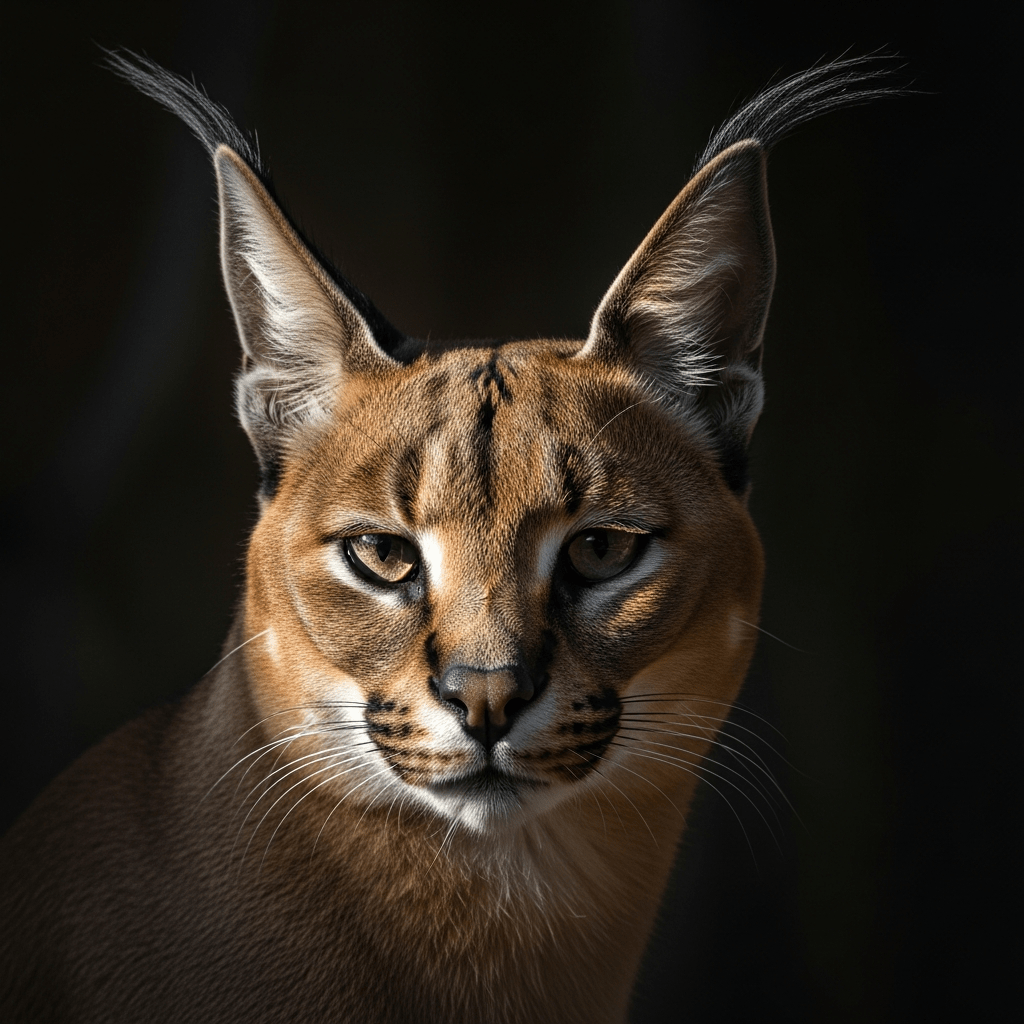
Caracal Caracal
The caracal (Caracal caracal) is a striking medium-sized wild cat renowned for its long, black-tufted ears and remarkable agility, thriving across Africa, the Middle East, and parts of Asia.
The caracal (Caracal caracal) is a striking medium-sized wild cat renowned for its long, black-tufted ears and remarkable agility, thriving across Africa, the Middle East, and parts of Asia.
First formally described by Johann Christian Daniel von Schreber in 1776, the caracal’s origins trace to Africa and the Middle East, where it has long been recognized in zoological literature. Early specimens and observations emerged from these regions, establishing the caracal as a distinct member of the Felidae family. Over centuries, its presence has been documented in classical and modern works, with no evidence of hybrid lineage or cross-species ancestry.
The caracal belongs to the family Felidae, subfamily Felinae, and is classified within the genus Caracal. Its scientific name is Caracal caracal, with historical synonyms including Felis caracal and Lynx caracal. Closely related to the African golden cat and serval, the caracal exemplifies the adaptability and predatory prowess typical of small to medium felids.
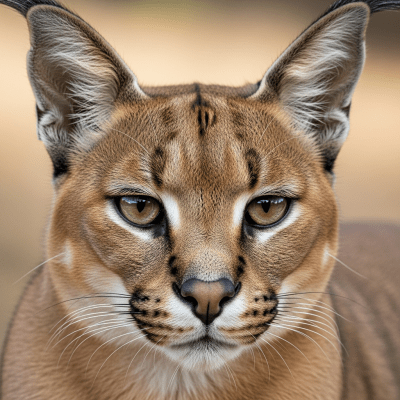
Caracals are distinguished by their sleek, athletic build and short, dense coat, which is typically a uniform reddish-brown or tawny with paler undersides. The most iconic feature is their elongated, black-tufted ears, which stand out dramatically against their coat and may aid in communication or camouflage. Adults weigh between 8 and 19 kilograms and measure 78 to 108 centimeters in body length, with a tail spanning 21 to 34 centimeters. Rare melanistic individuals have been observed, but most caracals display the classic warm hues and subtle markings of their species.
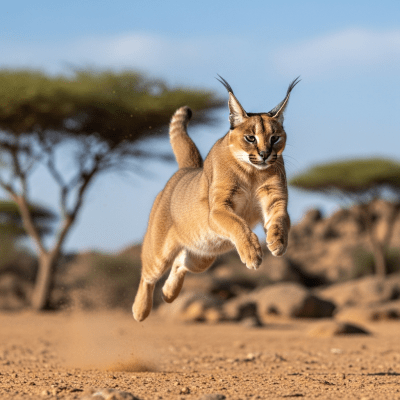
Primarily solitary and nocturnal, caracals are territorial hunters that use scent and visual cues to mark their ranges. Their diet is carnivorous, focusing on birds, rodents, small mammals, and occasionally reptiles. Notably, caracals possess exceptional leaping ability, capable of springing up to 3 meters vertically to snatch birds mid-flight. Their activity patterns can shift to crepuscular or diurnal in response to human disturbance or prey availability, and they are adept at surviving in arid environments with minimal water intake.
Bring this kind into your world illustrated posters, mugs, and shirts.
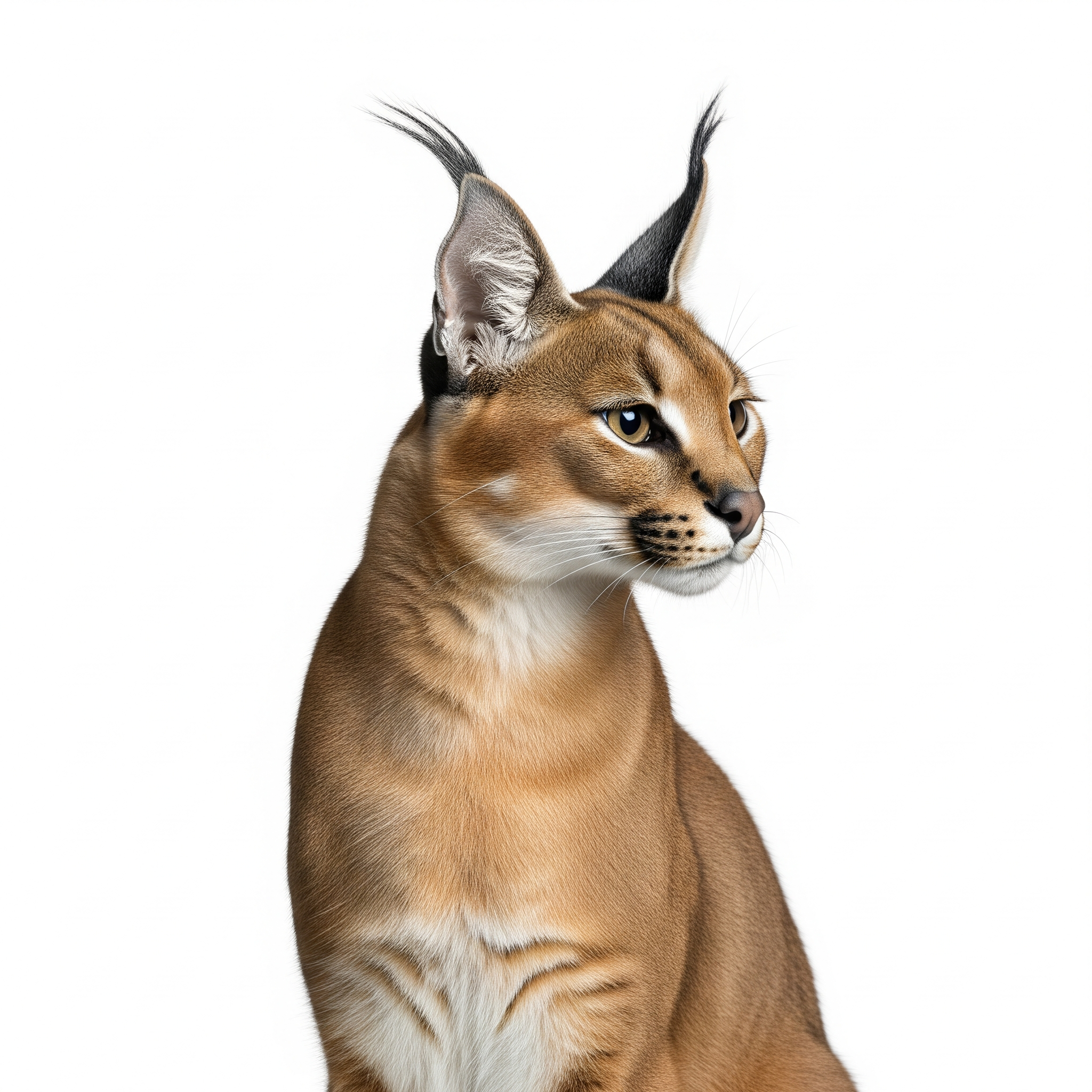
Archival print, museum-grade paper
Buy Poster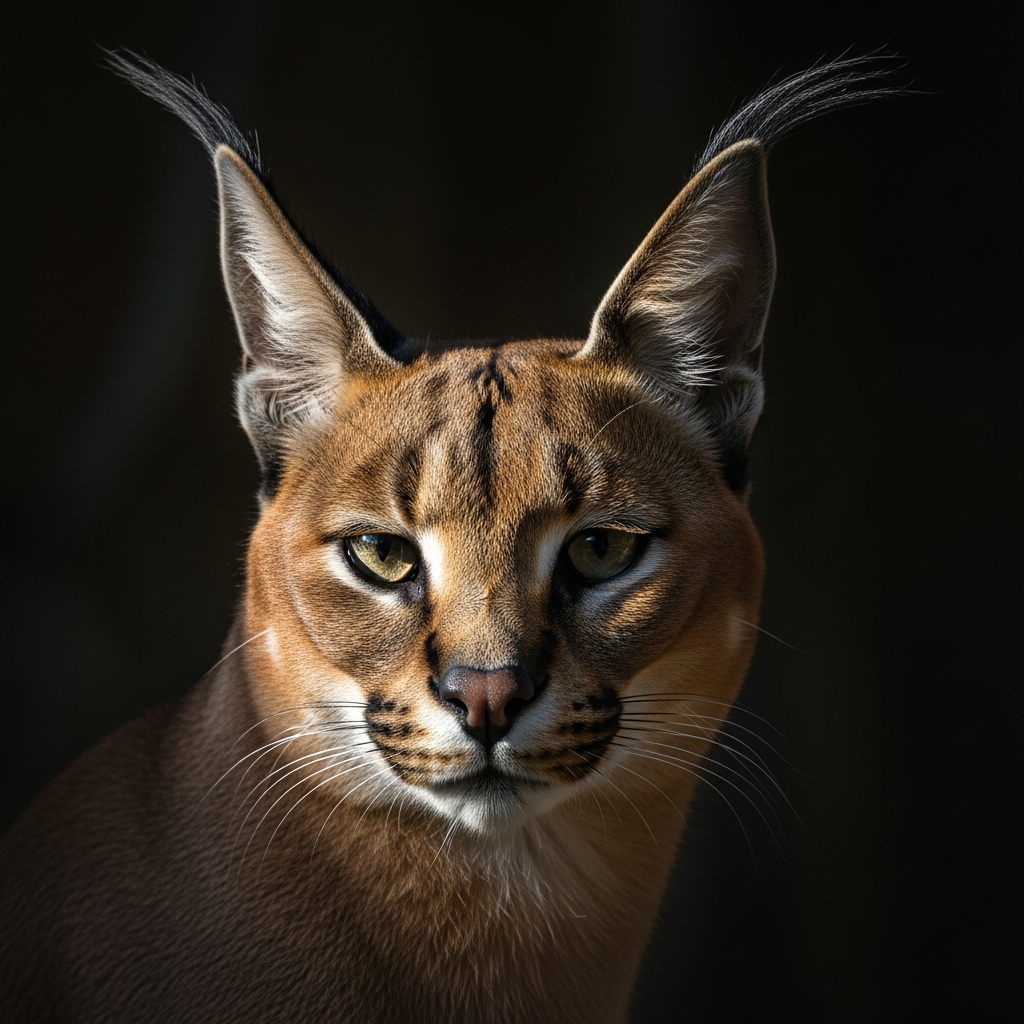
Stoneware mug, dishwasher safe
Buy Mug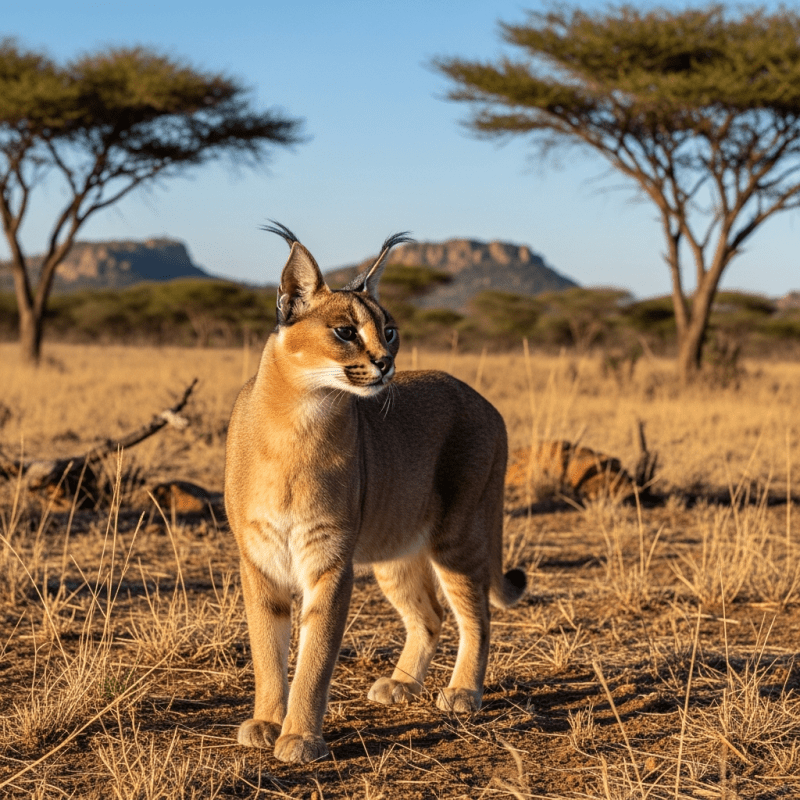
Soft cotton tee, unisex sizes
Buy ShirtThe caracal has been a subject of fascination in art and folklore across its range. Revered for its beauty and hunting prowess, it appears in ancient Egyptian iconography and regional tales throughout Africa and Asia. In some cultures, caracals were trained for bird hunting, and their distinctive ears have inspired local names and legends. Today, the caracal remains a symbol of agility and wildness in modern wildlife conservation and ecotourism narratives.
Caracals are native to a vast area spanning sub-Saharan Africa, North Africa, the Middle East (including the Arabian Peninsula), and Central and South Asia, reaching as far east as India. Their historical and current distribution reflects their adaptability to a wide range of environments, though regional declines have occurred in North Africa and parts of Asia.

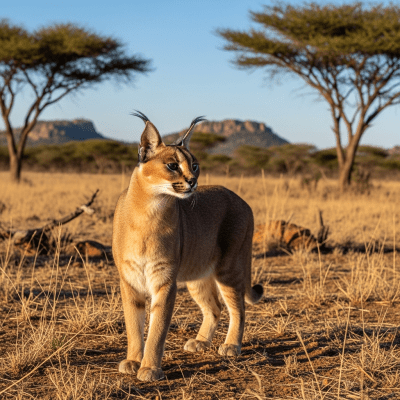
Preferring open and semi-open landscapes, caracals thrive in savannas, woodlands, scrublands, semi-deserts, and dry mountain regions. They avoid dense forests and true deserts, relying on their stealth and agility to hunt a variety of prey. As solitary carnivores, caracals play a vital ecological role in controlling populations of small mammals and birds, and their ability to survive with minimal water makes them well-suited to arid ecosystems.
The caracal is currently listed as Least Concern by the IUCN Red List, reflecting its wide distribution and presumed large population. However, regional declines and threats persist, and legal protection varies by country. The species is included in CITES Appendix I or II depending on locality, underscoring the need for ongoing monitoring and habitat conservation.
Major threats to caracals include habitat loss due to agricultural expansion, persecution and retaliatory killing over livestock predation, prey depletion, and hunting. While populations are stable in southern Africa, declines or unknown trends are reported elsewhere, particularly in North Africa and Asia. Conservation efforts focus on legal protection, habitat preservation, and mitigating human-wildlife conflict.
Caracals possess several remarkable adaptations: their powerful hind limbs enable extraordinary leaps, allowing them to catch birds in flight; metabolic efficiency lets them survive with minimal free water in arid environments; and their long, black ear tufts may aid in communication or camouflage. These traits collectively support their success across diverse, often challenging habitats.
Caracal reproduction involves a gestation period of 69–78 days, with litters of 1–4 kittens born in concealed dens. Cubs remain with their mother for several months, learning essential survival skills before dispersing. Sexual maturity is reached at 12–16 months, and individuals typically live up to 12 years in the wild, with captive lifespans extending to 17 years. Parental care is provided exclusively by the female, ensuring the young are protected and nurtured during their vulnerable early months.
Several subspecies of caracal have been proposed, including Caracal caracal nubica, Caracal caracal schmitzi, and Caracal caracal michaelis. However, recent genetic studies indicate weak differentiation among regional populations, and these subspecies are not universally recognized. Minor morphological and behavioral variations may occur, but the species is generally treated as a single, widespread taxon.
Genetic research places the caracal within the Caracal lineage, closely related to the African golden cat and serval. Mitochondrial DNA and partial nuclear genome data reveal low genetic divergence among populations, supporting the view of a single species with limited subspecies structure. No hybridization with other felids has been documented, and while the full genome is yet to be published, available microsatellite and phylogenetic data provide valuable insights into the caracal’s evolutionary history and adaptability.