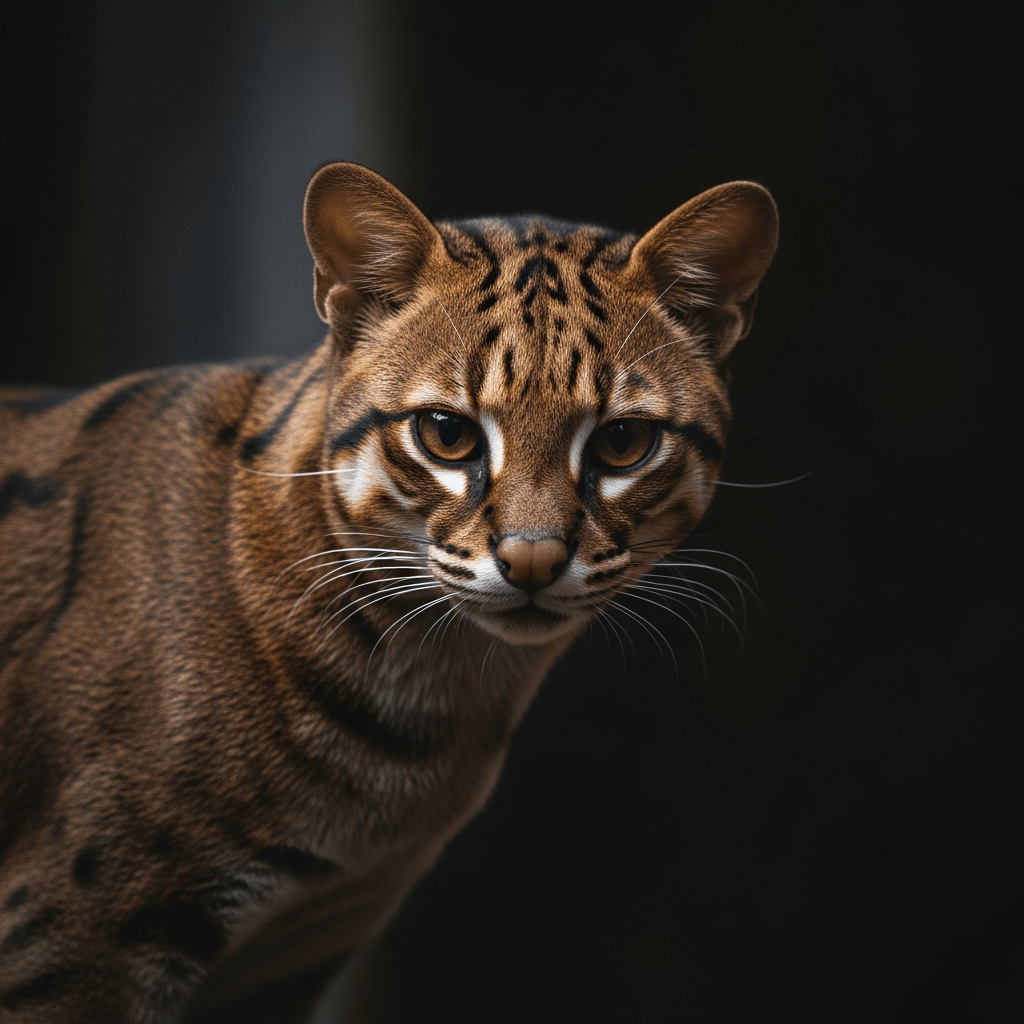
Catopuma Badia
The Borneo Bay Cat (Catopuma badia) is a rare, elusive wild feline found only on the island of Borneo, distinguished by its striking reddish-brown coat and secretive habits.
The Borneo Bay Cat (Catopuma badia) is a rare, elusive wild feline found only on the island of Borneo, distinguished by its striking reddish-brown coat and secretive habits.
First described in 1874 by John Edward Gray from a specimen collected in Sarawak, the Borneo Bay Cat is endemic to Borneo and has never been recorded outside this island. Its evolutionary lineage diverged from other Southeast Asian felids, and it is most closely related to the Asian golden cat. Despite its long-standing scientific recognition, the species remains shrouded in mystery due to its rarity and secretive nature.
The Borneo Bay Cat belongs to the family Felidae, subfamily Felinae, and is classified under the genus Catopuma. Its scientific name is Catopuma badia, with no recognized subspecies. The species is closely related to the Asian golden cat (Catopuma temminckii), but molecular and morphological evidence supports its status as a distinct species within the small/medium cat lineage of felines.
This medium-sized, slender wild cat features a rich reddish or chestnut-brown coat, sometimes adorned with faint spots or stripes. Its underside is paler, and the long, bushy tail often ends in a darker tip. The face is marked by white streaks and a distinctive dark line running from the eyes to the nose, giving it a striking and expressive look. Adult Borneo Bay Cats measure 49–67 cm in body length, with tails 30–40 cm long, and weigh approximately 2.3–4.5 kg. Its agile build and cryptic coloration are perfectly suited for moving through dense forest understory.
The Borneo Bay Cat is solitary and primarily nocturnal or crepuscular, making it exceptionally difficult to observe in the wild. It is believed to hunt small mammals, birds, and possibly reptiles, relying on stealth and agility. The species is a flagship for forest conservation, symbolizing the rich but threatened biodiversity of Borneo’s rainforests. Its elusive nature means interactions with humans are extremely rare, and it plays a vital ecological role as a forest predator.
Bring this kind into your world illustrated posters, mugs, and shirts.
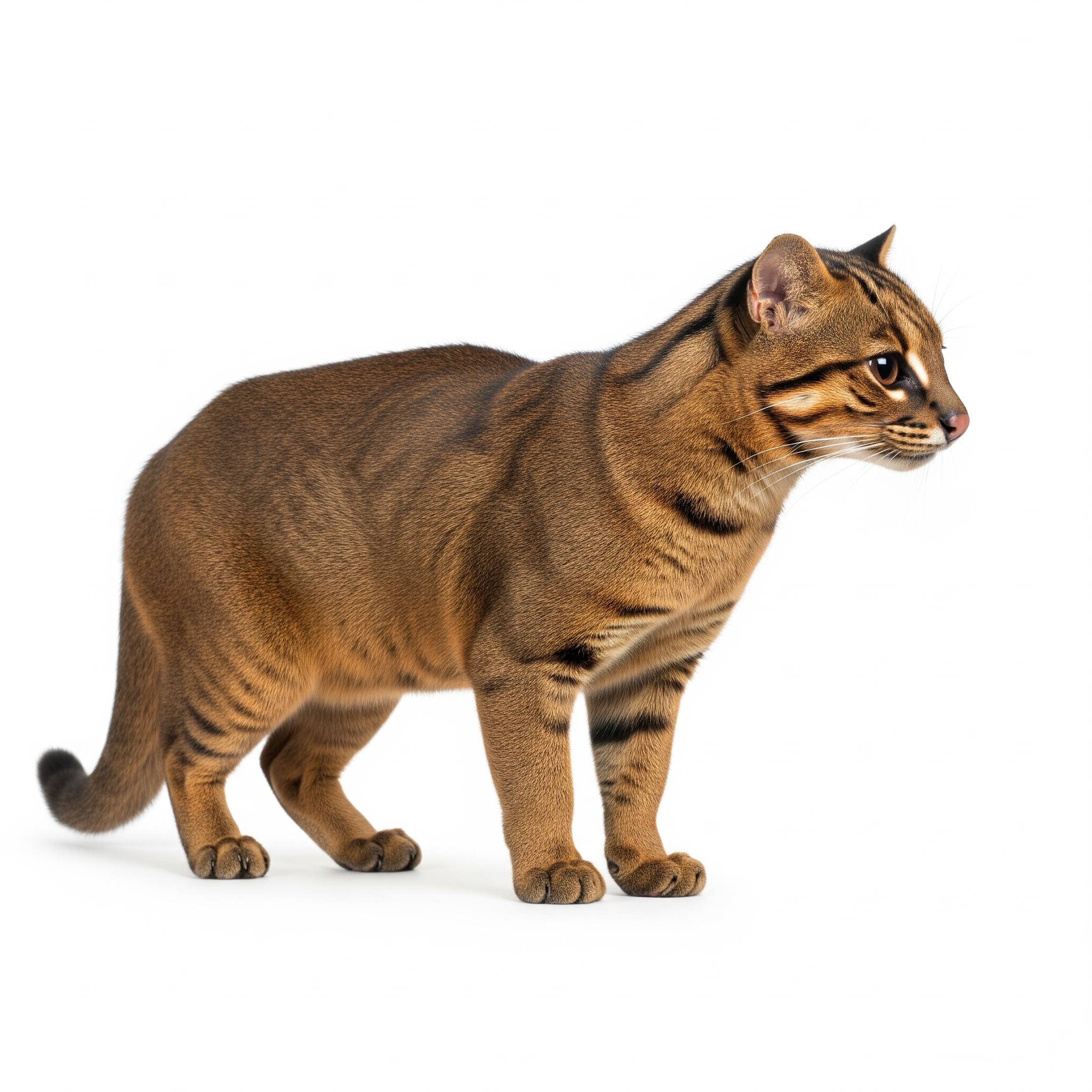
Archival print, museum-grade paper
Buy Poster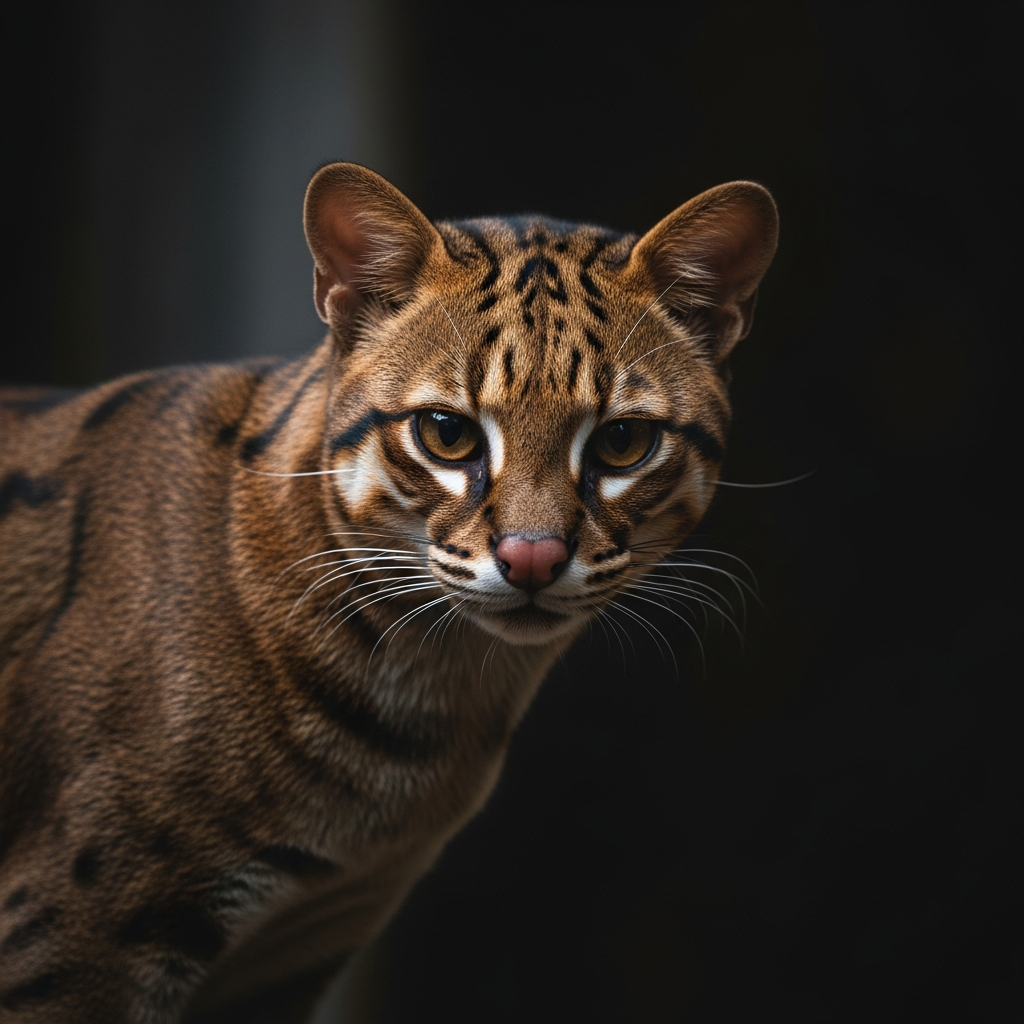
Stoneware mug, dishwasher safe
Buy Mug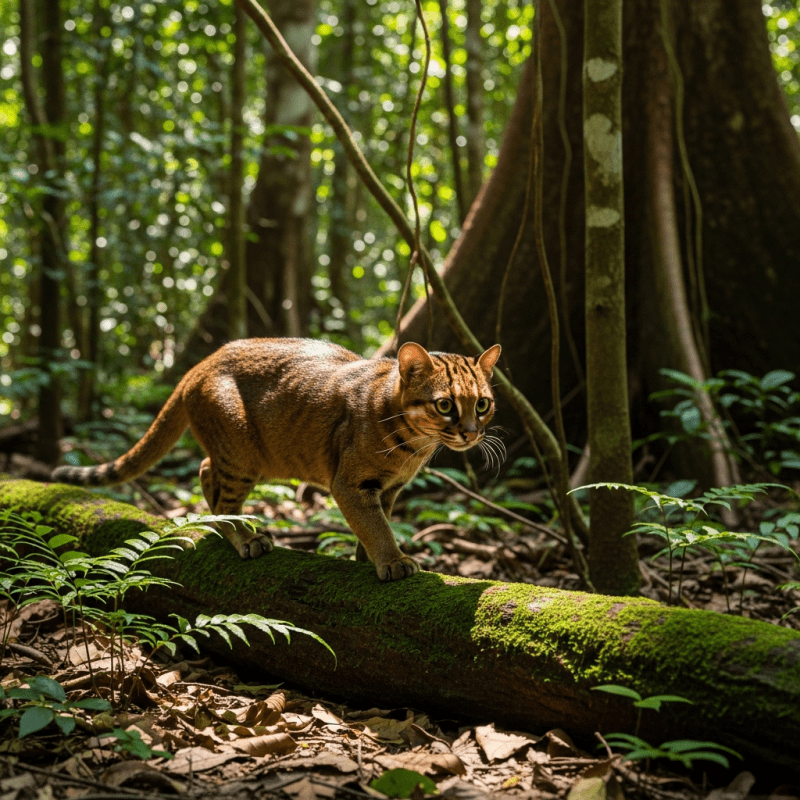
Soft cotton tee, unisex sizes
Buy ShirtWhile the Borneo Bay Cat is not widely represented in art or folklore due to its rarity, it holds significant value among conservationists and researchers as an emblem of Borneo’s unique wildlife. Locally, it is known as "Kucing Merah" in Malay, and its mysterious presence has fueled scientific intrigue and conservation efforts. Its status as one of the least-known felids adds to its allure and importance in the global narrative of endangered species.
The Borneo Bay Cat is endemic to Borneo, with confirmed records from the Malaysian states of Sarawak and Sabah, as well as the Indonesian province of Kalimantan. Its range is restricted to lowland and hill forests below 500 meters elevation, and it has not been observed outside this island.
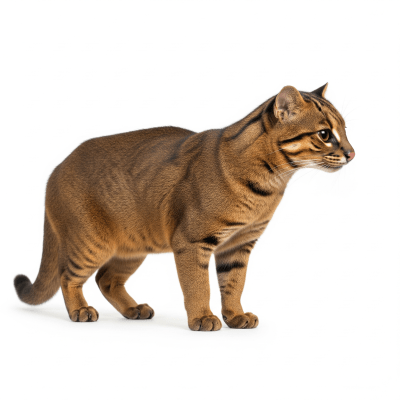
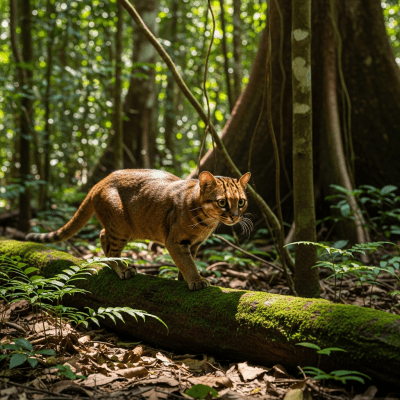
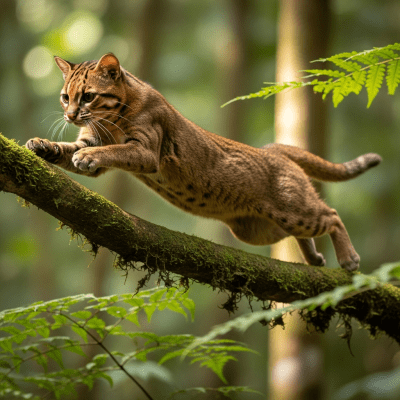
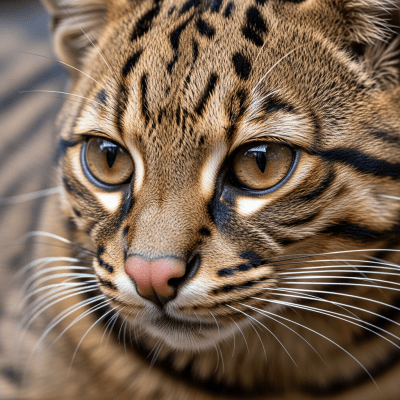
This species prefers lowland and hill forests, including both primary and selectively logged areas. It is rarely found above 500 meters elevation. The Borneo Bay Cat is an agile predator, adapted for both arboreal and terrestrial movement, and plays an important role in maintaining the ecological balance by preying on small mammals, birds, and possibly reptiles. Its cryptic coloration helps it blend into the dense forest understory, aiding both hunting and evasion.
The Borneo Bay Cat is classified as Endangered on the IUCN Red List. This status indicates a very high risk of extinction in the wild, with fewer than 2,500 mature individuals estimated and a decreasing population trend. Protection under national laws exists in Malaysia and Indonesia, but enforcement and habitat preservation remain significant challenges.
The greatest threats to the Borneo Bay Cat are habitat loss from deforestation, logging, and conversion of forests to agriculture, especially oil palm plantations. Additional pressures include hunting and fragmentation of remaining forest habitats, which isolate populations and reduce genetic diversity. Conservation measures are limited, and ongoing habitat destruction poses a critical risk to the species’ survival.
The Borneo Bay Cat exhibits cryptic coloration, allowing it to blend seamlessly into the forest understory and avoid detection by both prey and potential threats. Its slender, agile body and long bushy tail enable it to move adeptly through dense vegetation and climb trees, making it well-suited for both arboreal and terrestrial hunting in the complex rainforest environment.
Very little is known about the reproductive habits or lifecycle of the Borneo Bay Cat. Key details such as gestation period, litter size, and breeding season remain undocumented due to the species’ extreme rarity and secretive nature. It is presumed to follow patterns similar to related felids, but direct observations and data are currently unavailable.
No breeds, subspecies, or regional populations are recognized for the Borneo Bay Cat. All known individuals belong to a single species, Catopuma badia, with minimal regional naming variation due to its restricted range on Borneo.
Genetic research on the Borneo Bay Cat is limited but has confirmed its placement within the Catopuma lineage, closely related to the Asian golden cat. Partial mitochondrial DNA sequences and DNA barcoding have been used to distinguish it from other felids. Phylogenetic studies indicate a clear divergence from the Asian golden cat, though the timing and genetic distance are still being investigated. No complete genome sequence or population-level genetic diversity data are yet available.