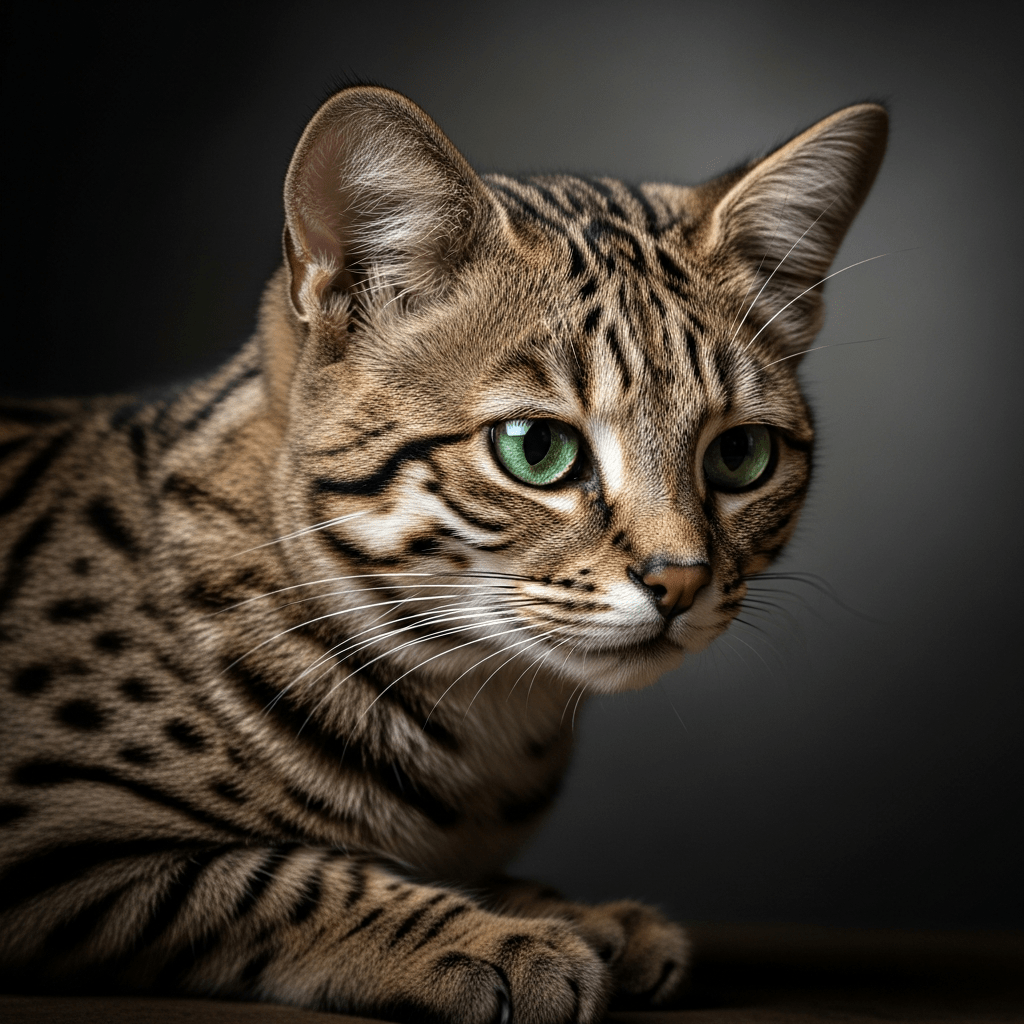
Felis Nigripes
The Black-footed Cat (Felis nigripes) is Africa’s smallest wild feline, renowned for its elusive nocturnal lifestyle and extraordinary hunting prowess in the arid landscapes of southern Africa.
The Black-footed Cat (Felis nigripes) is Africa’s smallest wild feline, renowned for its elusive nocturnal lifestyle and extraordinary hunting prowess in the arid landscapes of southern Africa.
First described in 1876 by British zoologist William Thomas Blanford, the Black-footed Cat’s type specimen originated in South Africa. Its evolutionary lineage places it within the genus Felis, closely related to the African wildcat and sand cat. The species has always been native to southern Africa, thriving in dry savannas and semi-desert regions, and has maintained a stable taxonomic identity without recognized subspecies or hybrid lineages.
Classified within the family Felidae and subfamily Felinae, the Black-footed Cat belongs to the genus Felis as the species nigripes. It shares its genus with other small wild cats such as the African wildcat and sand cat, and is distinguished by both genetic and morphological traits. Its stable taxonomy and clear species boundaries make it a well-defined member of the Felidae family.
With a body length of 35–52 cm and weighing just 1–2.4 kg, the Black-footed Cat is diminutive yet striking. Its tawny to pale brown coat is densely patterned with black or dark brown spots and stripes, while its namesake black or dark brown feet set it apart. The broad head features large, expressive eyes and rounded ears, giving it an alert and endearing appearance. Its compact form is perfectly adapted for stealth and agility in sparse, sandy habitats.
Strictly nocturnal and solitary, the Black-footed Cat spends daylight hours hidden in burrows or dense cover. At night, it emerges as an exceptionally efficient hunter, preying on rodents, small birds, and insects. Remarkably, it kills more prey per night relative to its body weight than any other cat species. Its secretive nature and avoidance of human contact make it rarely seen, and it plays a vital ecological role in controlling small mammal populations.
Bring this kind into your world illustrated posters, mugs, and shirts.
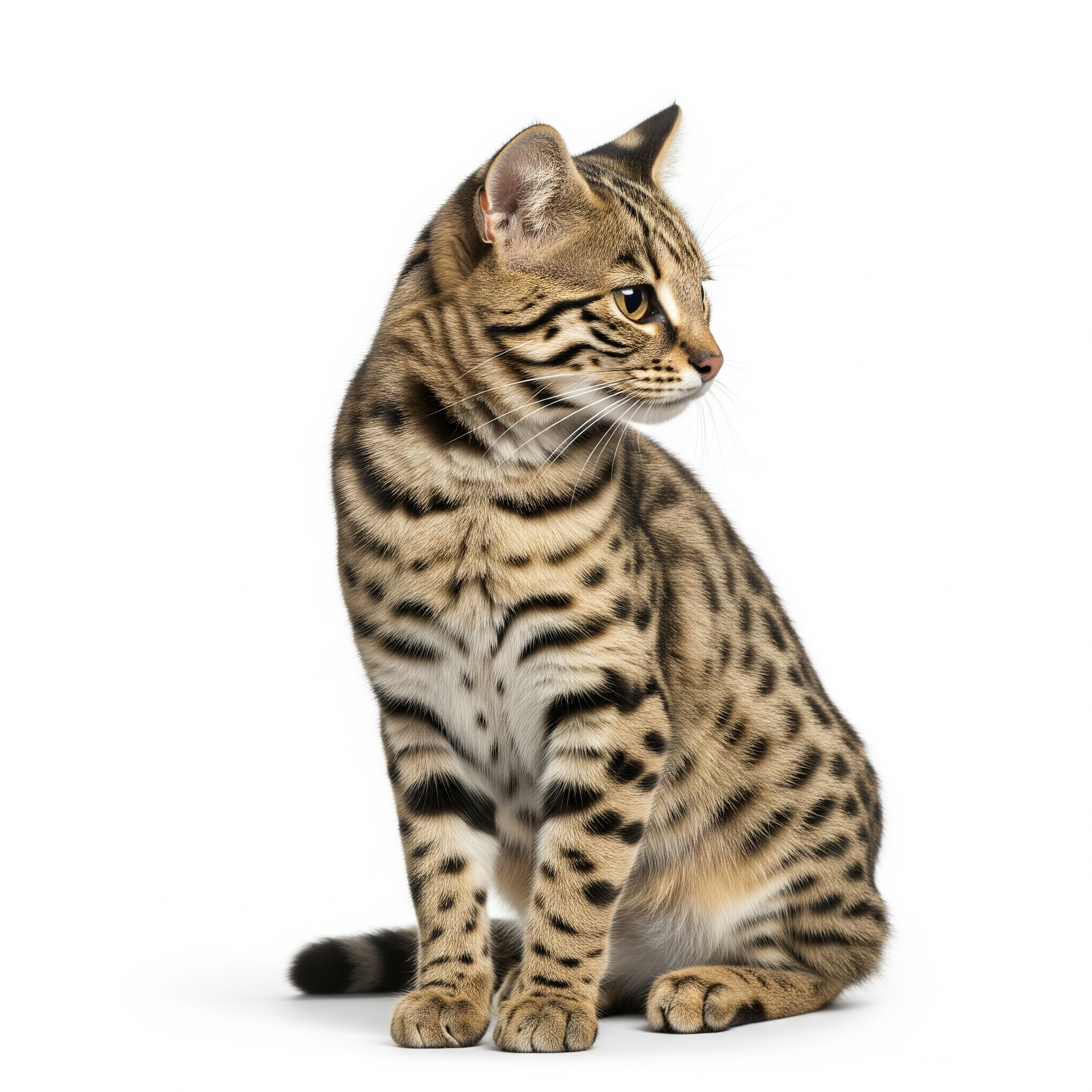
Archival print, museum-grade paper
Buy Poster
Stoneware mug, dishwasher safe
Buy Mug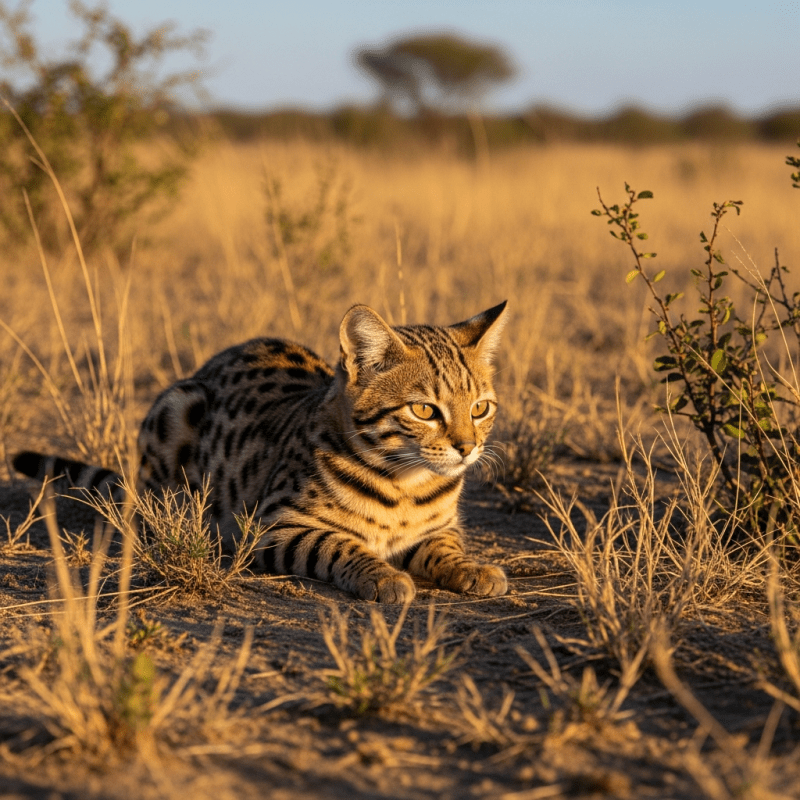
Soft cotton tee, unisex sizes
Buy ShirtWhile not prominent in folklore or art compared to larger African cats, the Black-footed Cat holds fascination among naturalists and wildlife enthusiasts for its rarity and remarkable hunting skills. In southern Africa, its local names—such as Swartvoetkat in Afrikaans—reflect its unique identity. Its elusive behavior has inspired research and conservation interest, symbolizing the hidden diversity of Africa’s wild landscapes.
Historically and currently, the Black-footed Cat is native to southern Africa, with established populations in South Africa, Namibia, Botswana, and marginally in Zimbabwe. Its distribution is closely tied to arid and semi-arid regions, favoring open savannas and shrublands with sandy soils. The species’ range has remained relatively stable, though fragmented due to human activity and habitat changes.
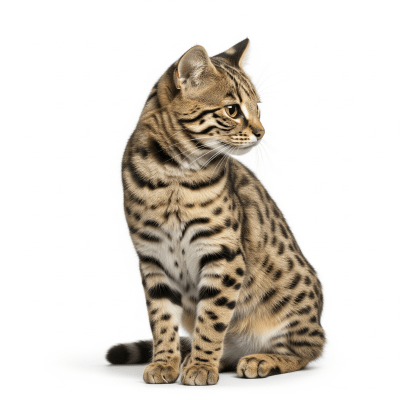
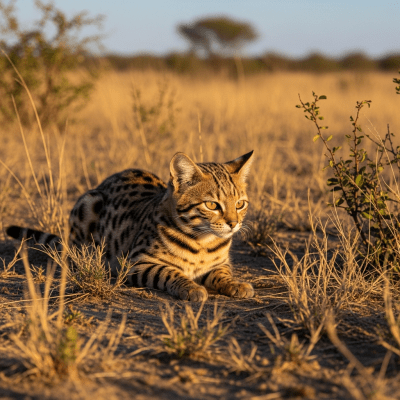
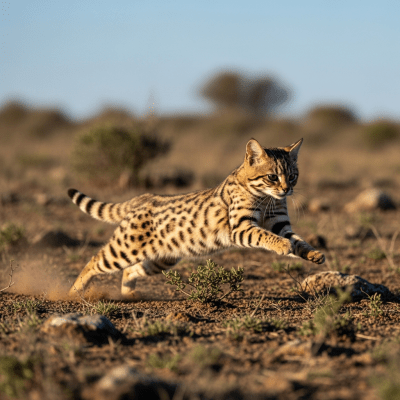
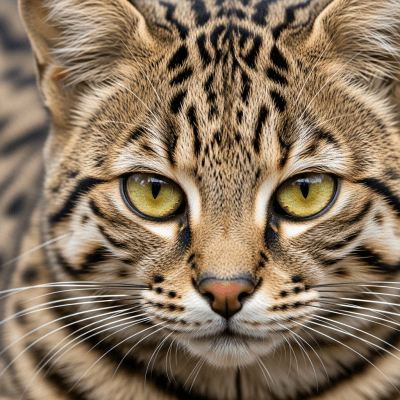
Preferring open, dry savannas, shrublands, and semi-desert landscapes, the Black-footed Cat thrives in environments with sparse vegetation and sandy soils. It utilizes abandoned burrows for shelter and is highly adapted to water-scarce conditions. Ecologically, it plays a crucial role as a top small predator, regulating populations of rodents and insects, and contributing to the balance of its native ecosystem.
The Black-footed Cat is listed as Vulnerable on the IUCN Red List. This status indicates a high risk of extinction in the wild, driven by habitat loss, declining prey, and other anthropogenic pressures. With fewer than 10,000 mature individuals estimated and a declining population trend, ongoing conservation efforts focus on habitat protection, research, and awareness to safeguard this elusive species.
Major threats to the Black-footed Cat include habitat degradation from agricultural expansion, reduction of prey due to rodenticide use, accidental poisoning, disease, and predation by domestic dogs. Its secretive nature complicates population monitoring, making conservation actions challenging. Fragmented habitats and low genetic diversity further increase its vulnerability to environmental changes and disease outbreaks.
Specialized for life in arid and semi-arid environments, the Black-footed Cat exhibits remarkable water conservation behaviors and relies on abandoned burrows for shelter. Its nocturnal habits and cryptic coloration provide effective camouflage, while its compact size and agility enable it to hunt efficiently in sparse terrain. These adaptations allow it to thrive where few other felines can survive.
Breeding is seasonal, with females giving birth to litters of 1–2 kittens after a gestation period of 63–68 days. Kittens are weaned at 6–8 weeks and reach sexual maturity between 8–12 months. Parental care is provided by the mother, who shelters her young in burrows until they are ready to venture out. The lifecycle is adapted to the harsh conditions of its habitat, ensuring survival despite environmental challenges.
No recognized breeds or subspecies exist for the Black-footed Cat; all populations are classified under Felis nigripes. Regional variants are not documented, and genetic studies confirm a stable taxonomic status across its range.
Genetic research confirms the Black-footed Cat as a distinct species within the Felis genus, closely related to the African wildcat and sand cat. Mitochondrial DNA barcodes and partial genome sequences are available, revealing low genetic diversity likely due to small, fragmented populations. No evidence of hybridization with other felids has been found, and further genomic studies are ongoing to better understand its evolutionary history and conservation needs.