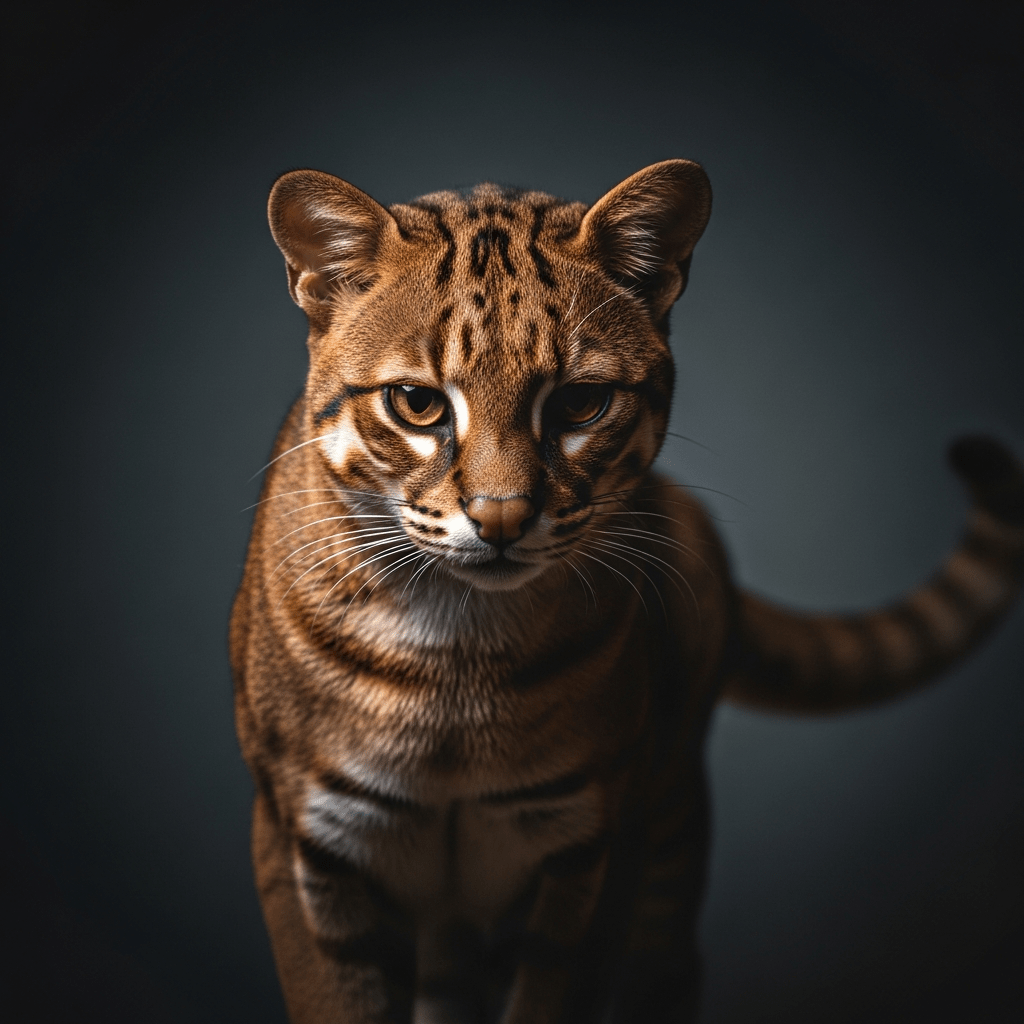
Catopuma Badia
The Bay Cat (Catopuma badia) is a rare, small wild feline endemic to Borneo, renowned for its reddish coat and secretive habits.
The Bay Cat (Catopuma badia) is a rare, small wild feline endemic to Borneo, renowned for its reddish coat and secretive habits.
First described in 1874 by British zoologist John Edward Gray, the Bay Cat's scientific recognition began with a skin specimen collected in Sarawak, Borneo. Its evolutionary roots trace to the Asian bay cat lineage, and molecular studies have clarified its placement within the genus Catopuma, closely related to the Asian golden cat. The species is native solely to Borneo, making its origin both geographically and biologically distinct.
The Bay Cat belongs to the family Felidae, subfamily Felinae, and is classified under the genus Catopuma as Catopuma badia. Historically, it was also referred to as Felis badia and Pardofelis badia, reflecting ongoing debates about its taxonomic placement. Current consensus, supported by genetic evidence, affirms its status as a distinct species within the Asian bay cat lineage, separate from but closely related to the Asian golden cat (Catopuma temminckii).
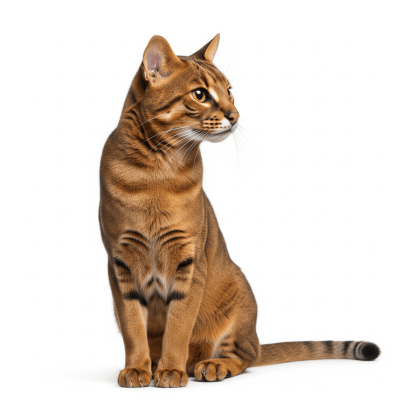
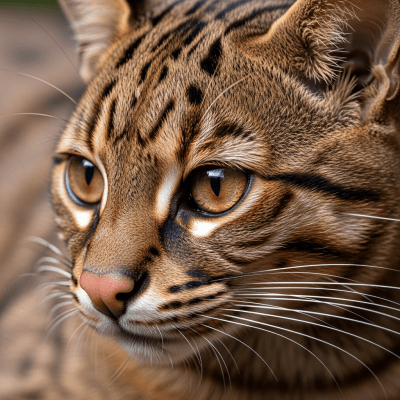
Bay Cats are small and slender, measuring 49–67 cm in body length and weighing 2.3–4.5 kg. Their fur is typically reddish or chestnut brown, with paler underparts and faint spots on the belly. A long tail, often tipped with white, and short, rounded head add to their distinctive look. White markings frame the mouth and eyes, and some individuals display a rare grey morph. The overall impression is of a lithe, agile feline perfectly adapted for moving through dense forest undergrowth.
Bay Cats are solitary, nocturnal, and exceptionally elusive, making direct observation rare. Their secretive nature allows them to navigate both arboreal and terrestrial environments, hunting small mammals, birds, and possibly reptiles. Unlike domestic or social felines, Bay Cats avoid human contact and are seldom seen, which has contributed to the limited understanding of their ecology and behavior.
Bring this kind into your world illustrated posters, mugs, and shirts.
Archival print, museum-grade paper
Buy Poster
Stoneware mug, dishwasher safe
Buy Mug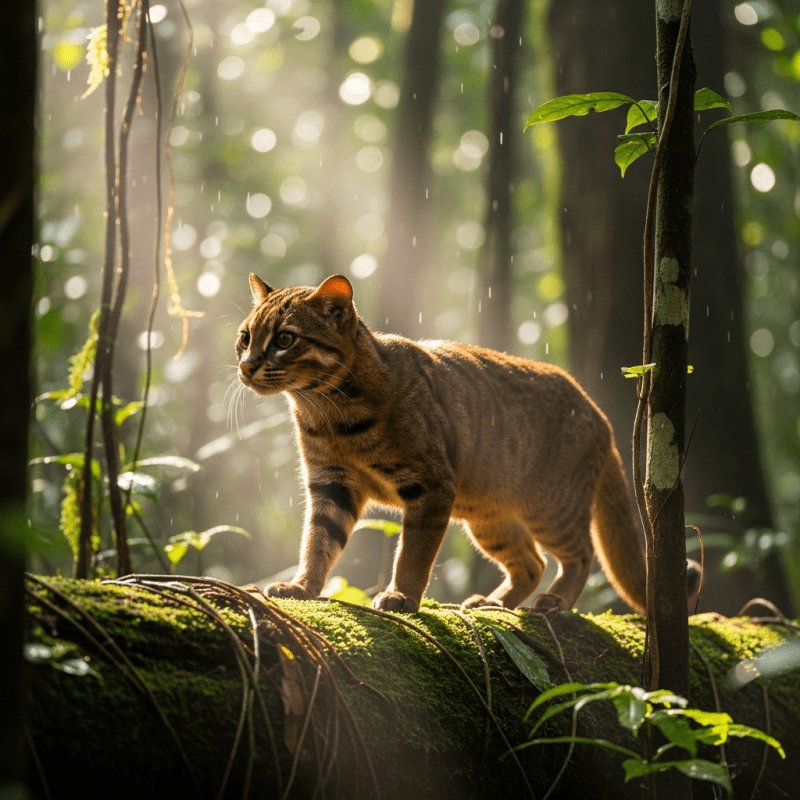
Soft cotton tee, unisex sizes
Buy ShirtWhile the Bay Cat is not widely represented in global art or folklore, it holds regional significance in Borneo, where it is known as "Kucing Merah" (Malay for "red cat"). Its rarity and mysterious presence have made it a symbol of Borneo’s unique and threatened biodiversity, often cited in conservation campaigns and local wildlife awareness efforts.
The Bay Cat is strictly endemic to Borneo, with confirmed records in the Malaysian states of Sarawak and Sabah, Brunei, and Indonesian Kalimantan. Historically and currently, its distribution is limited to this island, making it one of Southeast Asia's most geographically restricted felines.
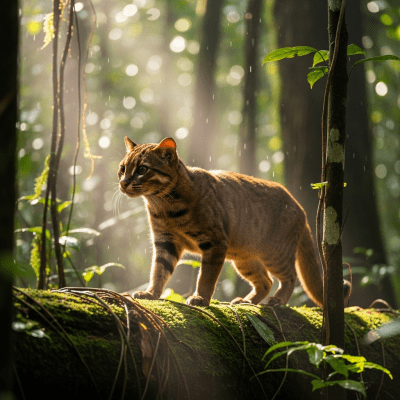
This species prefers dense, undisturbed primary rainforest but has also been recorded in logged and secondary forests, spanning lowland, hill, and montane regions. Its ecological role is presumed to be that of a stealthy predator, helping regulate populations of small mammals and birds within Borneo’s forest ecosystems. Adapted for both arboreal and terrestrial movement, the Bay Cat thrives in habitats with thick vegetation and minimal human disturbance.
The Bay Cat is classified as Endangered on the IUCN Red List, reflecting its high risk of extinction due to a declining population and ongoing habitat loss. Protection under national laws and CITES Appendix II aims to curb illegal trade and hunting, but conservation challenges remain significant.
Major threats to the Bay Cat include extensive deforestation for agriculture, particularly oil palm plantations, logging, and habitat fragmentation. Hunting pressures and possible direct persecution further endanger the species. Its secretive nature complicates conservation efforts, as population size and trends are difficult to monitor.
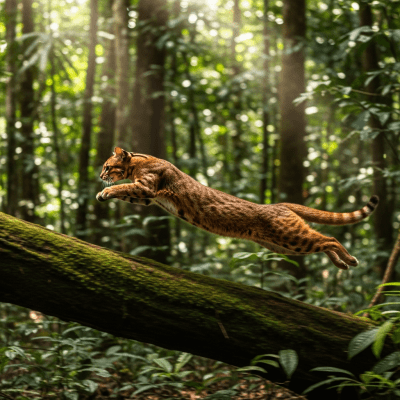
The Bay Cat exhibits adaptations for both arboreal and terrestrial locomotion, allowing it to navigate dense forest environments with agility and stealth. Its secretive, nocturnal habits help it avoid predators and human disturbance, while its slender build and long tail aid in balance and maneuverability among trees and undergrowth.
Little is known about the reproductive biology of the Bay Cat. Key details such as gestation period, litter size, and breeding season remain undocumented due to the species’ rarity and elusive behavior. The absence of direct observations means that much of its lifecycle remains a mystery to science.
No recognized breeds or subspecies exist for the Bay Cat; all known populations are classified as Catopuma badia. Regional variations are minimal, and taxonomic ambiguity regarding its genus placement has been resolved in favor of Catopuma based on molecular evidence.
Genetic studies have confirmed the Bay Cat as a distinct species within the genus Catopuma, closely related to the Asian golden cat. Mitochondrial DNA analyses support its separation from other Southeast Asian felids, and limited nuclear data are available. DNA barcodes have been generated for museum specimens, but a complete genome sequence and detailed population genetics remain unavailable, leaving gaps in understanding its genetic diversity and evolutionary history.