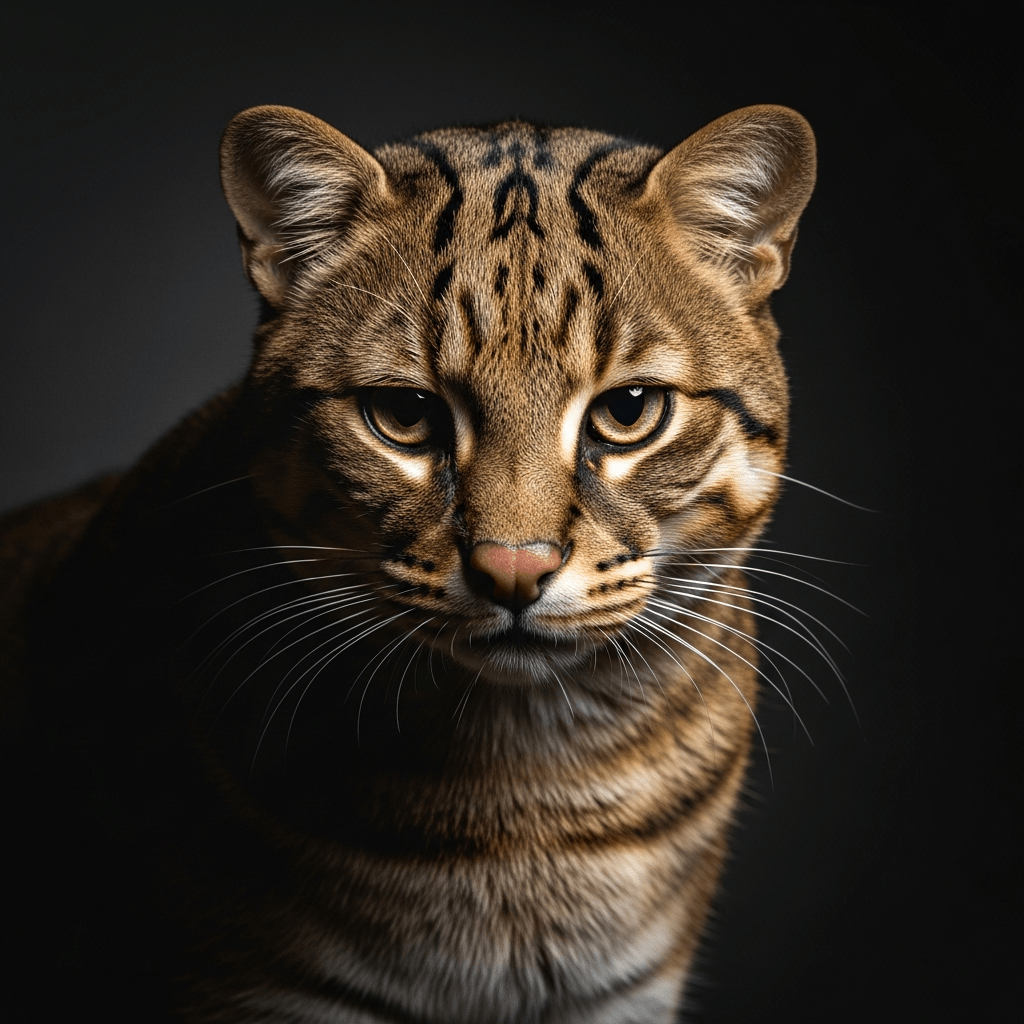
Catopuma Temminckii
The Asian Golden Cat (Catopuma temminckii) is a medium-sized, elusive wild feline native to Southeast Asia, renowned for its strikingly variable coat colors and adaptability across diverse forest habitats.
The Asian Golden Cat (Catopuma temminckii) is a medium-sized, elusive wild feline native to Southeast Asia, renowned for its strikingly variable coat colors and adaptability across diverse forest habitats.
First described in 1827 by Dutch zoologist Coenraad Jacob Temminck, the Asian Golden Cat’s type specimen originated from the forests of Southeast Asia. Early European naturalists encountered this secretive predator in the dense woodlands of northeastern India and Indochina. Initially classified under the genus Felis, subsequent morphological and genetic research led to its placement in Catopuma. The species’ evolutionary lineage traces to the bay cat clade, closely related to the Borneo Bay Cat, with no known history of hybridization or crossbreeding.
The Asian Golden Cat belongs to the family Felidae, subfamily Felinae, and is currently classified in the genus Catopuma. Its scientific name is Catopuma temminckii, with historical synonyms including Felis temminckii and Pardofelis temminckii. Molecular studies confirm its status as a distinct species within the bay cat clade, sharing close evolutionary ties with Catopuma badia (Borneo Bay Cat). While taxonomic ambiguities exist regarding its genus, consensus now favors Catopuma.
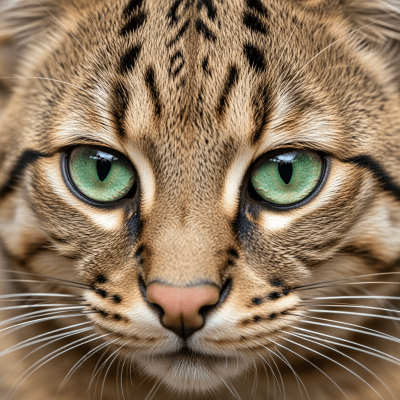
The Asian Golden Cat is robustly built, with a body length ranging from 66 to 105 cm and a tail measuring 40 to 57 cm. Adults weigh between 6 and 15 kg. Its coat is highly variable—shades include golden, reddish-brown, gray, and even melanistic black. Distinctive white lines run from the eyes to the nose, and some individuals display spots or stripes on the head and limbs. The cat’s rounded ears and relatively short face give it a unique profile, while its dense, soft fur adds to its striking appearance.
Primarily solitary and elusive, the Asian Golden Cat is most active at night or during twilight, though daytime sightings do occur. It is an opportunistic predator, hunting small mammals, birds, reptiles, and occasionally livestock. Its agility allows it to climb trees and swim with ease, making it both arboreal and terrestrial. The species plays a vital ecological role as a mid-sized predator, helping regulate prey populations and maintain forest health. Direct interactions with humans are rare, but conflicts can arise near settlements due to livestock predation.
Bring this kind into your world illustrated posters, mugs, and shirts.
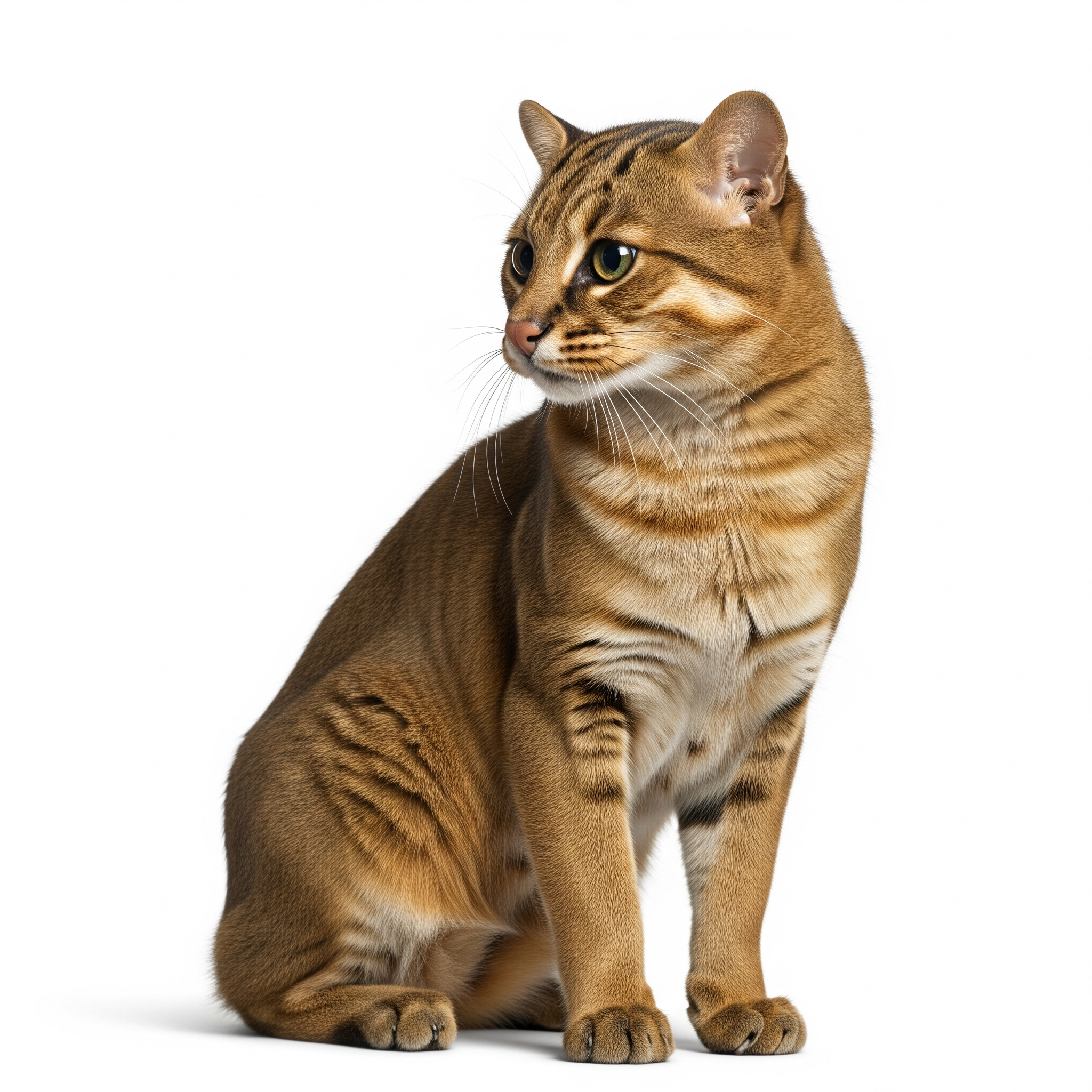
Archival print, museum-grade paper
Buy Poster
Stoneware mug, dishwasher safe
Buy Mug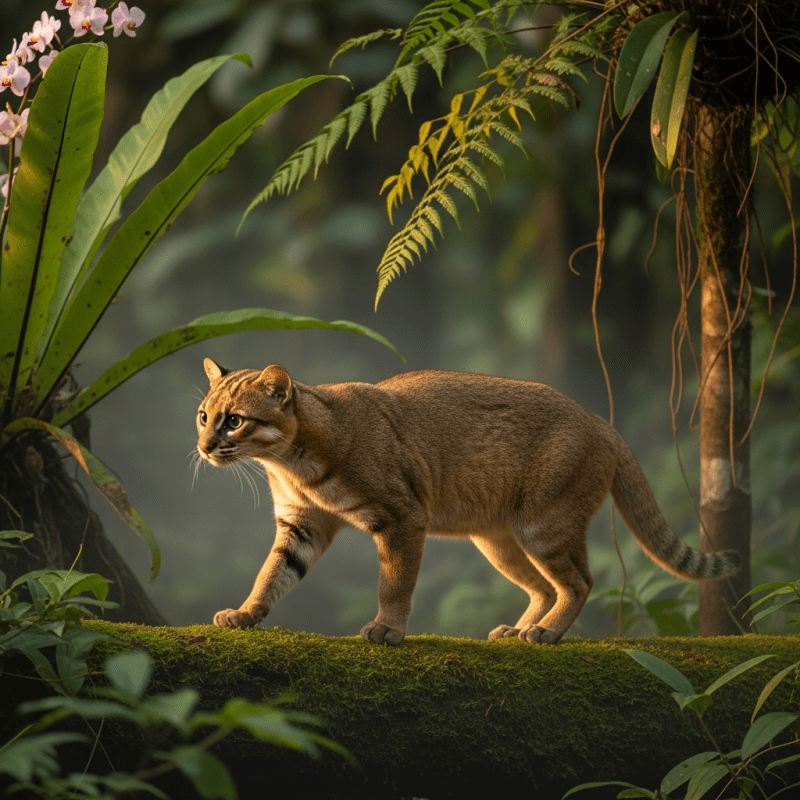
Soft cotton tee, unisex sizes
Buy ShirtIn local folklore across Southeast Asia, the Asian Golden Cat is sometimes called the "Fire Cat" or "Rock Cat," names inspired by its vivid coat colors and elusive nature. While not as prominent in global art or mythology as larger felines, it holds a subtle presence in regional stories and traditions, often symbolizing mystery and agility. Its rare appearances and secretive habits contribute to its reputation as a creature of the deep forest, respected and sometimes feared by local communities.
The Asian Golden Cat’s range extends from the eastern Himalayas through northeastern India, Bhutan, Bangladesh, Myanmar, Thailand, Laos, Cambodia, Vietnam, Malaysia, and into southern China. It occupies elevations from lowland forests up to 3,000 meters, favoring dense woodland environments but also venturing into grasslands and shrublands. Historically widespread, it is now considered locally rare in many regions due to increasing pressures on its habitats.
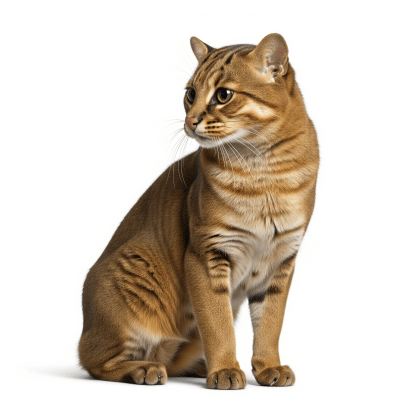
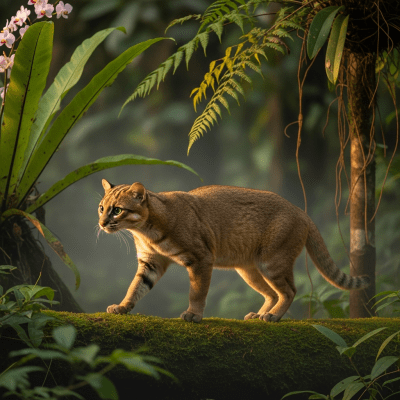

This species prefers dense evergreen, deciduous, and subtropical forests, but is also found in grasslands and shrublands. Its ecological role as a mid-level predator is crucial for maintaining balanced prey populations. The Asian Golden Cat’s adaptability allows it to exploit a variety of environments, from humid lowlands to mountainous terrain, and its cryptic behavior helps it avoid detection by both predators and humans.
The Asian Golden Cat is classified as Near Threatened on the IUCN Red List (2020). This status indicates the species faces a high risk of becoming endangered in the near future. Population trends are decreasing, primarily due to habitat destruction, fragmentation, and illegal hunting. Conservation efforts are hampered by the cat’s elusive nature and lack of comprehensive population data.
Major threats to the Asian Golden Cat include widespread habitat loss from deforestation and land conversion, fragmentation of remaining forests, poaching for fur and body parts, and retaliatory killings near human settlements. The illegal wildlife trade and depletion of prey species further exacerbate its decline. Its secretive habits make monitoring and protection challenging, leaving populations vulnerable to ongoing environmental pressures.
The Asian Golden Cat boasts cryptic coloration that blends seamlessly with forest undergrowth, aiding in both hunting and evasion. Its muscular build and flexible limbs allow for expert climbing and swimming, enabling it to exploit arboreal and terrestrial niches. A wide tolerance for different habitat types—from dense forests to open shrublands—makes it one of the most adaptable felines in Asia.
Females experience a gestation period of approximately 78–80 days, typically giving birth to 1–3 kittens. Cubs are born blind and remain dependent on their mother for several months, gradually gaining independence as they mature. The species’ solitary nature extends to its reproductive habits, with little known about courtship or parental care beyond the early stages of cub development.
There are no universally recognized subspecies of the Asian Golden Cat, though regional populations exhibit notable variation in coat color and pattern. Local names such as "Red Cat" or "Rock Cat" reflect these differences, but genetic and morphological studies have yet to establish formal subspecies classifications.
Genetic research places the Asian Golden Cat as a distinct lineage within the bay cat clade, closely related to the Borneo Bay Cat (Catopuma badia). Mitochondrial DNA barcodes and partial genome sequences are available, supporting its unique phylogenetic position. The species has a karyotype of 2n=38, and no hybridization with other felids has been documented. However, comprehensive population-level genetic data and a complete genome sequence remain outstanding as of June 2024.