Leopardus Jacobita
The Andean Cat (Leopardus jacobita) is a rare, elusive wild feline native to the high-altitude Andes, celebrated for its striking silvery-gray coat and critical conservation status.
The Andean Cat (Leopardus jacobita) is a rare, elusive wild feline native to the high-altitude Andes, celebrated for its striking silvery-gray coat and critical conservation status.
First described in 1865 by Italian zoologist Emilio Cornalia, the Andean Cat originates from the rugged peaks and arid plateaus of the South American Andes. Its scientific recognition was based on scarce specimens collected from these remote regions, and the species remains one of the least observed wild cats in the world. Most modern knowledge comes from recent field studies and camera trap surveys, reflecting its secretive nature and low population density. The Andean Cat belongs to the genus Leopardus, a lineage of small wild cats native to Central and South America, with no known hybrids or subspecies.
The Andean Cat is classified within the family Felidae, subfamily Felinae, and genus Leopardus. Its scientific name is Leopardus jacobita. Closely related to the Pampas Cat (Leopardus colocola) and the Ocelot (Leopardus pardalis), it shares the specialized traits of small South American wild cats. Historical synonyms include Felis jacobita and Oreailurus jacobita, but current consensus places it firmly in Leopardus. No recognized subspecies exist, and regional morphological variation is minimal.
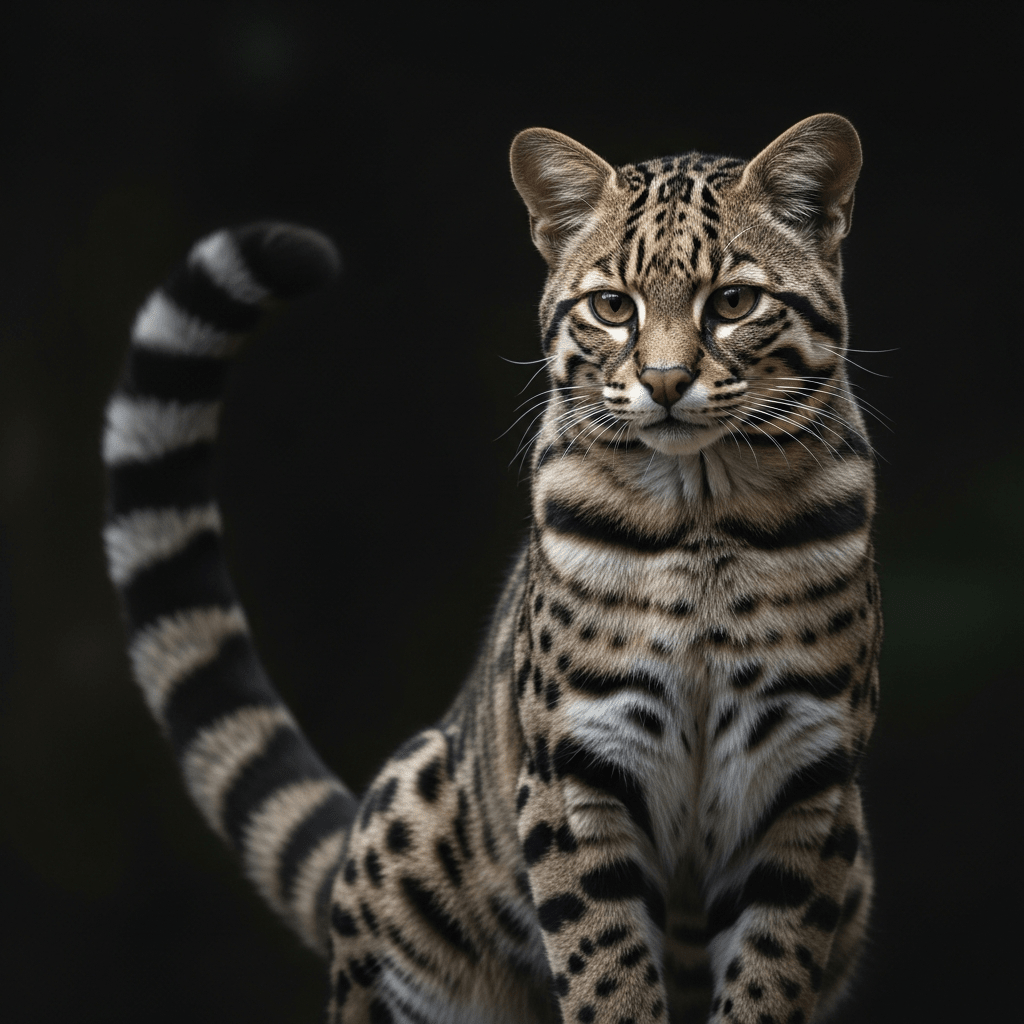
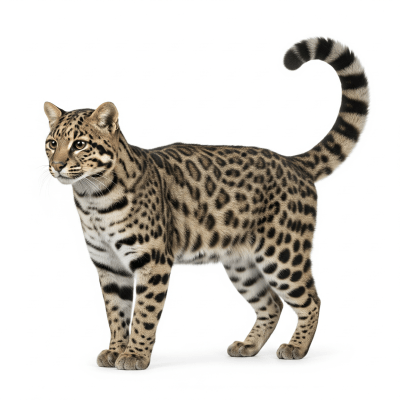
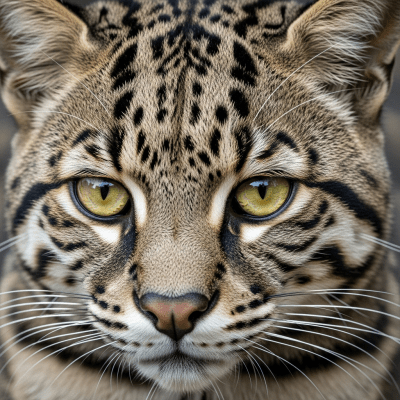
The Andean Cat is medium-sized, measuring 57–64 cm in body length with a long, bushy tail of 41–48 cm. Its dense, silvery-gray fur is adorned with bold dark brown or black spots and stripes, including distinctive dark rings encircling the tail and limbs. The face features striking black lines running from the eyes to the jaw, and its rounded gray ears blend seamlessly with the coat. Broad paws and thick fur provide insulation against the cold, arid climate of its high-altitude habitat, giving the Andean Cat a plush, robust appearance perfectly suited for mountain life.
Primarily nocturnal and crepuscular, the Andean Cat leads a solitary and secretive existence, rarely seen by humans. It is a specialized predator, feeding mainly on mountain viscachas, small rodents, and birds. Its elusive behavior and low population density make it a flagship species for conservation in the Andes, symbolizing the fragility of high-altitude ecosystems. The Andean Cat’s interactions with humans are limited, though it occasionally faces threats from local hunting and habitat encroachment.
Bring this kind into your world illustrated posters, mugs, and shirts.
Archival print, museum-grade paper
Buy Poster
Stoneware mug, dishwasher safe
Buy Mug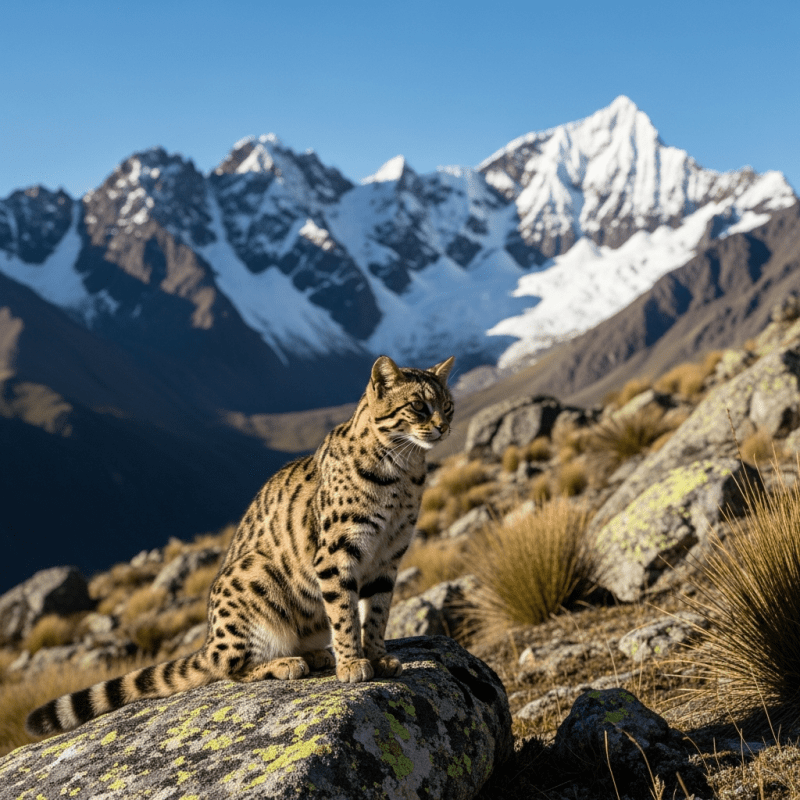
Soft cotton tee, unisex sizes
Buy ShirtRevered as a symbol of the Andean wilderness, the Andean Cat holds cultural resonance in local folklore and indigenous languages, known as "gato andino" in Spanish and "titi" in Quechua and Aymara. Its mysterious presence and rarity have made it an emblem for mountain conservation efforts, inspiring regional alliances and community engagement. While not widely depicted in global art or myth, it is increasingly recognized in scientific and conservation circles as a flagship species for the fragile Andean ecosystem.
The Andean Cat’s range spans the high Andes of Argentina, Bolivia, Chile, and Peru, primarily above 3,000 meters in elevation. Historically and currently, its distribution remains patchy and fragmented, closely tied to arid, rocky habitats. The species’ presence is confirmed only in isolated pockets, reflecting both its elusive nature and the challenging terrain it inhabits.
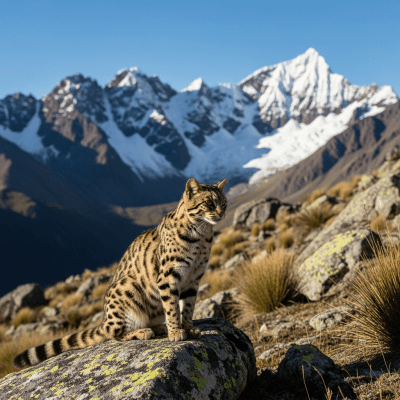
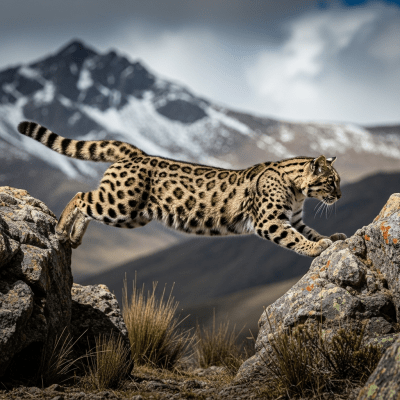
This feline thrives in arid, rocky environments at elevations between 3,000 and 4,800 meters, where temperatures are low and vegetation is sparse. Its ecological role centers on controlling populations of mountain viscachas and small rodents, making it a key predator in the fragile Andean ecosystem. The Andean Cat’s solitary lifestyle and specialized adaptations allow it to survive in some of the most inhospitable landscapes in South America, with minimal competition from other carnivores.
The Andean Cat is listed as Endangered on the IUCN Red List (2020), with fewer than 1,400 mature individuals estimated worldwide and a declining population trend. This status highlights the urgent need for conservation measures, including habitat protection, research, and community involvement, to prevent further decline and ensure the species’ survival.
Major threats to the Andean Cat include habitat loss due to mining and infrastructure development, depletion of prey species, hunting, and persecution by local communities. Human disturbance and fragmentation of its mountainous habitat further exacerbate its vulnerability. Conservation efforts must address these challenges through habitat restoration, legal protection, and education to mitigate ongoing risks.
The Andean Cat exhibits remarkable adaptations for life in cold, high-altitude environments. Its long, dense fur provides insulation against harsh temperatures, while broad paws help navigate rocky terrain and snow. The species’ elusive, solitary behavior minimizes competition and predation, and its specialized diet reflects the scarcity of prey in its habitat. These traits collectively enable the Andean Cat to thrive in the extreme conditions of the Andes.
Reproductive biology in the Andean Cat is not well documented, but available data suggest a low reproductive rate, with litters of 1–2 kittens likely born in spring or early summer. Parental care details remain unclear due to the species’ rarity and secretive habits, though kittens are presumed to be raised in sheltered rocky crevices. The small litter size and infrequent breeding contribute to the species’ vulnerability and slow population recovery.
No recognized breeds or subspecies of the Andean Cat exist. While historical taxonomic ambiguity placed the species in the genus Oreailurus, current consensus recognizes only Leopardus jacobita as valid, with no significant regional morphological variation documented.
Genetic studies confirm the Andean Cat’s placement within the Leopardus lineage, closely related to the Pampas Cat and Ocelot. Available mitochondrial DNA barcodes and partial nuclear genome sequences reveal low genetic diversity, consistent with its small, fragmented population. Limited gene flow among regional populations underscores the species’ isolation and highlights the importance of genetic monitoring for conservation planning.