Felis Lybica
The African Wildcat (Felis lybica) is a small, highly adaptable feline native to Africa and the Middle East, renowned as the principal ancestor of the domestic cat.
The African Wildcat (Felis lybica) is a small, highly adaptable feline native to Africa and the Middle East, renowned as the principal ancestor of the domestic cat.
First described by Georg Forster in 1780, the African Wildcat originated in North Africa and has played a pivotal role in human history as the species from which domestic cats descended. Domestication is believed to have begun in the Near East and Egypt around 9,000–10,000 years ago, coinciding with the rise of agriculture and settled societies. The original type specimen was collected in North Africa, though the precise locality remains debated among scholars. Over time, taxonomic revisions have clarified its distinction from the European Wildcat, solidifying its status as a unique species within the genus Felis.
Belonging to the family Felidae and subfamily Felinae, the African Wildcat is classified under the genus Felis, species lybica. It is closely related to the European Wildcat (Felis silvestris) and the domestic cat (Felis catus), forming a key branch of the small cat lineage. Historically, it was sometimes grouped as a subspecies of the European Wildcat, but genetic and morphological evidence now support its recognition as a distinct species.
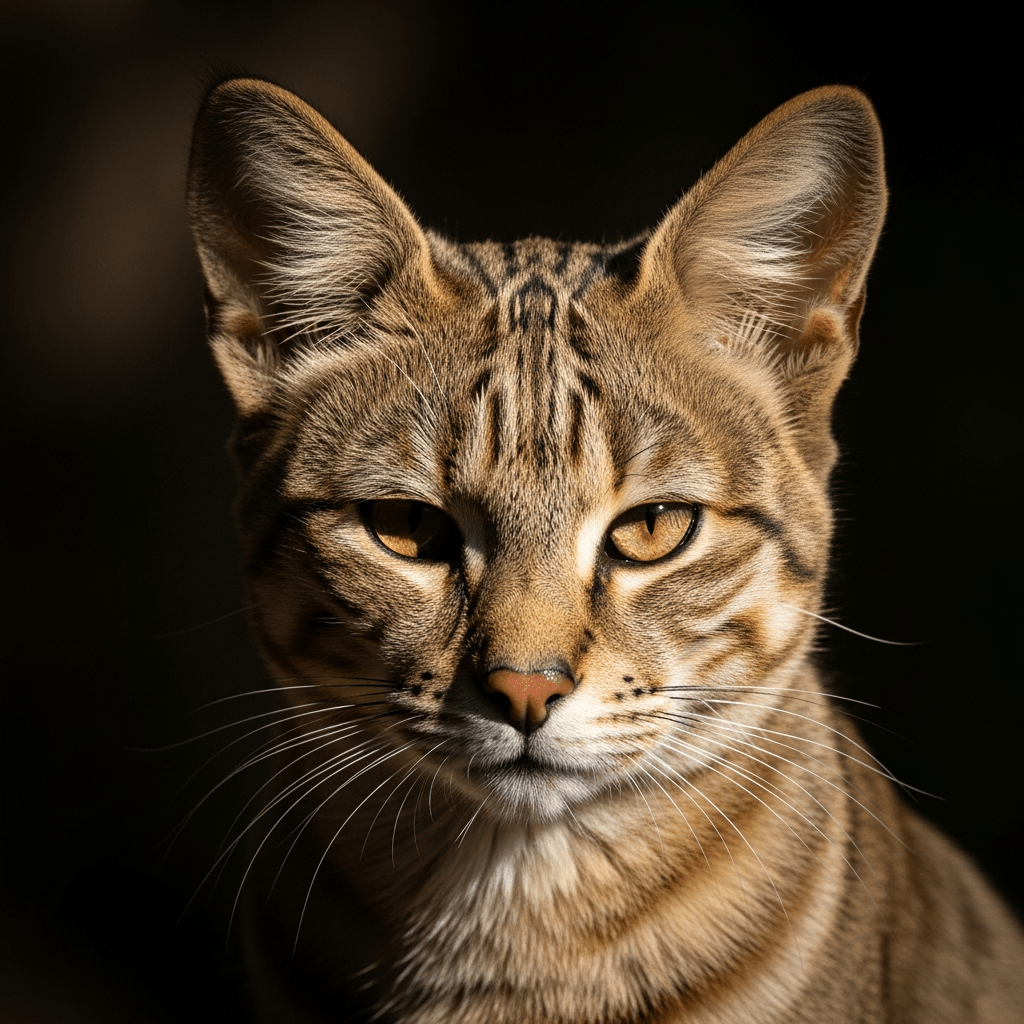
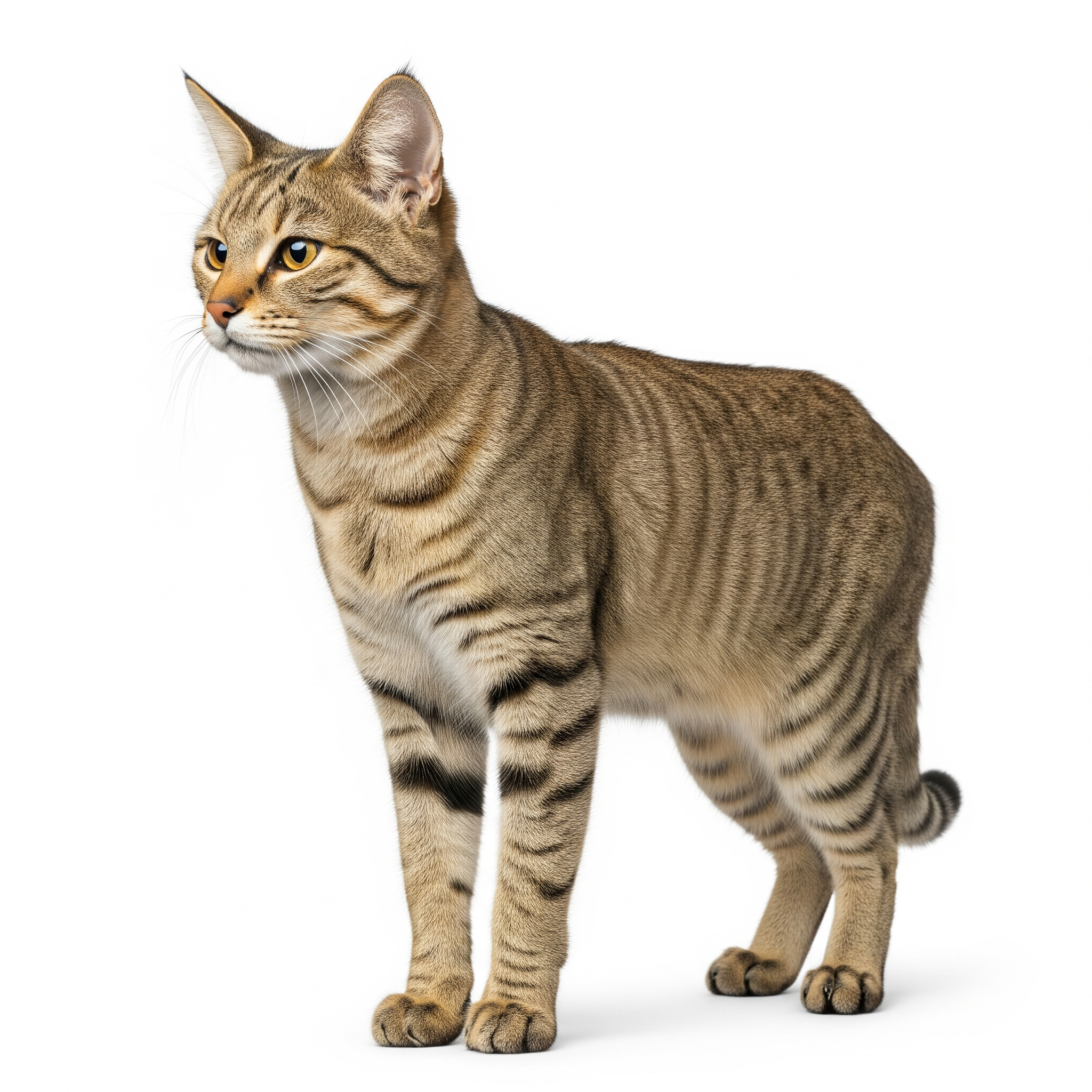
The African Wildcat is a medium-small, slender feline, typically weighing 3–6 kg and measuring 45–75 cm in body length. Its coat is pale gray to tawny, marked by faint vertical stripes on the body and limbs, and a bushy, ringed tail ending in a black tip. The underparts are lighter, and the face features reddish or orange highlights behind the ears and on the nose. Desert populations tend to be paler, blending seamlessly into arid landscapes. The overall impression is one of subtle elegance and keen adaptation to its environment.
Solitary and predominantly nocturnal, African Wildcats are territorial hunters, marking their boundaries with scent. They are opportunistic feeders, preying on small mammals, birds, reptiles, and insects. In undisturbed habitats, they may be active during the day. Their acute senses and stealth allow them to thrive in diverse environments, and their ecological flexibility has enabled them to persist alongside human settlements, sometimes venturing into agricultural areas in search of food.
Bring this kind into your world illustrated posters, mugs, and shirts.
Archival print, museum-grade paper
Buy Poster
Stoneware mug, dishwasher safe
Buy Mug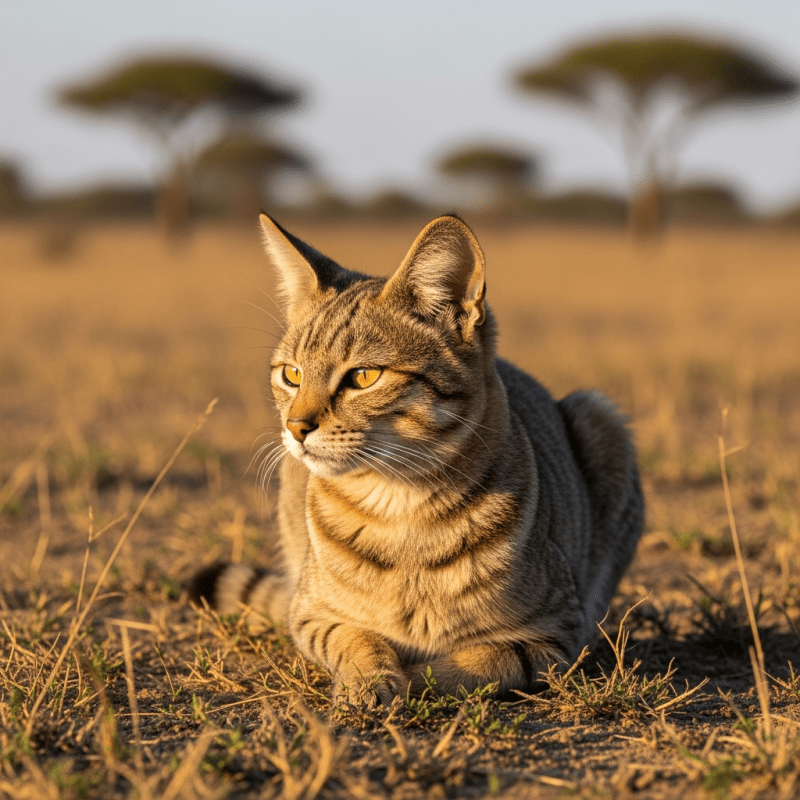
Soft cotton tee, unisex sizes
Buy ShirtThe African Wildcat holds deep cultural resonance as the direct ancestor of the domestic cat, a companion and symbol in countless human societies. Its domestication in ancient Egypt and the Near East transformed it from a wild predator into a revered household animal, immortalized in art, mythology, and religion. The legacy of the African Wildcat persists in the traits and behaviors of modern domestic cats, bridging the wild and the familiar in human culture.
Widely distributed across most of Africa, the African Wildcat also extends into the Arabian Peninsula, the Middle East, and southwestern Asia. It is absent from dense rainforests and true deserts, favoring open and semi-arid environments. This broad range reflects its adaptability and historical spread, including regions where domestication first occurred.
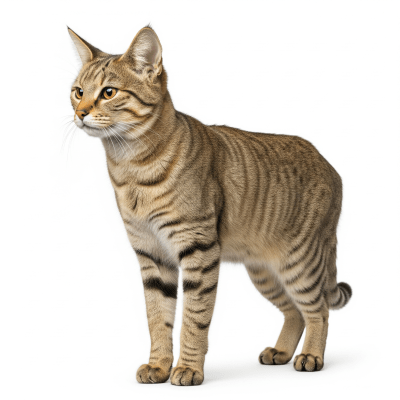
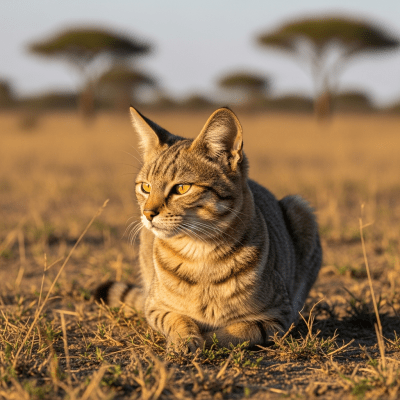

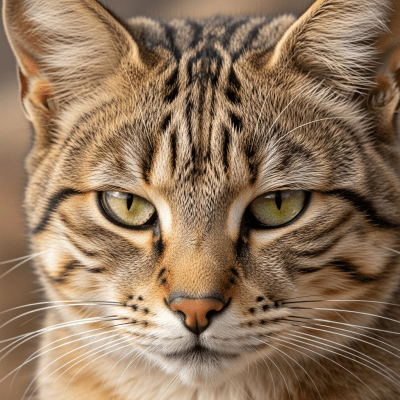
African Wildcats occupy a variety of habitats, including savanna, grassland, shrubland, semi-desert, and agricultural areas. They avoid dense forests and extreme deserts. As solitary hunters, they play a vital ecological role in controlling populations of small mammals and other prey. Their adaptability allows them to persist in both wild and human-influenced landscapes, but they are sensitive to habitat fragmentation and changes in land use.
According to the IUCN Red List, the African Wildcat is classified as Least Concern, reflecting its wide distribution and presumed large population. However, this status masks regional declines, particularly where hybridization with domestic cats and habitat loss are prevalent. Conservation efforts focus on maintaining genetic integrity and protecting suitable habitats.
The greatest threat to the African Wildcat is genetic introgression from domestic cats, which erodes the purity of wild populations. Additional challenges include habitat loss due to agriculture and urban expansion, direct persecution, and diseases transmitted by domestic and feral cats. These pressures contribute to declining numbers in some regions and complicate conservation strategies.
African Wildcats possess acute hearing and vision, enabling them to hunt efficiently in low-light conditions. Their high ecological adaptability allows them to thrive in diverse environments, from arid savannas to cultivated fields. Subtle coat variations, such as paler fur in desert populations, provide camouflage and protection from the elements.
Breeding occurs year-round, with peaks in wetter seasons. After a gestation of 56–68 days, females give birth to litters of 1–5 kittens. Kittens are weaned at 6–8 weeks and reach sexual maturity at 10–12 months. Maternal care is intensive during the early weeks, ensuring survival in challenging environments. The lifecycle is shaped by environmental conditions, with flexibility in breeding timing and litter size.
Other regional forms exist, but taxonomic boundaries remain debated. The species is sometimes confused with the European Wildcat, though genetic studies confirm its distinct status.
Genetic research confirms the African Wildcat as the principal ancestor of the domestic cat, with mitochondrial DNA and nuclear markers showing close affinity. DNA barcodes such as cytochrome b and 16S rRNA are available, and whole-genome sequencing has been performed for select individuals. Hybridization with domestic cats is widespread, leading to genetic mixing in many populations. Phylogenetic analyses place Felis lybica firmly within the Felis lineage, closely related to both Felis silvestris and Felis catus.