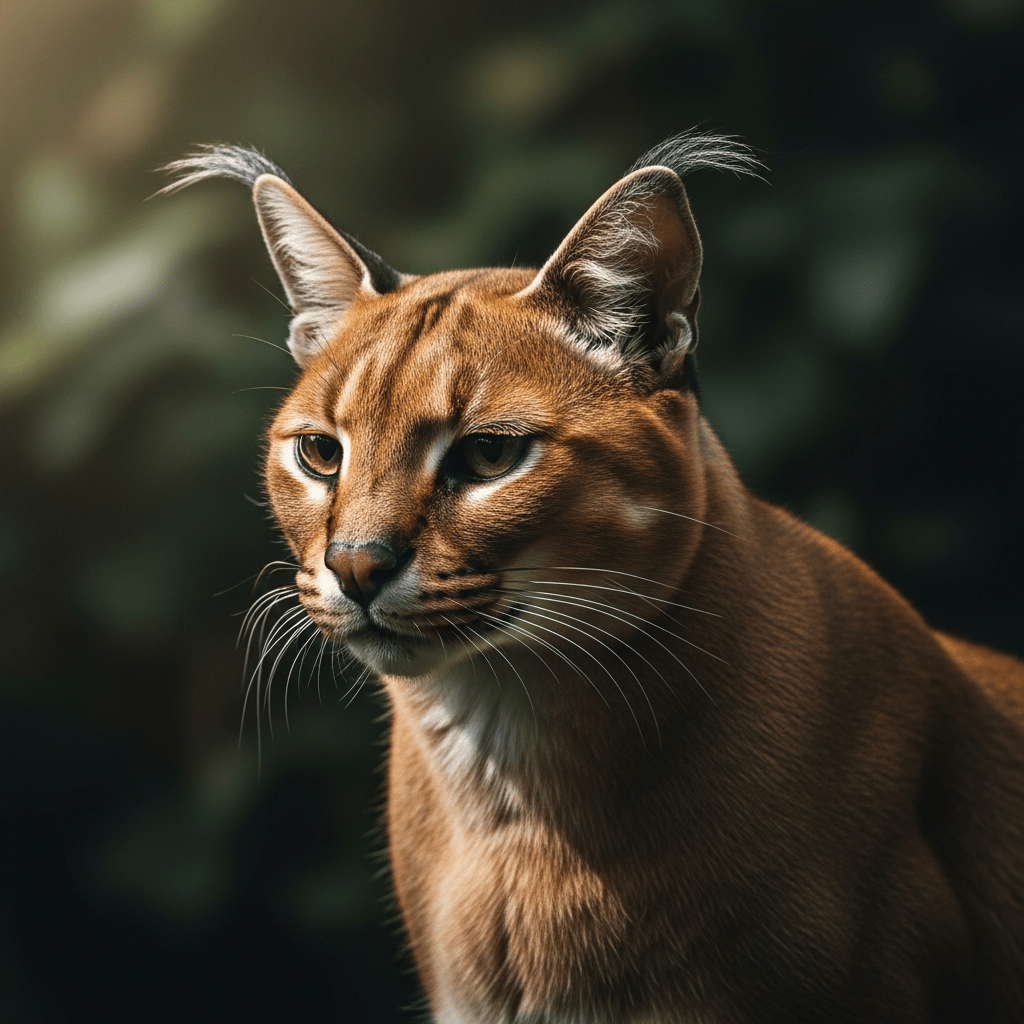
Caracal Aurata
The African Golden Cat (Caracal aurata) is a rare, medium-sized wild feline native to the rainforests of Central and West Africa, renowned for its variable coat and elusive nature.
The African Golden Cat (Caracal aurata) is a rare, medium-sized wild feline native to the rainforests of Central and West Africa, renowned for its variable coat and elusive nature.
First described in 1827 by Dutch zoologist Coenraad Jacob Temminck, the African Golden Cat’s origins are deeply rooted in the dense tropical forests of equatorial Africa, with early specimens collected from Gabon and Cameroon. Its evolutionary lineage places it within the Caracal group, closely related to the Caracal and Serval, and it has remained genetically distinct without documented hybridization. The species’ discovery and subsequent taxonomic revisions reflect ongoing advances in genetic and morphological research, solidifying its status as a unique forest predator.
Belonging to the family Felidae, subfamily Felinae, the African Golden Cat is classified under the genus Caracal and species aurata. Its closest relatives are the Caracal (Caracal caracal) and Serval (Leptailurus serval), forming a distinct Caracal lineage within felines. Historically, it has been known by synonyms such as Felis aurata and Profelis aurata, but genetic studies now firmly place it in Caracal. Two subspecies are recognized: Caracal aurata aurata (western populations) and Caracal aurata celidogaster (eastern populations), though genetic differentiation remains unresolved.
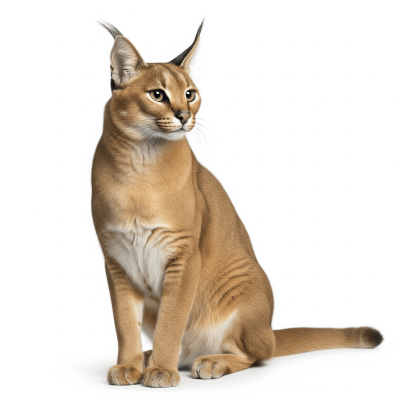
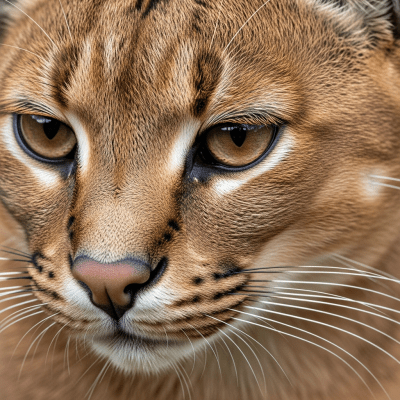
The African Golden Cat is robust and medium-sized, with adults weighing 7–16 kg and measuring up to 101 cm in body length, plus a tail of up to 46 cm. Its short, dense fur displays remarkable color variation—ranging from reddish-brown and golden to grayish or even black—often adorned with faint spots or stripes. The cat’s rounded head, short muzzle, and small, rounded ears marked with white on the back give it a distinctive profile. Sexual dimorphism is present, with males generally larger than females. Its cryptic coloration and muscular build are perfectly adapted for stealth and agility in dense forest environments.
Solitary and highly secretive, the African Golden Cat is primarily nocturnal or crepuscular, tailoring its activity to habitat conditions and prey availability. Though an adept climber, it hunts mainly on the ground, preying on rodents, birds, small primates, and occasionally duikers. Its elusive behavior and low population density make direct observation rare, and it plays a vital role in controlling small vertebrate populations within its forest ecosystem. The species avoids human contact and is seldom seen outside protected areas.
Bring this kind into your world illustrated posters, mugs, and shirts.
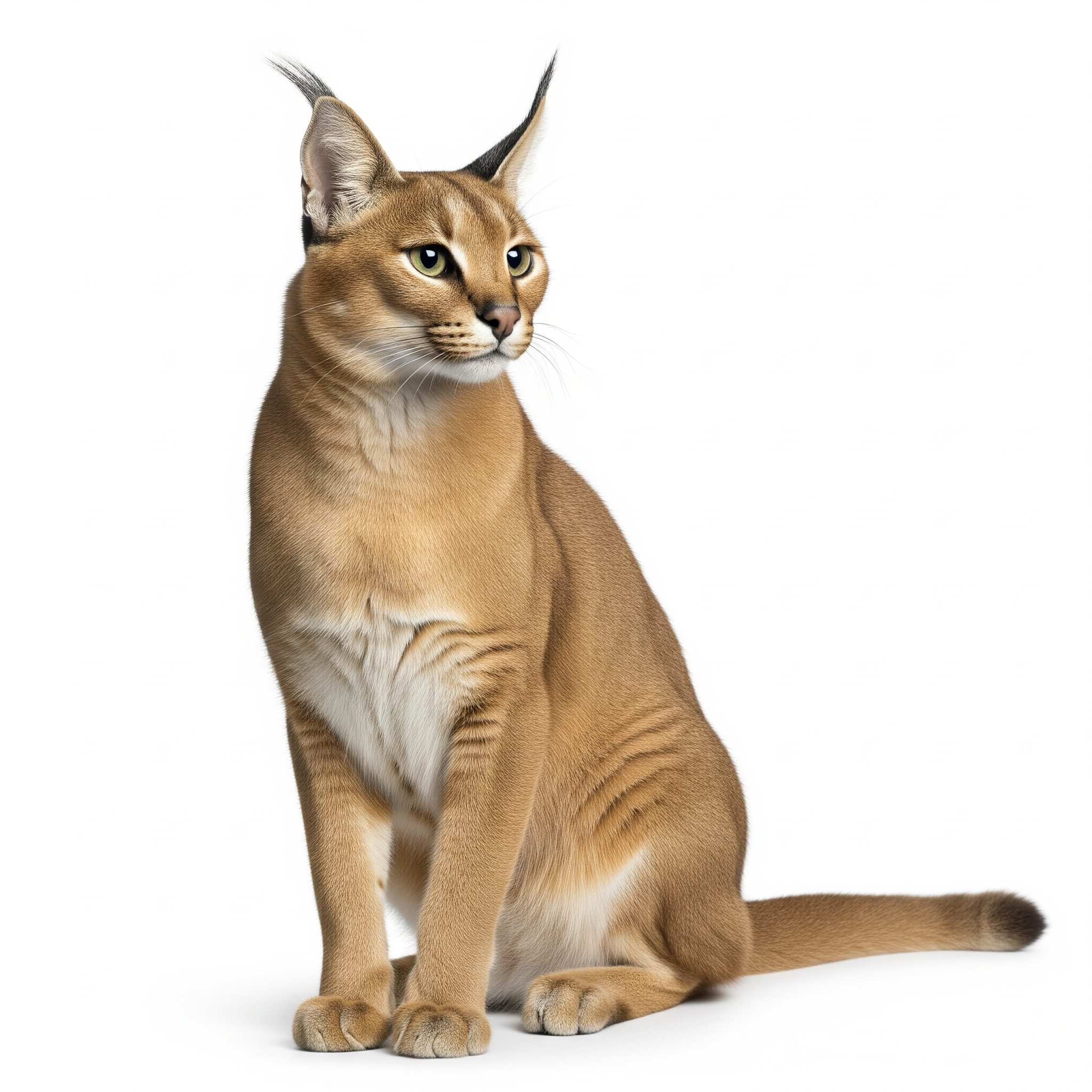
Archival print, museum-grade paper
Buy Poster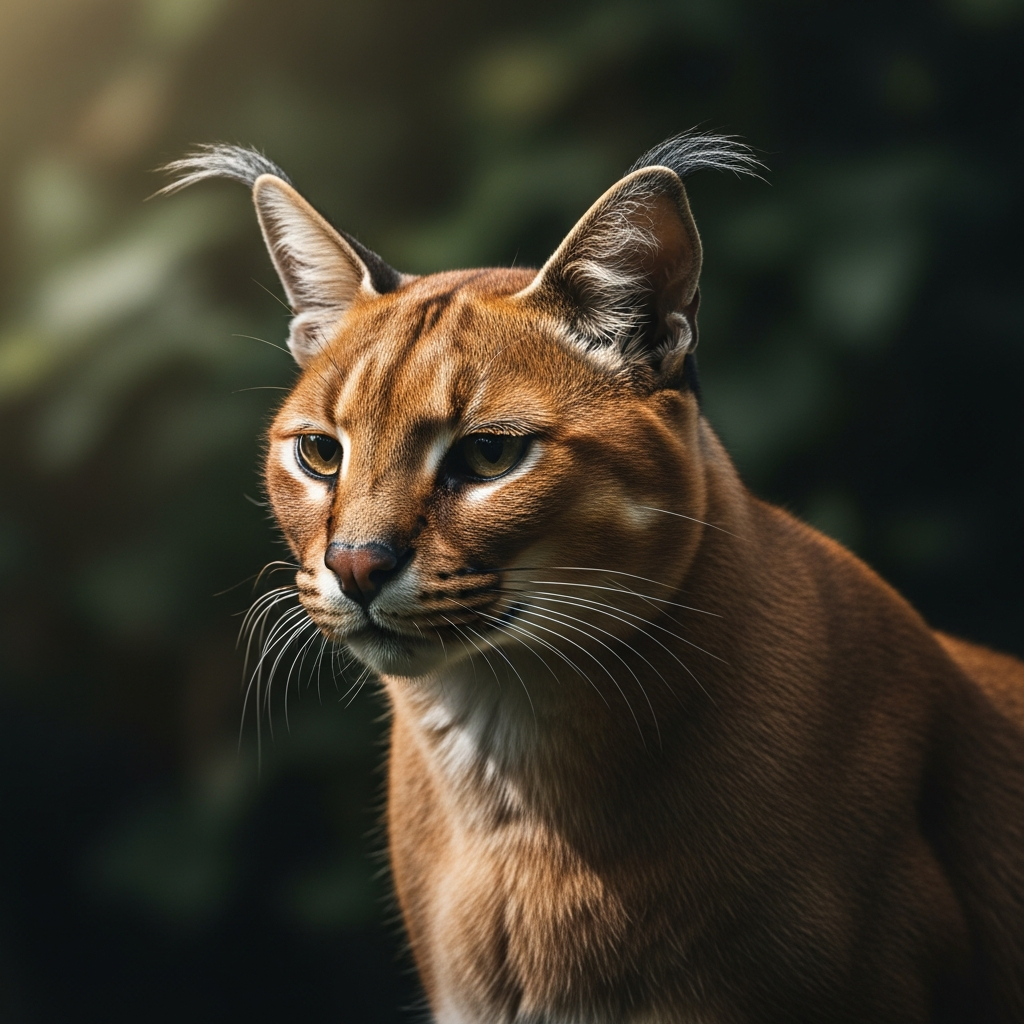
Stoneware mug, dishwasher safe
Buy Mug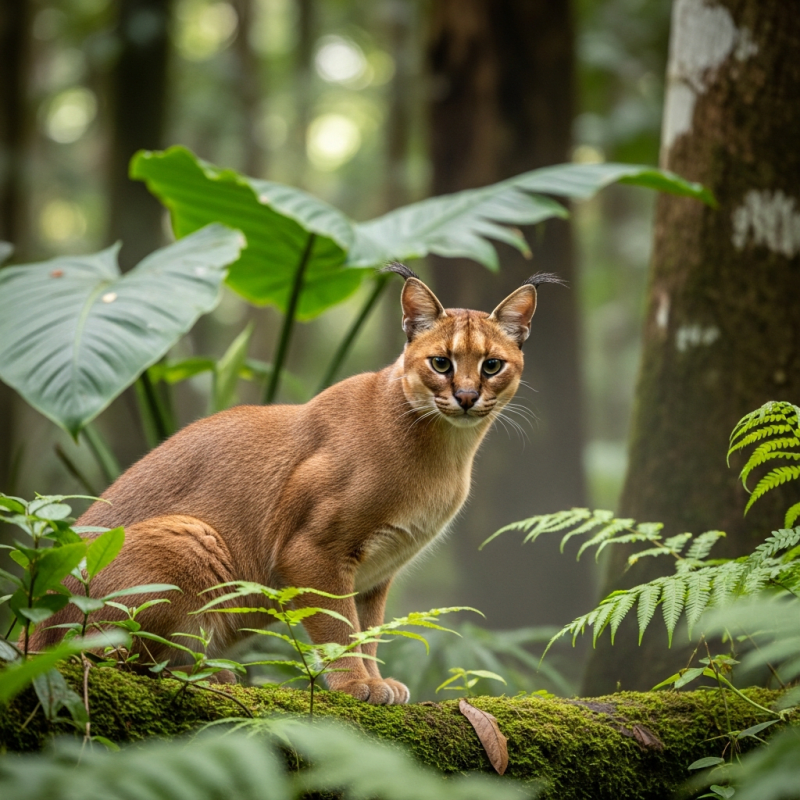
Soft cotton tee, unisex sizes
Buy ShirtWhile the African Golden Cat is not widely represented in art or folklore compared to other African felines, its striking appearance and rarity have inspired local names and occasional references in regional stories. In French-speaking regions, it is known as Chat doré d’Afrique. Its elusive nature has made it a symbol of mystery and the hidden richness of Africa’s rainforests among naturalists and conservationists.
The African Golden Cat’s range spans the rainforests of Central and West Africa, from Senegal and Sierra Leone in the west through Liberia, Ghana, Nigeria, Cameroon, Gabon, Republic of Congo, Democratic Republic of Congo, Uganda, and into western Kenya. Historically and currently, it is most closely associated with moist, dense tropical forests, though it can also be found in secondary and montane forests up to 3,000 meters elevation.
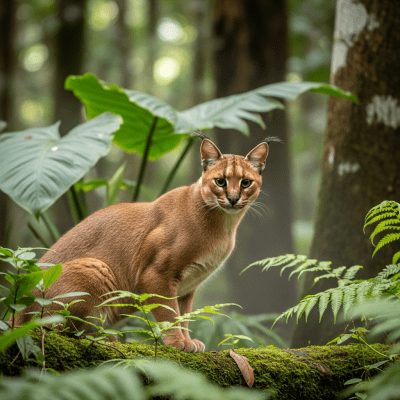
This species prefers moist, dense tropical forests, thriving in undisturbed rainforest but also occupying secondary growth, bamboo, and montane forests. It plays a key ecological role as a mid-sized predator, helping regulate populations of small mammals, birds, and other vertebrates. Its cryptic habits and adaptability to various forest types make it a vital, though rarely seen, component of African forest ecosystems.
The African Golden Cat is listed as Vulnerable on the IUCN Red List, indicating a high risk of extinction in the wild. Its population is believed to be decreasing, driven by habitat loss, deforestation, and hunting. Legal protections exist in several countries, and the species is included in Appendix II of CITES, but enforcement and effective conservation remain inconsistent.
Major threats to the African Golden Cat include widespread habitat loss and fragmentation due to deforestation and agricultural expansion, bushmeat hunting, snaring, and direct persecution. The species’ dependence on intact forest makes it especially vulnerable to human encroachment and environmental change, and its secretive nature complicates conservation efforts.
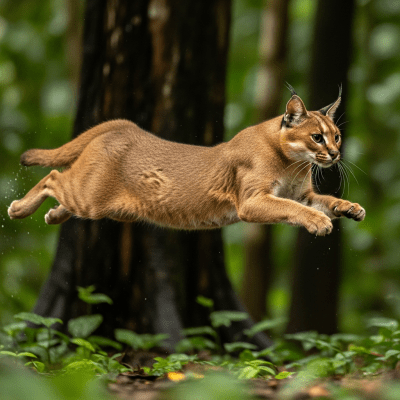
To thrive in dense rainforest, the African Golden Cat has evolved cryptic coloration for camouflage, powerful limbs for climbing and pouncing, and acute senses for detecting prey in low-light conditions. Its solitary, elusive behavior helps it avoid both predators and human contact, while its flexible hunting strategies enable survival in varied forest habitats.
Reproductive data are limited, but the African Golden Cat is believed to have a gestation period of about 75 days, producing litters of one to two kittens. Births occur in dense vegetation or hollow trees, with cubs remaining hidden for several weeks. Lifespan in the wild is estimated at 12–15 years, though much remains unknown about its breeding behavior and parental care.
Taxonomic ambiguity persists, and further genetic research may clarify subspecies boundaries.
Genetic studies confirm the African Golden Cat’s placement within the Caracal lineage, closely related to the Caracal and Serval. Mitochondrial DNA and partial nuclear genome data support its status as a distinct species, with divergence from its closest relatives estimated at 2–3 million years ago. While complete genome sequencing is pending, ongoing research aims to clarify population genetics and evolutionary history, potentially resolving subspecies ambiguity.