
Zero-Tail-Swing Hydraulic Excavator
A zero-tail-swing hydraulic excavator is a compact, crawler-mounted machine engineered so its rear counterweight remains within the track width during rotation, enabling safe operation in confined spaces.
A zero-tail-swing hydraulic excavator is a compact, crawler-mounted machine engineered so its rear counterweight remains within the track width during rotation, enabling safe operation in confined spaces.
The zero-tail-swing concept originated in the early 1990s in Japan and Europe, pioneered by manufacturers like Yanmar with its ViO series. It emerged to meet growing demand for excavators capable of working safely in tight urban and utility environments. Since then, global OEMs have refined the design, enhancing ergonomics, emissions, and hydraulic efficiency.
This excavator belongs to the hydraulic class within the excavators family, characterized by an articulated boom and arm actuated by hydraulic cylinders. It is typically crawler-mounted and falls within the mini to midi size classes, optimized for construction, utility, and landscaping applications.
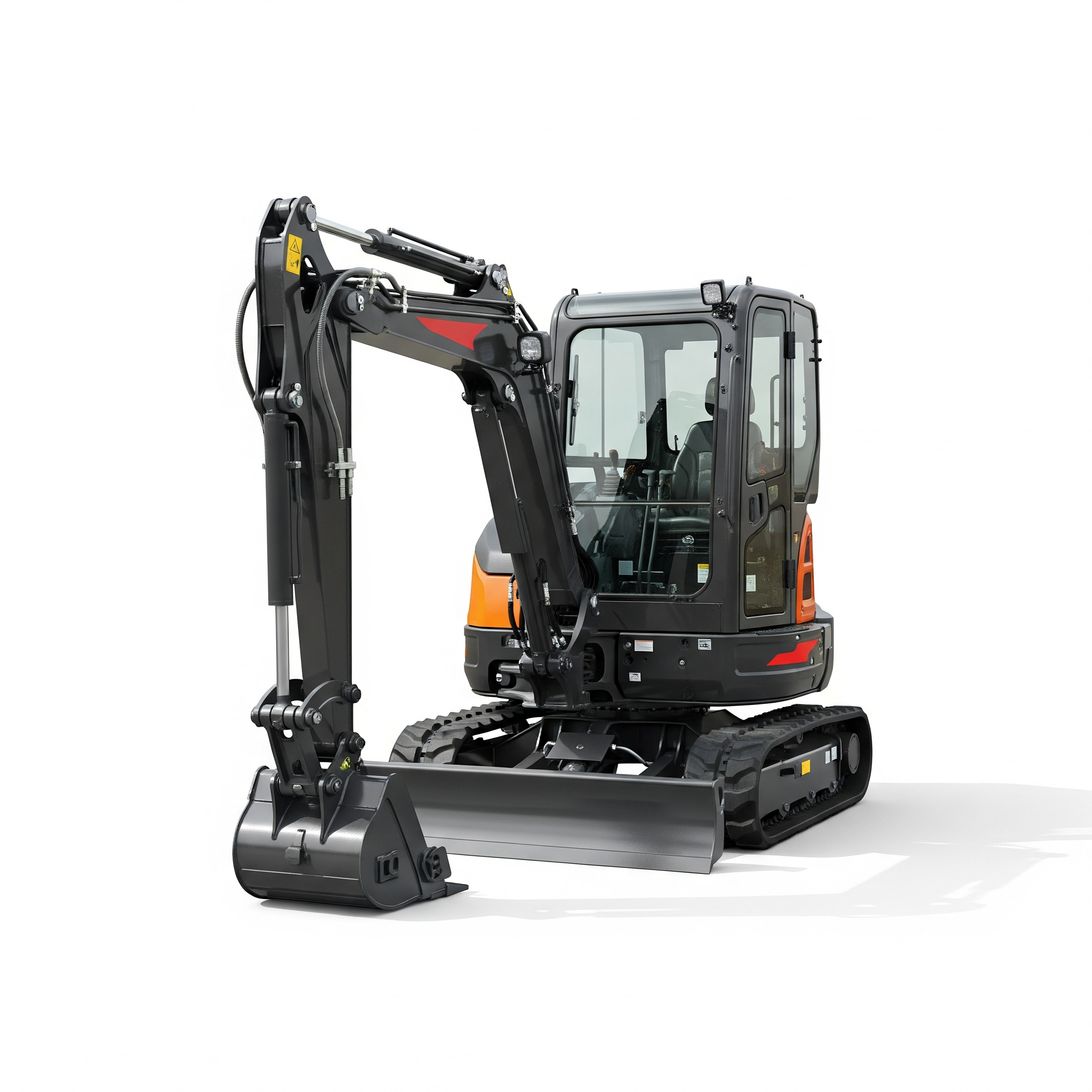
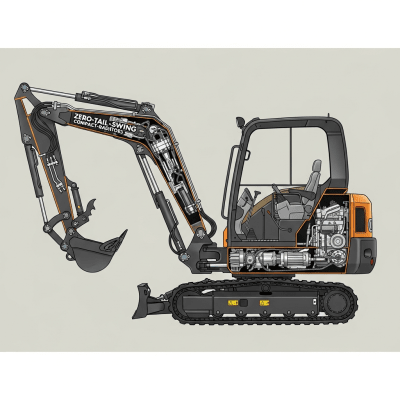
Visually, zero-tail-swing excavators feature a compact superstructure that does not extend beyond the width of their tracks when rotating. They have a tracked undercarriage with steel or rubber tracks, a hydraulic boom and arm, and a rear counterweight designed to stay within the track footprint or slightly protrude by less than 10 centimeters.
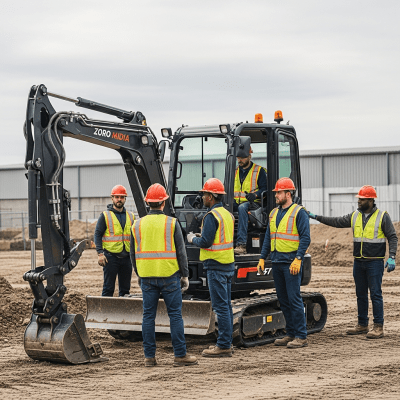
These excavators excel in earthmoving tasks within confined or urban sites, such as utility trenching, landscaping, and roadwork. Their minimal tail swing allows operators to work safely close to walls, fences, and traffic without risk of collision, making them invaluable for contractors and municipalities in restricted environments.
Bring this kind into your world illustrated posters, mugs, and shirts.
Archival print, museum-grade paper
Buy Poster
Stoneware mug, dishwasher safe
Buy Mug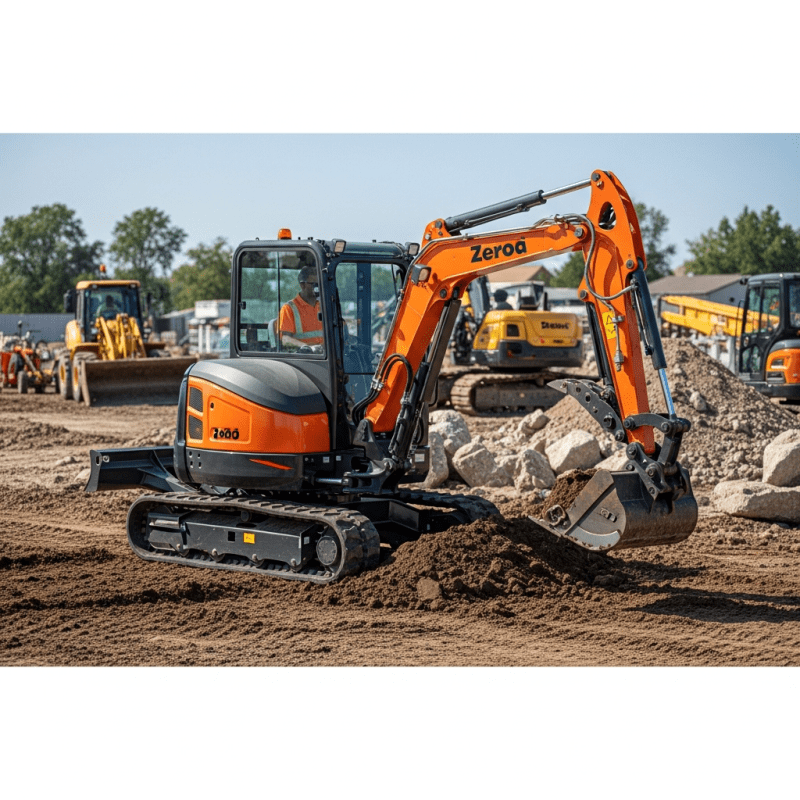
Soft cotton tee, unisex sizes
Buy ShirtWhile primarily functional, zero-tail-swing excavators symbolize modern urban construction's emphasis on safety and efficiency. Their design reflects a cultural shift towards machines that adapt to increasingly dense and regulated workspaces, embodying innovation in compact heavy equipment.
⚙️ Zero-tail-swing excavators utilize an articulated boom and arm system powered by hydraulic cylinders. The hydraulic system often employs closed-center or load-sensing variable displacement pumps, delivering precise and efficient control. This mechanism enables smooth digging, lifting, and material handling while maintaining compactness through optimized counterweight placement.

🚜 Mobility is provided by a crawler undercarriage with steel or rubber tracks, offering excellent traction and stability on uneven terrain. This tracked mobility supports safe operation in confined spaces and rough ground, while some models offer interchangeable undercarriages for adaptability.
📇 Zero-tail-swing excavators typically weigh between 1,500 and 8,000 kilograms, placing them in the mini to midi size classes. Their buckets range from 0.03 to 0.3 cubic meters in capacity, with maximum reaches spanning 3 to 6 meters. Breakout forces vary from 10 to 45 kilonewtons, suitable for light to moderate earthmoving tasks.
🧑🏽🔧🟢 Safety features include ROPS/FOPS-certified cabs or canopies, compliance with ISO 12117-2 standards, rear-view cameras, and proximity sensors to enhance operator awareness. Emissions are controlled to meet EU Stage V or equivalent Tier 4 Final regulations, reflecting modern environmental standards.
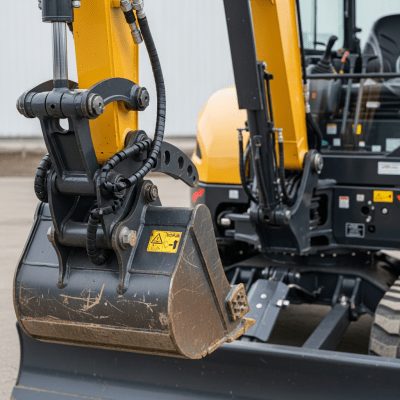
🔧 Common attachments expand versatility and include standard digging buckets, hydraulic breakers for demolition, augers for drilling, grapples and thumbs for material handling, and tiltrotators that allow bucket rotation for precise positioning. Quick-coupler systems facilitate rapid attachment changes on site.
🛠️️⏳ Maintenance routines follow manufacturer schedules focusing on hydraulic system checks, engine servicing, and track tension adjustments. These excavators are designed for durability with typical service lives ranging from 5,000 to 10,000 operating hours, supported by robust components and accessible service points.