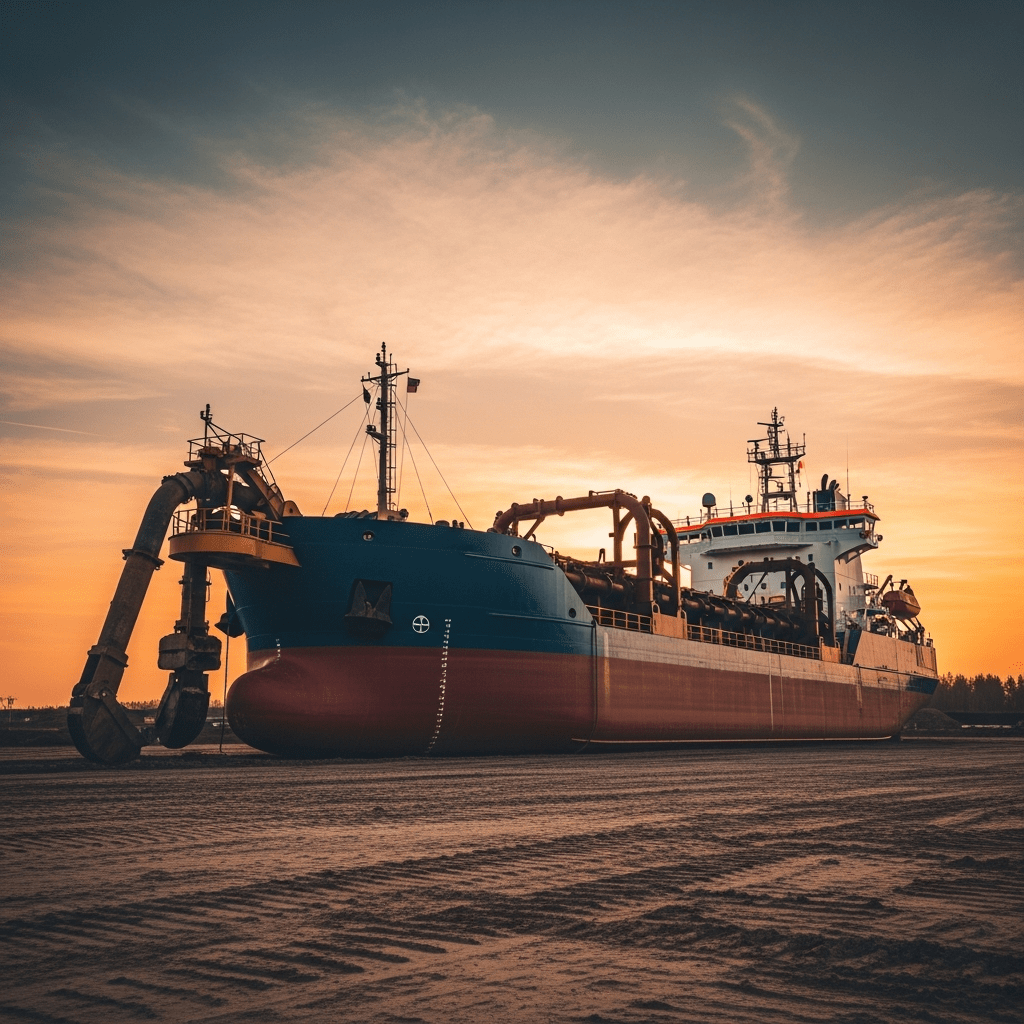
Trailing Suction Hopper Dredger
A Trailing Suction Hopper Dredger (TSHD) is a large, self-propelled vessel designed to excavate underwater sediments by suction and transport them in an onboard hopper for dredging and land reclamation projects.
A Trailing Suction Hopper Dredger (TSHD) is a large, self-propelled vessel designed to excavate underwater sediments by suction and transport them in an onboard hopper for dredging and land reclamation projects.
The concept of the Trailing Suction Hopper Dredger originated in the Netherlands during the late 19th and early 20th centuries, evolving from earlier bucket and stationary suction dredgers. Major advancements in suction technology and vessel design throughout the 20th century established the modern TSHD, with leading manufacturers such as Royal IHC, Damen Shipyards, and Jan De Nul pioneering its development.
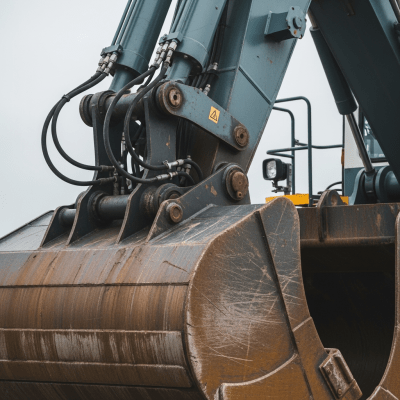
TSHDs belong to the hydraulic excavation family but differ from typical land-based excavators by operating as marine vessels. They are classified as large-scale dredging excavators, specialized for underwater sediment removal using hydraulic suction rather than articulated booms or mechanical digging arms.
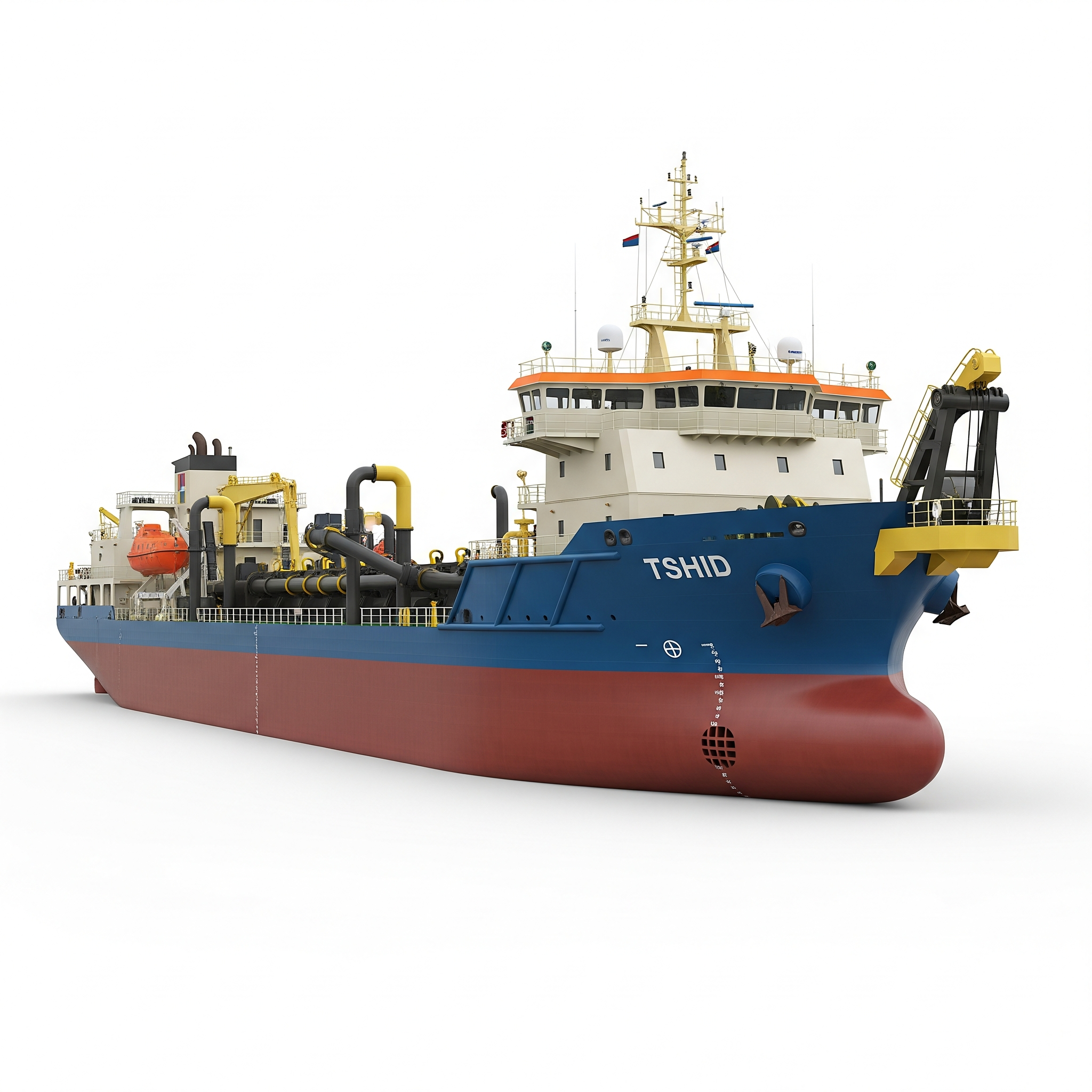
Visually, a Trailing Suction Hopper Dredger resembles a sizable ship equipped with one or more trailing suction pipes ending in dragheads that trail along the seabed. The vessel features a large central hopper to store dredged material, with discharge systems such as rainbow nozzles or pipelines. Unlike land excavators, it lacks a boom or arm but is characterized by its marine hull and dredging apparatus.
TSHDs operate by moving slowly over dredging sites while suction pipes draw sediment from the seabed into the onboard hopper. This dual function of excavation and transport allows continuous dredging over large areas. They are primarily used for capital and maintenance dredging in ports, waterways, land reclamation, beach nourishment, and offshore aggregate mining, especially where large volumes of material must be moved efficiently over distances.
Bring this kind into your world illustrated posters, mugs, and shirts.
Archival print, museum-grade paper
Buy Poster
Stoneware mug, dishwasher safe
Buy Mug
Soft cotton tee, unisex sizes
Buy ShirtWhile Trailing Suction Hopper Dredgers do not hold a prominent place in popular culture or mythology, they are vital to modern maritime infrastructure and coastal engineering. Their presence symbolizes human ingenuity in reshaping coastlines and maintaining navigable waterways, underpinning global trade and urban expansion in port cities.
⚙️ The primary excavation mechanism of a Trailing Suction Hopper Dredger involves hydraulic suction through one or more trailing suction pipes equipped with dragheads. As the vessel moves forward, the dragheads rest on the seabed, and powerful pumps create suction that lifts sediment-water mixtures into the hopper. The dredge pumps maintain continuous flow, allowing simultaneous excavation and transport. Unlike articulated boom excavators, TSHDs rely on hydraulic fluid dynamics and submerged suction technology rather than mechanical digging forces.
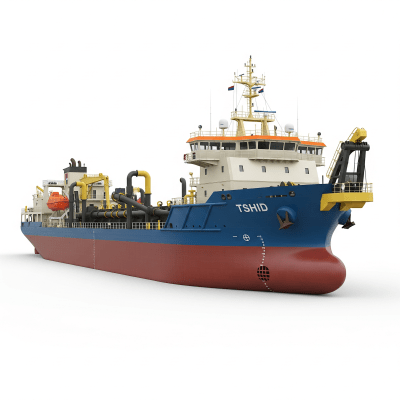


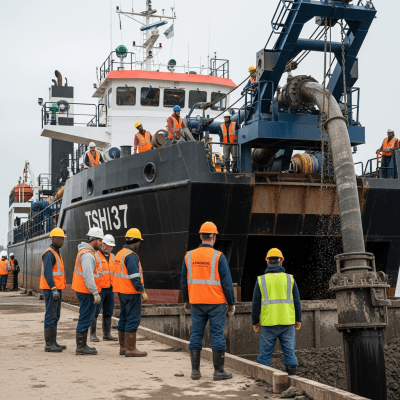
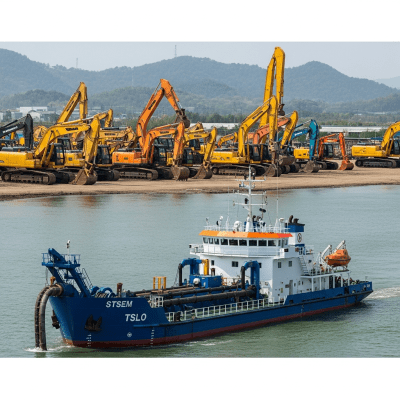
🚨 Mobility for TSHDs is marine-based and self-propelled, distinct from land excavators. These vessels navigate waterways under their own power, using diesel engines for propulsion and dredging operations. Their mobility enables them to cover extensive dredging areas without repositioning equipment, a key advantage over stationary or land-based machines.
📇 Trailing Suction Hopper Dredgers are classified as large excavators, with operating weights ranging from 1,000,000 to 40,000,000 kilograms. Hopper capacities vary widely, from 500 to over 40,000 cubic meters of dredged material. Their rated engine power spans 2,000 to 20,000 kilowatts, supporting both propulsion and dredging pumps. Typical dredging depths range from 20 to 60 meters, with some vessels capable of reaching 100 meters.
🛡️⚙️ TSHDs comply with international maritime safety standards including IMO regulations, SOLAS for ship safety, and MARPOL for pollution prevention. They incorporate advanced navigation and safety systems to ensure operational security. Emissions standards vary, but many modern vessels use diesel engines meeting Tier 3 or IMO III requirements. Ballast water treatment and environmental controls are also common to minimize ecological impact.
🔧 Common attachments for TSHDs include trailing suction pipes with dragheads that contact the seabed to collect sediment, as well as various discharge systems such as rainbow nozzles, pipelines, and bottom doors for material disposal. These components enable flexible dredging and unloading operations tailored to project needs.
🛠️️⏳ Maintenance of TSHDs involves regular inspection and servicing of dredge pumps, suction pipes, hull integrity, and propulsion systems to ensure reliability and safety. The lifecycle of these vessels can span several decades with proper upkeep, supported by scheduled dry-docking and adherence to maritime regulatory inspections. Durability depends on operating conditions, with corrosion protection and mechanical wear management critical for longevity.