kinds of beautiful knowledge

Origin Story

The concept of remote and unmanned excavators emerged in the late 20th century as retrofit solutions for hazardous demolition and contaminated sites. Early development involved collaborations between major manufacturers like Caterpillar, Komatsu, and Hitachi alongside automation technology firms. Commercially viable teleoperated excavators appeared in the 1990s, evolving through advances in wireless communication, sensor integration, and control systems. More recently, purpose-built unmanned platforms and autonomous excavation pilots have expanded their use, especially in mining and large infrastructure projects.

Classification

These excavators belong to the hydraulic class, typically crawler-based for stability and traction. They fit within the standard to large size classes, with operating weights ranging from 1,500 to 80,000 kilograms. Their primary application spans construction, mining, demolition, and utility work, distinguished by their control mode as remote, semi-autonomous, or fully autonomous machines.

Appearance or Form

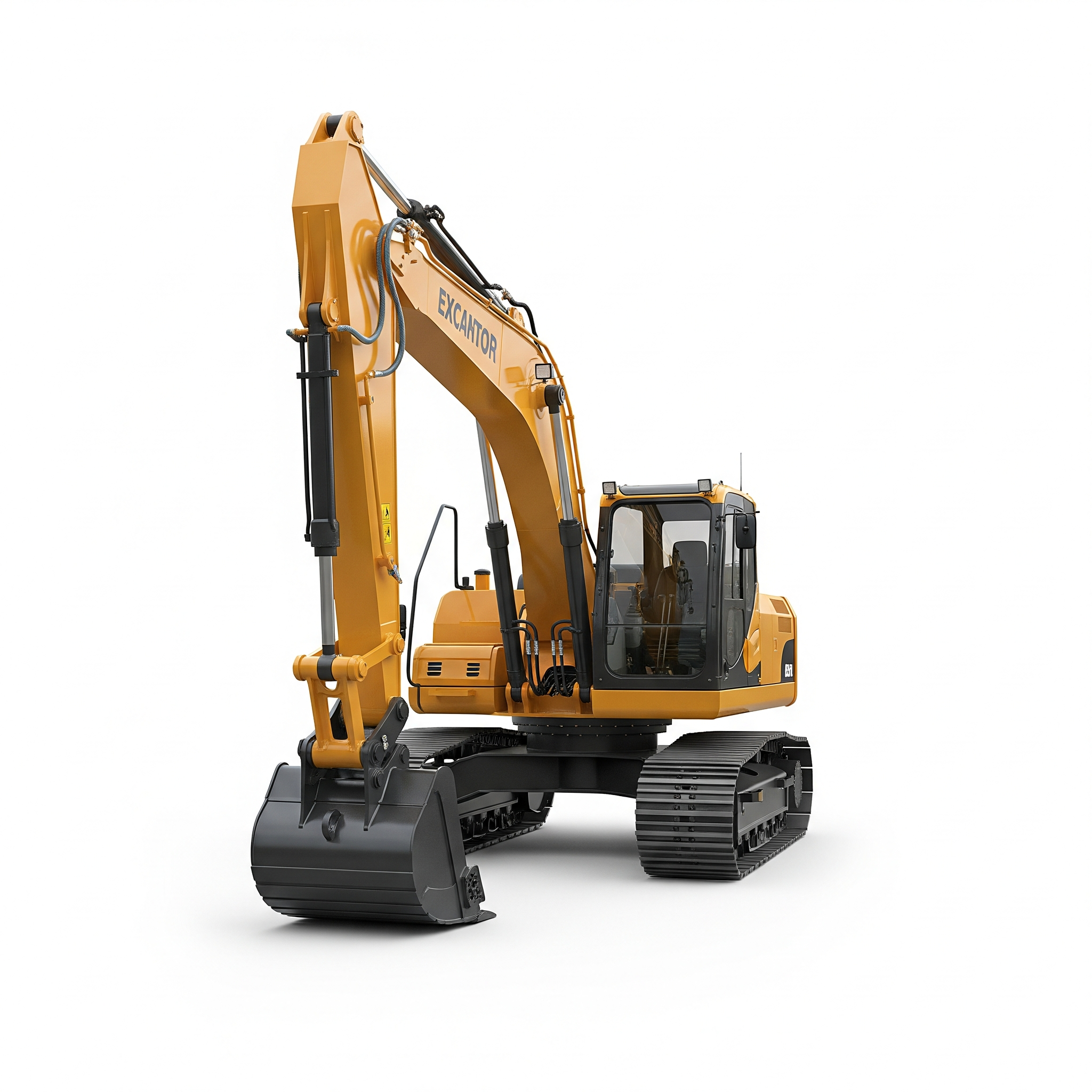
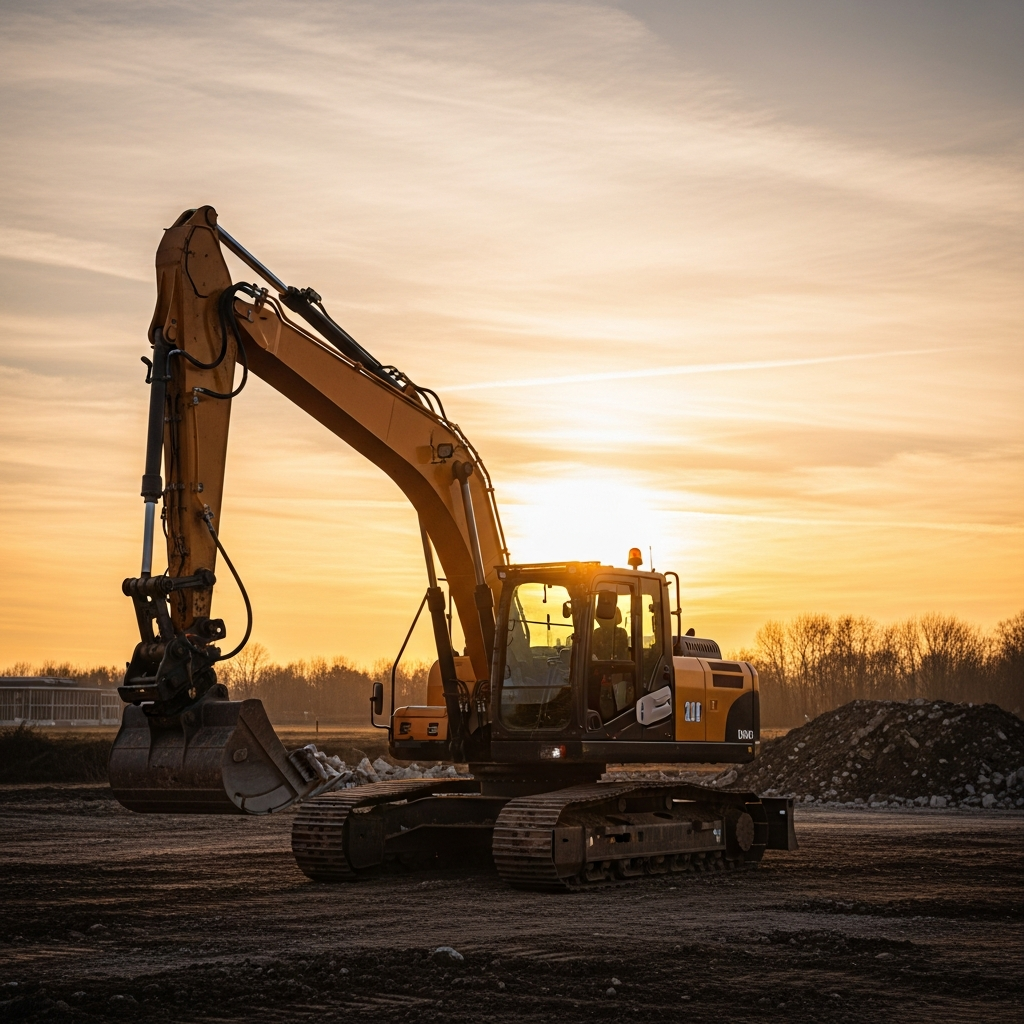
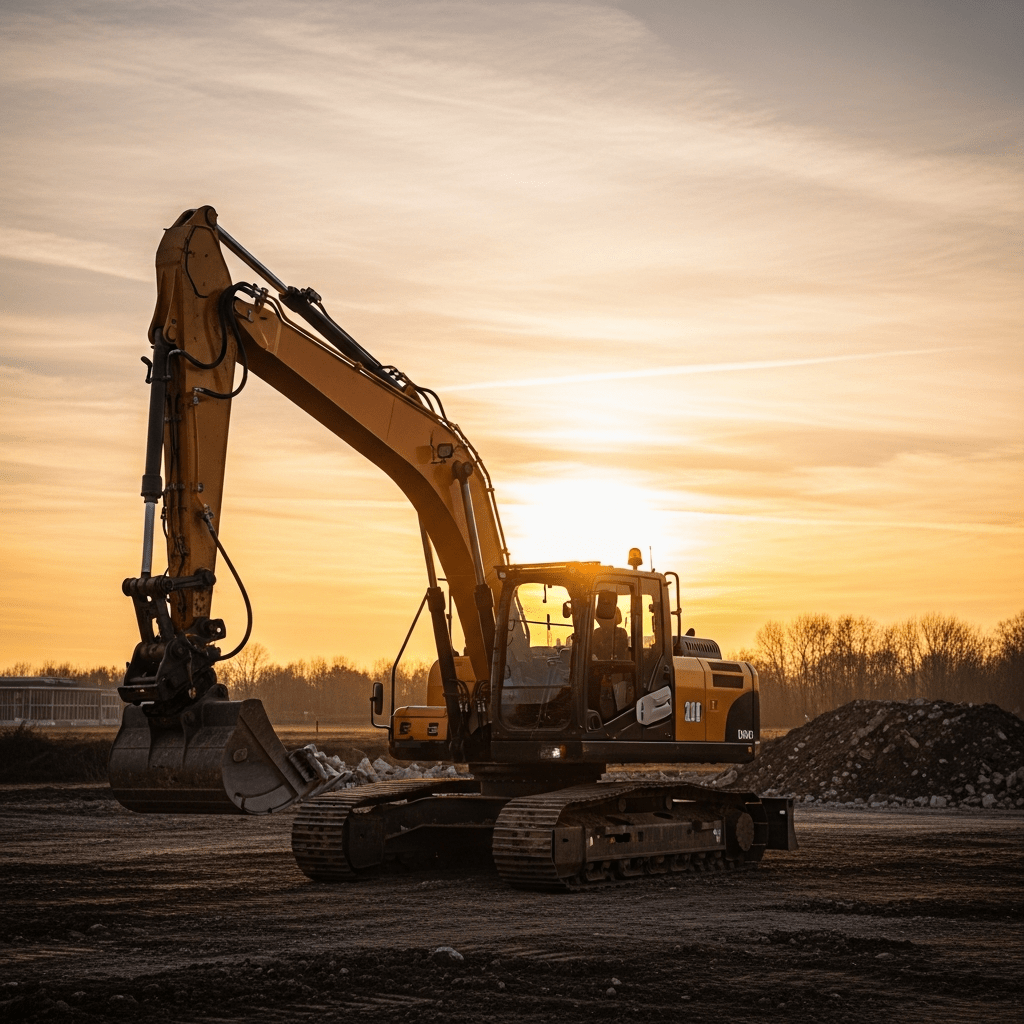
Visually, remote-teleoperated and unmanned excavators resemble conventional hydraulic excavators with articulated booms, arms, and buckets. Most are mounted on tracked crawler undercarriages for rugged terrain adaptability. They often feature standard or zero-tail swing designs and may include sensor arrays, cameras, and communication antennas to support remote operation and autonomous functions.

Behavior or Usage

These excavators perform earthmoving tasks remotely or autonomously, enabling operation in environments unsafe or impractical for human operators. They are widely used in hazardous demolition, contaminated soil remediation, mining in unstable areas, disaster response, and utility work in confined spaces. Operators control them via wireless or tethered systems, with some models offering manual override capabilities. Their use enhances safety, reduces operator fatigue, and increases productivity in challenging conditions.

Merchandise & Prints

Bring this kind into your world ๏ฟฝ illustrated posters, mugs, and shirts.

Remote-teleoperated and unmanned excavator Remote-teleoperated and unmanned excavator Poster

Remote-teleoperated and unmanned excavator Poster

Archival print, museum-grade paper

Remote-teleoperated and unmanned excavator Remote-teleoperated and unmanned excavator Mug

Remote-teleoperated and unmanned excavator Mug

Stoneware mug, dishwasher safe

Remote-teleoperated and unmanned excavator Remote-teleoperated and unmanned excavator Shirt

Remote-teleoperated and unmanned excavator Shirt

Soft cotton tee, unisex sizes

Attributes & Insights

Taxon-Specific Insights

🌍Cultural Significance

Remote and unmanned excavators represent a significant technological leap in construction and mining culture, symbolizing the integration of robotics and automation into heavy machinery. They embody modern priorities of safety and efficiency, often featured in discussions about the future of work and the automation of hazardous jobs. In some regions, they are heralded as "smart excavators" or "next-generation diggers," reflecting a cultural shift toward digital and autonomous industrial equipment.

📌Notable Facts

  • First commercial teleoperated excavators appeared in the 1990s.
  • Operating weights span from mini (1,500 kg) to large (80,000 kg) classes.
  • Typical engine power ranges between 50 and 400 kW.
  • Common attachments include buckets, breakers, grapples, shears, augers, and rotating handlers.
  • Safety features include collision avoidance sensors, geofencing, and redundant wireless controls.

⚙️Mechanism Details

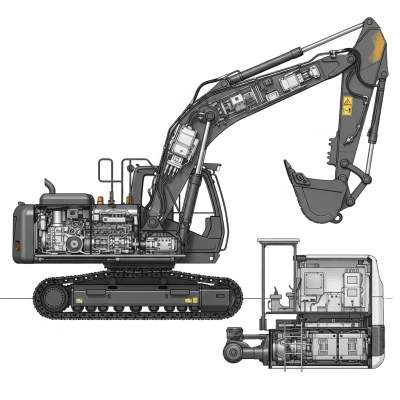
โš™๏ธ The primary excavation mechanism is an articulated hydraulic boom and arm system actuated by hydraulic cylinders. This setup allows precise control of the bucket and attachments, enabling digging, lifting, and material handling. Remote and autonomous control systems integrate sensors, cameras, and wireless communication to replicate or replace operator inputs. Some platforms incorporate quick couplers for rapid attachment changes, enhancing versatility in various excavation tasks.

Visual Variations

High quality studio photograph of a single Remote-teleoperated / unmanned excavator (tele- or robot-operated) from the excavators taxonomy
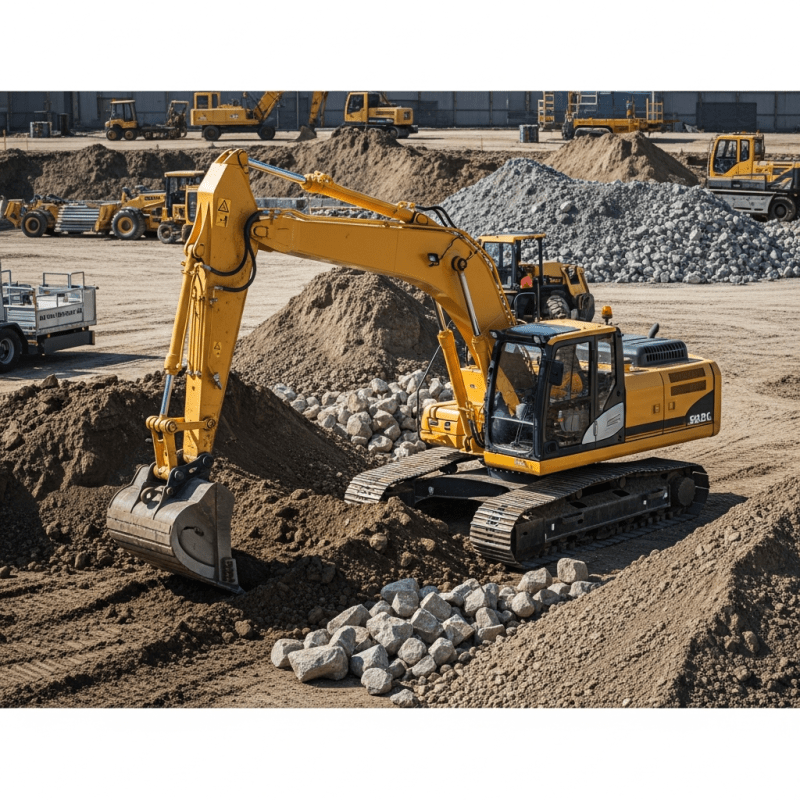
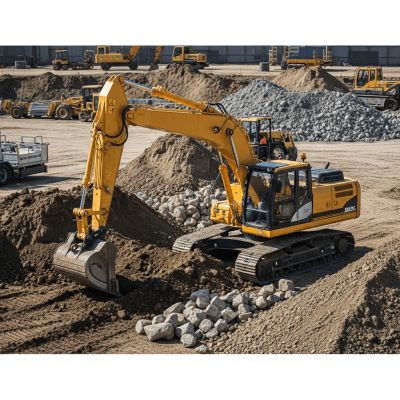
A realistic image of a Remote-teleoperated / unmanned excavator (tele- or robot-operated) (excavators) at work on a construction site, surrounded by soil, rocks, and machinery
Detailed cross-sectional illustration of a Remote-teleoperated / unmanned excavator (tele- or robot-operated) from the excavators taxonomy
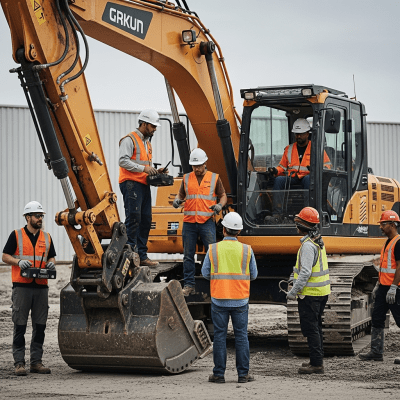
Image of a diverse group of construction workers operating or interacting with a Remote-teleoperated / unmanned excavator (tele- or robot-operated) from the excavators taxonomy
A close-up photograph focusing on the bucket and arm of a Remote-teleoperated / unmanned excavator (tele- or robot-operated) (excavators), showing details such as hydraulic lines, metal textures, and wear marks
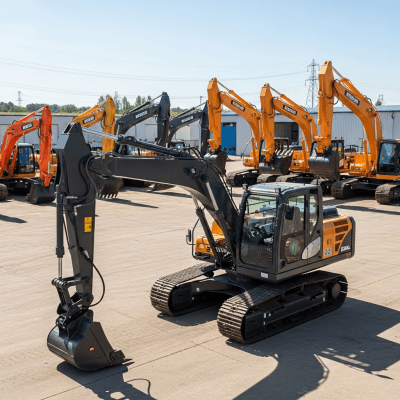
A wide-angle image of a fleet of various excavators, with the specific Remote-teleoperated / unmanned excavator (tele- or robot-operated) in the foreground for emphasis

Composition & Context

Taxon-Specific Insights

🚜Mobility Types

๐Ÿš˜ Most remote-teleoperated excavators use crawler (tracked) undercarriages, offering superior traction and stability on uneven or soft terrain. Wheeled variants exist for improved road mobility and faster repositioning on firm surfaces. Stationary or skid-steer forms are less common but may be used in specialized applications. Mobility choice depends on terrain, application, and operational requirements.

📏Size And Capacity

๐Ÿ“‡ These excavators typically fall within the standard (15โ€“30 tonnes) and large (30โ€“80 tonnes) size classes, though mini and midi versions exist for confined or urban sites. Operating weights range from approximately 1,500 kg to 80,000 kg. Bucket capacities vary from 0.2 to 4.0 cubic meters, and maximum reach spans 5 to 15 meters, accommodating a broad spectrum of excavation tasks.

🦺🌿Safety And Emissions

๐Ÿงช๐Ÿช– Safety features include emergency stop systems, collision avoidance sensors, geofencing to restrict operation zones, and redundant wireless controls to prevent loss of command. These machines eliminate operator exposure to hazardous environments, significantly reducing risk. Emissions compliance varies by powertrain; while diesel engines remain prevalent, electric and hybrid models offer reduced emissions and align with increasingly strict environmental standards.

🔧Attachments And Accessories

๐Ÿ› ๏ธ Common attachments include standard and specialized buckets for digging, hydraulic breakers for demolition, grapples for material handling, shears for cutting, augers for drilling, and rotating handlers for versatile manipulation. Many unmanned excavators support quick coupler systems, allowing rapid switching between tools to adapt to varied tasks efficiently.

🛠️⏳Maintenance And Lifecycle

๐Ÿ› ๏ธ๏ธโณ Maintenance routines mirror those of conventional excavators, focusing on hydraulic systems, engine upkeep, and undercarriage inspection. Additional attention is required for electronic components, sensors, and communication systems integral to remote or autonomous operation. These machines typically offer reduced operator fatigue and risk, potentially extending operational availability. Service life aligns with standard excavator expectations, contingent on usage intensity and maintenance quality.

Faq

Q: What environments are remote excavators best suited for?
They excel in hazardous, contaminated, or confined sites where human presence is risky or impractical.

Q: How are these excavators controlled?
They use wireless or tethered remote control systems, with some models offering autonomous operation.

Q: Do they reduce emissions compared to conventional excavators?
Electric and hybrid variants reduce emissions, though diesel remains common in many models.