Origin Story

The suction excavator concept originated in Europe during the late 1990s, with pioneering development in Germany by companies such as MTS and RSP. Evolving from industrial vacuum technology, these machines were adapted to meet growing demands for safe utility excavation and have since spread to North America and other regions, continuously refined for improved suction power, filtration, and mobility.

Classification

Suction excavators belong to the broader excavator family distinguished by their pneumatic excavation mechanism. Unlike hydraulic or cable excavators that rely on mechanical digging arms, suction excavators use vacuum pumps and suction hoses to dislodge and remove material, classifying them within the suction mechanism subgroup of wheeled excavators primarily used in utility and civil engineering applications.

Appearance or Form

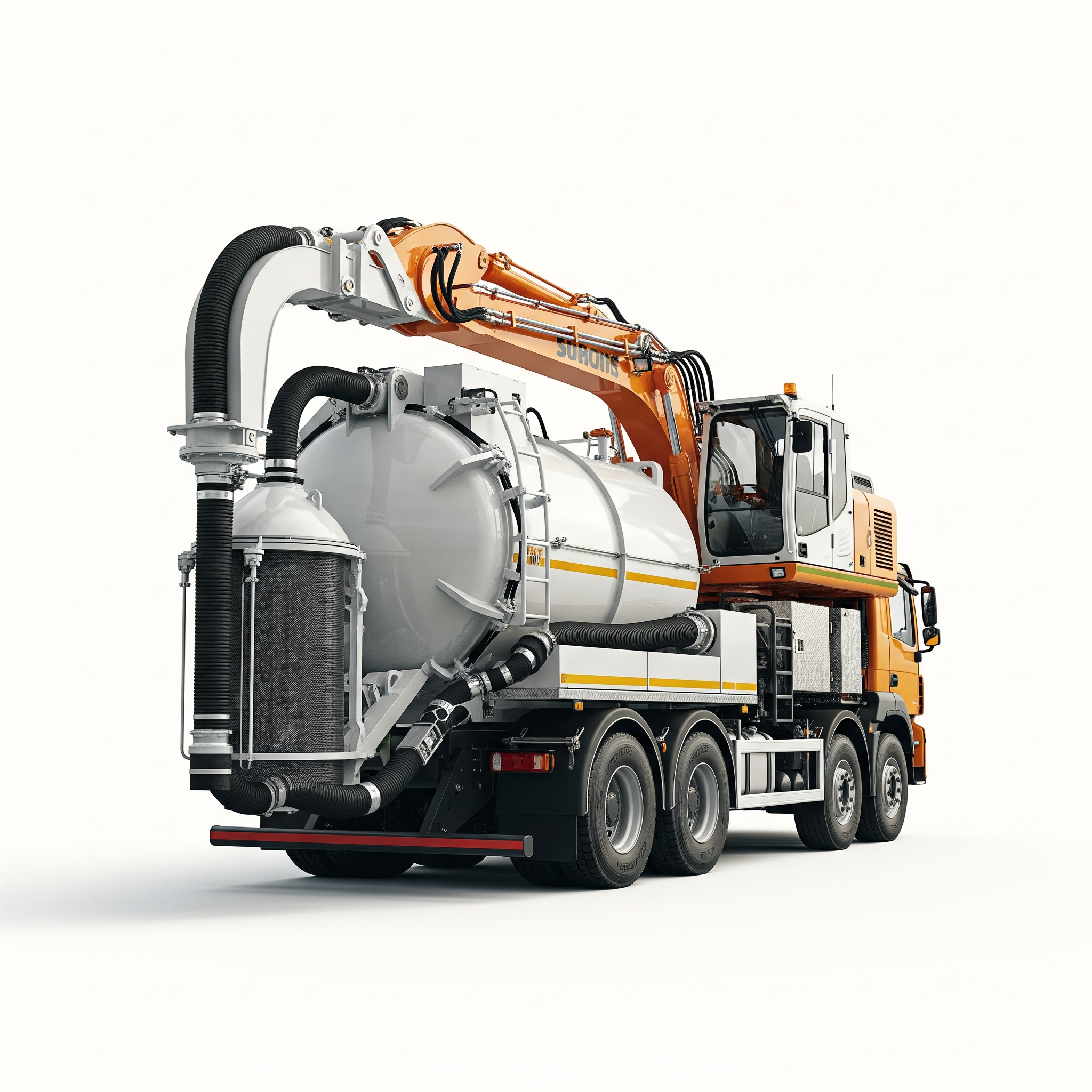
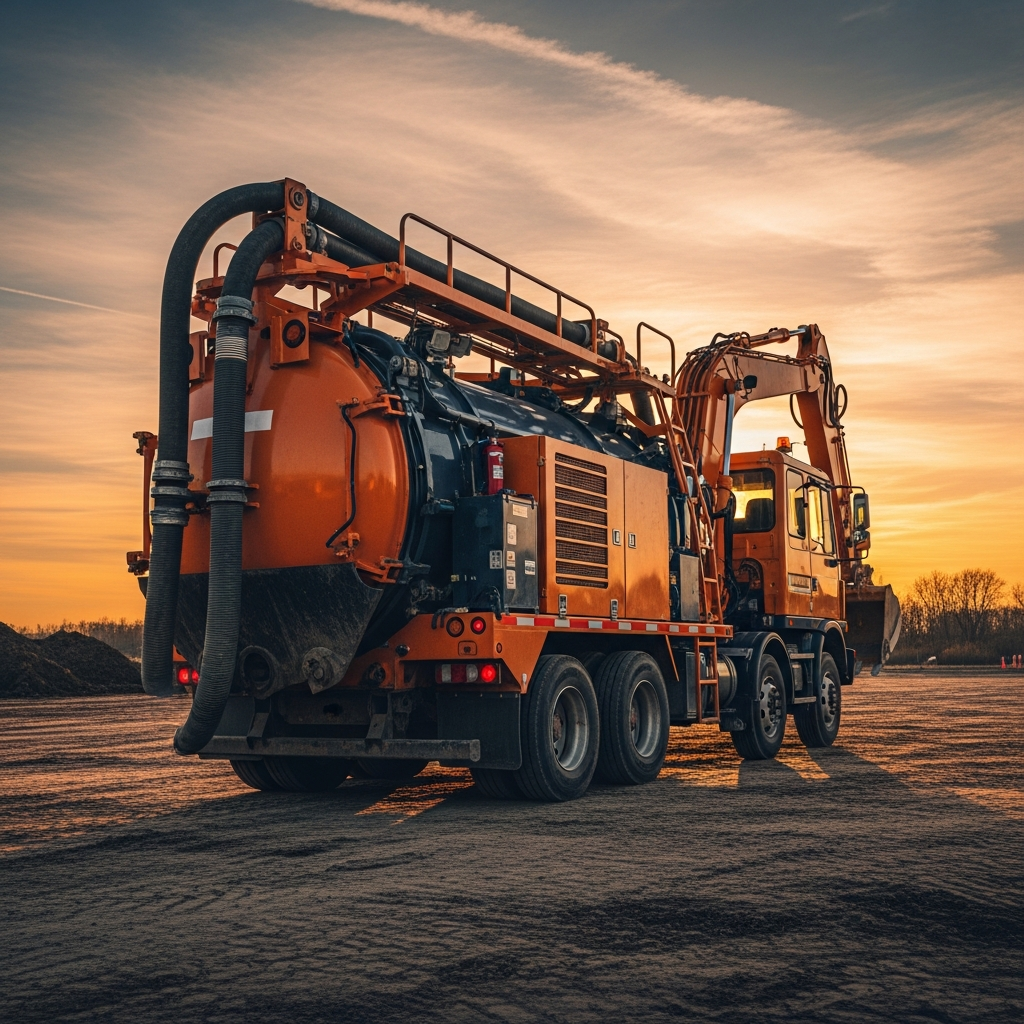
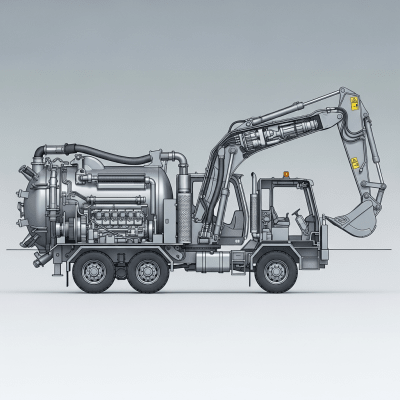
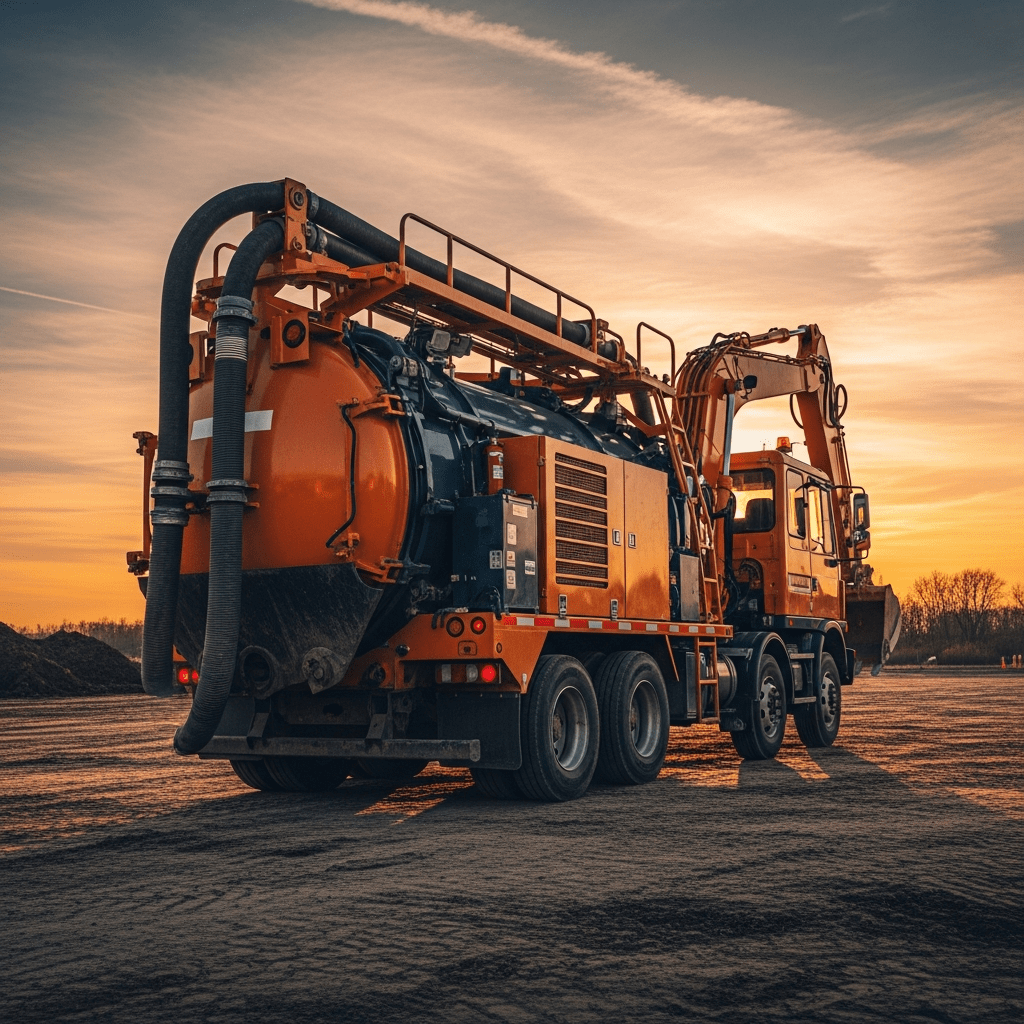
Typically mounted on wheeled truck chassis, suction excavators feature a large-diameter suction hose (150–250 mm) connected to a powerful vacuum pump housed on the vehicle. The machines have a robust spoil tank ranging from 2 to 12 cubic meters for collected material. Their form emphasizes mobility and accessibility, with flexible hose assemblies and attachments like compressed air lances or water jets to aid soil loosening.

Behavior or Usage

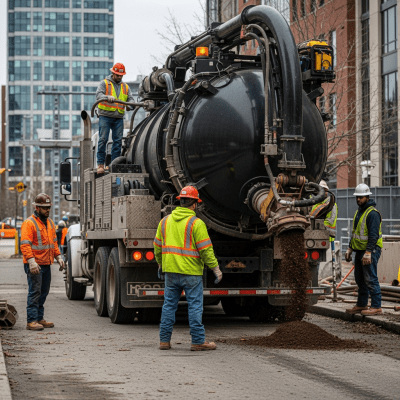
Suction excavators operate by generating strong airflow through a suction hose to safely extract soil and debris without mechanical contact, minimizing risk to buried utilities. They are widely used for potholing, trenching, daylighting, and debris removal in urban and utility environments. Operators maneuver the hose to expose underground infrastructure precisely, often supported by remote hose control and soil loosening tools.

Merchandise & Prints

Bring this kind into your world � illustrated posters, mugs, and shirts.

Suction (vacuum) excavator Suction (vacuum) excavator Poster

Suction (vacuum) excavator Poster

Archival print, museum-grade paper

Suction (vacuum) excavator Suction (vacuum) excavator Mug

Suction (vacuum) excavator Mug

Stoneware mug, dishwasher safe

Suction (vacuum) excavator Suction (vacuum) excavator Shirt

Suction (vacuum) excavator Shirt

Soft cotton tee, unisex sizes

Attributes & Insights

Taxon-Specific Insights

🌍Cultural Significance

While not prominent in traditional culture or mythology, suction excavators have gained significance in modern infrastructure maintenance and urban development. Their role in preventing utility strikes and enabling safer excavation reflects growing societal emphasis on safety, environmental protection, and efficient urban engineering practices.

📌Notable Facts

  • Suction excavators can generate vacuum pressures up to -30 kPa to dislodge soil gently.
  • They typically have spoil tanks capable of holding between 2 and 12 cubic meters of excavated material.
  • Their suction hoses range from 150 to 250 mm in diameter, allowing efficient removal of various soil types.
  • These machines reduce utility strike risks significantly compared to mechanical digging.
  • Though predominantly diesel-powered, emerging electric and hybrid models are beginning to appear.

⚙️Mechanism Details

⚙️ Suction excavators employ a high-powered vacuum pump—commonly a positive displacement blower or centrifugal fan—to create strong negative pressure. This vacuum draws soil and debris through a large-diameter hose, transporting material into an onboard spoil tank. The pneumatic excavation mechanism avoids direct mechanical contact with underground utilities, significantly reducing damage risk. Additional tools like compressed air lances or water jets may be used to loosen compacted soil, enhancing suction efficiency. Filtration systems, often multi-stage with HEPA filters, ensure dust and airborne contaminants are controlled during operation.

Visual Variations

High quality studio photograph of a single Suction (vacuum) excavator from the excavators taxonomy
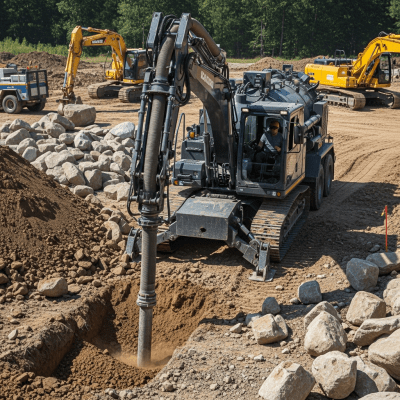
A realistic image of a Suction (vacuum) excavator (excavators) at work on a construction site, surrounded by soil, rocks, and machinery
Detailed cross-sectional illustration of a Suction (vacuum) excavator from the excavators taxonomy
Image of a diverse group of construction workers operating or interacting with a Suction (vacuum) excavator from the excavators taxonomy
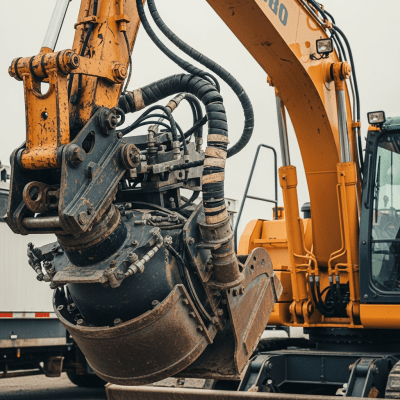
A close-up photograph focusing on the bucket and arm of a Suction (vacuum) excavator (excavators), showing details such as hydraulic lines, metal textures, and wear marks
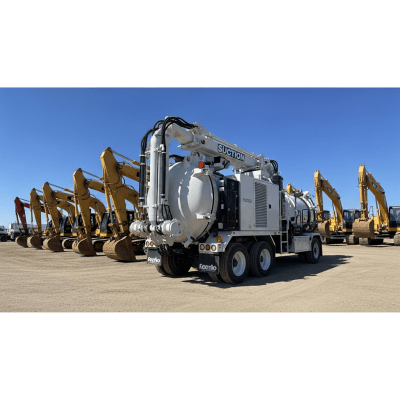
A wide-angle image of a fleet of various excavators, with the specific Suction (vacuum) excavator in the foreground for emphasis

Composition & Context

Taxon-Specific Insights

🚜Mobility Types

🚬 Suction excavators are predominantly mounted on wheeled truck chassis, providing road legality and high mobility for urban and utility work. Some variants are trailer-mounted for site-specific use, while stationary skid-mounted units exist for indoor or confined applications. Wheeled mobility offers rapid deployment and ease of maneuvering in tight city environments, contrasting with crawler types used in rough terrain.

📏Size And Capacity

📇 These machines typically fall within the standard size class, with operating weights ranging from 7,000 to 18,000 kilograms. Their rated engine power spans 100 to 250 kW, powering both the vehicle and vacuum system. Suction hose lengths provide a maximum reach of 6 to 10 meters from the vehicle, while spoil tank capacities vary between 2 and 12 cubic meters, balancing mobility with material handling needs.

🦺🌿Safety And Emissions

🧪🟧 Safety features include non-destructive digging design to prevent utility strikes and multi-stage filtration systems with HEPA filters to control dust and airborne contaminants. Suction excavators comply with regional emissions standards such as the EU Stage V and EPA Tier 4 for diesel engines. Operator cabs are typically equipped with protective structures, and some models offer remote hose control to increase operator safety.

🔧Attachments And Accessories

🛠️ Common attachments include the primary suction hose with rigid or flexible nozzles, compressed air lances to loosen compacted soil, and water jets for hydro-excavation variants. These accessories enhance excavation efficiency and versatility, allowing operators to adapt to different soil conditions and job requirements.

🛠️⏳Maintenance And Lifecycle

🛠️️⏳ Maintenance routines focus on vacuum system upkeep, including regular inspection and replacement of filters, cleaning of the spoil tank, and servicing of the vacuum pumps and hoses. Service intervals align closely with heavy truck maintenance schedules. With proper care, suction excavators offer durable service lives suited to demanding utility and municipal applications.

Faq

Q: What makes suction excavators safer than traditional excavators?
A: They use vacuum suction instead of mechanical digging, minimizing damage risk to underground utilities.

Q: What types of materials can suction excavators remove?
A: They can remove soil, debris, and loose materials, often aided by compressed air or water jets for compacted soil.

Q: Are suction excavators mobile?
A: Yes, most are mounted on wheeled truck chassis for easy transport and maneuverability on roads and job sites.