Pontoon-Mounted Backhoe Dredger
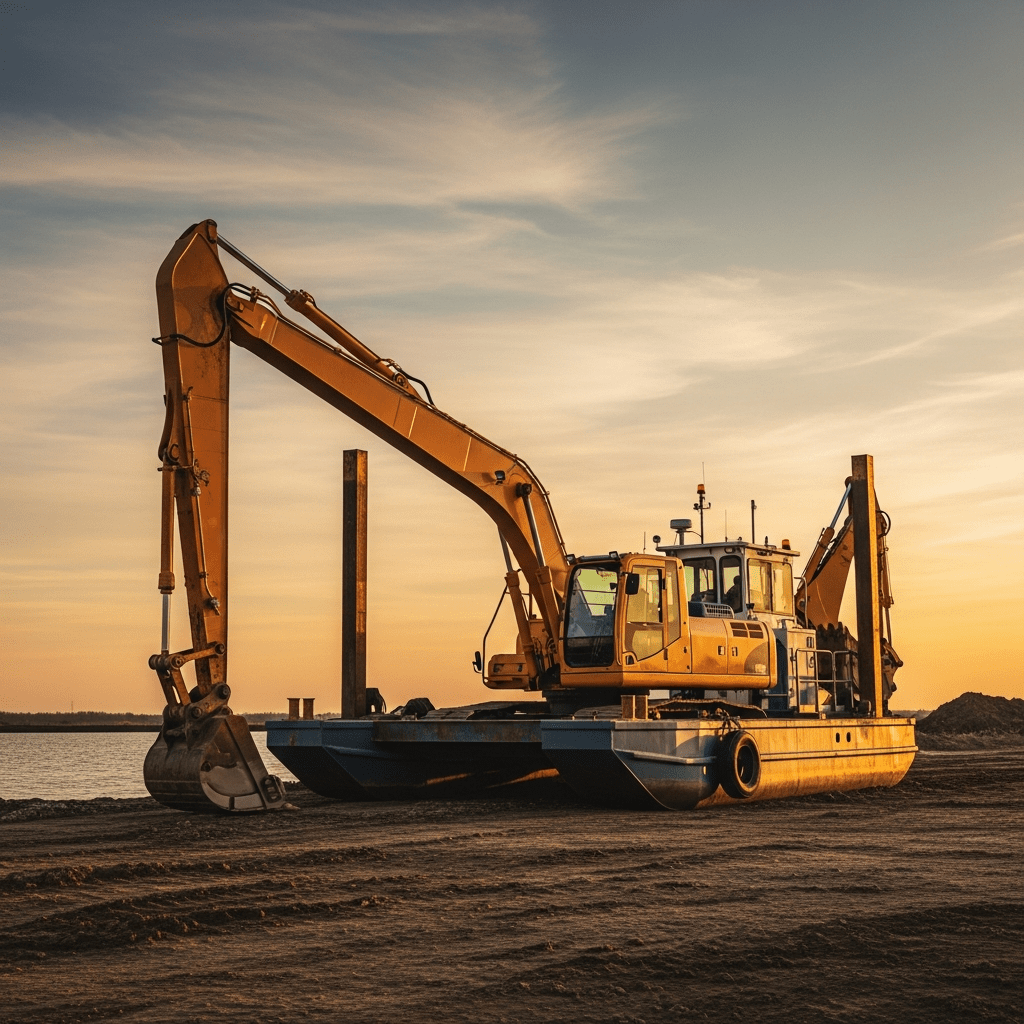
The pontoon-mounted backhoe dredger is a specialized hydraulic excavator mounted on a floating pontoon, designed for precise mechanical dredging in aquatic environments such as harbors, rivers, and canals.
The pontoon-mounted backhoe dredger is a specialized hydraulic excavator mounted on a floating pontoon, designed for precise mechanical dredging in aquatic environments such as harbors, rivers, and canals.
Emerging in the late 20th century, pontoon-mounted backhoe dredgers evolved from land-based hydraulic excavators adapted for waterborne use. This innovation responded to growing demands for efficient harbor and inland waterway maintenance, combining traditional mechanical dredging with advanced hydraulic technology. Leading manufacturers and marine engineering firms refined the design, creating integrated dredgers capable of operating in shallow or confined waters with improved control and versatility.
This machine belongs to the hydraulic excavator family, distinguished by its pontoon-mounted mobility that enables aquatic operation. Classified as a standard-size excavator, it fits within the broader category of dredging equipment, specifically mechanical dredgers using articulated booms and buckets rather than suction or cable-operated systems.
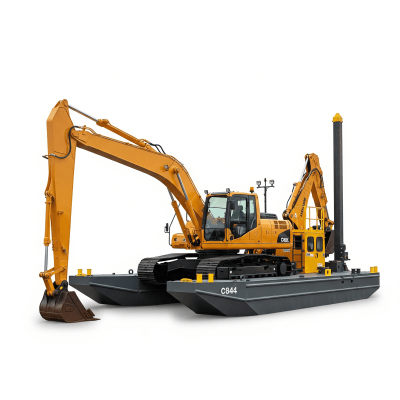
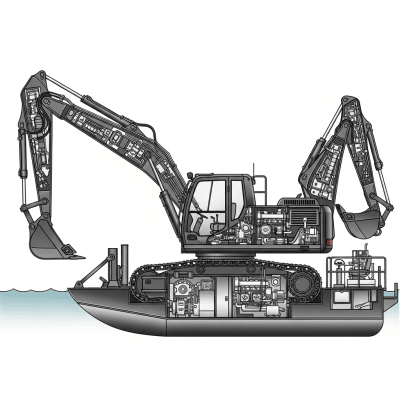
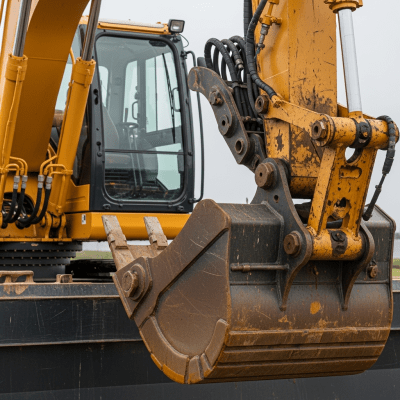
Visually, the pontoon-mounted backhoe dredger features a robust hydraulic excavator mounted atop a floating barge or pontoon platform. It typically includes an articulated boom and arm with a bucket attachment, supported by a stable, flat pontoon base that may be equipped with spud legs or anchors for positional stability. The operator cabin is enclosed and positioned to provide clear visibility over the water and excavation site.
Designed for underwater excavation, this dredger removes sediment, debris, and other materials from waterway beds using its hydraulic boom and bucket. It excels in precise material handling tasks such as harbor maintenance, river deepening, environmental remediation, and underwater construction. Its floating mobility allows it to access shallow or restricted areas where larger dredgers cannot operate effectively.
Bring this kind into your world illustrated posters, mugs, and shirts.
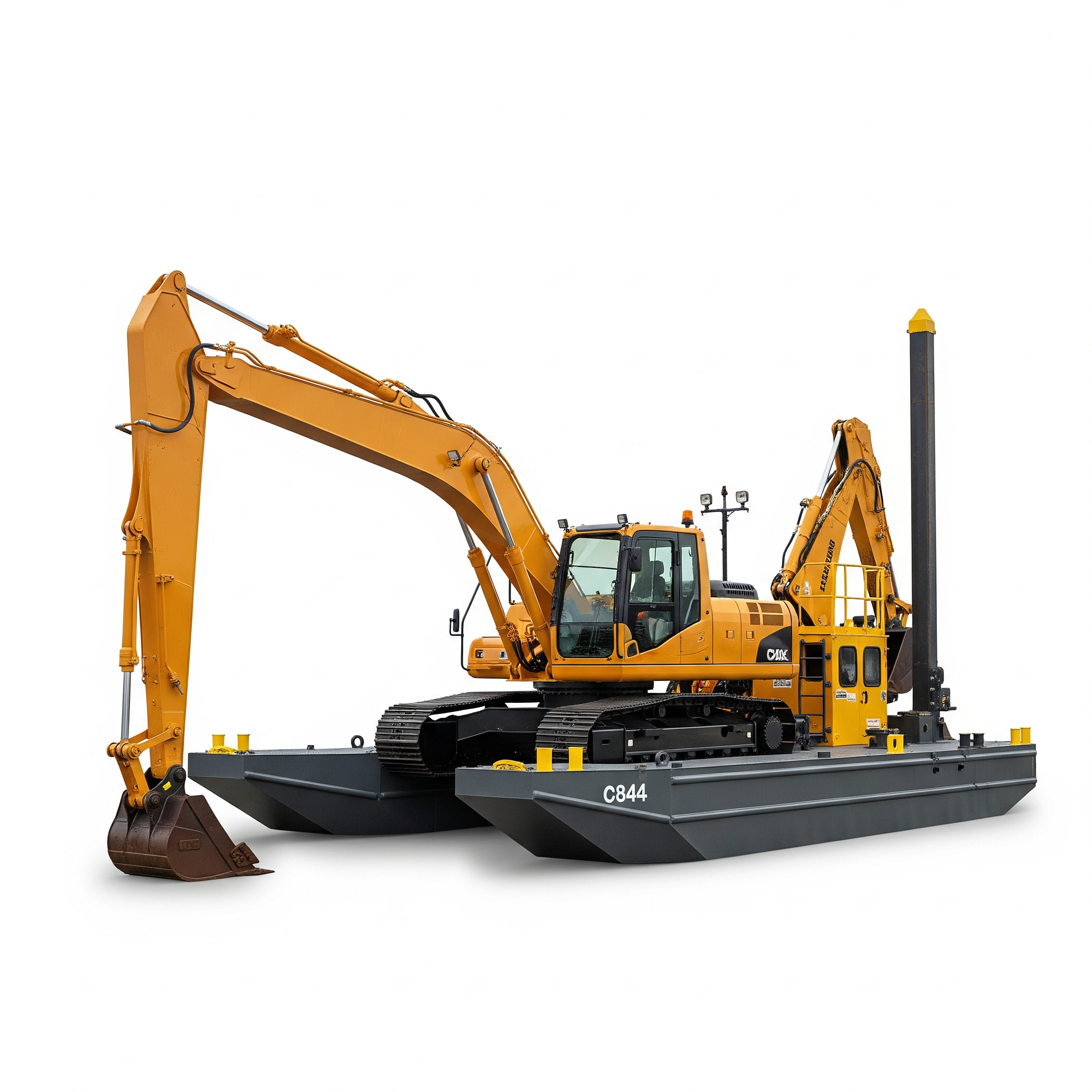
Archival print, museum-grade paper
Buy Poster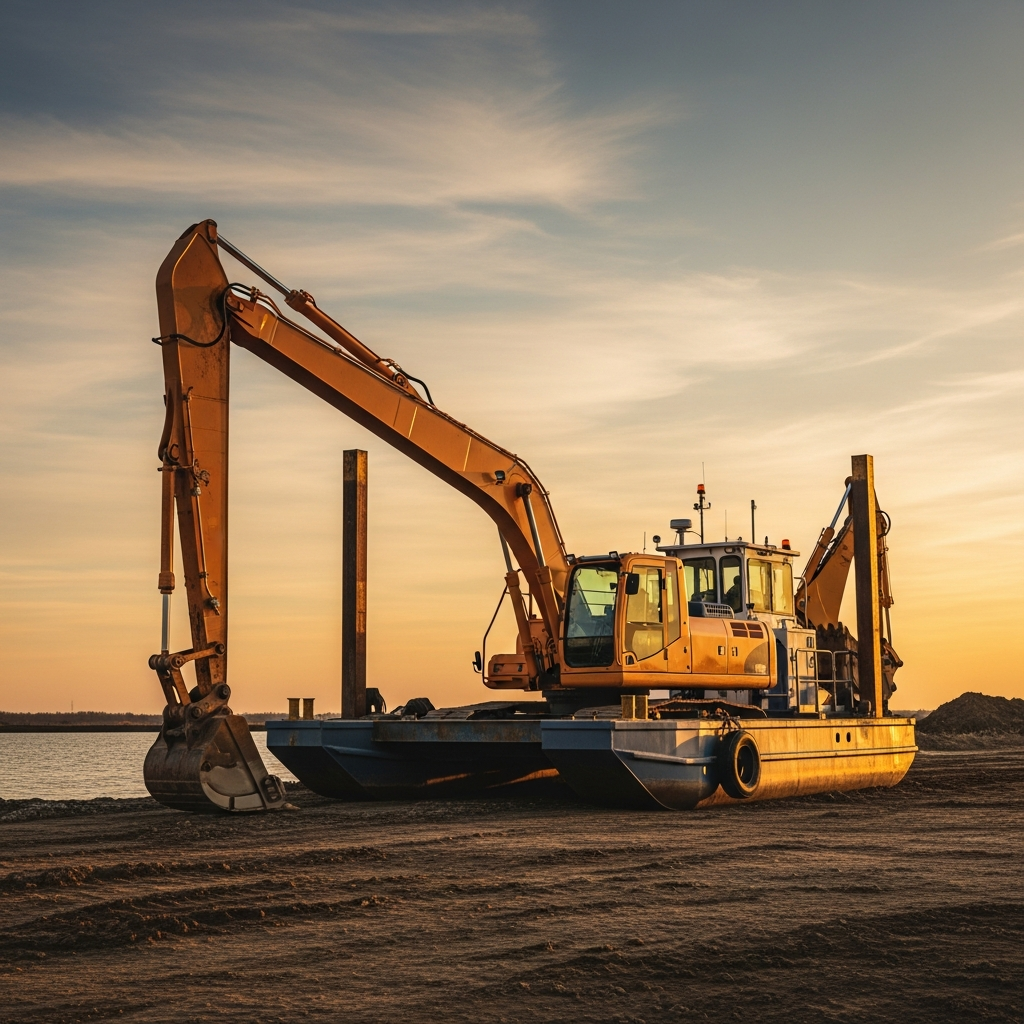
Stoneware mug, dishwasher safe
Buy Mug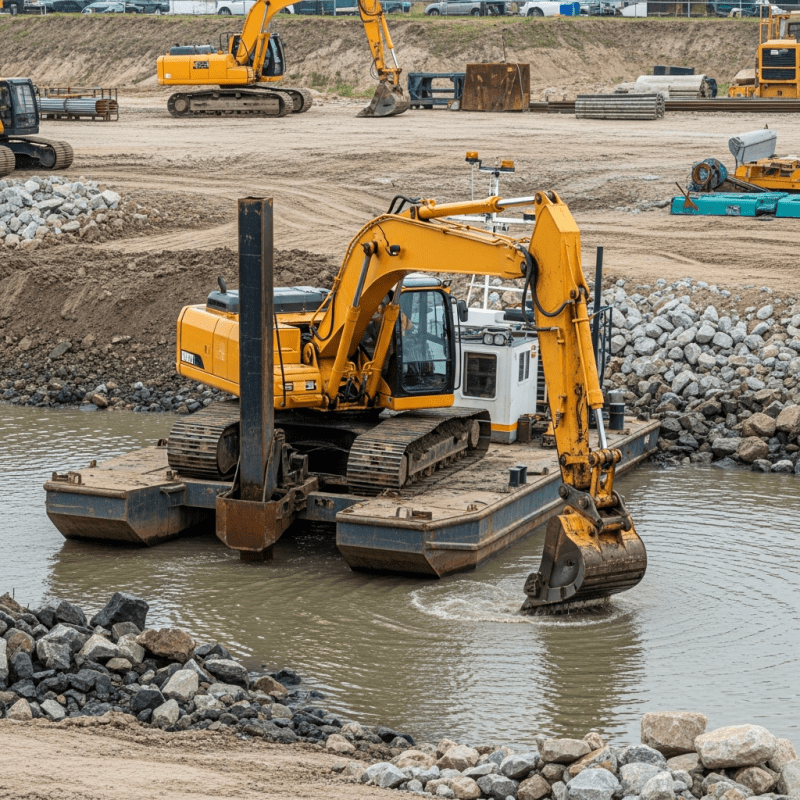
Soft cotton tee, unisex sizes
Buy ShirtWhile primarily a functional machine, the pontoon-mounted backhoe dredger symbolizes modern engineering solutions bridging land and water environments. It plays a vital role in maintaining navigable waterways and supporting marine infrastructure, reflecting human ingenuity in adapting heavy machinery for aquatic challenges. Its presence in maritime construction projects underscores the integration of hydraulic technology with marine operations.
⚙️ The core excavation mechanism consists of an articulated boom and arm actuated by hydraulic cylinders, enabling precise underwater digging and material handling. High-pressure hydraulic systems power the movement of the boom, arm, and bucket, allowing the operator to scoop, lift, and place sediment or debris. The hydraulic system’s responsiveness and force capacity facilitate breaking compacted materials and handling heavy loads underwater, supported by attachments like hydraulic breakers or grapples for specialized tasks.
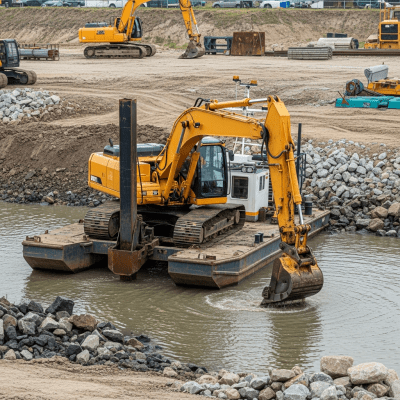
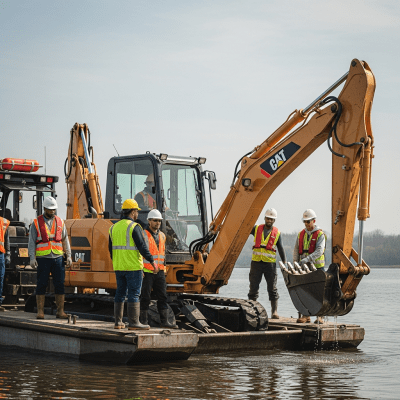
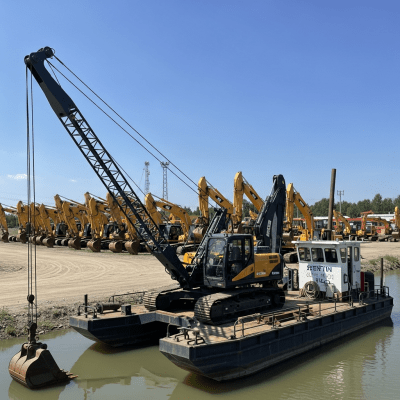
🚨 Mobility is provided by the pontoon platform, a floating barge that supports the excavator above water. This form factor enables the dredger to operate in aquatic environments inaccessible to land-based machines. Stability during operation is maintained via spud legs or anchors that secure the pontoon in place, preventing drift. Unlike crawler or wheeled excavators, pontoon-mounted dredgers rely on marine mobility and positioning rather than terrestrial traction.
📇 Classified as a standard-size excavator, pontoon-mounted backhoe dredgers typically weigh between 15,000 and 80,000 kilograms. Engine power ranges from 100 to 350 kilowatts, supporting robust hydraulic performance. Bucket capacities span from 0.5 to 3.0 cubic meters, accommodating various dredging depths and material types. The maximum reach of the boom extends from 10 to 22 meters, allowing effective excavation across broad underwater areas.
🛡️ Pontoon-mounted backhoe dredgers comply with stringent marine safety standards such as those set by the International Maritime Organization (IMO) and the EU Machinery Directive. Safety features include stability assessments for barge operation, anti-collision systems, emergency stop protocols, and operator fall protection measures. Emissions standards typically meet Tier 4 regulations, reflecting advanced diesel engine technology adapted for marine use, minimizing environmental impact.
🔧 Common attachments enhance the dredger’s versatility and efficiency. These include:
🛠️⏳ Operating in harsh marine environments, pontoon-mounted backhoe dredgers require rigorous maintenance to combat corrosion and wear. Routine inspections focus on hull integrity, hydraulic system performance, and engine servicing. Preventative care includes monitoring seals, hoses, and structural components exposed to water and sediment. With proper upkeep, these machines maintain operational reliability over extended service lives, though marine exposure typically accelerates maintenance cycles compared to land-based excavators.