Origin Story

Developed in the late 20th century as hydraulic technology advanced, the long-reach hydraulic excavator emerged to meet the growing demand for machines capable of extended reach and precision in excavation and demolition. Initially evolving from aftermarket modifications of standard hydraulic excavators of the 1960s, major manufacturers like Caterpillar, Komatsu, Hitachi, Volvo, and Liebherr began offering factory-engineered long-reach models in the 1980s and 1990s. Key innovations included reinforced booms, optimized counterweights, and advanced hydraulic controls to ensure stability and accuracy at extended working distances.
Classification

Belonging to the hydraulic excavator family, the long-reach variant is classified by its extended boom and arm length, hydraulic actuation, and crawler mobility. It typically falls within the standard to large size classes, distinguished from other excavators by its enhanced horizontal and vertical reach capabilities tailored for specialized construction, demolition, and civil engineering tasks.

Appearance or Form

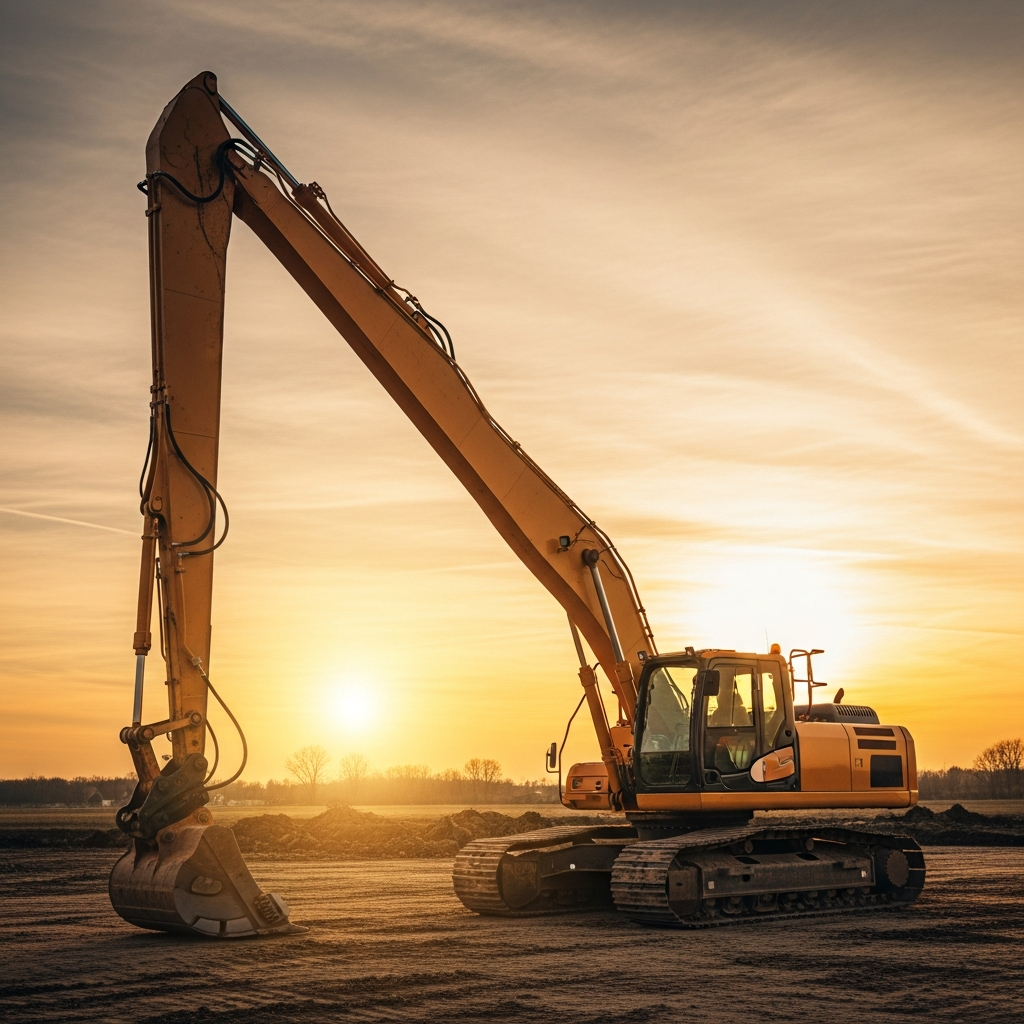
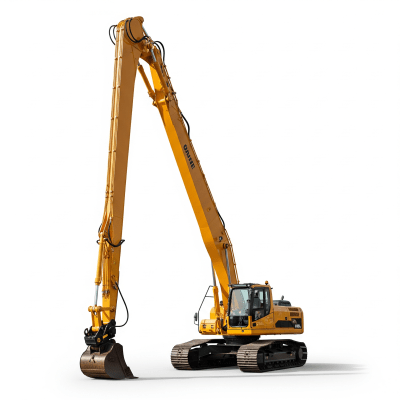
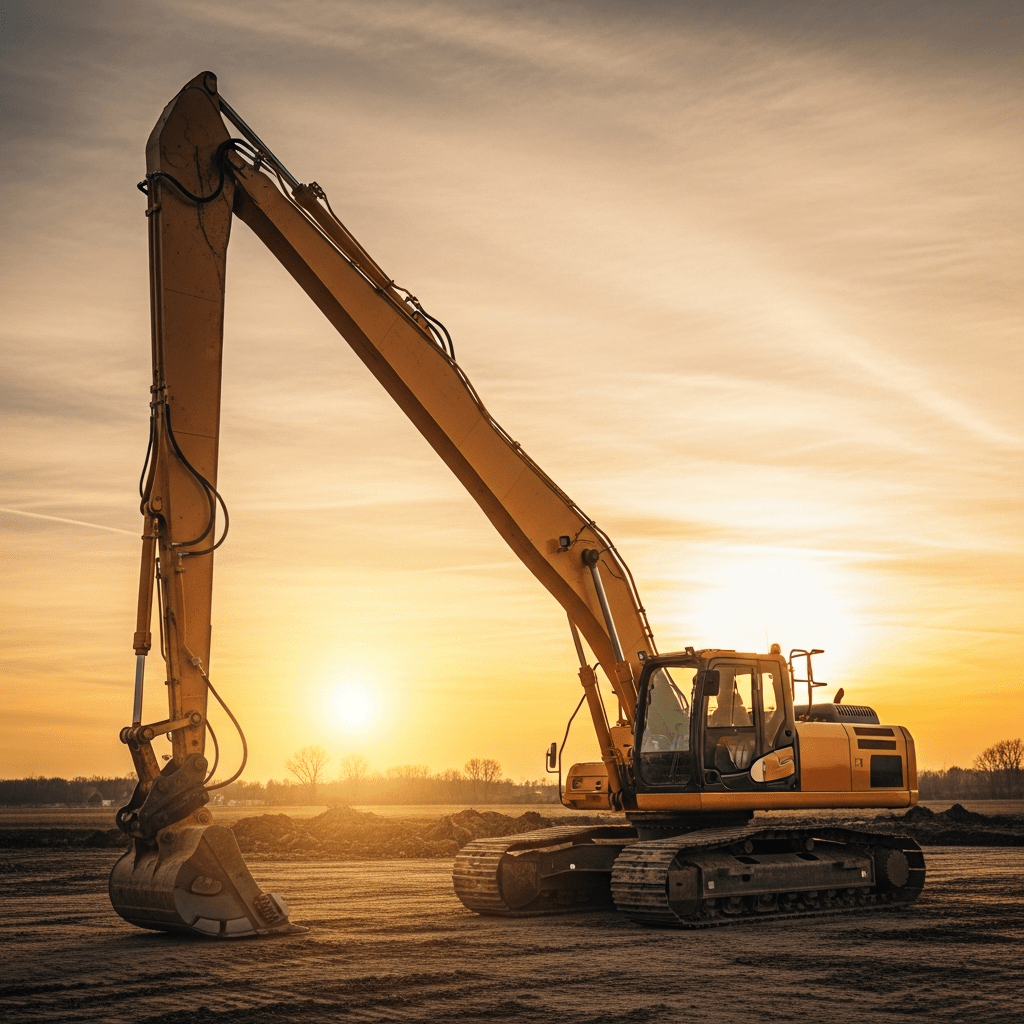
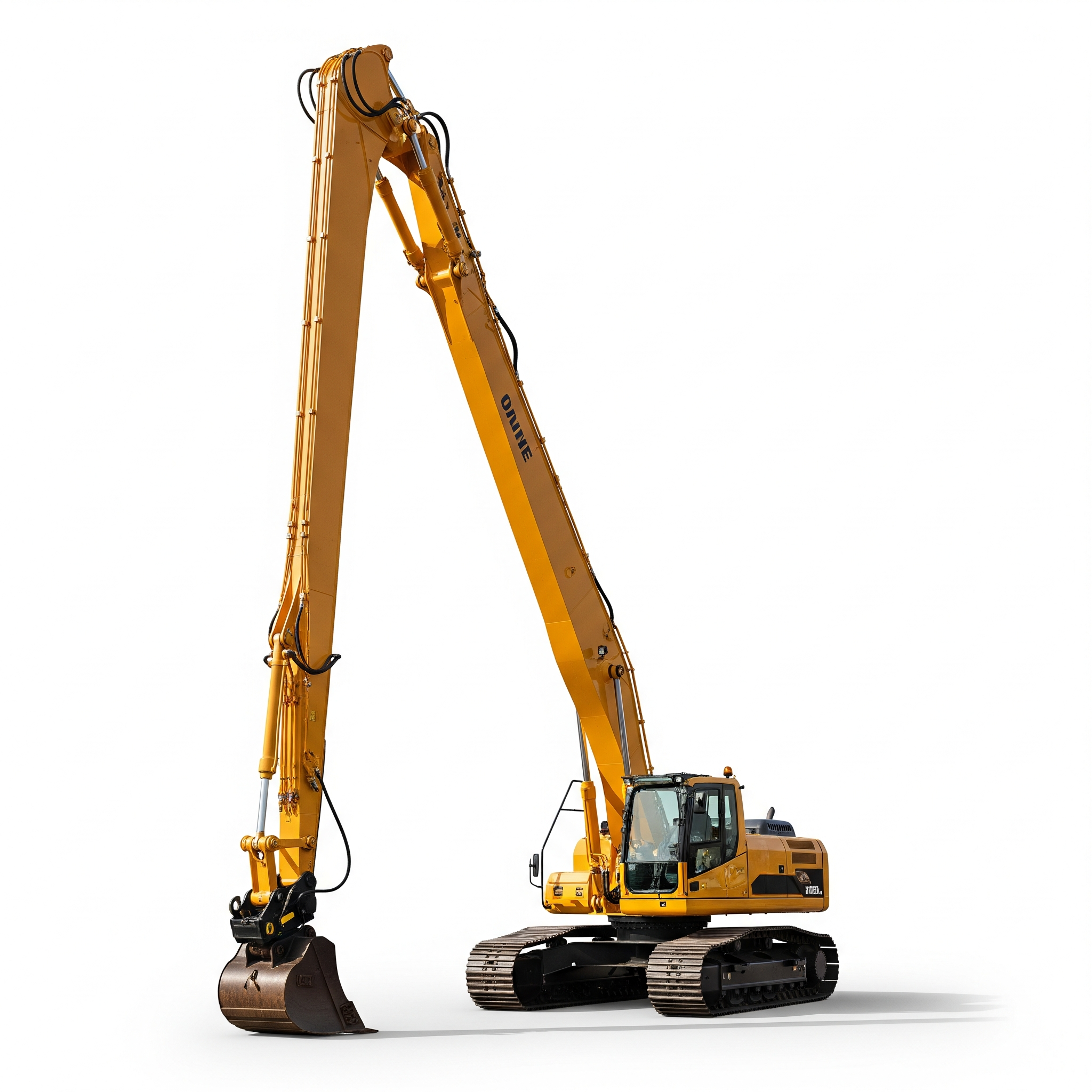
Visually, long-reach hydraulic excavators resemble standard crawler excavators but feature noticeably elongated booms and arms, often reinforced to withstand increased leverage forces. They are mounted on tracked undercarriages that provide stability during extended reach operations. The operator cab sits atop a rotating platform, with counterweights carefully balanced to offset the longer boom. These machines generally have a robust, industrial appearance, emphasizing structural strength and precision.

Behavior or Usage

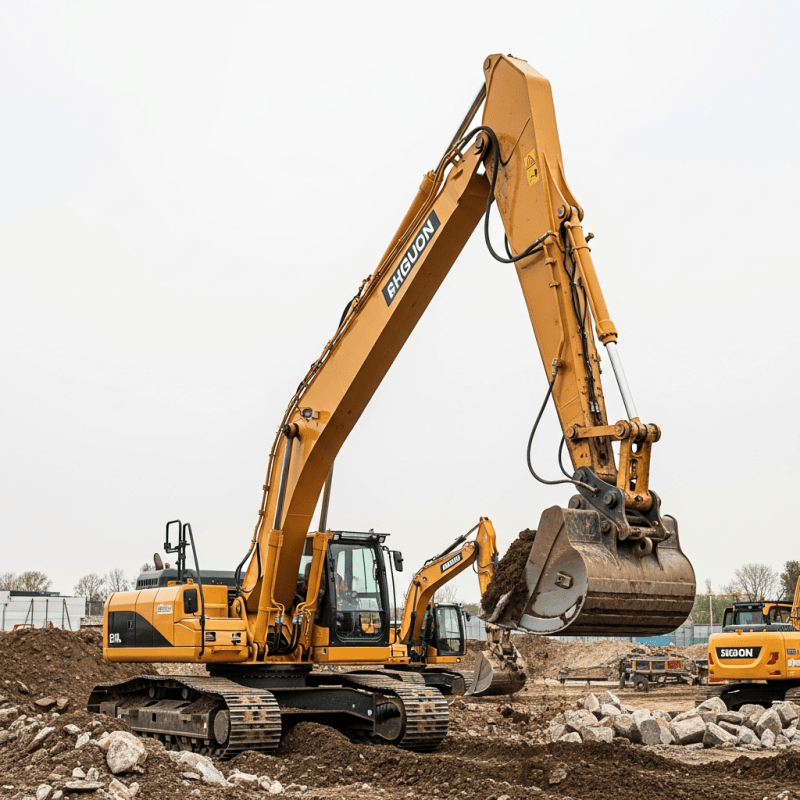
Long-reach hydraulic excavators excel at tasks requiring extended horizontal or vertical reach beyond the capability of conventional excavators. They are commonly used for riverbank stabilization, deep foundation digging, slope remediation, selective demolition of tall structures, and hazardous material removal. Operators control articulated booms and arms hydraulically to position buckets or specialized attachments precisely, enabling efficient excavation or demolition in hard-to-access or sensitive environments.

Merchandise & Prints

Bring this kind into your world � illustrated posters, mugs, and shirts.

Long-reach hydraulic excavator Long-reach hydraulic excavator Poster

Long-reach hydraulic excavator Poster

Archival print, museum-grade paper

Long-reach hydraulic excavator Long-reach hydraulic excavator Mug

Long-reach hydraulic excavator Mug

Stoneware mug, dishwasher safe

Long-reach hydraulic excavator Long-reach hydraulic excavator Shirt

Long-reach hydraulic excavator Shirt

Soft cotton tee, unisex sizes

Attributes & Insights

Taxon-Specific Insights

🌍Cultural Significance

While primarily industrial tools, long-reach hydraulic excavators symbolize human ingenuity in overcoming physical constraints in construction and demolition. Their presence in urban redevelopment and environmental restoration projects highlights modern engineering’s role in shaping landscapes safely and sustainably. Occasionally featured in media and exhibitions, they represent the evolution of heavy machinery toward greater precision and reach.

📌Notable Facts

  • Typical maximum reach ranges from 15 to 30 meters, with some specialized models exceeding 30 meters.
  • Operating weights generally range between 20 and 50 metric tonnes, with some large variants reaching up to 80 tonnes.
  • Despite their size, these excavators often require partial disassembly for road transport due to boom length.
  • They employ enhanced stability features such as counterweights, boom damping, and load monitoring to prevent overturning.
  • Emerging electric and hybrid powertrain variants are beginning to appear, though diesel remains dominant.

⚙️Mechanism Details

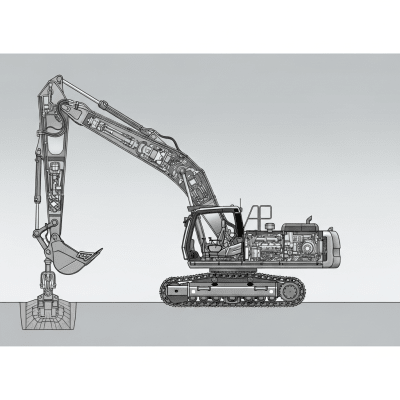
⚙️ The long-reach hydraulic excavator operates through an articulated boom and arm system actuated by hydraulic cylinders. Hydraulic fluid pressure drives these cylinders, enabling smooth, precise movement of the boom, arm, and attachments. The extended boom design incorporates reinforced structural elements to withstand increased bending moments and leverage forces. Hydraulic control systems include load-sensing valves and proportional controls that maintain stability and responsiveness, even at maximum reach. Counterweights balance the machine to prevent tipping, while boom damping systems reduce oscillations during operation.

Visual Variations

High quality studio photograph of a single Long-reach hydraulic excavator from the excavators taxonomy
A realistic image of a Long-reach hydraulic excavator (excavators) at work on a construction site, surrounded by soil, rocks, and machinery
Detailed cross-sectional illustration of a Long-reach hydraulic excavator from the excavators taxonomy
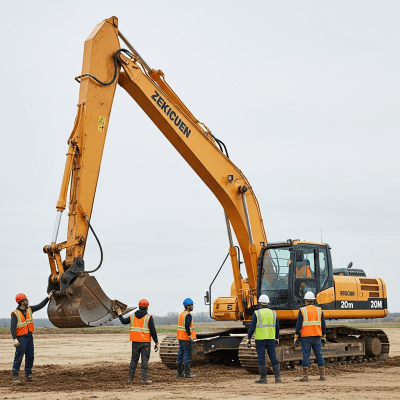
Image of a diverse group of construction workers operating or interacting with a Long-reach hydraulic excavator from the excavators taxonomy
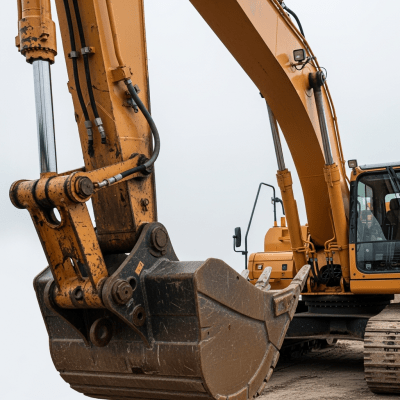
A close-up photograph focusing on the bucket and arm of a Long-reach hydraulic excavator (excavators), showing details such as hydraulic lines, metal textures, and wear marks
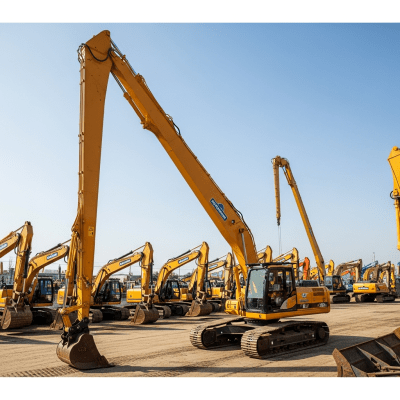
A wide-angle image of a fleet of various excavators, with the specific Long-reach hydraulic excavator in the foreground for emphasis

Composition & Context

Taxon-Specific Insights

🚜Mobility Types

🚨 Most long-reach hydraulic excavators utilize crawler (tracked) undercarriages, providing superior stability and traction on uneven or soft terrain. Wheeled variants exist but are less common due to reduced stability at extended reaches. The crawler mobility allows these machines to operate safely on slopes and in challenging environments, essential for riverbank work and demolition sites.

📏Size And Capacity

📇 Classified primarily within the standard size class, long-reach excavators typically weigh between 20,000 and 50,000 kilograms, with some large models reaching up to 80,000 kilograms. Engine power ranges from 90 to 250 kilowatts, supporting the hydraulic systems and heavy-duty operations. Bucket capacities vary from 0.3 to 1.2 cubic meters, balancing reach with excavation volume. Maximum horizontal reach spans 15 to 30 meters, enabling access to deep or distant work zones.

🦺🌿Safety And Emissions

🛡️🌿 Safety features include enhanced stability through counterweights, boom damping to reduce shock loads, and load monitoring systems that alert operators to potential overloads or tipping risks. Operator cabs are typically equipped with ROPS/FOPS protection for safety. Emissions compliance aligns with stringent standards such as the EU Stage V, ensuring reduced environmental impact. Operators must remain vigilant of hydraulic hose integrity and visibility limitations inherent to long-reach configurations.

🔧Attachments And Accessories

🔧 Common attachments for long-reach hydraulic excavators include:

  • Long-reach buckets of varying sizes for earthmoving.
  • Clamshell buckets for precise material handling.
  • Hydraulic breakers for concrete and rock demolition.
  • Grapples for sorting and lifting debris.
  • Demolition shears for cutting structural elements.
  • Dredging tools for aquatic and riverbank excavation.

🛠️⏳Maintenance And Lifecycle

🛠️️⏳ Maintenance routines focus on hydraulic system integrity, particularly boom and arm cylinders subject to high leverage stresses. Regular inspection of pins, bushings, and structural welds is critical due to increased strain from extended reach. Service intervals may be shorter than standard excavators, reflecting the demanding operational conditions. Typical service life ranges from 10 to 15 years, depending on usage intensity and maintenance quality. OEM long-reach models are preferred over aftermarket conversions for structural durability and warranty support.

Faq

Q: What distinguishes a long-reach hydraulic excavator from a standard excavator?
The extended boom and arm length allow it to reach deeper or farther than standard models, enabling specialized excavation and demolition tasks.

Q: Are long-reach excavators suitable for demolition?
Yes, especially for high-reach demolition of multi-story structures where precision and reach are critical.

Q: Can these excavators be transported easily?
Due to their length and weight, they often require partial disassembly and special permits for road transport.