Origin Story

Originating in Europe during the mid-20th century, hydraulic wheeled excavators evolved from cable-operated shovels and hydraulic crawler excavators to meet the growing demand for mobile, road-capable excavation equipment. Pioneered by manufacturers such as Liebherr and Volvo in the 1960s and 1970s, their design was refined to suit compact urban infrastructure needs, emphasizing travel speed and maneuverability.

Classification

This excavator belongs to the hydraulic class of earthmoving machinery, distinguished by its use of high-pressure hydraulic systems to power an articulated boom and arm. Within the mobility taxonomy, it is classified as a wheeled excavator, and size-wise it falls into the standard category, typically weighing between 14 and 26 metric tonnes. Its primary application spans construction, utility work, and material handling.

Appearance or Form

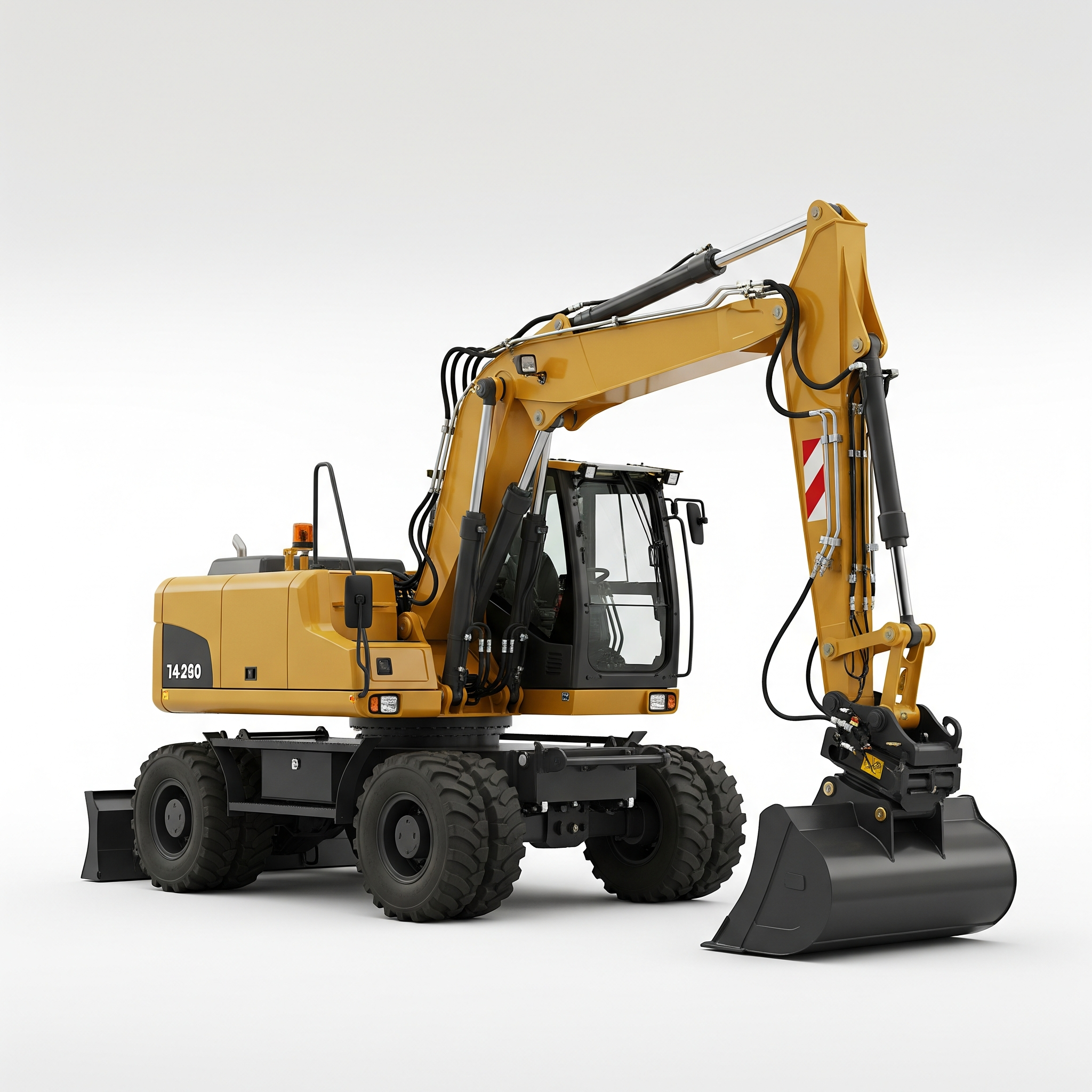
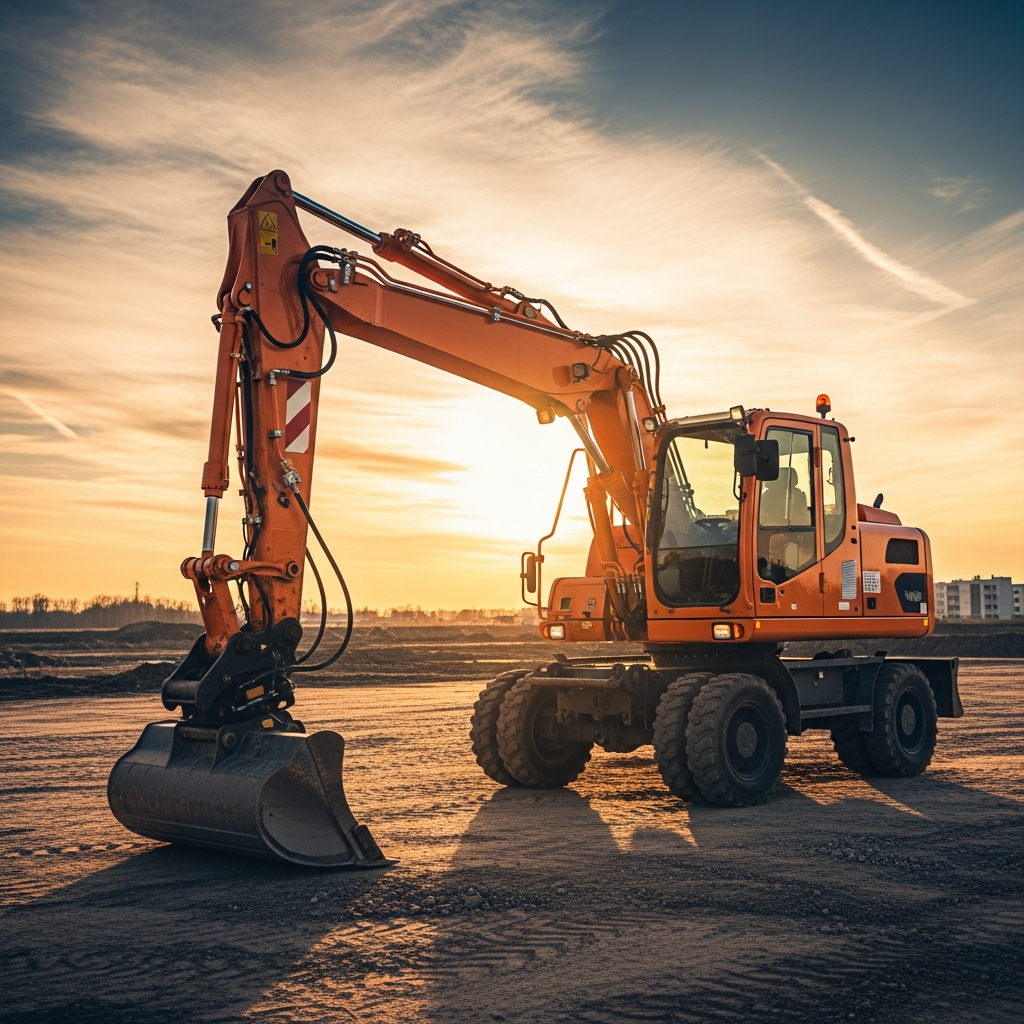
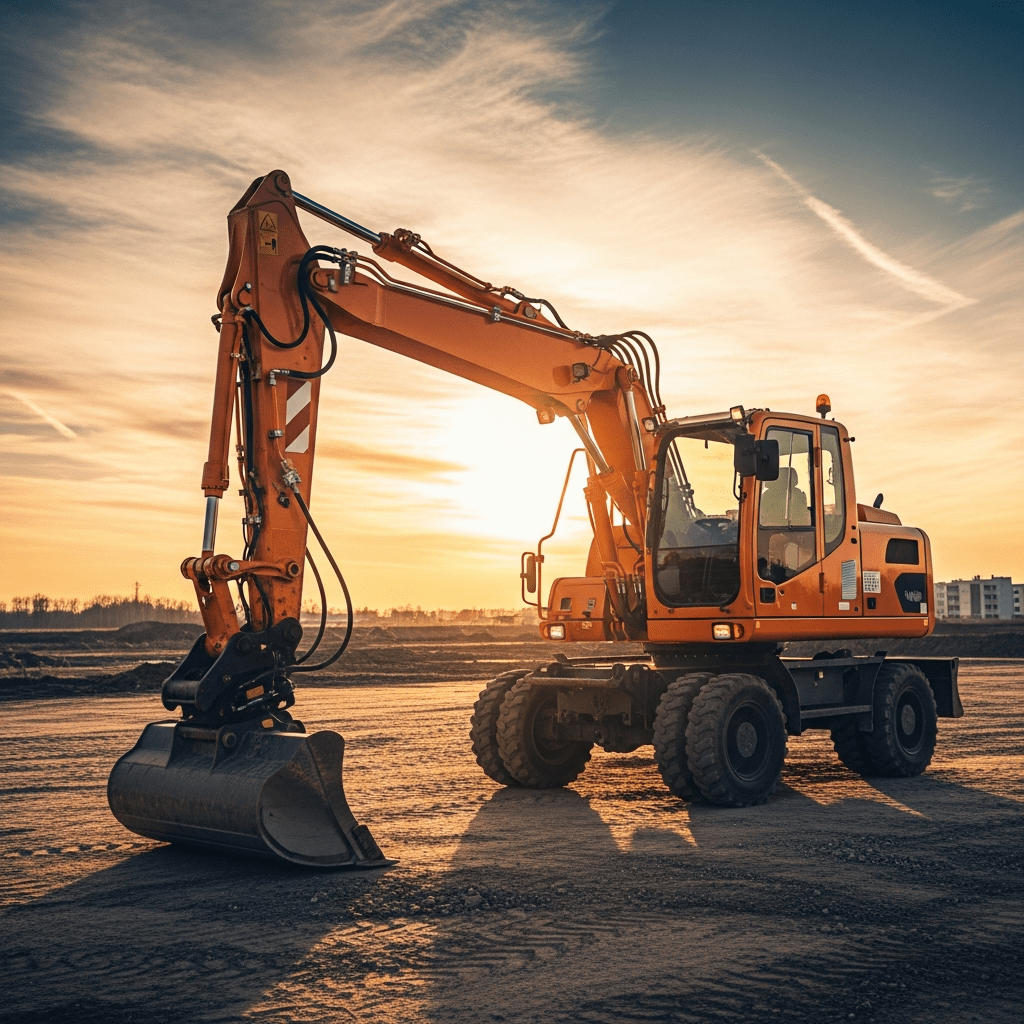
Visually, the hydraulic wheeled excavator (standard) presents a robust upper structure mounted on a wheeled chassis with two or three axles. It features an articulated boom and arm operated by hydraulic cylinders, complemented by a cab equipped with safety features. Outriggers or a dozer blade provide stability during operation, while the wheeled undercarriage enables smooth road travel at speeds up to 40 km/h.

Behavior or Usage

Designed for versatility, this excavator performs earthmoving, digging, and material handling tasks across urban construction sites, utility installations, and roadworks. Its wheeled mobility allows quick relocation without specialized transport, making it ideal for municipal fleets and contractors. Operators can interchange attachments to adapt to demolition, landscaping, or light forestry work, enhancing its multifunctional utility.

Merchandise & Prints

Bring this kind into your world � illustrated posters, mugs, and shirts.

Hydraulic wheeled excavator (standard) Hydraulic wheeled excavator (standard) Poster

Hydraulic wheeled excavator (standard) Poster

Archival print, museum-grade paper

Hydraulic wheeled excavator (standard) Hydraulic wheeled excavator (standard) Mug

Hydraulic wheeled excavator (standard) Mug

Stoneware mug, dishwasher safe

Hydraulic wheeled excavator (standard) Hydraulic wheeled excavator (standard) Shirt

Hydraulic wheeled excavator (standard) Shirt

Soft cotton tee, unisex sizes

Attributes & Insights

Taxon-Specific Insights

🌍Cultural Significance

While primarily a functional machine, the hydraulic wheeled excavator has become a symbol of modern urban development and infrastructure renewal. Its presence in cityscapes reflects the ongoing evolution of construction technology, embodying efficiency and adaptability in densely populated environments. It occasionally appears in industrial art and media as an icon of progress and mechanized labor.

📌Notable Facts

  • Standard models weigh between 14,000 and 26,000 kilograms, balancing power and mobility.
  • Typical engine power ranges from 90 to 150 kilowatts, powered by diesel internal combustion engines.
  • Bucket capacities vary from 0.6 to 1.5 cubic meters, suitable for diverse excavation tasks.
  • Equipped with safety features like ROPS/FOPS cabs, rear-view cameras, and hydraulic lockout systems.
  • Complies with stringent emissions standards such as the EU Stage V.

⚙️Mechanism Details

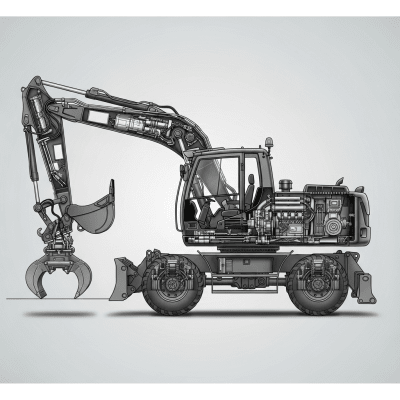
⚙️ The core excavation mechanism consists of an articulated boom and arm powered by high-pressure hydraulic cylinders. Hydraulic fluid, pressurized by pumps driven by the diesel engine, actuates these cylinders to extend, retract, and pivot the boom and arm with precision. A quick-coupler system allows rapid attachment changes, enabling the excavator to switch between buckets, breakers, grapples, and other tools. The hydraulic system also controls the swing mechanism, allowing 360-degree rotation around the chassis for versatile digging and loading operations.

Visual Variations

High quality studio photograph of a single Hydraulic wheeled excavator (standard) from the excavators taxonomy
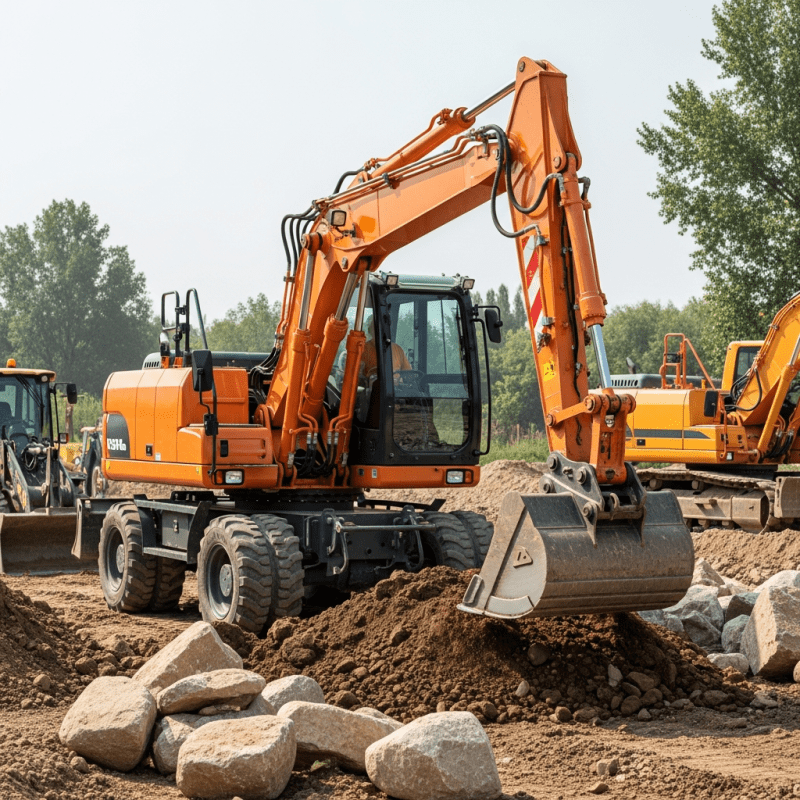
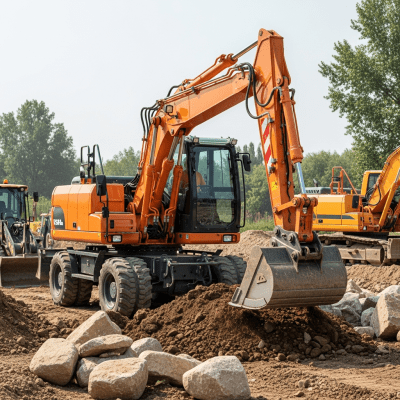
A realistic image of a Hydraulic wheeled excavator (standard) (excavators) at work on a construction site, surrounded by soil, rocks, and machinery
Detailed cross-sectional illustration of a Hydraulic wheeled excavator (standard) from the excavators taxonomy
Image of a diverse group of construction workers operating or interacting with a Hydraulic wheeled excavator (standard) from the excavators taxonomy
A close-up photograph focusing on the bucket and arm of a Hydraulic wheeled excavator (standard) (excavators), showing details such as hydraulic lines, metal textures, and wear marks
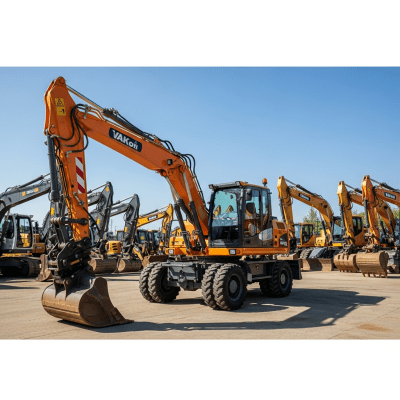
A wide-angle image of a fleet of various excavators, with the specific Hydraulic wheeled excavator (standard) in the foreground for emphasis

Composition & Context

Taxon-Specific Insights

🚜Mobility Types

🚘 This excavator employs a wheeled undercarriage, typically with two or three axles, providing superior road mobility compared to tracked counterparts. Wheeled chassis enable travel speeds of 20 to 40 km/h, facilitating quick site-to-site relocation without transport trailers. Stability during digging is maintained by deployable outriggers or a front dozer blade. While wheeled excavators excel on paved surfaces and urban environments, they are less suited to extremely rough or muddy terrain where crawler models dominate.

📏Size And Capacity

📇 Classified as standard size, these excavators weigh between 14,000 and 26,000 kilograms. Their rated engine power ranges from 90 to 150 kilowatts, delivering sufficient force for typical urban and utility excavation tasks. Bucket capacities span 0.6 to 1.5 cubic meters, balancing material volume with maneuverability. Maximum horizontal reach extends from 8 to 10 meters, allowing effective digging and loading within confined spaces. Tail swing radius typically measures 2 to 3 meters, with some zero or short-swing variants designed for tight urban sites.

🦺🌿Safety And Emissions

🦺🌿 Safety features include ROPS/FOPS-certified operator cabs to protect against rollovers and falling objects, rear-view cameras for enhanced visibility, audible travel alarms, and hydraulic lockout systems to prevent unintended movements. Emissions compliance meets stringent standards such as the EU Stage V and US Tier 4 Final, ensuring reduced environmental impact. These measures align with ISO 20474-1 safety guidelines and regional regulations, promoting operator safety and environmental responsibility.

🔧Attachments And Accessories

🛠️ Common attachments for the hydraulic wheeled excavator (standard) include:

  • General-purpose buckets for earthmoving and digging
  • Ditch-cleaning buckets for grading and channel work
  • Hydraulic breakers for concrete and rock demolition
  • Grapples for material handling and sorting
  • Shears for cutting metal and demolition tasks
  • Augers for drilling holes in soil
  • Rotating handlers for precise material placement

🛠️⏳Maintenance And Lifecycle

🛠️️⏳ Maintenance routines focus on hydraulic system integrity, engine servicing, and undercarriage inspection. Regular checks of hydraulic fluid levels, filter replacements, and lubrication extend component life. Tires require monitoring for wear and pressure to maintain mobility and safety. Typical service life ranges from 8 to 15 years, influenced by duty cycle, operating conditions, and adherence to maintenance schedules. Designed for high utilization in urban fleets, these excavators balance durability with operational efficiency.

Faq

Q: What distinguishes a wheeled excavator from a crawler excavator?
A: Wheeled excavators have rubber tires allowing faster travel on roads, while crawler excavators use tracks for superior stability on rough terrain.

Q: Can hydraulic wheeled excavators be used for demolition?
A: Yes, with appropriate attachments like shears or breakers, they can perform light to moderate demolition tasks.

Q: Are these excavators suitable for long-distance travel?
A: They can travel on public roads at moderate speeds but may require transport trailers for long-distance or cross-border moves due to axle load limits.