Origin Story

Hydraulic mining shovels originated in the late 1970s and early 1980s as an evolution of smaller hydraulic excavators adapted to meet the mining industry's demand for greater capacity and efficiency. Pioneered by manufacturers such as O&K (later part of Terex and Caterpillar), Komatsu, Hitachi, and Liebherr, these machines replaced earlier cable-actuated shovels by leveraging advances in hydraulic technology for improved control and faster cycle times.

Classification

Belonging to the hydraulic class of excavators, hydraulic mining shovels are a specialized subset designed for mining applications. They are crawler-mounted machines within the mining size class, distinguished from cable-operated electric rope shovels and draglines by their hydraulic actuation and high mobility on rough terrain.

Appearance or Form

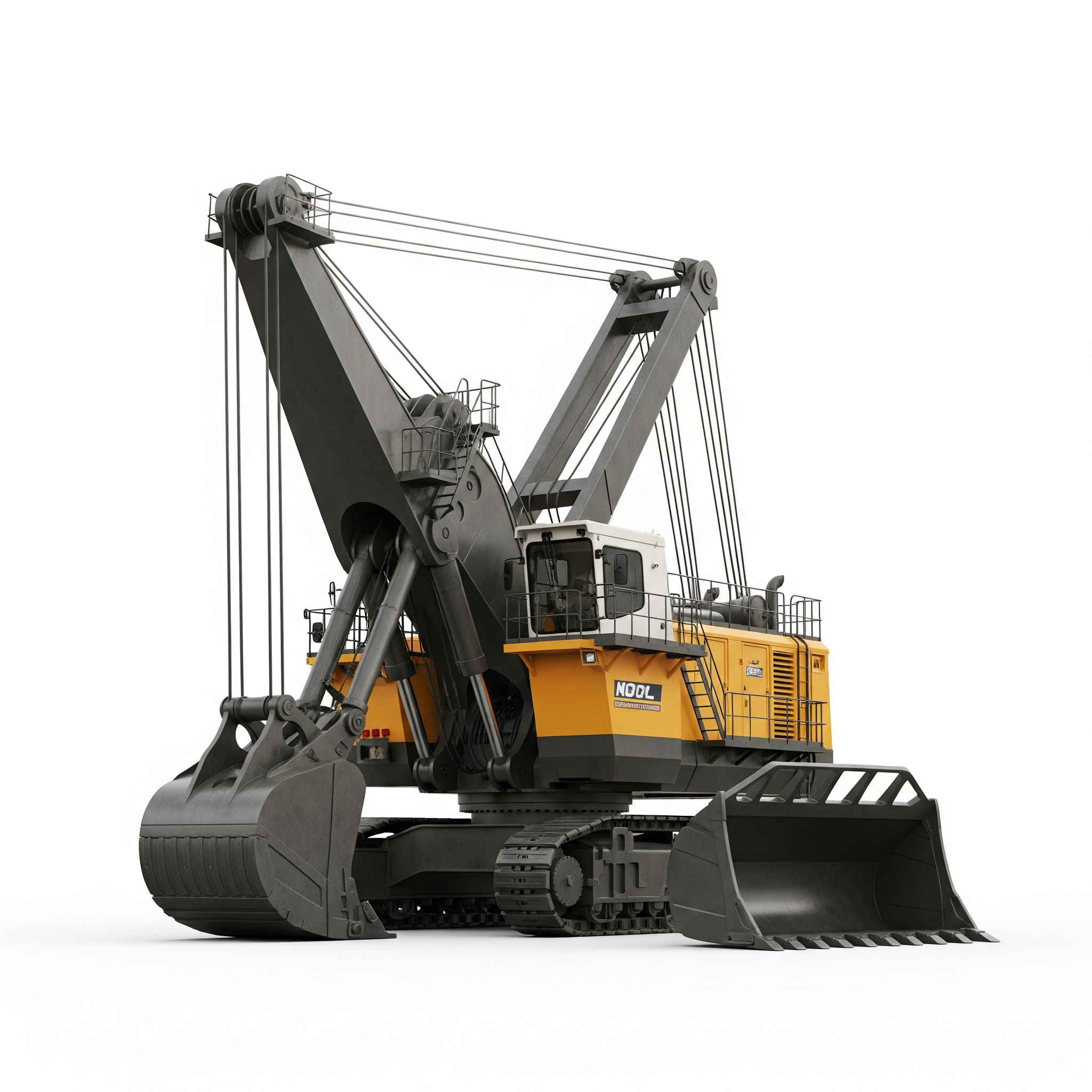
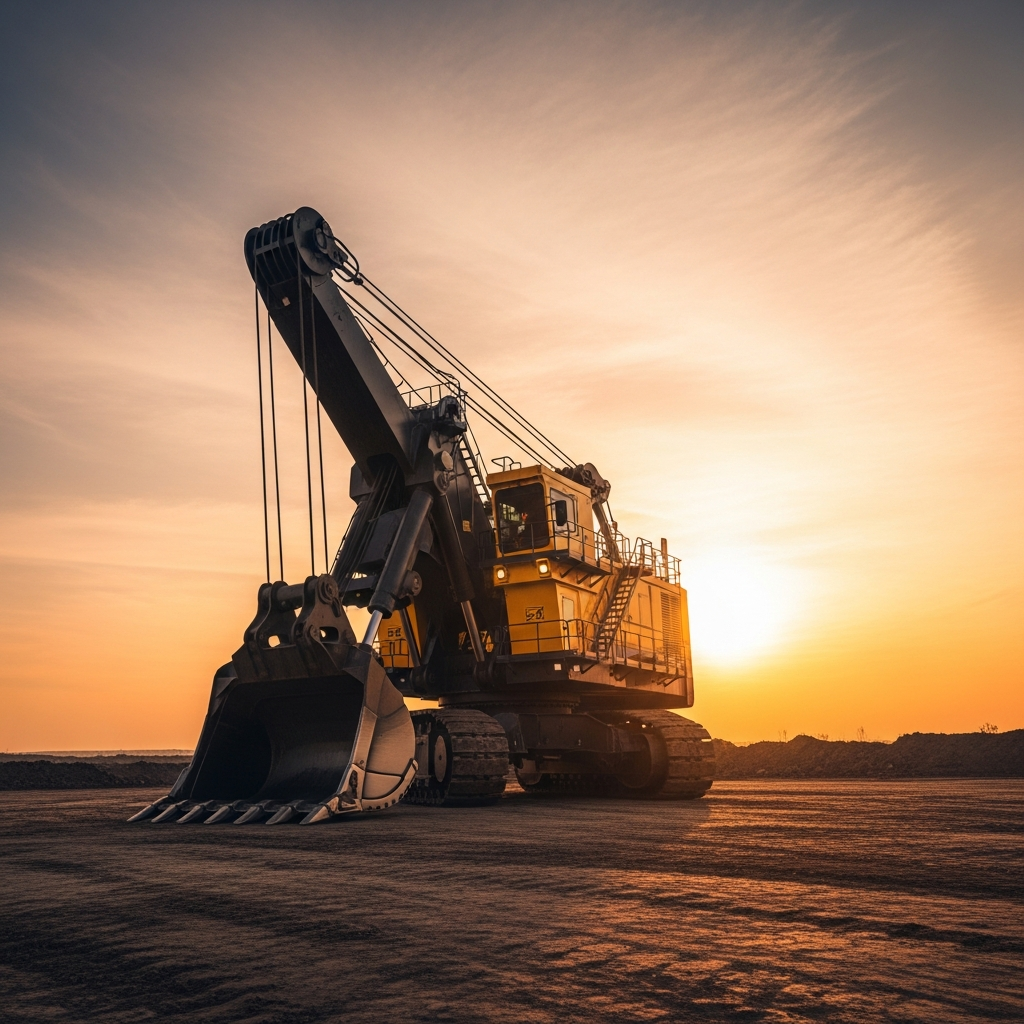
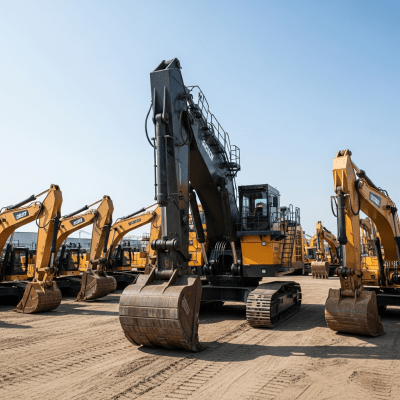
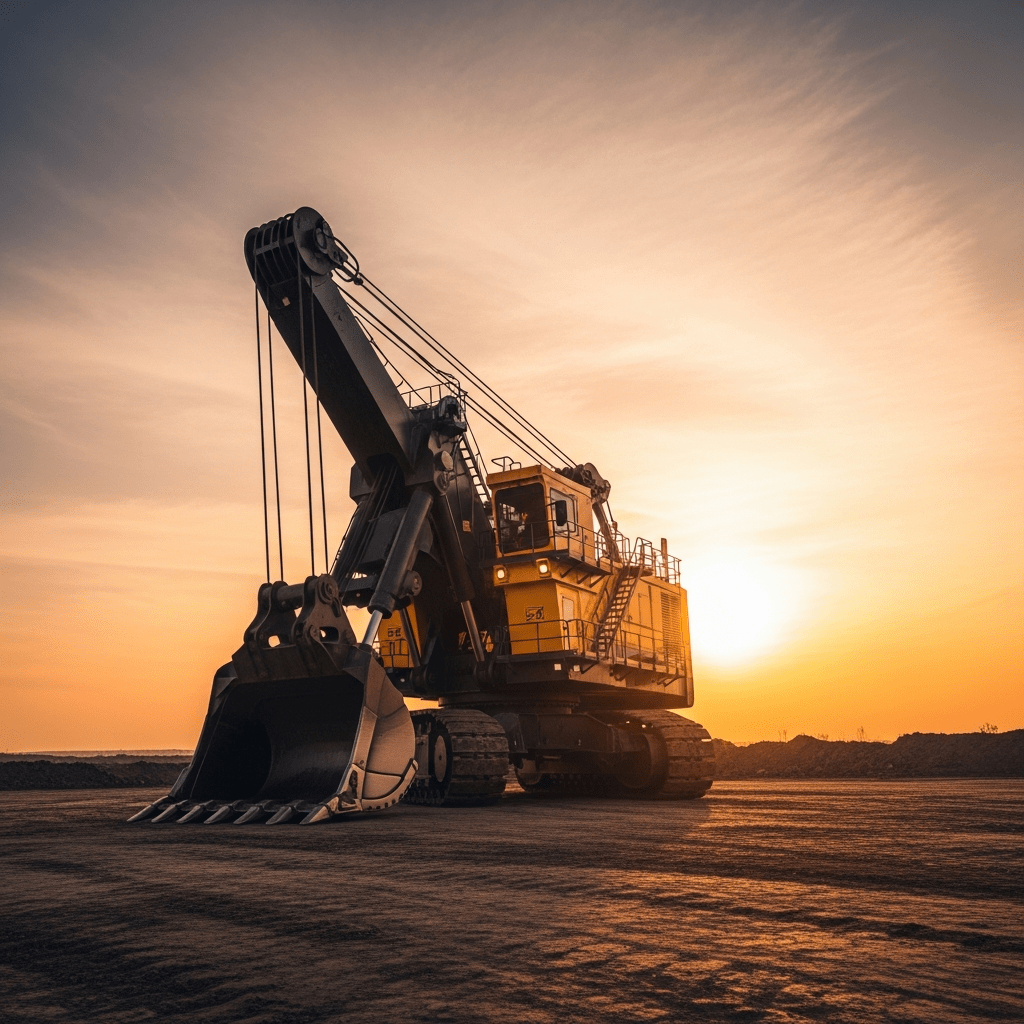
These machines feature a robust crawler undercarriage supporting a massive articulated boom, stick, and bucket assembly powered by hydraulic cylinders. They typically exhibit a large, heavy frame with an enclosed operator cab, a substantial counterweight at the rear, and a bucket capacity ranging from 8 to 52 cubic meters. Their tail swing radius ranges between 6 and 12 meters, reflecting their considerable size and mass.

Behavior or Usage

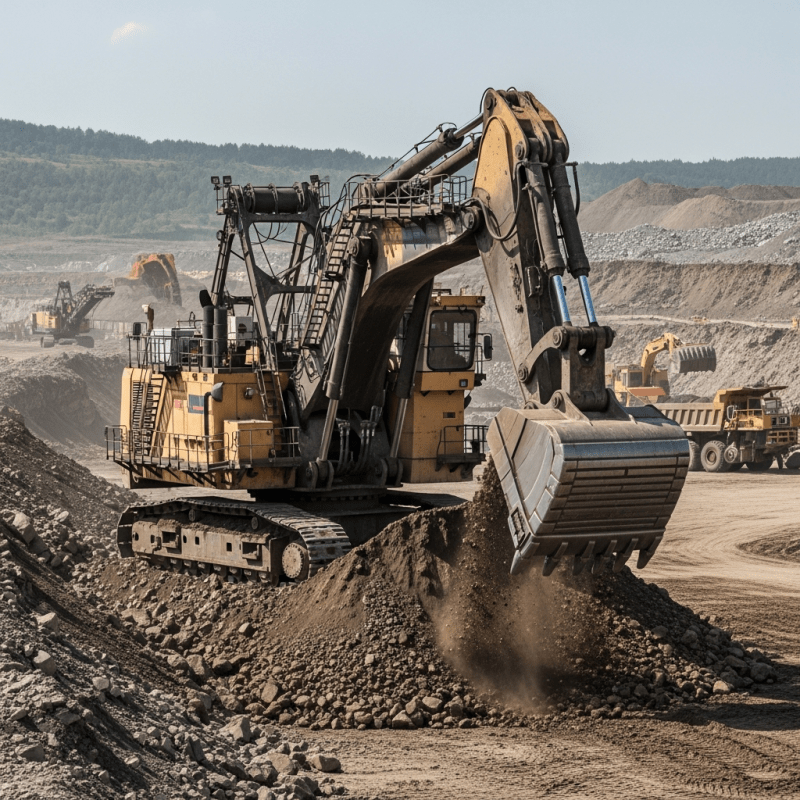
Hydraulic mining shovels perform high-volume excavation and loading tasks in surface mining, moving blasted rock, ore, and overburden into haul trucks. Their hydraulic systems enable precise, powerful digging and rapid cycle times, making them versatile for various materials including coal, hard rock, and overburden. Operators control them from enclosed cabs, with emerging remote and autonomous operation technologies still in early adoption stages.

Merchandise & Prints

Bring this kind into your world � illustrated posters, mugs, and shirts.

Hydraulic mining shovel Hydraulic mining shovel Poster

Hydraulic mining shovel Poster

Archival print, museum-grade paper

Hydraulic mining shovel Hydraulic mining shovel Mug

Hydraulic mining shovel Mug

Stoneware mug, dishwasher safe

Hydraulic mining shovel Hydraulic mining shovel Shirt

Hydraulic mining shovel Shirt

Soft cotton tee, unisex sizes

Attributes & Insights

Taxon-Specific Insights

🌍Cultural Significance

While primarily industrial tools, hydraulic mining shovels symbolize the scale and power of modern mining and earthmoving technology. They appear in mining industry exhibitions, engineering showcases, and occasionally in media depicting large-scale resource extraction. Their imposing presence reflects human capability to reshape landscapes and fuels narratives of industrial progress.

📌Notable Facts

  • Hydraulic mining shovels can weigh from 80 to over 900 metric tonnes, making them some of the heaviest earthmoving machines.
  • They feature bucket capacities up to 52 cubic meters, capable of moving immense volumes in a single scoop.
  • Typical engine power ranges from 1,000 to 4,000 kW, powered mainly by diesel engines.
  • Safety features include ROPS/FOPS-certified operator cabs and advanced fire suppression systems.
  • Transporting these machines requires disassembly and modular shipment due to their massive size.

⚙️Mechanism Details

⚙️ Hydraulic mining shovels operate via an articulated boom, stick, and bucket system actuated by hydraulic cylinders. Pressurized hydraulic fluid flows through cylinders that extend or retract to move each arm segment and the bucket, allowing precise control over digging and loading motions. This hydraulic actuation provides high breakout forces—up to 3,000 kN—enabling the machine to penetrate hard rock and dense materials. The crawler undercarriage ensures stability on uneven terrain, while the hydraulic system’s responsiveness allows for efficient cycle times in loading haul trucks.

Visual Variations

High quality studio photograph of a single Hydraulic mining shovel (large hydraulic mining excavator) from the excavators taxonomy
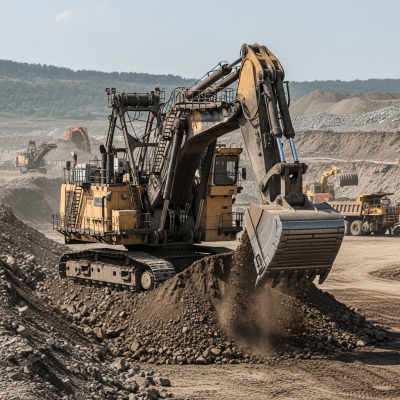
A realistic image of a Hydraulic mining shovel (large hydraulic mining excavator) (excavators) at work on a construction site, surrounded by soil, rocks, and machinery
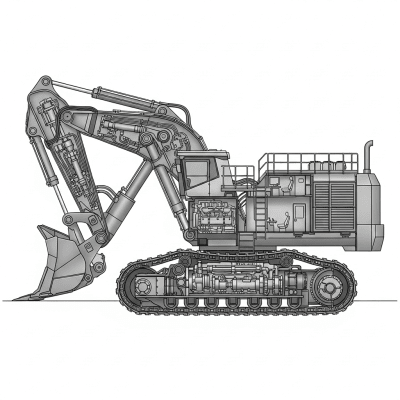
Detailed cross-sectional illustration of a Hydraulic mining shovel (large hydraulic mining excavator) from the excavators taxonomy
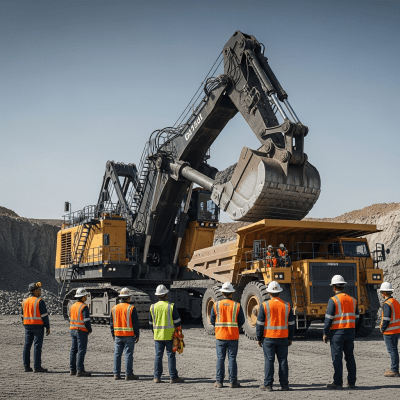
Image of a diverse group of construction workers operating or interacting with a Hydraulic mining shovel (large hydraulic mining excavator) from the excavators taxonomy
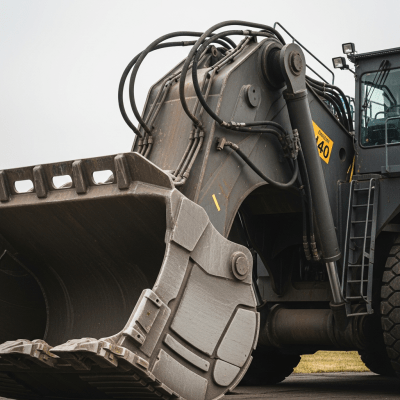
A close-up photograph focusing on the bucket and arm of a Hydraulic mining shovel (large hydraulic mining excavator) (excavators), showing details such as hydraulic lines, metal textures, and wear marks
A wide-angle image of a fleet of various excavators, with the specific Hydraulic mining shovel (large hydraulic mining excavator) in the foreground for emphasis

Composition & Context

Taxon-Specific Insights

🚜Mobility Types

🚨 Hydraulic mining shovels are exclusively mounted on crawler (tracked) undercarriages, providing superior traction and stability on rough, uneven mining terrain. This mobility type allows them to maneuver heavy loads safely and maintain balance during digging operations. Unlike wheeled excavators, crawlers distribute weight evenly, reducing ground pressure and enabling operation in soft or rugged ground conditions typical of mining sites.

📏Size And Capacity

📇 Classified in the mining size band, hydraulic mining shovels typically weigh between 80,000 and 900,000 kilograms. Their bucket capacities range from 8 to 52 cubic meters, accommodating massive volumes of material per cycle. Engine power spans from 1,000 to 4,000 kilowatts, supporting the hydraulic systems and heavy lifting. Maximum reach varies between 10 and 25 meters, allowing deep excavation and loading of large haul trucks. Tail swing radii of 6 to 12 meters reflect the machine’s substantial footprint.

🦺🌿Safety And Emissions

🛡️ Hydraulic mining shovels incorporate multiple safety features including ROPS (Roll-Over Protective Structure) and FOPS (Falling Object Protective Structure) certified operator cabs, advanced fire suppression systems, fall protection, and emergency egress mechanisms. Emissions compliance varies by region, with many machines meeting Tier 4 or equivalent standards, though some operate under less stringent regulations depending on local mining policies.

🔧Attachments And Accessories

🛠️ Common attachments for hydraulic mining shovels include large mining buckets tailored for general excavation, specialized coal buckets, overburden buckets for loose material, hard rock buckets designed for tough conditions, rock breakers for secondary fragmentation, and material handlers for loading and sorting tasks. These attachments enhance versatility across different mining environments and materials.

🛠️⏳Maintenance And Lifecycle

🛠️️⏳ Hydraulic mining shovels are engineered for continuous heavy-duty operation with maintenance routines focused on hydraulic system integrity, engine performance, track and undercarriage wear, and structural inspections. Major overhauls typically occur after tens of thousands of operating hours. Their robust construction supports long service lives, often extending several decades with proper care and periodic component replacements.

Faq

Q: What distinguishes a hydraulic mining shovel from an electric rope shovel?
A: Hydraulic mining shovels use hydraulic cylinders for boom and bucket movement, offering faster cycle times and greater flexibility, while electric rope shovels use cable systems and are often larger with higher bucket capacities.

Q: Are hydraulic mining shovels used outside mining?
A: While primarily designed for mining, they are occasionally employed in large-scale quarrying and major civil engineering projects requiring massive excavation.

Q: What power sources do hydraulic mining shovels use?
A: Most are powered by diesel internal combustion engines, with some newer models incorporating hybrid electric-assist systems.