Origin Story

Emerging in the late 20th century, hydraulic material handlers evolved from standard hydraulic excavators to meet the growing demands of scrap yards, ports, and recycling facilities. Leading manufacturers like Liebherr, Sennebogen, Caterpillar, and Fuchs pioneered purpose-built models featuring reinforced frames, elevated cabs, and specialized hydraulic systems, marking a significant divergence from traditional excavators toward machines tailored for industrial material handling.

Classification

Classified within the hydraulic excavator family, hydraulic material handlers belong to the standard to large size class and are primarily crawler-based machines. They are distinguished by their application focus on material handling rather than earthmoving, and are part of the broader excavator taxonomy that includes cable and suction excavators, with this type emphasizing hydraulic actuation and rotating upper structures.

Appearance or Form

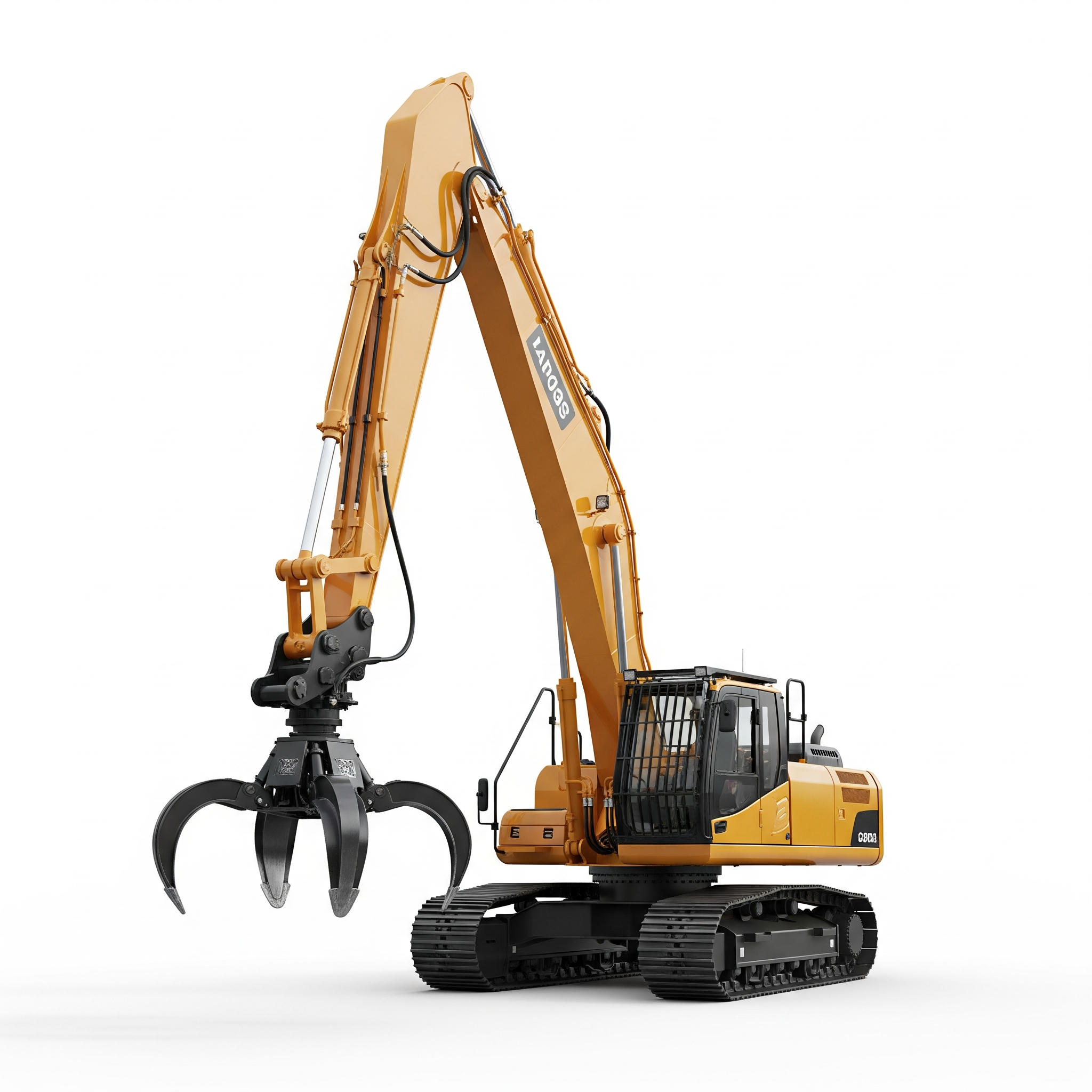
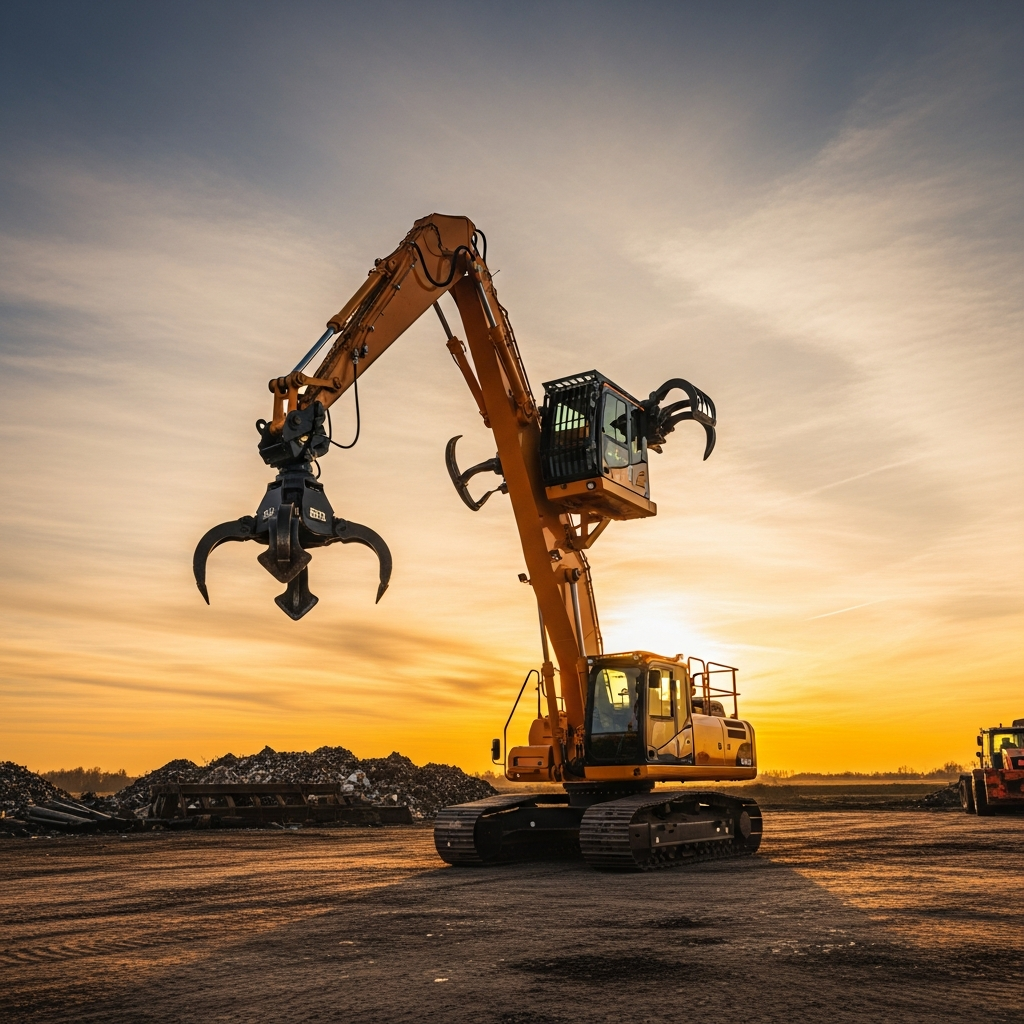
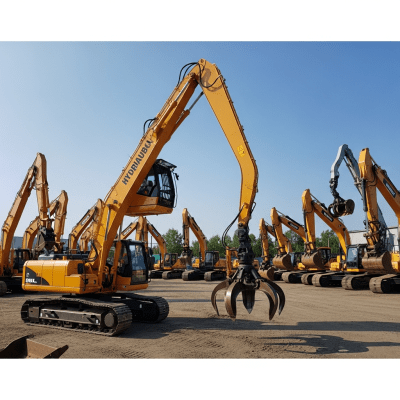
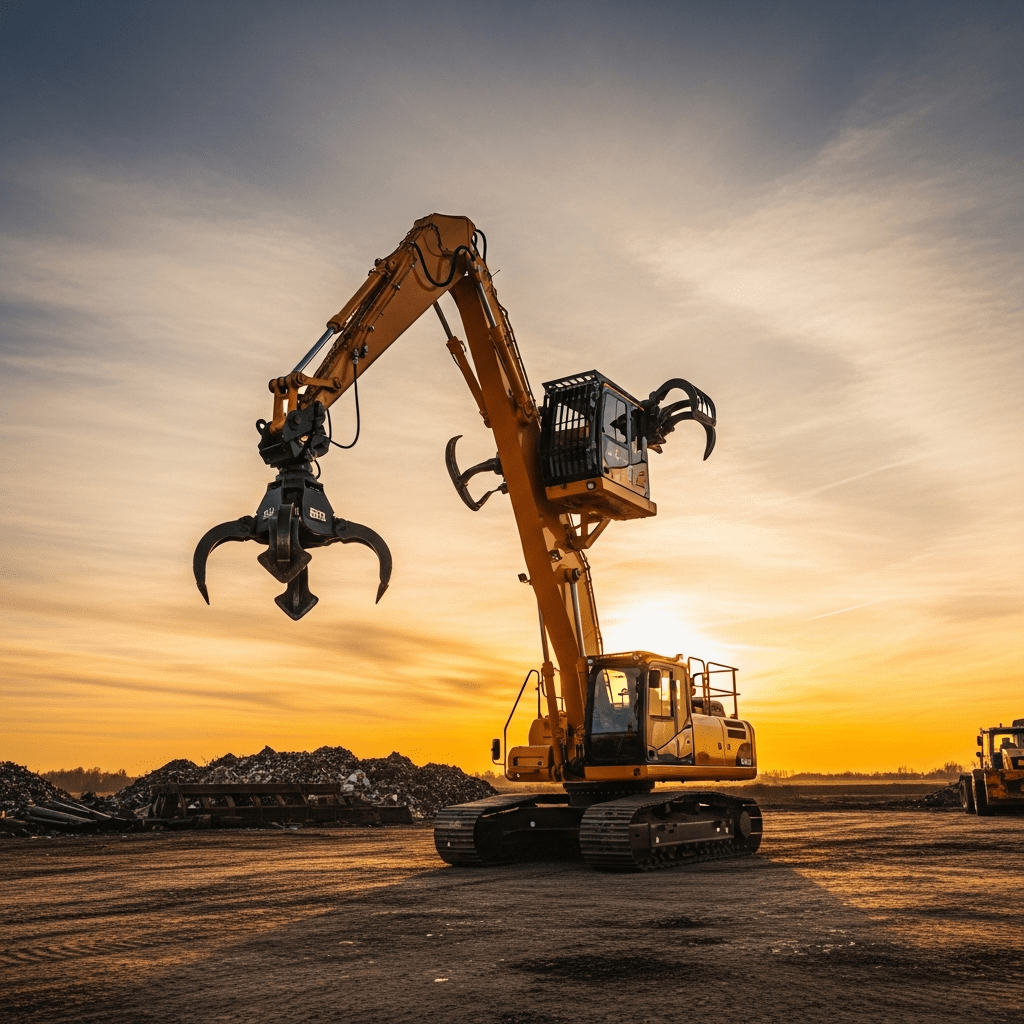
These machines feature a robust, tracked undercarriage for stability, supporting a rotating upper structure capable of 360° slew. The operator cab is elevated for enhanced visibility, and the boom and stick are configured for extended reach, often between 12 and 22 meters. Attachments such as multi-tine hydraulic grapples or clamshell buckets define their distinctive silhouette, emphasizing function over traditional digging form.

Behavior or Usage

Hydraulic material handlers excel at high-cycle operations involving loading, sorting, and transferring diverse bulk materials. Their powerful hydraulic systems drive precise boom, stick, and attachment movements, enabling efficient handling of scrap metal, timber, recyclables, and other industrial materials. Commonly deployed in scrap yards, ports, recycling plants, and timber yards, they prioritize lift capacity and operational speed over digging force.

Merchandise & Prints

Bring this kind into your world � illustrated posters, mugs, and shirts.

Hydraulic material handler Hydraulic material handler Poster

Hydraulic material handler Poster

Archival print, museum-grade paper

Hydraulic material handler Hydraulic material handler Mug

Hydraulic material handler Mug

Stoneware mug, dishwasher safe

Hydraulic material handler Hydraulic material handler Shirt

Hydraulic material handler Shirt

Soft cotton tee, unisex sizes

Attributes & Insights

Taxon-Specific Insights

🌍Cultural Significance

While not prominent in traditional art or myth, hydraulic material handlers have become iconic in modern industrial landscapes, symbolizing the efficiency and technological advancement of recycling and bulk material logistics. Their presence at ports and recycling centers underscores society's growing emphasis on sustainability and resource management.

📌Notable Facts

  • Operating weights typically range from 15 to 80 metric tonnes, with some port handlers exceeding 100 tonnes.
  • They feature 360° rotating upper structures for continuous material manipulation.
  • Electric and hybrid powertrains are emerging, especially for indoor or low-emission environments.
  • Attachments include hydraulic grapples, magnets, scrap shears, and timber grabs, tailored for diverse materials.
  • Safety systems often include load moment indicators and stability monitoring to ensure secure operation.

⚙️Mechanism Details

⚙️ Hydraulic material handlers operate through hydraulic actuators that power the boom, stick, and attachments. This system uses pressurized hydraulic fluid to drive cylinders and motors, enabling smooth, powerful, and precise movements. The rotating upper structure, capable of full 360° slew, allows continuous manipulation of materials without repositioning the undercarriage. Unlike digging-focused excavators, these handlers emphasize lift capacity and cycle speed, with attachments designed for gripping, sorting, and transferring rather than soil penetration.

Visual Variations

High quality studio photograph of a single Hydraulic material handler (rotating upper, grapple) from the excavators taxonomy
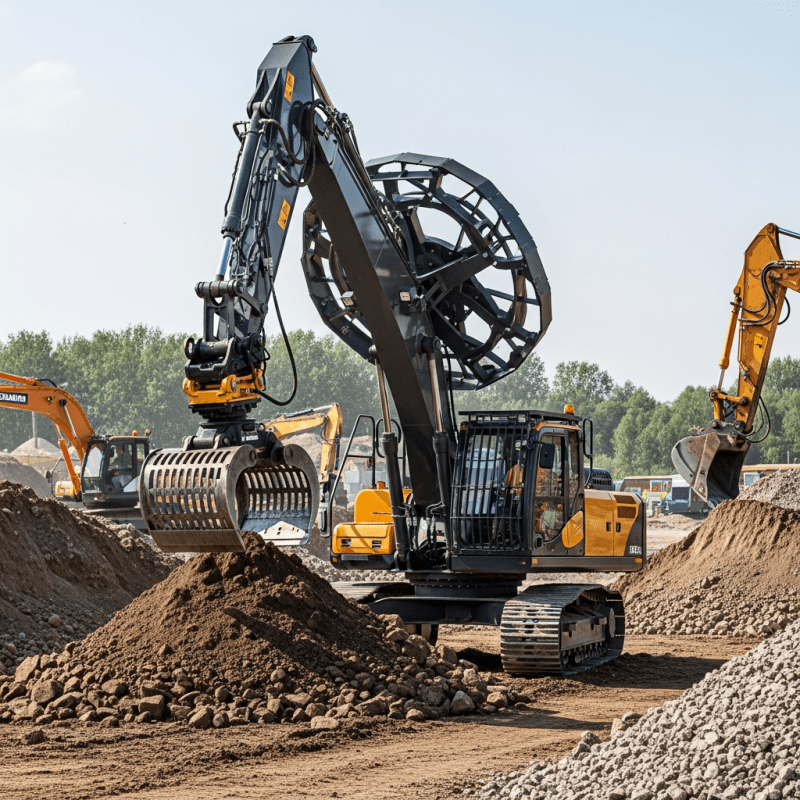
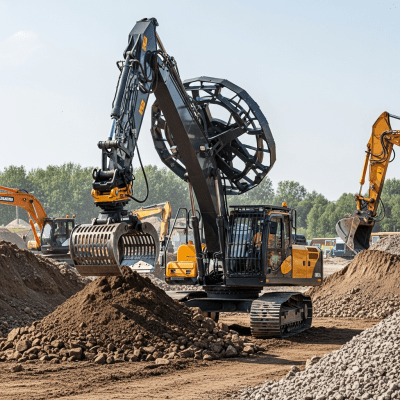
A realistic image of a Hydraulic material handler (rotating upper, grapple) (excavators) at work on a construction site, surrounded by soil, rocks, and machinery
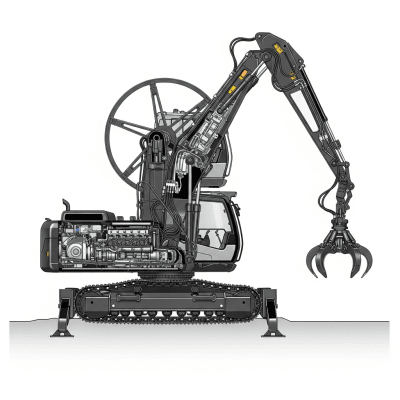
Detailed cross-sectional illustration of a Hydraulic material handler (rotating upper, grapple) from the excavators taxonomy
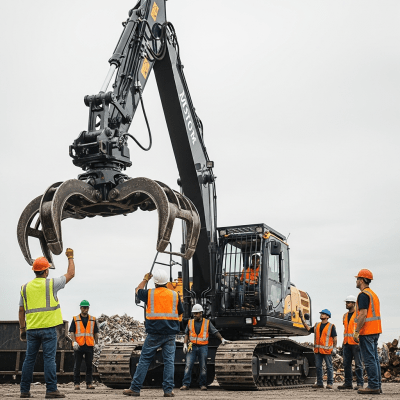
Image of a diverse group of construction workers operating or interacting with a Hydraulic material handler (rotating upper, grapple) from the excavators taxonomy
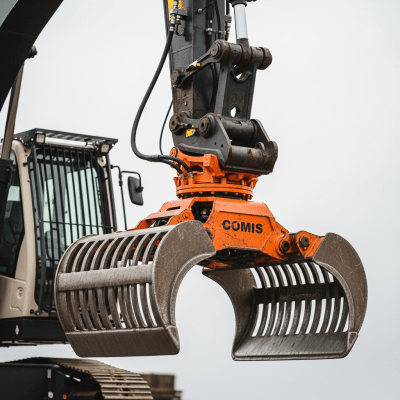
A close-up photograph focusing on the bucket and arm of a Hydraulic material handler (rotating upper, grapple) (excavators), showing details such as hydraulic lines, metal textures, and wear marks
A wide-angle image of a fleet of various excavators, with the specific Hydraulic material handler (rotating upper, grapple) in the foreground for emphasis

Composition & Context

Taxon-Specific Insights

🚜Mobility Types

🚨 Mobility is primarily provided by crawler (tracked) undercarriages, offering superior stability on uneven terrain and heavy lifting capacity. Some models are stationary, mounted on pedestals or rails for dockside or mill operations, while wheeled variants exist but are less common. The crawler base supports outriggers or ballast systems to enhance stability during high-reach or heavy-load operations.

📏Size And Capacity

📇 Hydraulic material handlers typically fall within the standard to large size classes, with operating weights ranging from 15,000 to 80,000 kilograms. Engine power generally spans 100 to 300 kilowatts. Bucket or grapple capacities vary between 0.5 and 2.5 cubic meters, depending on attachment type and material. Maximum reach extends from 12 to 22 meters, enabling access to large piles or containers in industrial settings.

🦺🌿Safety And Emissions

🧪🪔 These machines incorporate advanced safety features such as load moment indicators, cab guarding, emergency stop systems, and stability monitoring to protect operators and surroundings. They comply with international safety standards like ISO 20474-1 and regional regulations including EU Stage V and US Tier 4 Final emissions classes. Electric variants offer zero-emission operation, increasingly favored in environmentally sensitive or indoor environments.

🔧Attachments And Accessories

🔧 Common attachments include:

  • Hydraulic grapples (multi-tine or orange peel) for grabbing and sorting scrap and bulk materials.
  • Clamshell buckets for precise loading and unloading.
  • Magnets for handling ferrous metals.
  • Scrap shears for cutting metal pieces.
  • Timber grabs specialized for handling logs and wood products.

These attachments enhance versatility and efficiency across diverse industrial applications.

🛠️⏳Maintenance And Lifecycle

🛠️⏳ Designed for demanding, high-duty cycles, hydraulic material handlers require regular maintenance focused on hydraulic system integrity, attachment wear, and undercarriage condition. Routine inspections of hoses, cylinders, and slew mechanisms are critical to prevent downtime. With proper care, these machines offer extended service lives, supporting continuous operation in industrial environments where uptime is essential.

Faq

Q: How do hydraulic material handlers differ from standard excavators?
A: They are optimized for lifting and material manipulation with specialized attachments and rotating upper structures, rather than earth excavation.

Q: What types of attachments are commonly used?
A: Hydraulic grapples, clamshell buckets, magnets, scrap shears, and timber grabs are typical.

Q: Are there electric versions available?
A: Yes, electric and hybrid models are increasingly used, especially indoors or where emissions are regulated.