Origin Story

High-reach demolition excavators originated in the late 1980s and early 1990s, developed primarily in Europe and Japan to meet growing urban demolition demands and stricter safety regulations. Leading manufacturers adapted standard hydraulic crawler excavators by extending booms, reinforcing frames, and enhancing operator protection, setting new industry standards for safe, high-altitude demolition.

Classification

This excavator belongs to the hydraulic class of earthmoving machinery, characterized by articulated booms powered by hydraulic cylinders. It falls within the large size category, typically crawler-based for stability, and is purpose-built for demolition applications requiring extended vertical reach.

Appearance or Form

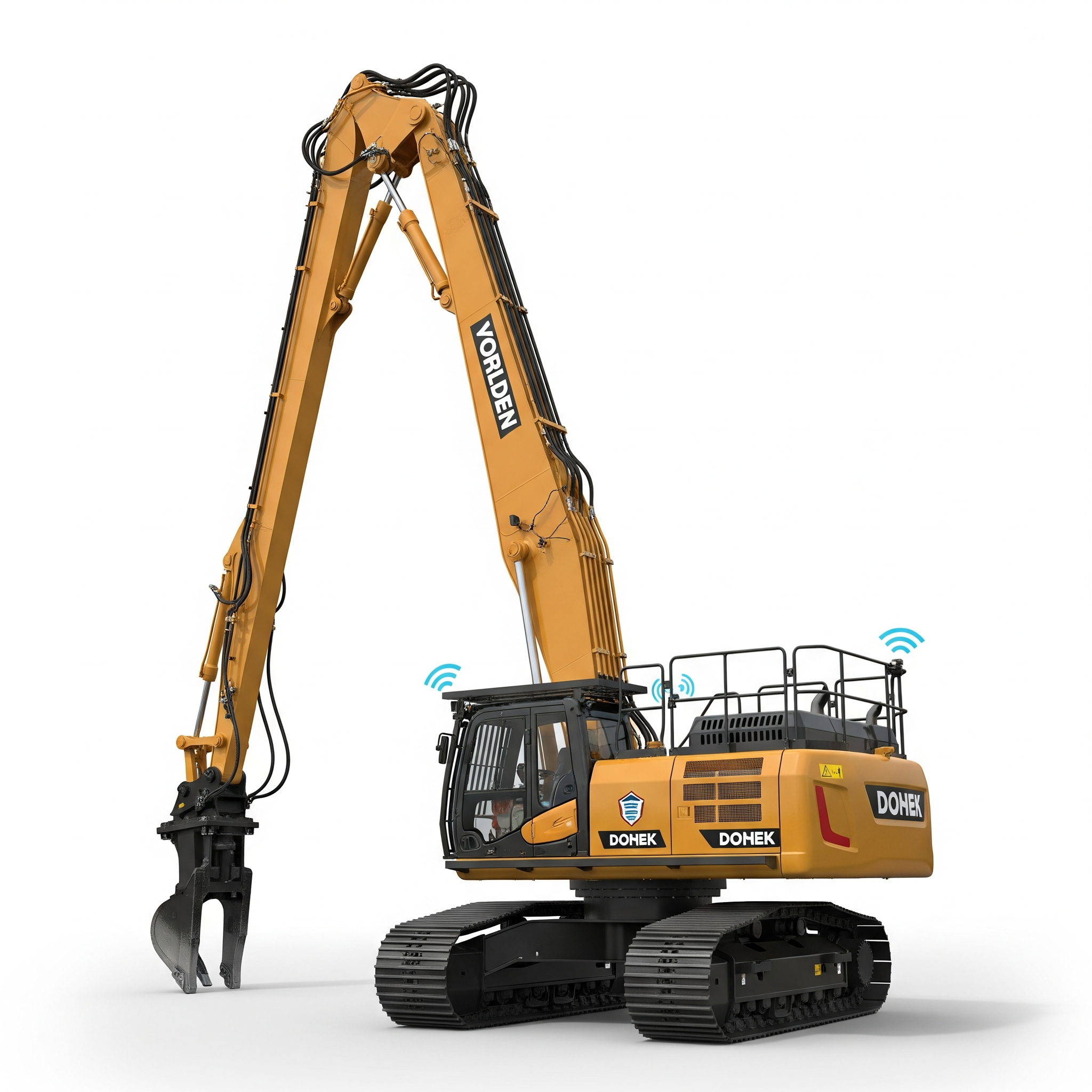
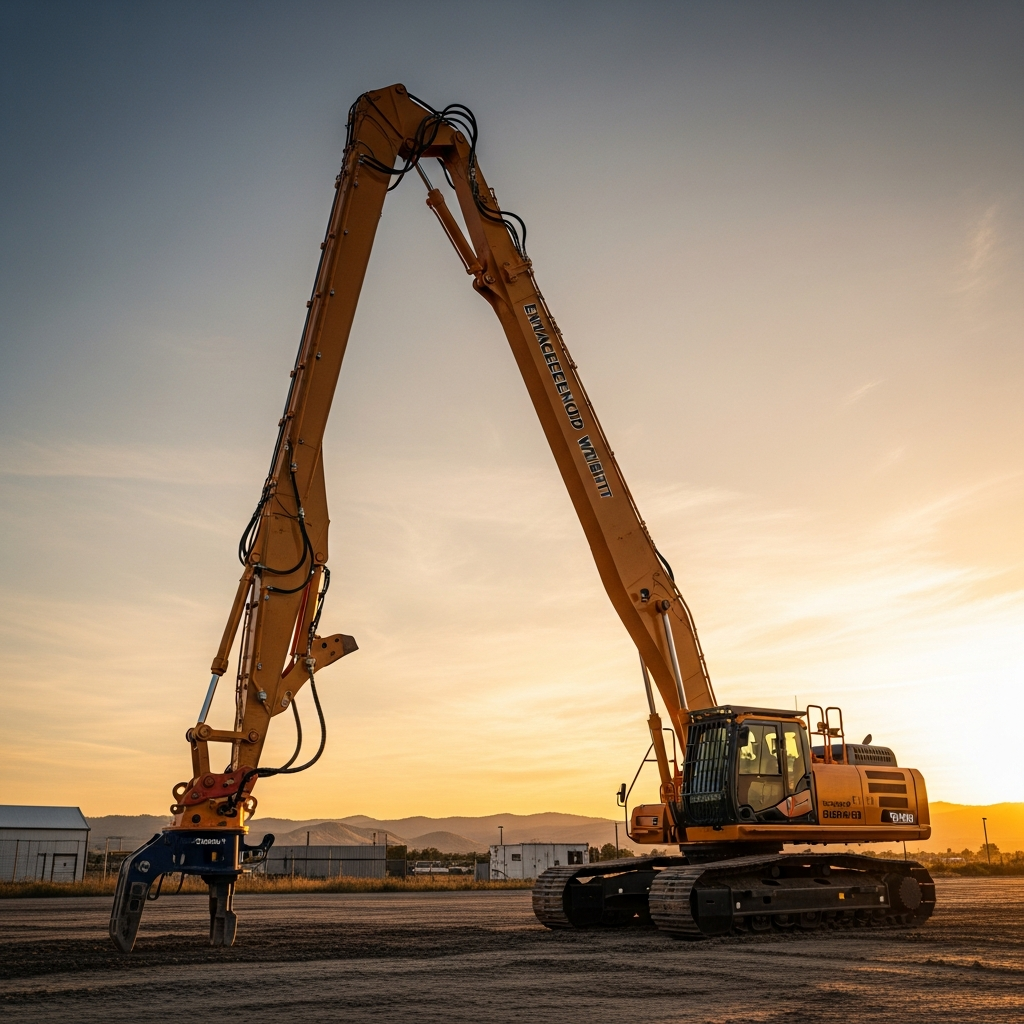
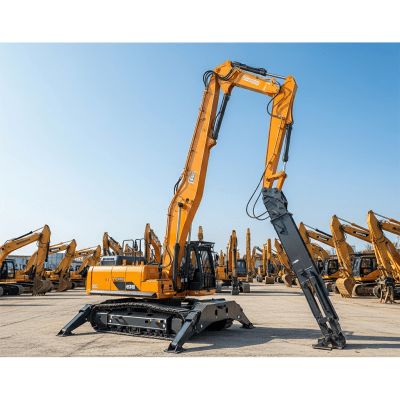
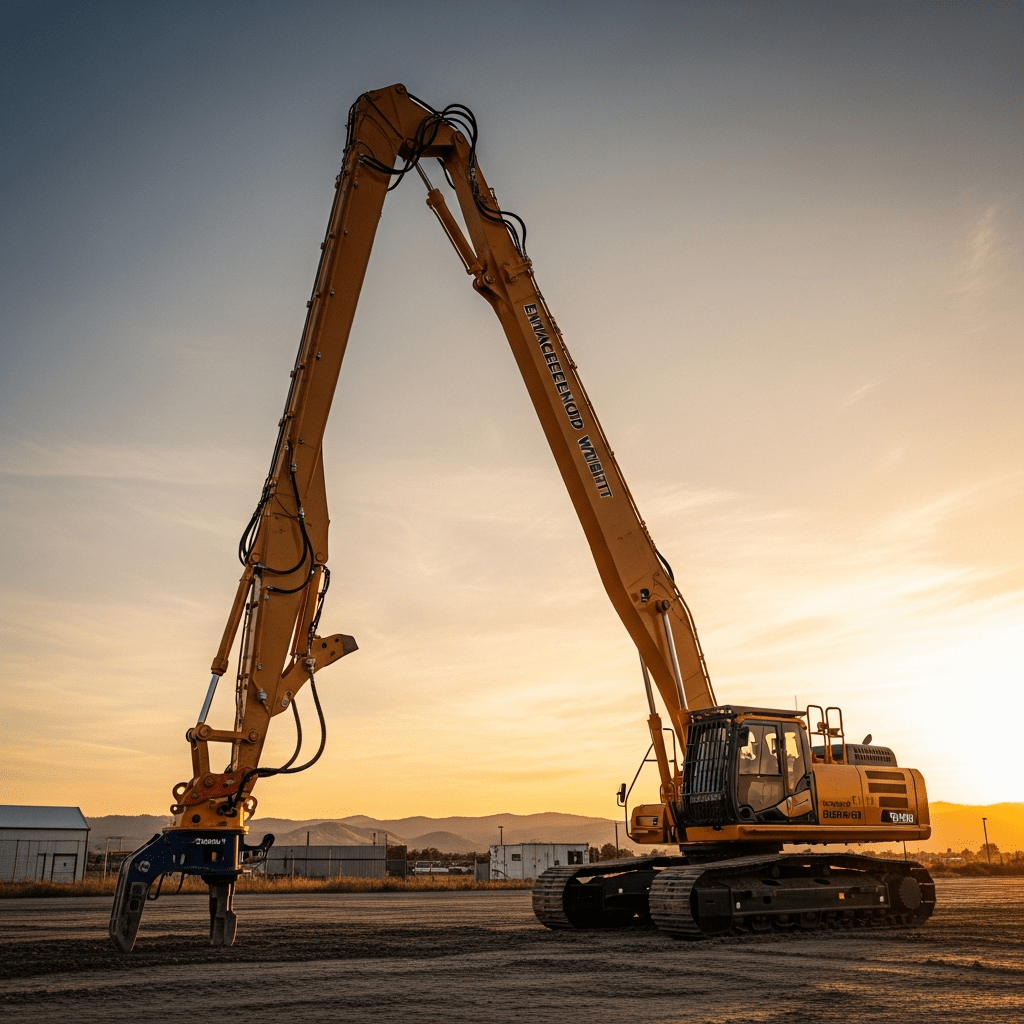
Visually, these excavators feature a robust tracked undercarriage supporting a reinforced upper structure with multi-piece, often telescopic, hydraulic booms that can extend vertically up to 55 meters. The operator cab is heavily fortified with front and roof guards, reflecting its role in hazardous demolition environments.

Behavior or Usage

Hydraulic demolition/high-reach excavators are employed to dismantle tall buildings, industrial plants, and other large structures from the top down, allowing precise and safe removal of materials at height. Operators use a variety of attachments such as shears, breakers, and crushers to fragment concrete and steel, minimizing risk to personnel and surrounding properties.

Merchandise & Prints

Bring this kind into your world � illustrated posters, mugs, and shirts.

Hydraulic demolition/high-reach excavator Hydraulic demolition/high-reach excavator Poster

Hydraulic demolition/high-reach excavator Poster

Archival print, museum-grade paper

Hydraulic demolition/high-reach excavator Hydraulic demolition/high-reach excavator Mug

Hydraulic demolition/high-reach excavator Mug

Stoneware mug, dishwasher safe

Hydraulic demolition/high-reach excavator Hydraulic demolition/high-reach excavator Shirt

Hydraulic demolition/high-reach excavator Shirt

Soft cotton tee, unisex sizes

Attributes & Insights

Taxon-Specific Insights

🌍Cultural Significance

In modern urban landscapes, these machines symbolize the intersection of engineering innovation and safety, enabling city renewal and redevelopment. While not prominent in myth or art, they represent the technological progress that allows controlled transformation of the built environment, often featured in documentaries and industrial photography highlighting urban change.

📌Notable Facts

  • High-reach booms can extend vertically between 20 and 55 meters, with some models reaching up to 70 meters.
  • Operating weights range from 30 to 80 metric tonnes, with some variants exceeding 80 tonnes for extreme applications.
  • They incorporate reinforced cabs with FOPS/ROPS protection to safeguard operators from falling debris.
  • Attachments include demolition shears, concrete crushers, and multi-processors for versatile dismantling tasks.
  • Designed for modular transport, their booms can be disassembled to comply with road transport regulations.

⚙️Mechanism Details

These excavators operate via an articulated hydraulic boom system powered by high-pressure fluid actuators. The boom is often modular or telescopic, allowing vertical extension up to 55 meters. Hydraulic cylinders control boom articulation, arm movement, and attachment operation, enabling precise positioning and force application. The crawler undercarriage provides a stable base to counterbalance the extended boom and heavy attachments, ensuring operational safety and effectiveness during high-reach demolition tasks.

Visual Variations

High quality studio photograph of a single Hydraulic demolition / high-reach excavator from the excavators taxonomy
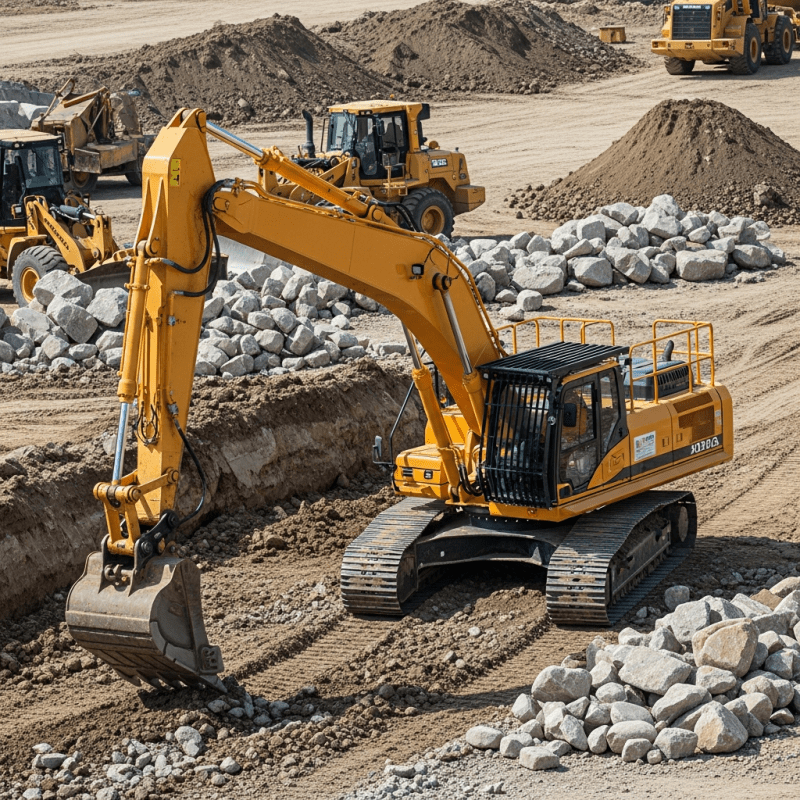
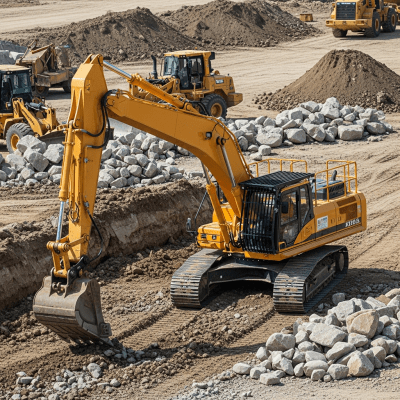
A realistic image of a Hydraulic demolition / high-reach excavator (excavators) at work on a construction site, surrounded by soil, rocks, and machinery
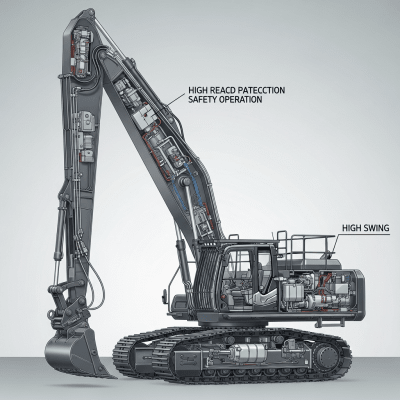
Detailed cross-sectional illustration of a Hydraulic demolition / high-reach excavator from the excavators taxonomy
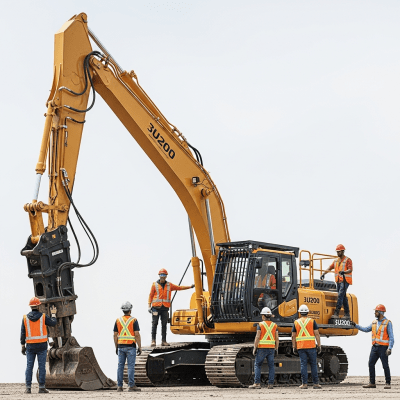
Image of a diverse group of construction workers operating or interacting with a Hydraulic demolition / high-reach excavator from the excavators taxonomy
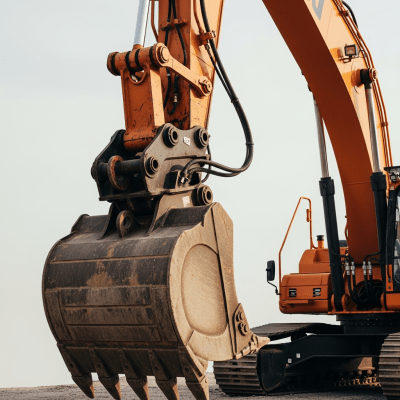
A close-up photograph focusing on the bucket and arm of a Hydraulic demolition / high-reach excavator (excavators), showing details such as hydraulic lines, metal textures, and wear marks
A wide-angle image of a fleet of various excavators, with the specific Hydraulic demolition / high-reach excavator in the foreground for emphasis

Composition & Context

Taxon-Specific Insights

🚜Mobility Types

Mobility is provided by a crawler (tracked) undercarriage, offering superior stability and traction on uneven or debris-laden demolition sites. This mobility type supports the heavy operating weight and counterbalances the long boom, making it preferable over wheeled alternatives for demolition work in confined or rough terrain.

📏Size And Capacity

Classified as large excavators, these machines typically weigh between 30,000 and 80,000 kilograms. Their rated engine power ranges from 150 to 400 kilowatts, supporting demanding demolition operations. Bucket and attachment capacities vary from 0.5 to 2.5 cubic meters, depending on the tool, while breakout forces range from 120 to 350 kilonewtons to handle tough materials.

🦺🌿Safety And Emissions

Safety features include reinforced operator cabs with Falling Object Protective Structures (FOPS) and Roll-Over Protective Structures (ROPS), front and roof guarding, and remote-control capabilities for hazardous environments. Enhanced counterweights improve stability during high-reach operations. Emissions standards typically comply with Tier 4 or equivalent regulations, reflecting modern environmental requirements in regulated markets.

🔧Attachments And Accessories

Common attachments include demolition shears for cutting steel, hydraulic breakers for concrete fragmentation, concrete crushers, grapples for material handling, buckets for debris removal, and multi-processors that combine several functions. Quick coupler systems enable rapid switching between tools to adapt to varied demolition tasks efficiently.

🛠️⏳Maintenance And Lifecycle

High-reach booms and demolition attachments experience accelerated wear due to the demanding nature of their work, necessitating regular inspection and maintenance aligned with ISO and EN standards. Routine servicing focuses on hydraulic system integrity, structural checks, and attachment condition. With proper care, these machines maintain operational reliability over a typical service life consistent with large hydraulic excavators.

Faq

Q: What distinguishes a high-reach demolition excavator from a standard excavator?
The extended, multi-piece boom and reinforced structure enable safe demolition at heights unreachable by standard models.

Q: Are these machines used only for demolition?
Primarily yes, but with appropriate attachments, they can perform limited material handling tasks.

Q: How is operator safety ensured?
Through reinforced cabs with protective guarding, remote-control options, and enhanced stability features.