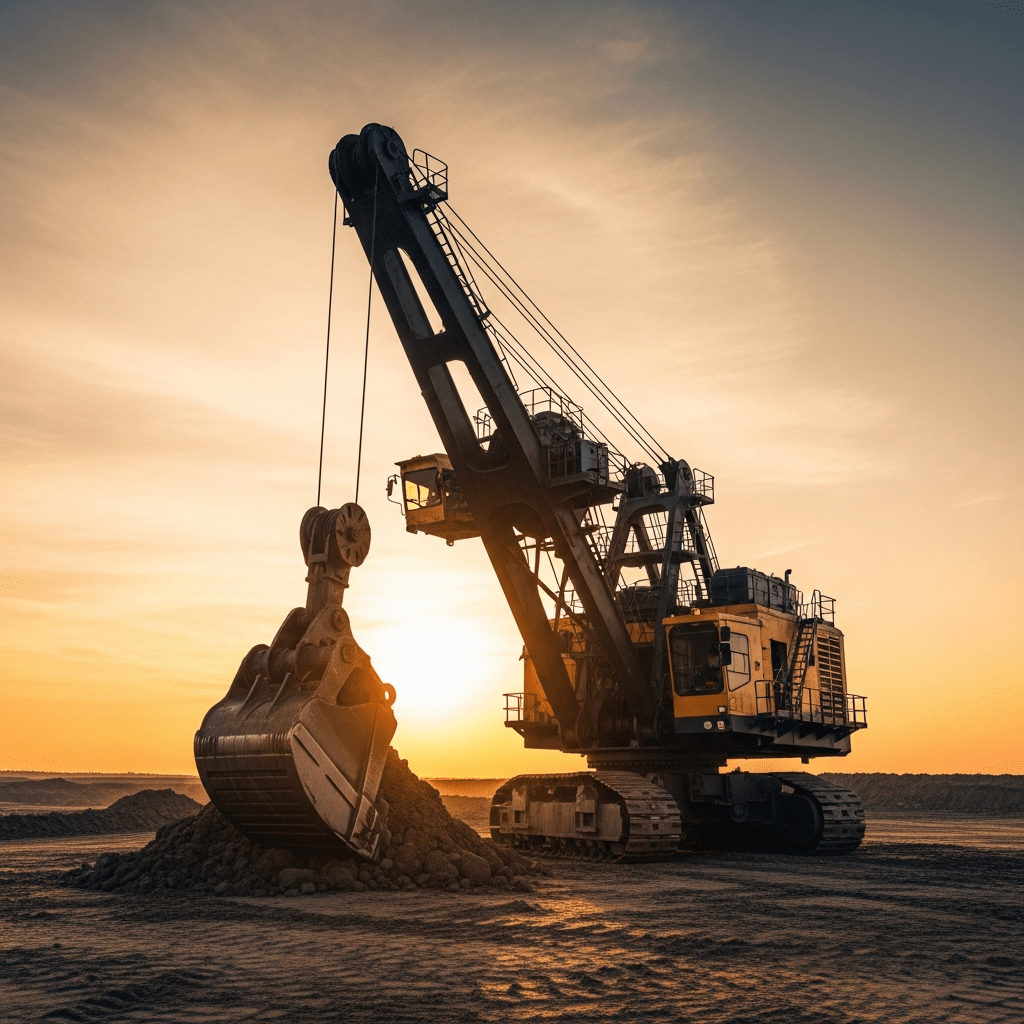
Electric Rope Shovel
An electric rope shovel is a massive mining excavator that uses cable-driven winches and electric motors to operate a large dipper bucket for high-volume earth removal in surface mining.
An electric rope shovel is a massive mining excavator that uses cable-driven winches and electric motors to operate a large dipper bucket for high-volume earth removal in surface mining.
Originating in the early 20th century, electric rope shovels evolved from steam-powered cable shovels to electrically driven machines by the 1920s and 1930s. Major manufacturers like Bucyrus-Erie and P&H Mining Equipment pioneered their development, with designs refined through the mid-20th century to meet the demands of large-scale mining operations.
Electric rope shovels belong to the cable-operated excavator family within the mining class. Distinguished from hydraulic excavators by their cable-driven dipper system, they are classified as large, crawler-mounted machines powered by electric motors, optimized for continuous heavy-duty excavation.
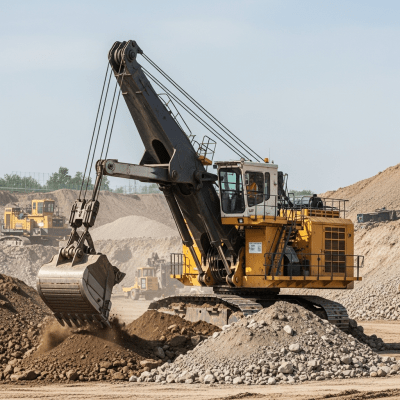
These machines are enormous, often weighing between 100 and 2,000 metric tonnes, featuring a robust crawler undercarriage for mobility within mines. Visually, they have a towering boom supporting a large dipper bucket suspended and maneuvered by thick steel cables connected to powerful winches, with an operator cabin perched high for visibility.
Electric rope shovels perform continuous excavation by hoisting, crowding, and swinging their dipper buckets to remove overburden and ore in open-pit mining. Operators control the machine from enclosed cabins, using the cable system to scoop and deposit large volumes of material efficiently into haul trucks or conveyors.
Bring this kind into your world illustrated posters, mugs, and shirts.
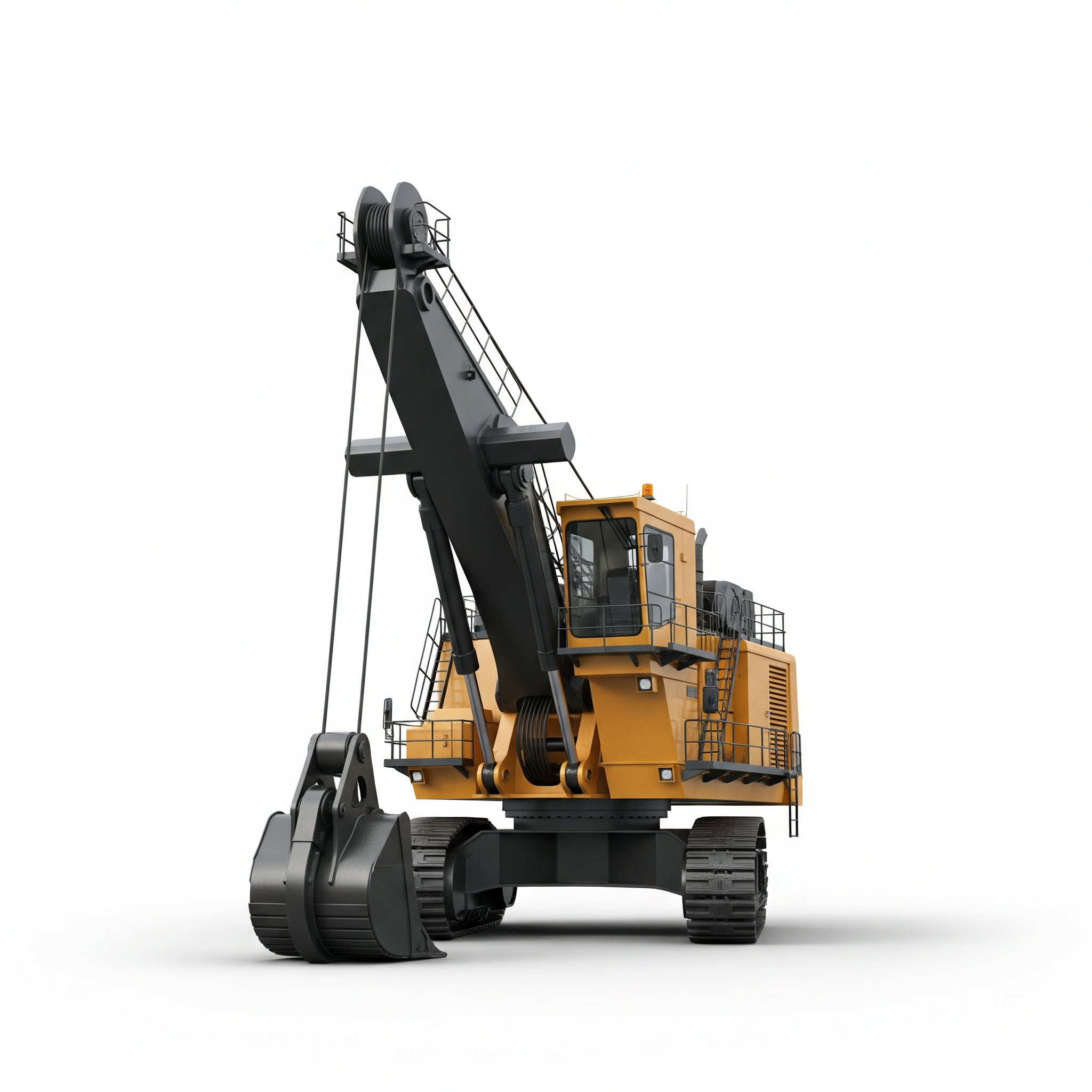
Archival print, museum-grade paper
Buy Poster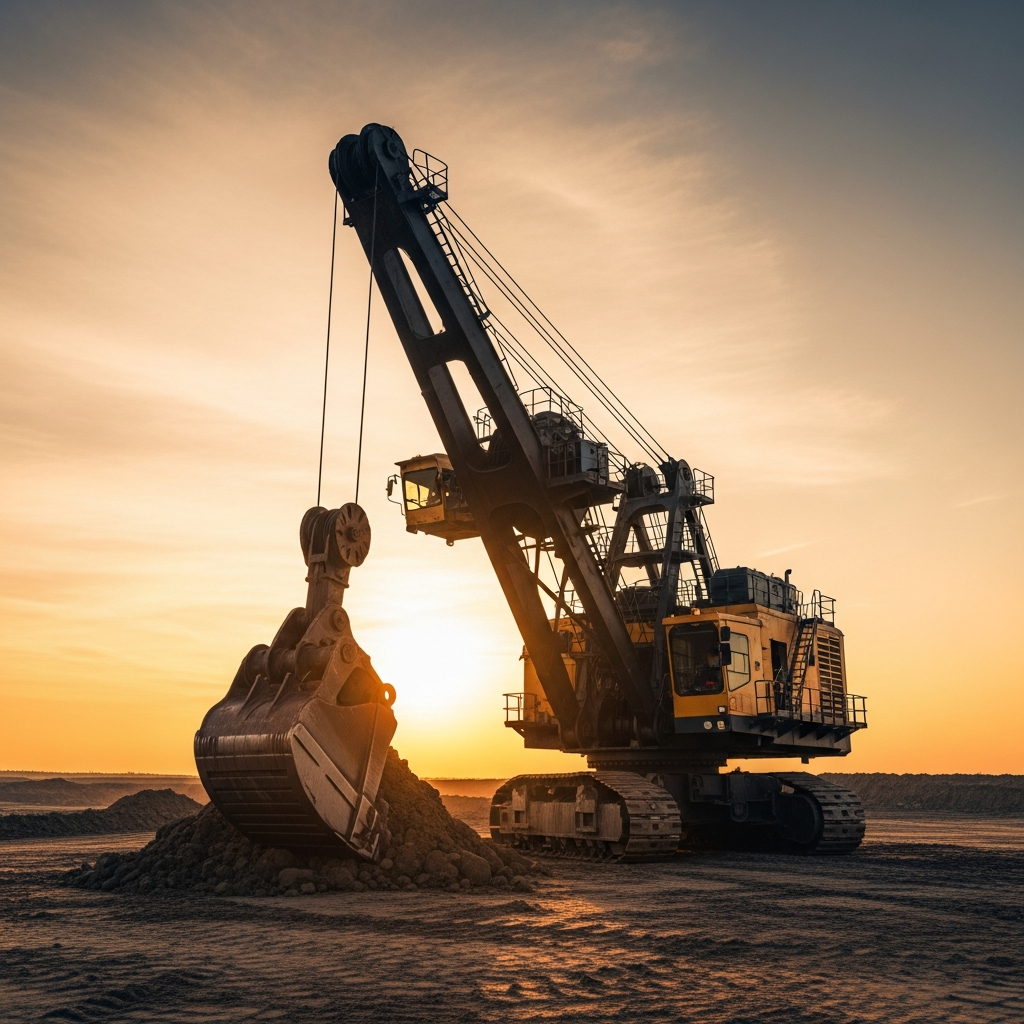
Stoneware mug, dishwasher safe
Buy Mug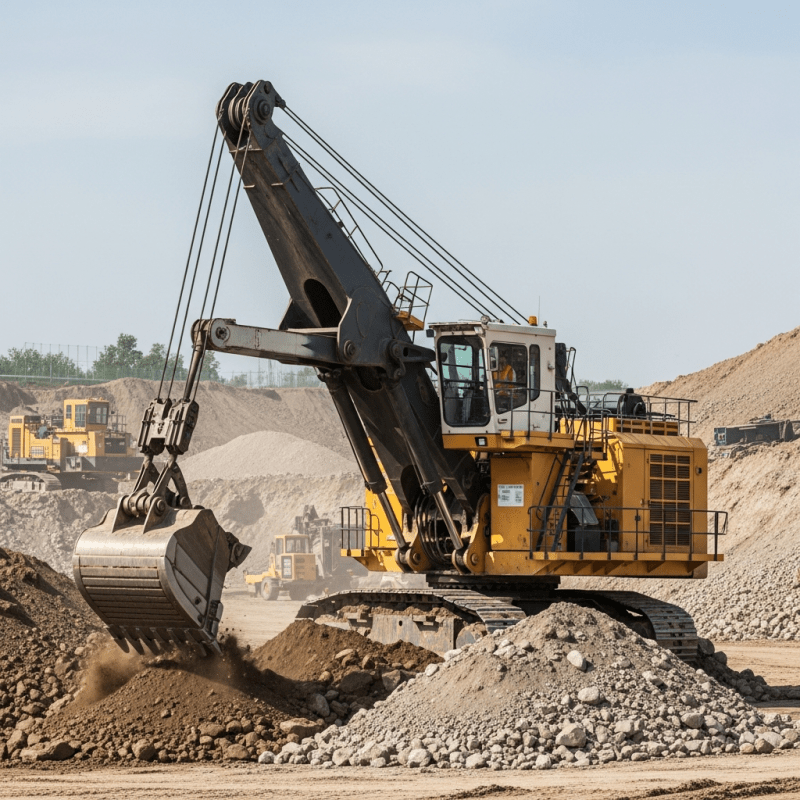
Soft cotton tee, unisex sizes
Buy ShirtWhile primarily industrial, electric rope shovels symbolize the scale and power of modern mining, often featured in documentaries and industrial photography to illustrate human engineering mastery over earth-moving. They represent technological progress in resource extraction and are iconic within mining communities worldwide.
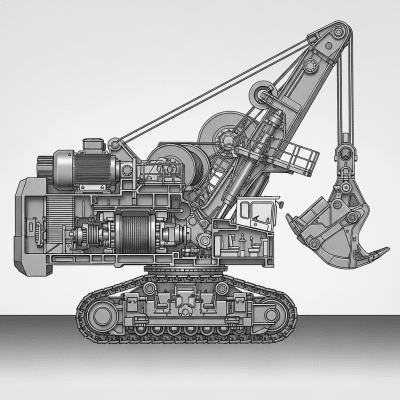
⚙️ The primary excavation mechanism of electric rope shovels is a cable-operated dipper system. Thick steel ropes run from large electric winches to the dipper bucket, controlling hoisting (lifting), crowding (extending/retracting), and swinging (rotating) motions. Unlike hydraulic excavators, these machines have no hydraulic cylinders; instead, electric motors power the winches, providing precise control over heavy loads. The dipper bucket scoops material from the pit floor and deposits it by swinging over haul trucks or conveyors, enabling high-volume excavation with minimal mechanical complexity in the arm.

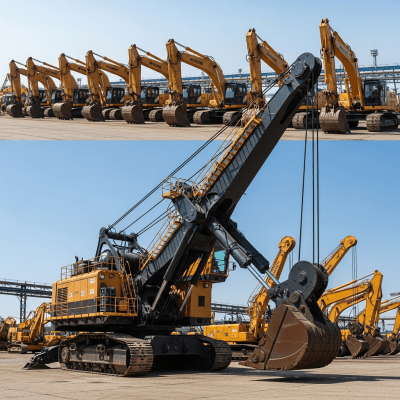
🚨 Electric rope shovels are primarily crawler-mounted, equipped with large, heavy-duty tracks that allow them to move within the mining site. This mobility system provides stability on uneven terrain and supports the machine's immense weight. Some models may be stationary, assembled in fixed positions for continuous operation. The crawler mobility balances the need for repositioning with the structural demands of the massive excavator.
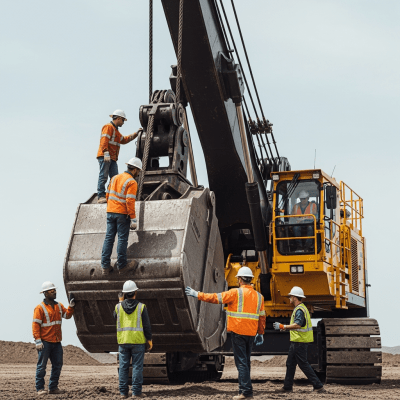
📇 Classified within the mining size band, electric rope shovels typically weigh between 100,000 kg (100 tonnes) and 2,000,000 kg (2,000 tonnes), with some ultra-large models exceeding this. Bucket capacities range from 15 to over 80 cubic meters, enabling the movement of massive material volumes per scoop. Their maximum reach spans 15 to 25 meters, corresponding to dipper stick length and swing radius, while breakout forces can reach between 1,000 and 5,000 kilonewtons, reflecting their powerful digging capability.
🧪🛡️ Safety features on electric rope shovels include operator protection systems, emergency stop circuits, fire suppression equipment, and fall protection compliant with OSHA and ISO 20474-7 standards. Due to their size and swing radius, strict exclusion zones and ground stability assessments are mandatory. Emissions are effectively zero on-site since the machines are electrically powered; however, overall environmental impact depends on the electricity generation source.
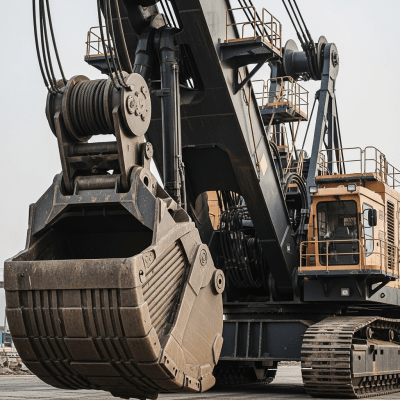
🔧 The primary attachment is the large dipper bucket, designed for scooping and hauling heavy material loads. Some models offer interchangeable dippers tailored for different material densities or mining conditions. Accessories may include specialized buckets for varying ore types, but the core cable-operated dipper remains central to function.
🛠️️⏳ Electric rope shovels are engineered for longevity, often serving 30 years or more with diligent maintenance. Routine upkeep includes inspection and replacement of cables, winches, electrical systems, and structural components. Major rebuilds and component overhauls are common to extend service life. Their modular construction facilitates on-site assembly and refurbishment, ensuring sustained productivity in demanding mining environments.