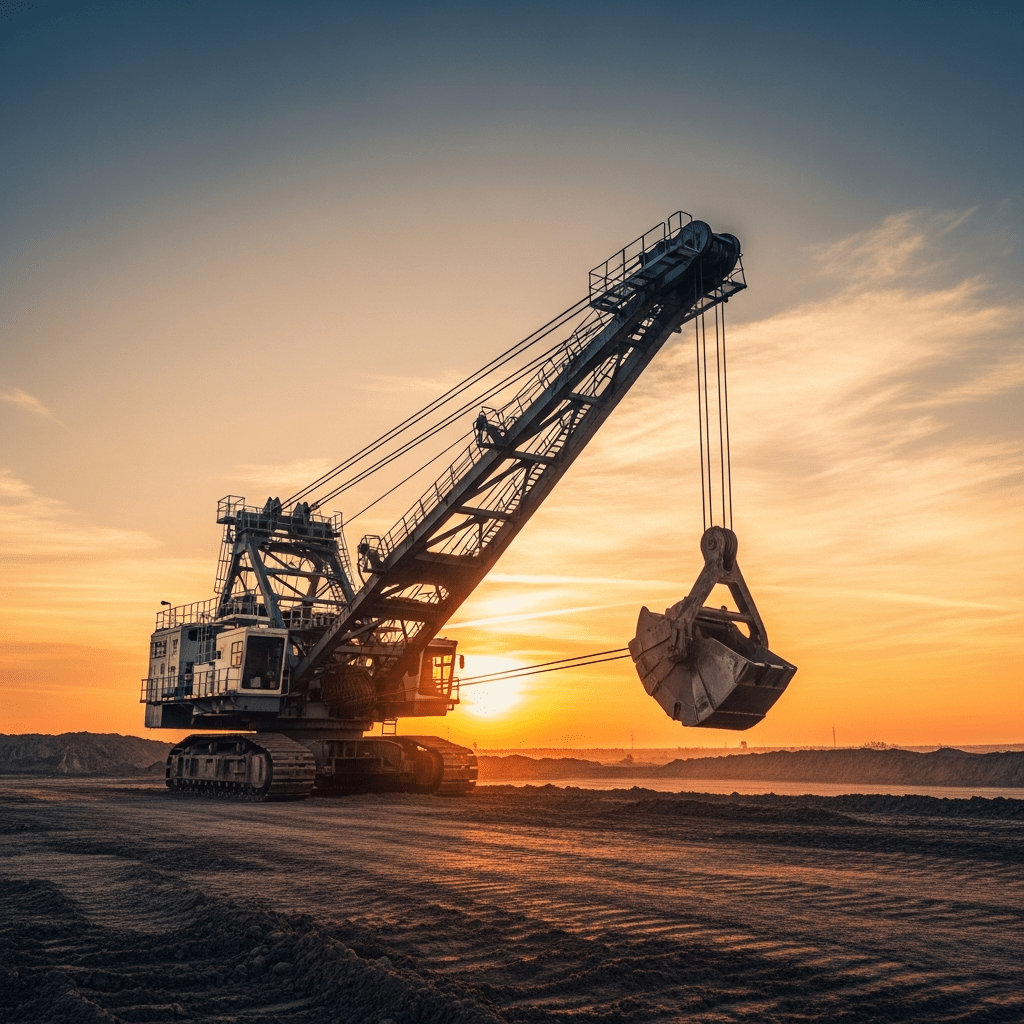
Dragline Excavator
A dragline excavator is a massive cable-operated earthmoving machine that uses a suspended bucket dragged by cables to excavate and move large volumes of material, primarily in surface mining and major civil engineering projects.
A dragline excavator is a massive cable-operated earthmoving machine that uses a suspended bucket dragged by cables to excavate and move large volumes of material, primarily in surface mining and major civil engineering projects.
The dragline excavator originated in the early 20th century, evolving from cable-operated cranes adapted for excavation. Early commercial models appeared between 1904 and 1911, developed by companies such as Bucyrus and Marion Power Shovel. Over time, draglines were refined for large-scale mining and civil works, becoming essential in surface mining operations worldwide.
Dragline excavators belong to the cable-operated class of excavators, characterized by their use of cables and winches to manipulate a suspended bucket. They are distinct from hydraulic excavators, relying on cable-electric powertrains and typically mounted on crawler undercarriages. Within excavators, draglines are classified as mining-scale machines due to their enormous size and capacity.
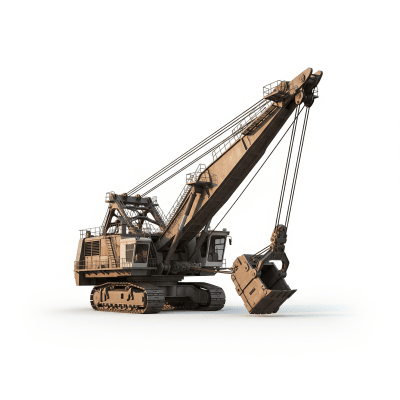
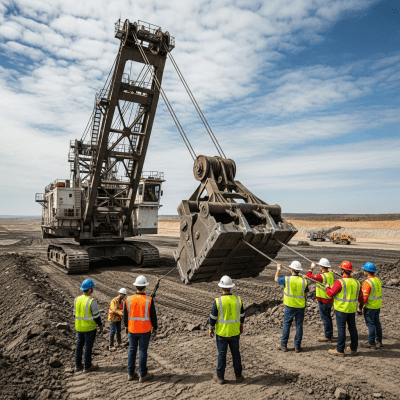
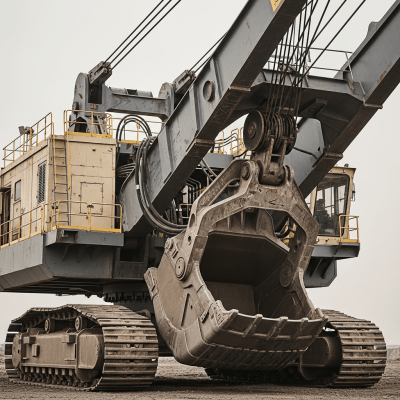
Visually, dragline excavators feature an imposing lattice boom that can extend from 15 to over 100 meters, from which a large bucket hangs suspended by cables. The bucket is dragged along the ground to scoop material and then lifted and swung to dump it. The machines rest on tracked crawler bases or, for the largest mining models, on walking or stationary platforms, emphasizing their monumental scale and industrial presence.
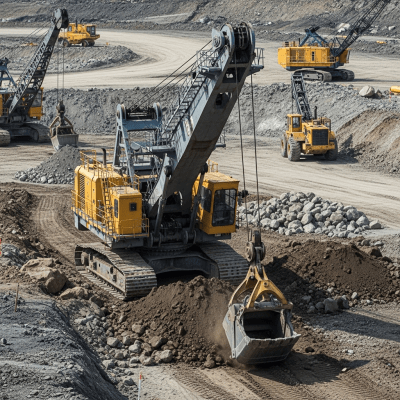
Draglines operate by lowering their bucket to the excavation site, dragging it horizontally to collect material, then lifting and swinging the bucket to deposit the load elsewhere. They excel at removing overburden in surface mining and performing large-scale earthmoving in civil engineering, such as canal dredging and riverbank stabilization. Their unmatched reach and bucket capacity enable efficient bulk excavation over wide areas.
Bring this kind into your world illustrated posters, mugs, and shirts.
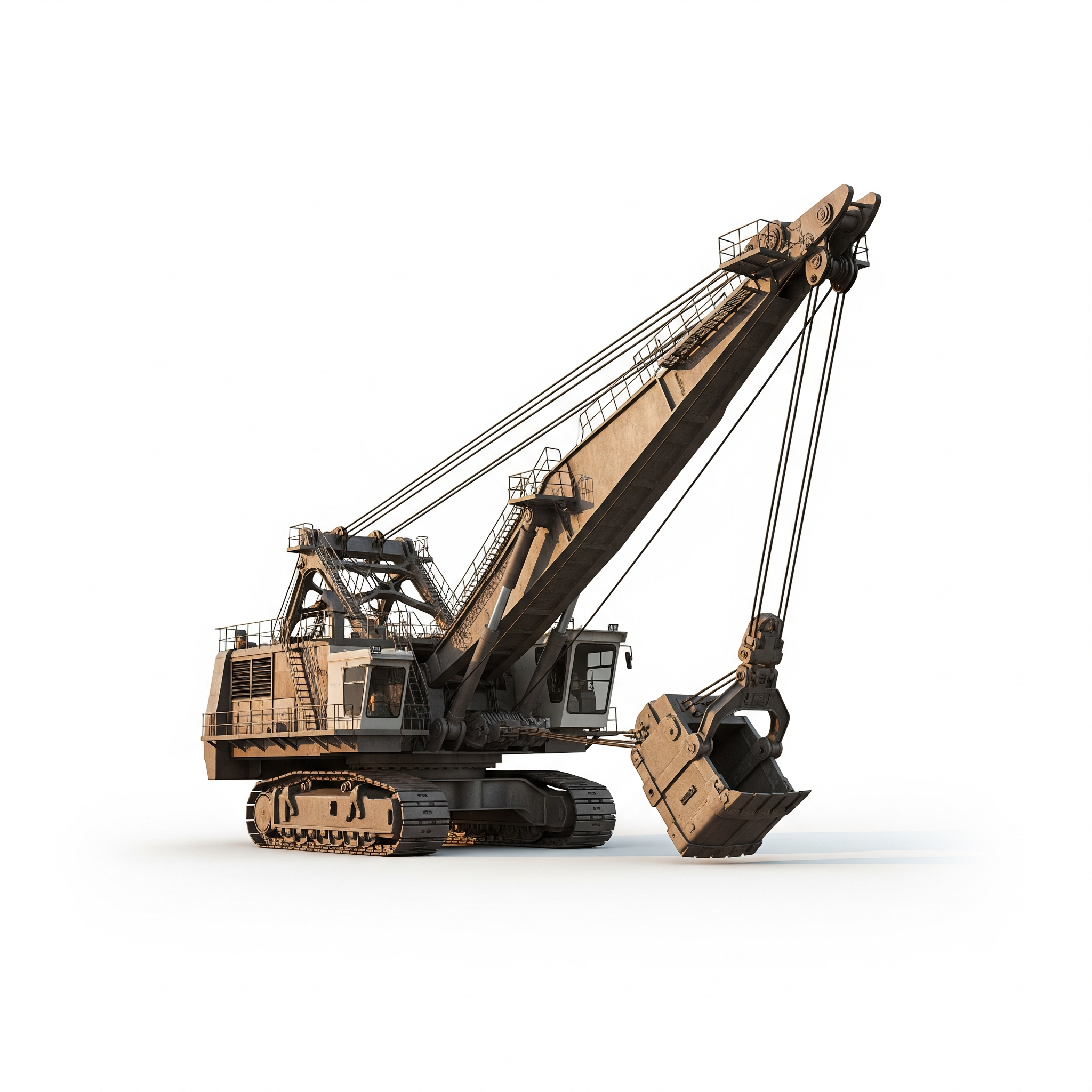
Archival print, museum-grade paper
Buy Poster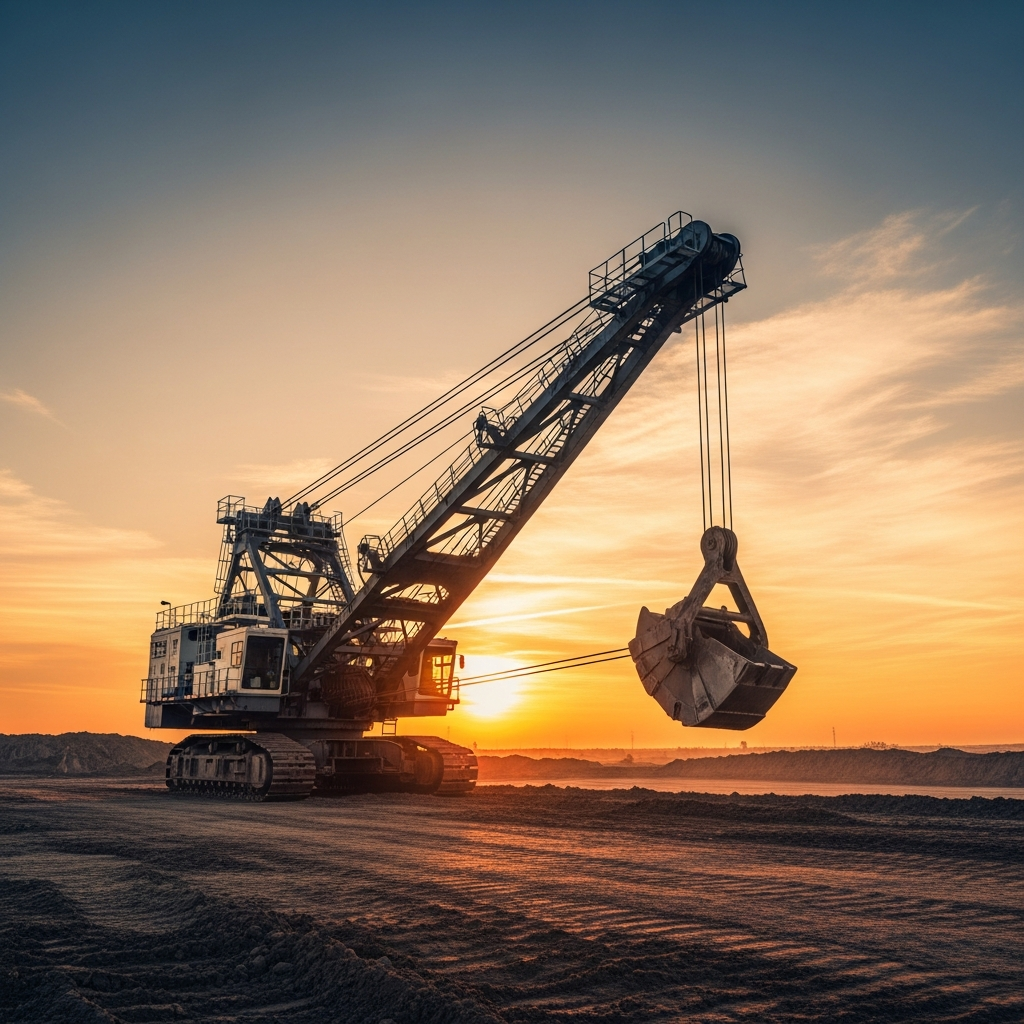
Stoneware mug, dishwasher safe
Buy Mug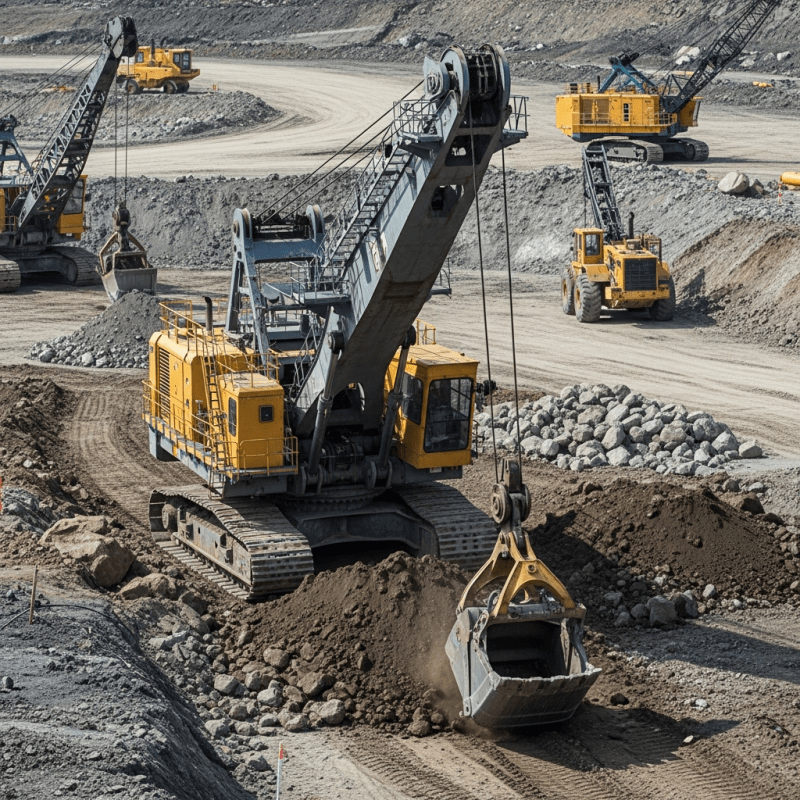
Soft cotton tee, unisex sizes
Buy ShirtDragline excavators symbolize industrial might and the scale of modern mining and earthworks. They have featured in the history of monumental projects like the Panama Canal and have become icons of mining regions in North America and Australia. While less common in popular culture than hydraulic excavators, draglines represent the pinnacle of cable-operated excavation technology and are often celebrated in engineering and mining communities.
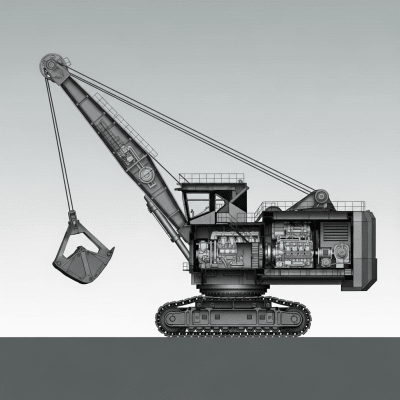
⚙️ The dragline excavator’s primary excavation mechanism involves a large bucket suspended from a long lattice boom by cables. The bucket is controlled by a system of hoist and drag cables operated via electric winches and pulleys. To excavate, the bucket is lowered to the ground and dragged horizontally toward the machine, scooping material. Once filled, the bucket is hoisted, swung around the boom’s pivot, and dumped at a designated location. This cable-driven method contrasts with hydraulic systems, relying on tension and precise cable control rather than hydraulic cylinders for digging force.
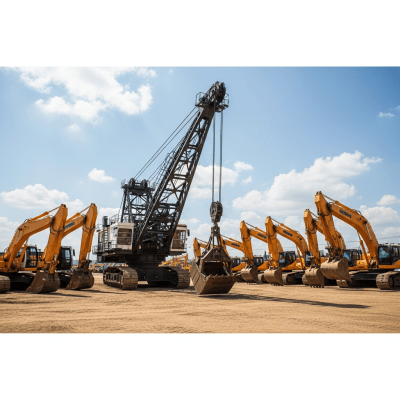
🚨 Dragline excavators typically use crawler (tracked) undercarriages for mobility, providing stability on uneven terrain. The largest mining draglines may be semi-mobile or stationary, employing "walking" mechanisms—large feet that lift and move the machine incrementally. This slow, deliberate movement suits massive machines that cannot be transported easily. Mobility choices balance the need for site access with the enormous size and weight of these machines.
📇 Draglines fall into the mining size class, with operating weights ranging from 80,000 kg for smaller civil models to over 7 million kg for the largest mining units. Bucket capacities span from 1 to 168 cubic meters, enabling massive material displacement. Boom lengths vary widely, typically between 15 and 100 meters, granting exceptional reach for excavation and dumping. These metrics place draglines among the largest and most powerful excavators in existence.
🛡️🟧 Safety features on draglines address hazards from high-voltage electrical systems, large moving masses, and extensive swing radii. Operators are protected by reinforced cabs, and machines comply with OSHA, MSHA, and EU machinery directives. Emissions are minimal on electric-powered draglines, which produce zero local exhaust; diesel-electric hybrids adhere to regional Tier or Stage emissions standards. Ground stability and site safety protocols are critical given the machines’ immense size and operational footprint.
🔧 The primary attachment of dragline excavators is the drag bucket, designed for efficient bulk material removal. Occasionally, clamshell buckets are used for specialized digging or material handling, and lifting hooks enable the machine to perform auxiliary lifting tasks. These attachments extend the versatility of draglines beyond standard excavation, adapting them to varied mining and civil engineering needs.
🛠️️⏳ Dragline excavators are engineered for decades of service, with maintenance focused on electrical systems, cable integrity, winches, and structural components like the boom and undercarriage. Major overhauls, including boom replacements and cable renewals, are routine to ensure operational safety and efficiency. Due to their scale, draglines are typically disassembled for transport and reassembled on-site, requiring specialized maintenance planning throughout their lifecycle.