Origin Story

This type of excavator emerged globally in the late 2010s, notably in Europe, Japan, and North America, as a response to increasing environmental regulations and urban air quality demands. Early models were pioneered by major manufacturers like Volvo, Caterpillar, and Hitachi, replacing diesel engines with high-capacity lithium-ion batteries and electric motors while retaining hydraulic actuation.

Classification

Battery-electric hydraulic excavators belong to the hydraulic class of excavators, distinguished by their use of hydraulic cylinders and fluid power for boom and arm articulation. They are primarily crawler-type machines and span size classes from mini to standard, classified by operating weight and power output.

Appearance or Form

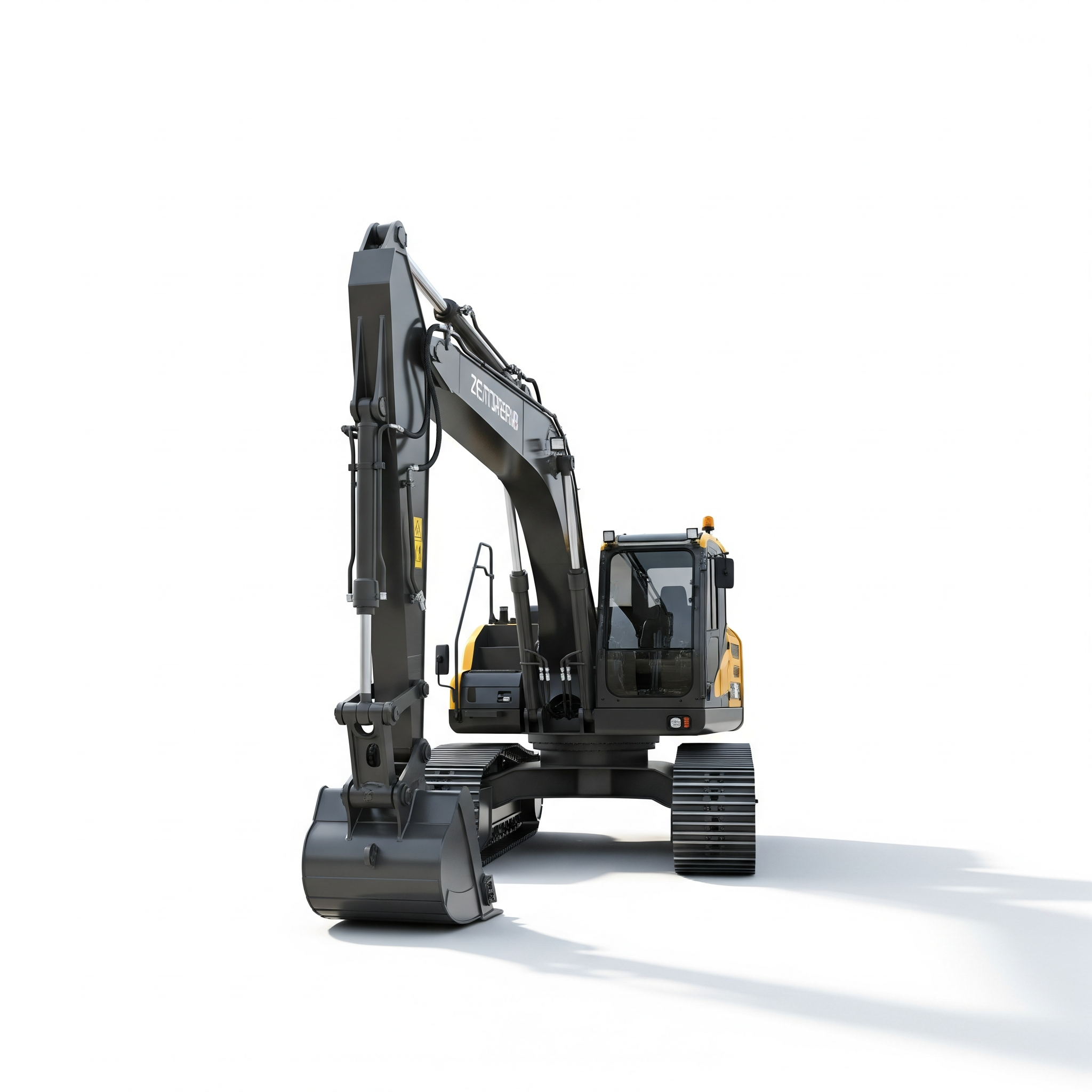
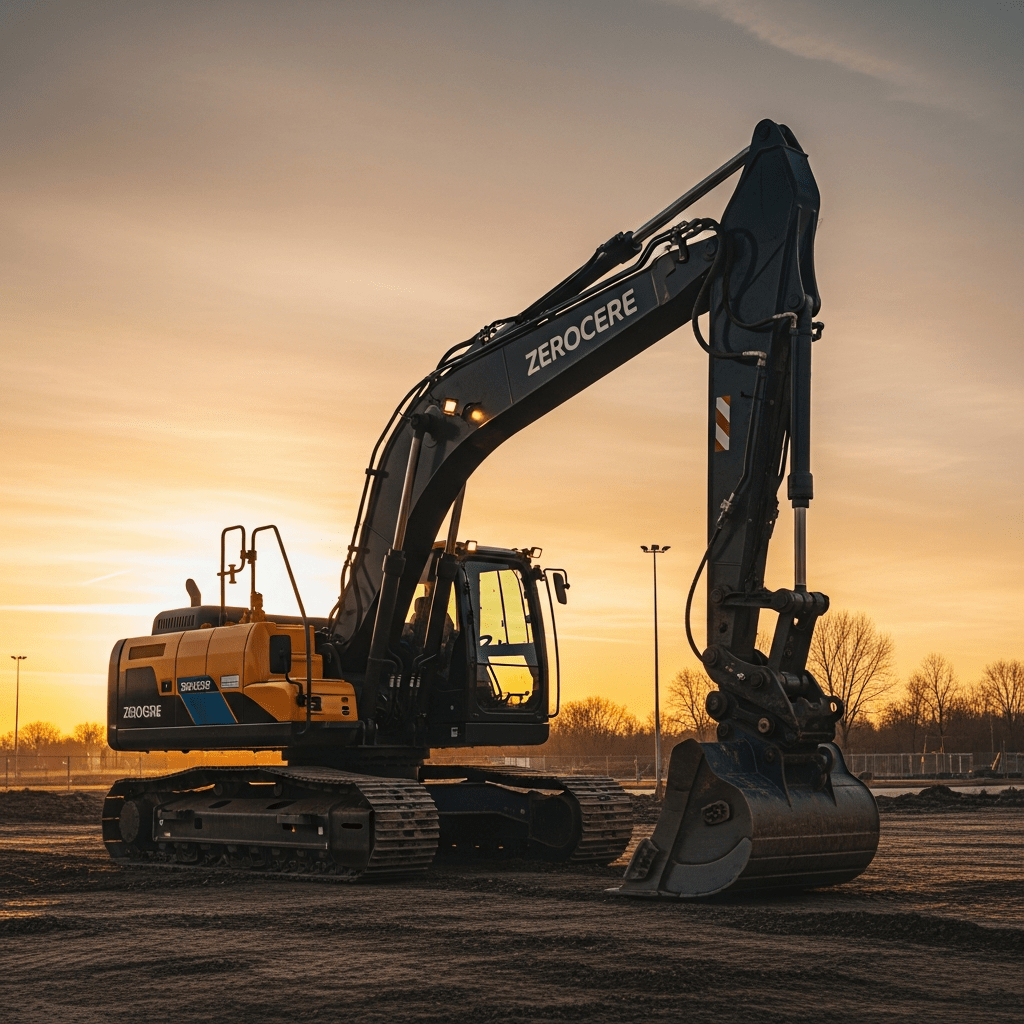
Visually, these excavators resemble traditional hydraulic models with a tracked undercarriage, articulated boom, arm, and bucket assembly. They often feature compact, zero or short tail-swing designs for urban use. Their electric powertrain adds battery compartments typically integrated into the chassis, and they maintain the robust, industrial aesthetic common to construction machinery.

Behavior or Usage

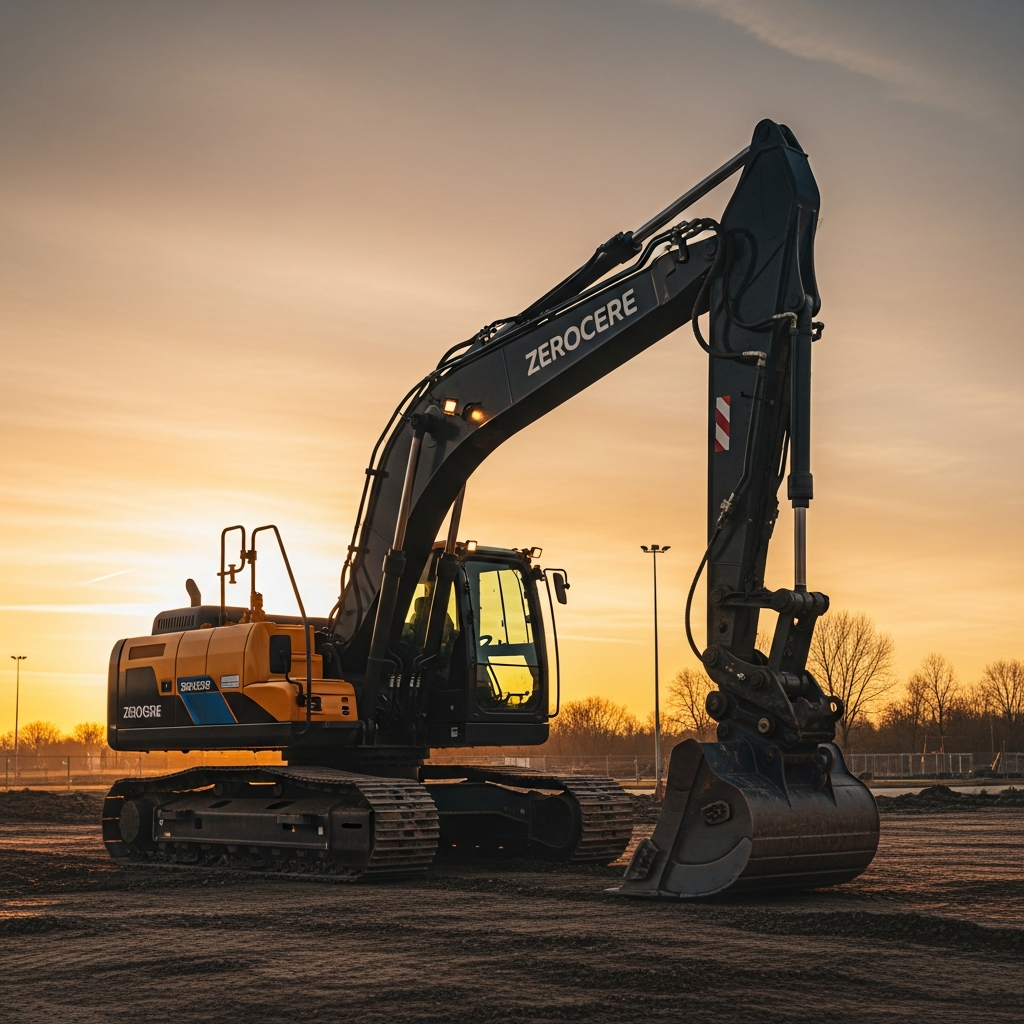
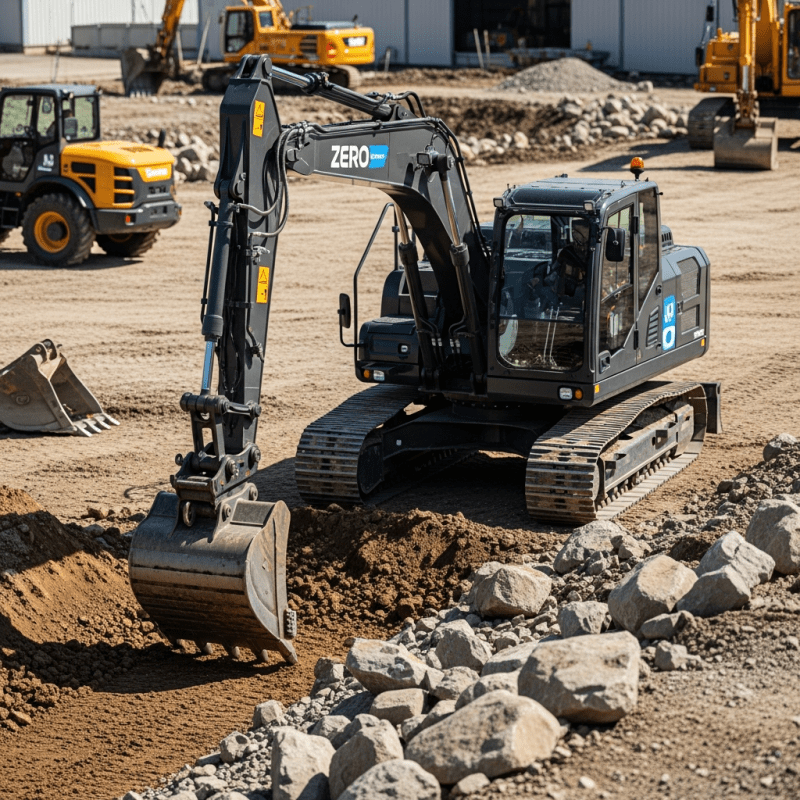
Used primarily in urban construction, tunneling, demolition, and utility work, battery-electric hydraulic excavators perform earthmoving tasks with reduced noise and zero exhaust emissions. Operators control them from cabs similar to diesel models, while emerging remote and semi-autonomous controls expand their utility in hazardous or confined environments.

Merchandise & Prints

Bring this kind into your world � illustrated posters, mugs, and shirts.

Battery-electric hydraulic excavator Battery-electric hydraulic excavator Poster

Battery-electric hydraulic excavator Poster

Archival print, museum-grade paper

Battery-electric hydraulic excavator Battery-electric hydraulic excavator Mug

Battery-electric hydraulic excavator Mug

Stoneware mug, dishwasher safe

Battery-electric hydraulic excavator Battery-electric hydraulic excavator Shirt

Battery-electric hydraulic excavator Shirt

Soft cotton tee, unisex sizes

Attributes & Insights

Taxon-Specific Insights

🌍Cultural Significance

These excavators symbolize the construction industry's shift toward sustainability and environmental responsibility. They are increasingly featured in green building projects and urban infrastructure developments, representing technological progress in reducing the carbon footprint of heavy machinery and aligning with modern ecological values.

📌Notable Facts

  • They produce zero local emissions, making them ideal for indoor and urban sites.
  • Battery replacement cycles typically range from 5 to 10 years.
  • They often incorporate zero or short tail-swing designs for maneuvering in tight spaces.
  • Compatible with a wide range of hydraulic attachments such as breakers, grapples, and augers.
  • Early adoption is strongest in Europe, Japan, and select North American cities with strict emission regulations.

⚙️Mechanism Details

⚙️ The core excavation mechanism consists of a conventional hydraulic system actuated by electric motors instead of diesel engines. High-capacity lithium-ion batteries supply power to electric pumps that drive hydraulic cylinders controlling the boom, arm, and bucket. This setup preserves the precise, powerful articulation characteristic of hydraulic excavators while enabling zero-emission operation. Advanced control electronics manage power delivery and regenerative braking to optimize battery life and performance.

Visual Variations

High quality studio photograph of a single Battery-electric hydraulic excavator (zero-emission variant) from the excavators taxonomy
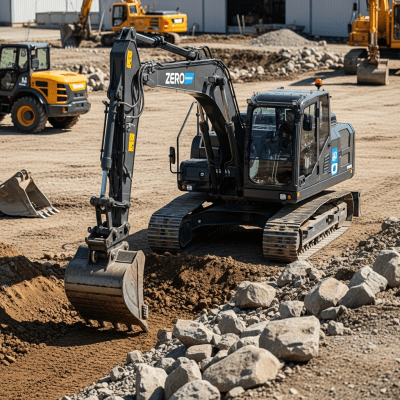
A realistic image of a Battery-electric hydraulic excavator (zero-emission variant) (excavators) at work on a construction site, surrounded by soil, rocks, and machinery
Detailed cross-sectional illustration of a Battery-electric hydraulic excavator (zero-emission variant) from the excavators taxonomy
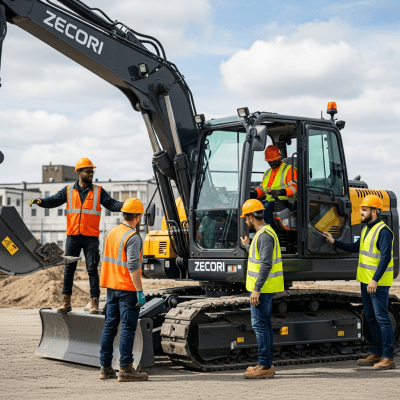
Image of a diverse group of construction workers operating or interacting with a Battery-electric hydraulic excavator (zero-emission variant) from the excavators taxonomy
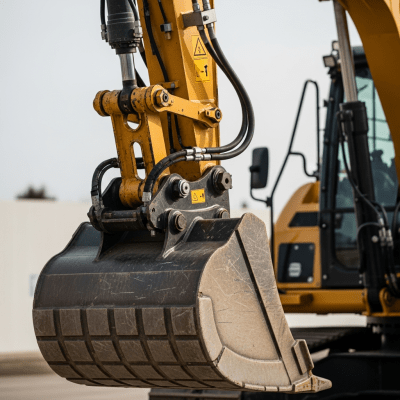
A close-up photograph focusing on the bucket and arm of a Battery-electric hydraulic excavator (zero-emission variant) (excavators), showing details such as hydraulic lines, metal textures, and wear marks
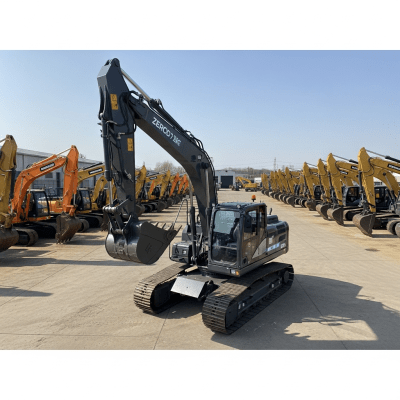
A wide-angle image of a fleet of various excavators, with the specific Battery-electric hydraulic excavator (zero-emission variant) in the foreground for emphasis

Composition & Context

Taxon-Specific Insights

🚜Mobility Types

🚨 Battery-electric hydraulic excavators predominantly use crawler (tracked) undercarriages, providing stability and traction on uneven terrain. Wheeled variants exist but are less common. The crawler chassis supports the additional battery weight and enables operation in confined urban sites. Zero or short tail-swing designs enhance maneuverability, especially in tight spaces typical of city construction and tunneling projects.

📏Size And Capacity

📇 These excavators span mini (1,800–5,500 kg), midi (6,000–15,000 kg), and standard (15,000–30,000 kg) size classes. Rated engine power ranges from 15 kW in mini models up to 150 kW in standard sizes. Bucket capacities vary accordingly, from as little as 0.03 m³ in mini models to 1.2 m³ in standard excavators. Maximum reach extends from 4 meters in smaller units up to 12 meters in larger ones, supporting a wide variety of excavation tasks.

🦺🌿Safety And Emissions

🧪🟢 Safety features include compliance with ISO standards for earthmoving machinery and specialized protocols for high-voltage battery systems, such as electrical isolation and fire risk mitigation. The absence of exhaust emissions eliminates exposure to diesel fumes, improving operator and site safety. Emission compliance aligns with EU Stage V and EPA Tier 4 standards by virtue of zero tailpipe emissions, though indirect emissions depend on the electricity source.

🔧Attachments And Accessories

🔧 Common attachments compatible with battery-electric hydraulic excavators include standard digging buckets, hydraulic breakers for demolition, grapples for material handling, augers for drilling, and shears for cutting. These attachments leverage the hydraulic system powered by electric motors, allowing versatile use across construction, landscaping, and utility applications.

🛠️⏳Maintenance And Lifecycle

🛠️⏳ Maintenance demands are generally lower than diesel counterparts due to fewer moving parts and no engine oil changes. Battery health monitoring and management are critical, with battery packs typically requiring replacement every 5 to 10 years depending on usage. Recycling and disposal of batteries are emerging concerns, prompting development of sustainable end-of-life processes. Overall, these machines offer reduced downtime and lower lifecycle emissions.

Faq

Q: How do battery-electric hydraulic excavators differ from diesel models?
A: They replace diesel engines with electric motors powered by batteries, eliminating exhaust emissions and reducing noise while retaining hydraulic excavation mechanisms.

Q: Are these excavators suitable for large-scale mining?
A: Currently, large and mining-class battery-electric excavators are mostly in prototype or pilot stages due to battery energy density limitations.

Q: What safety considerations are unique to these machines?
A: They require high-voltage electrical safety protocols and battery fire risk management in addition to standard construction safety measures.