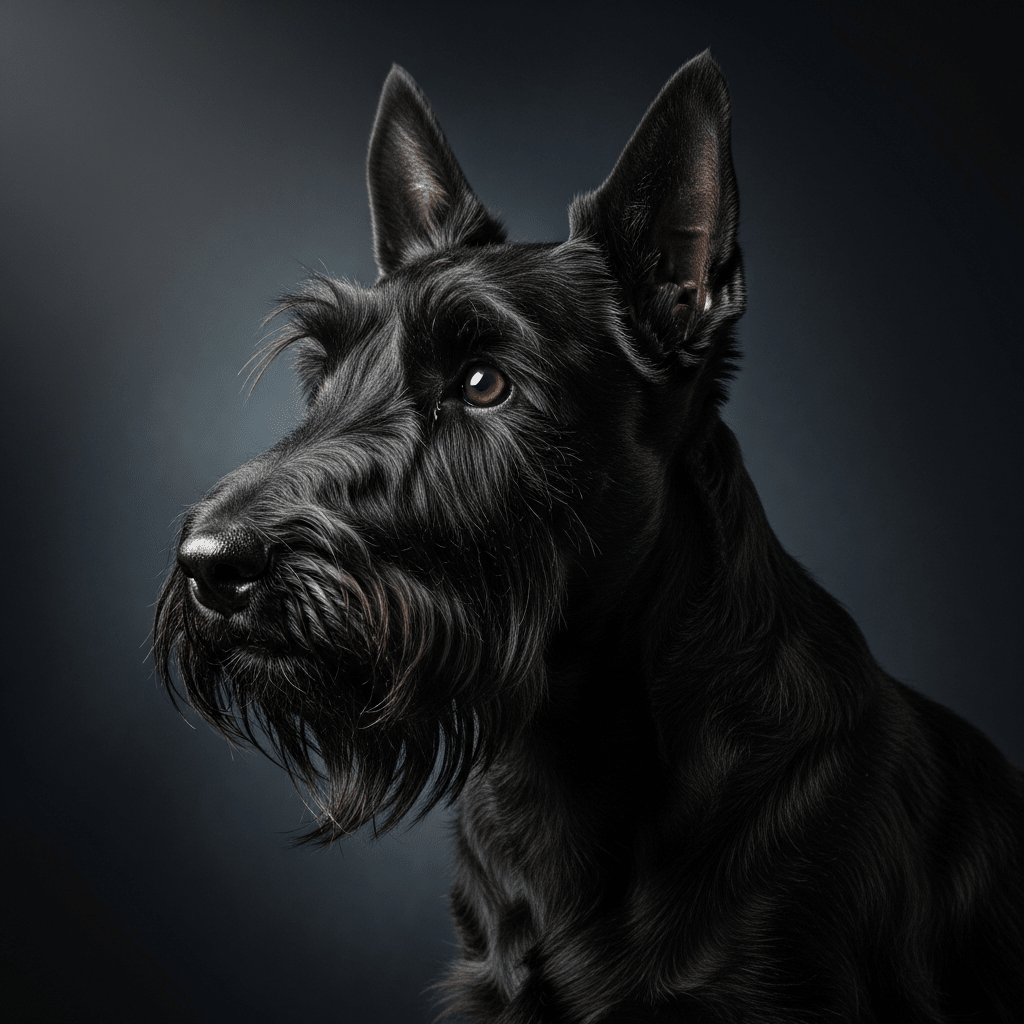
Scottish Terrier
The Scottish Terrier is a small, dignified dog breed from Scotland, instantly recognizable for its wiry coat, bold personality, and iconic silhouette.
The Scottish Terrier is a small, dignified dog breed from Scotland, instantly recognizable for its wiry coat, bold personality, and iconic silhouette.
Originating in Scotland, the Scottish Terrier was developed from local terriers used for hunting vermin and badgers. Its refinement began in the early 18th century, culminating in a distinct breed standard by the late 19th century. The Scottie’s lineage is shared with other Scottish breeds such as the Skye Terrier and Cairn Terrier, but its unique appearance and temperament set it apart. The breed gained formal recognition from the American Kennel Club in 1885, marking its transition from working terrier to beloved companion.
The Scottish Terrier belongs to the Canidae family, classified under the genus Canis and the species Canis lupus familiaris. It is grouped as a terrier breed by major kennel clubs, reflecting its historical role as a vermin hunter and its robust, energetic disposition. The Scottie is distinct within the terrier group for its compact build and reserved yet loyal nature.
Compact and sturdy, the Scottish Terrier displays a distinctive rectangular profile, accentuated by a pronounced beard and bushy eyebrows. Its hard, wiry double coat is weather-resistant, most commonly seen in black but also in wheaten and brindle. Short, powerful legs and a dignified posture contribute to its unmistakable silhouette, while its expressive eyes and confident stance evoke both charm and determination.
Scottish Terriers are known for their independence and alertness. Historically prized for their vermin-hunting abilities, today they are cherished as loyal companions and show dogs. While reserved with strangers, Scotties form deep bonds with their families and thrive in environments where their intelligence and dignity are respected. Their manageable size and adaptability make them well-suited for urban living.
Bring this kind into your world illustrated posters, mugs, and shirts.
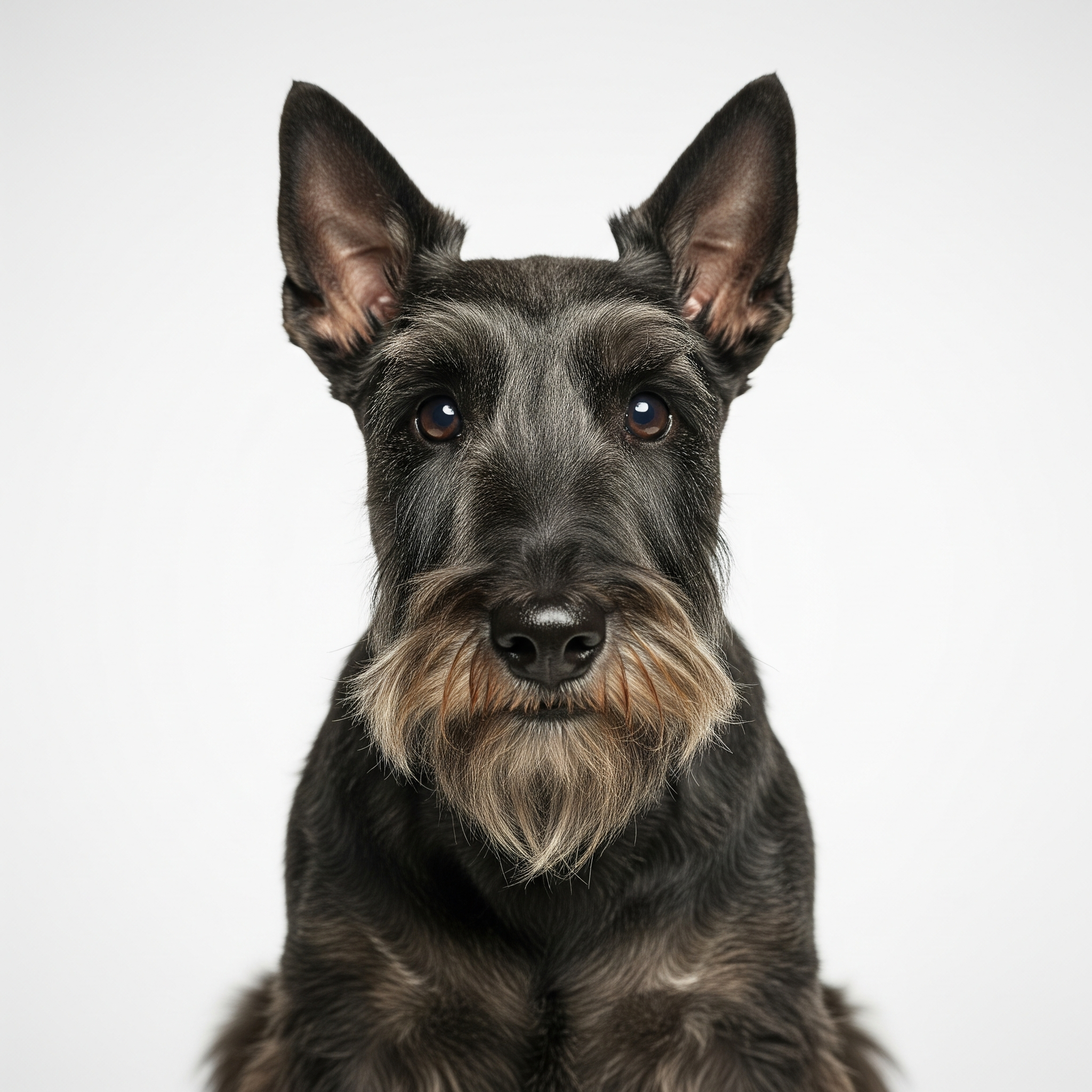
Archival print, museum-grade paper
Buy Poster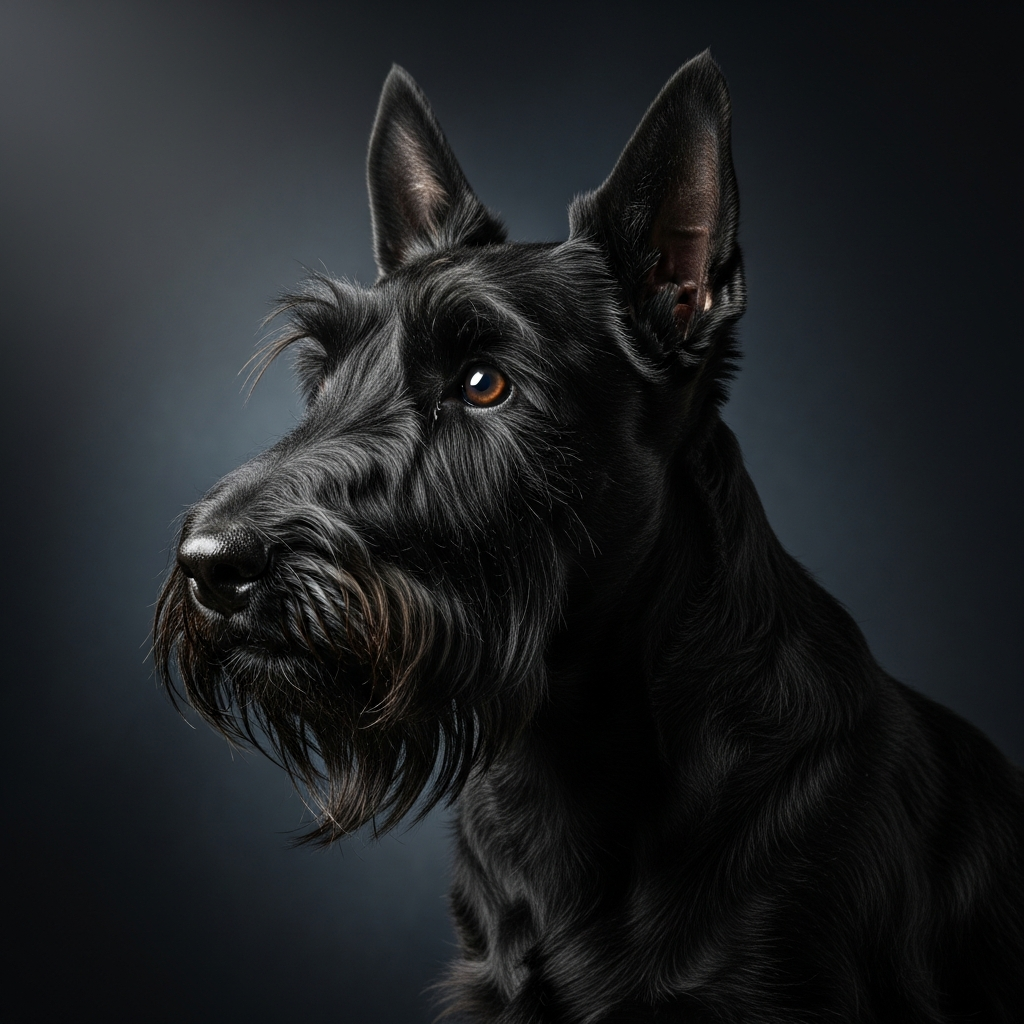
Stoneware mug, dishwasher safe
Buy Mug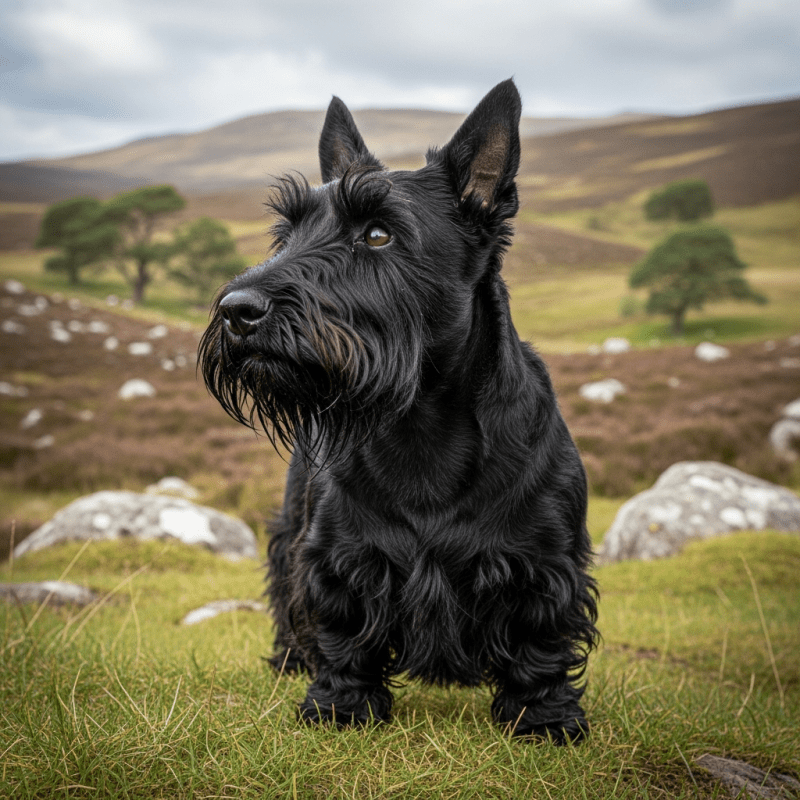
Soft cotton tee, unisex sizes
Buy ShirtThe Scottish Terrier enjoys a prominent place in popular culture, appearing as a Monopoly game token and serving as a mascot for various brands. Its iconic look has inspired artists, advertisers, and filmmakers, making the Scottie a symbol of both Scottish heritage and canine sophistication. The breed’s dignified demeanor and distinctive appearance have made it a favorite subject in art and media worldwide.
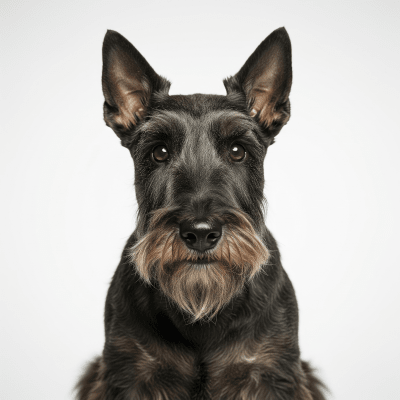
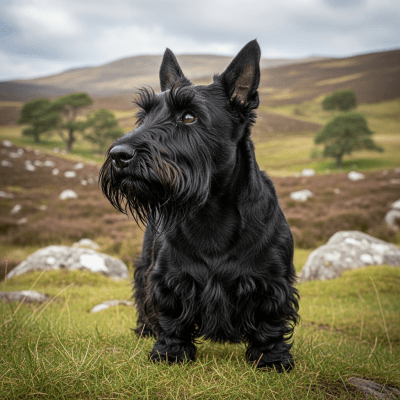


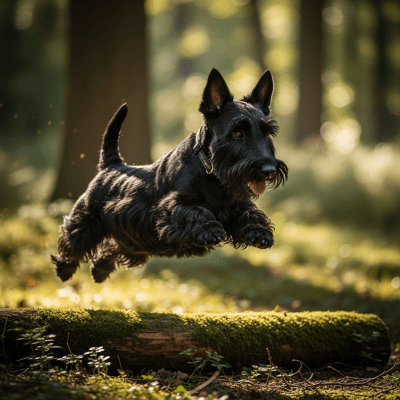
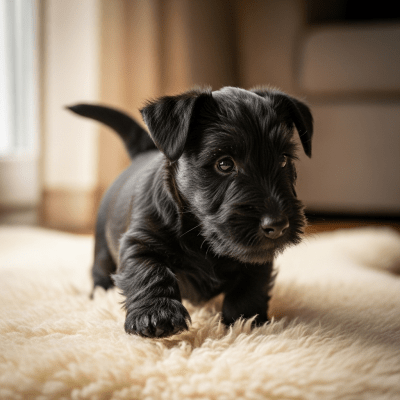
The Scottish Terrier is classified as a small breed, typically standing about 25 cm (10 inches) at the shoulder and weighing between 8–10 kg (18–22 pounds). Its compact, muscular build is designed for agility and endurance.
Scottish Terriers feature a hard, wiry, weather-resistant double coat. The most common color is black, but wheaten and brindle patterns are also seen. Their coat requires regular maintenance to preserve its texture and protective qualities.
Scotties are independent, intelligent, and deeply loyal. While they may be reserved with strangers, they are affectionate with their families. Training can be challenging due to their stubborn streak, but consistent, positive reinforcement yields the best results.
Scottish Terriers are generally robust, but can be prone to hereditary conditions such as Scottie cramp and von Willebrand's disease. With attentive care, they enjoy a healthy life, though specific lifespan figures are variable and often range into the mid-teens.
The Scottish Terrier breed standard is tightly regulated by major kennel clubs, resulting in minimal regional variants. While minor differences may exist in grooming or presentation, the breed’s core characteristics remain consistent worldwide.