
Saluki
The Saluki is an ancient sighthound breed celebrated for its elegant appearance, remarkable speed, and gentle, reserved nature.
The Saluki is an ancient sighthound breed celebrated for its elegant appearance, remarkable speed, and gentle, reserved nature.
Originating in the Fertile Crescent thousands of years ago, the Saluki’s lineage is woven into the history of ancient Egypt, Mesopotamia, and Persia. Bred by nomadic Bedouin tribes for hunting swift game like gazelle, Salukis were prized companions and hunters long before formal breed standards existed. Their development was shaped by generations of selective breeding across the Middle East, resulting in a dog uniquely suited to the region’s open terrain and cultural traditions.
The Saluki belongs to the hound group, specifically classified as a sighthound—a breed that hunts primarily by sight and speed rather than scent. Within the broader taxonomy of dogs, the Saluki is part of the Canidae family, genus Canis, species Canis lupus familiaris. Recognized by major kennel clubs worldwide, it exemplifies the ancient lineage and functional elegance of sighthounds.
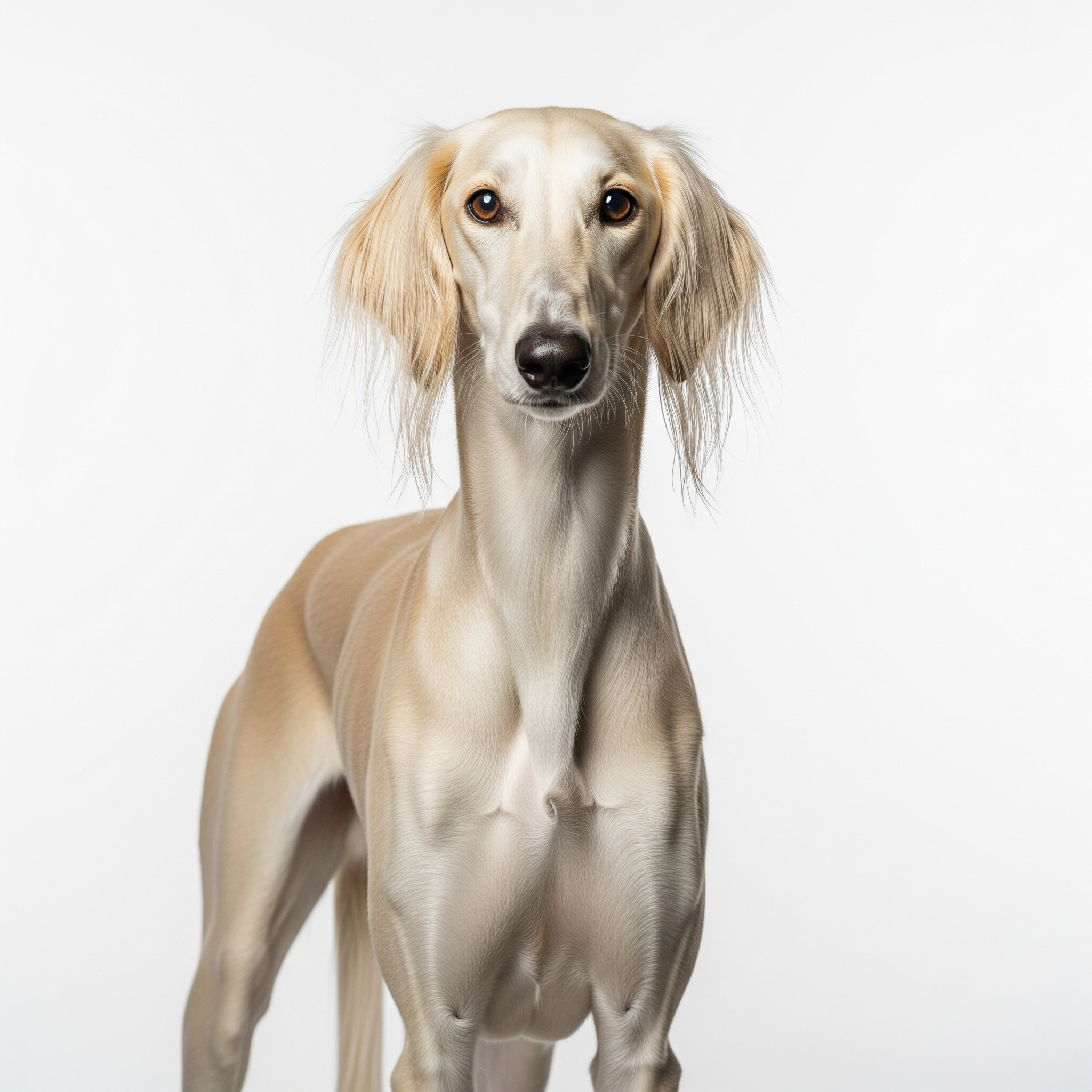
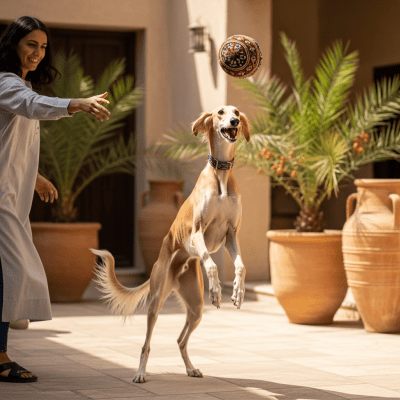
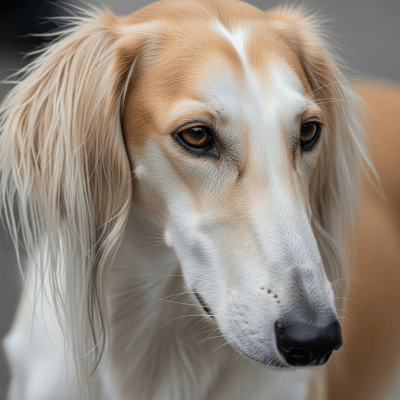
Salukis are instantly recognizable by their slender, athletic build, deep chest, and long legs designed for running at high speeds. Their narrow head features a slightly arched skull, and their ears and tail are often adorned with silky, feathered hair. The breed’s coat comes in two varieties: smooth and feathered, with the latter displaying longer hair on the ears, tail, and legs. Salukis exhibit a wide range of colors, including white, cream, fawn, gold, red, grizzle, black and tan, and tricolor, all contributing to their regal and graceful presence.
Historically, Salukis were valued for their ability to hunt fast-moving prey across open landscapes, relying on their keen eyesight and exceptional stamina. Today, they are cherished as companion animals, participating in activities such as lure coursing, agility, and conformation shows. Their reserved temperament makes them gentle and loyal with their families, though they often remain aloof with strangers. Salukis thrive in environments where they can exercise and bond closely with their owners.
Bring this kind into your world illustrated posters, mugs, and shirts.
Archival print, museum-grade paper
Buy Poster
Stoneware mug, dishwasher safe
Buy Mug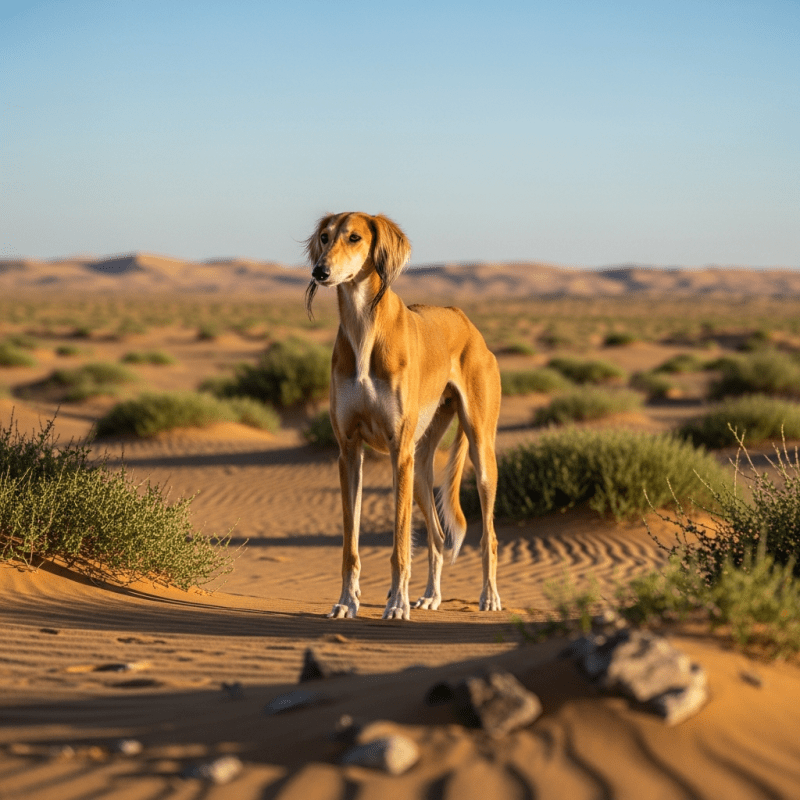
Soft cotton tee, unisex sizes
Buy ShirtThe Saluki holds a revered place in Middle Eastern culture, frequently depicted in ancient art and poetry as a symbol of nobility and grace. In Egypt, Saluki-like dogs appear in tomb paintings and artifacts, signifying their esteemed status among pharaohs and aristocrats. The breed’s legacy persists today, where it is admired for both its beauty and athletic prowess in dog shows and as a prestigious pet throughout the region.
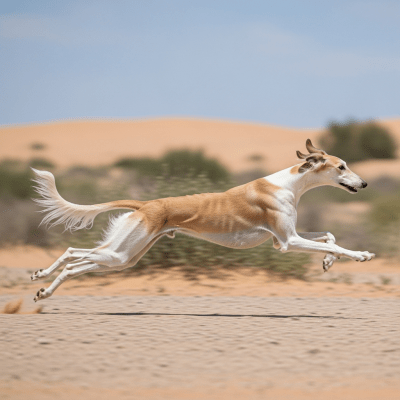

Salukis are classified as large dogs, typically standing 58–71 cm (23–28 inches) at the shoulder and weighing between 16–29 kg (35–65 pounds). Their slender build and long legs contribute to their reputation as elite runners among dog breeds.
The Saluki’s coat is either smooth or feathered, with the feathered variety featuring longer, silky hair on the ears, tail, and legs. Common colors include white, cream, fawn, gold, red, grizzle, black and tan, and tricolor, allowing for considerable diversity in appearance.
Salukis are gentle, independent, and reserved. They form strong bonds with their owners but tend to be aloof with strangers. Training requires patience and a gentle approach, as Salukis respond best to positive reinforcement and consistency rather than harsh methods.
Salukis generally enjoy good health, with a typical lifespan of 12–14 years. Owners should be aware of breed-specific sensitivities, such as reactions to anesthesia, and potential genetic issues including cardiac problems and certain cancers. Routine veterinary care and attention to their unique needs help ensure a long, healthy life.
Regional variants of the Saluki exist throughout the Middle East, with subtle distinctions in coat type and size. Notable lines are associated with countries such as Egypt, Iran, Iraq, Syria, and Saudi Arabia, reflecting localized breeding preferences and adaptations.