
Rottweiler
The Rottweiler is a powerful, loyal, and versatile domestic dog breed, celebrated worldwide for its protective instincts and adaptability as both a working and companion animal.
The Rottweiler is a powerful, loyal, and versatile domestic dog breed, celebrated worldwide for its protective instincts and adaptability as both a working and companion animal.
Originating in Germany, the Rottweiler traces its lineage to ancient Roman drover dogs, which accompanied legions across Europe. The breed was refined in the town of Rottweil, where it became indispensable for herding and guarding cattle. Throughout the 19th century, selective breeding honed its strength and intelligence, later adapting the breed for police and military service. Rather than a single founder, the Rottweiler evolved through generations of regional utility and careful selection, embodying centuries of working dog tradition.
The Rottweiler belongs to the Canis lupus familiaris species, classified within the working group by major kennel clubs. Its robust build and temperament place it among breeds traditionally used for guarding, herding, and service work. Recognized by authorities such as the AKC, FCI, and The Kennel Club, the Rottweiler stands as a quintessential example of a working dog, distinct from sporting, toy, or herding breeds.
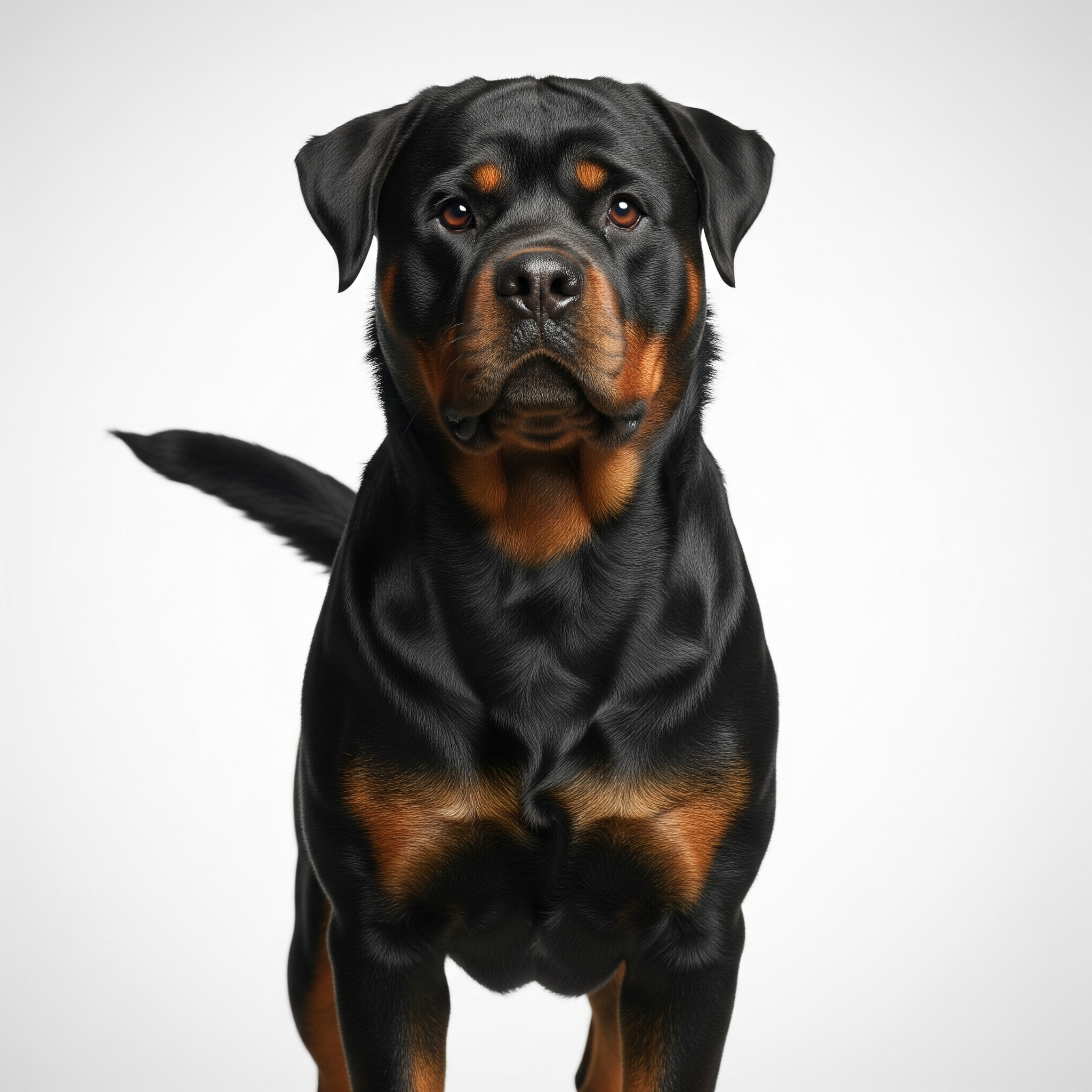
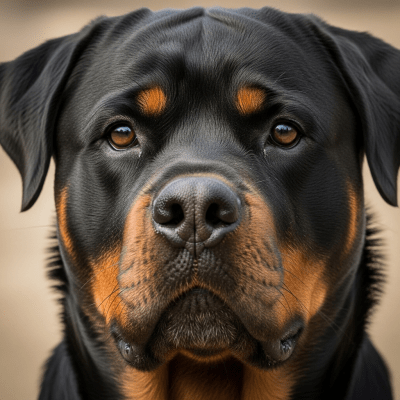
Rottweilers are instantly recognizable for their compact, muscular bodies and striking black coats adorned with sharply defined rust or mahogany markings. Their broad heads feature a moderately arched forehead, strong jaws, and a pronounced stop, giving an impression of both strength and alertness. The short, dense, and straight coat is easy to maintain, while the breed’s expressive eyes and confident stance reinforce its reputation as a formidable yet dignified companion.
Renowned for their protective nature, Rottweilers excel as guard dogs, police and military service animals, and loyal family companions. Their intelligence and trainability make them highly effective in search and rescue operations, personal protection, and various working roles. However, their strong instincts require consistent socialization and firm, positive training to ensure balanced behavior, especially in environments with children or other animals.
Bring this kind into your world illustrated posters, mugs, and shirts.
Archival print, museum-grade paper
Buy Poster
Stoneware mug, dishwasher safe
Buy Mug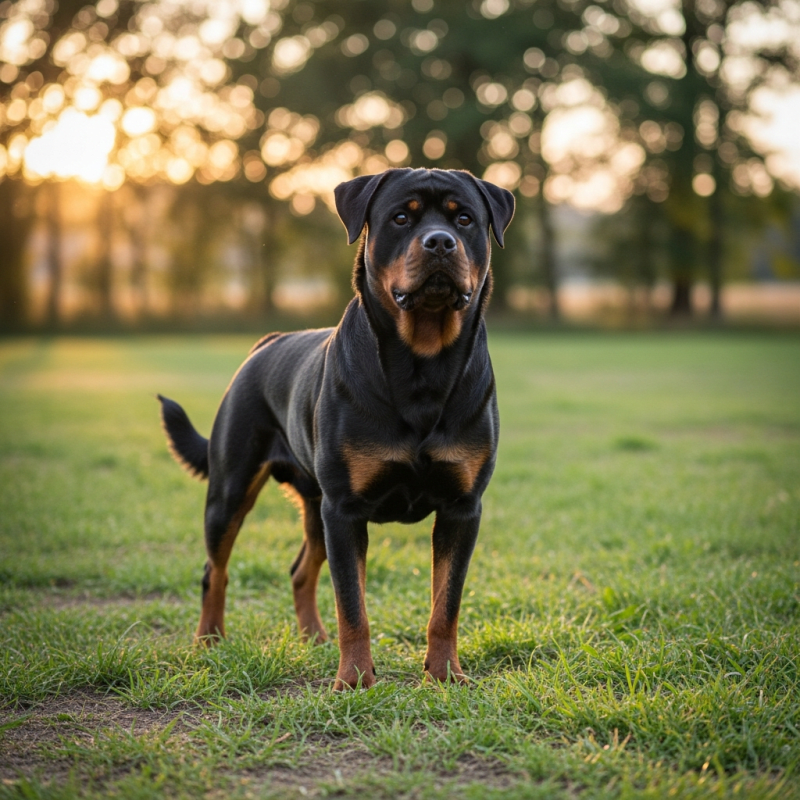
Soft cotton tee, unisex sizes
Buy ShirtThe Rottweiler has become a cultural icon of strength, guardianship, and loyalty. Frequently depicted in media as the archetypal guard dog, the breed symbolizes protection and steadfastness. Its presence in films, literature, and public service roles has cemented the Rottweiler’s image as both a trusted working partner and a devoted family member, reflecting its enduring appeal across generations and cultures.
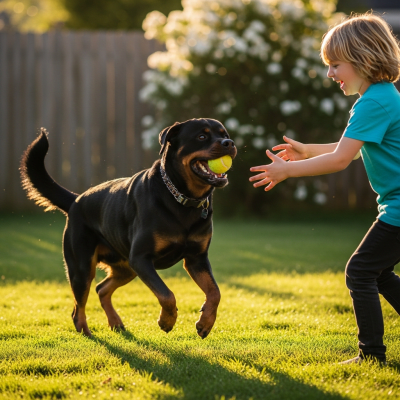


The Rottweiler is a large breed, with males typically standing 61–69 cm at the shoulder and weighing 43–61 kg. Females are slightly smaller. Their robust, muscular build reflects their working heritage and physical prowess.
Rottweilers have a short, dense, and straight coat that is always black with well-defined rust or mahogany markings. These markings appear on the cheeks, muzzle, chest, legs, and above the eyes, giving the breed its distinctive and elegant appearance.
Protective, loyal, and intelligent, Rottweilers are highly trainable and responsive to firm, consistent handling. Their versatility makes them suitable for a wide range of roles, but early socialization and ongoing training are essential to ensure balanced behavior and prevent overprotectiveness.
Rottweilers typically live 8–10 years. While generally robust, they are predisposed to certain health issues such as hip and elbow dysplasia, heart conditions, and some cancers. Regular veterinary care, a healthy diet, and appropriate exercise are important for maintaining their well-being.
While the Rottweiler breed standard is globally consistent, minor regional variants exist. American and European lines may differ slightly in size and temperament due to local breeding preferences, but these distinctions remain subtle and do not affect the breed’s core characteristics.