Papillon
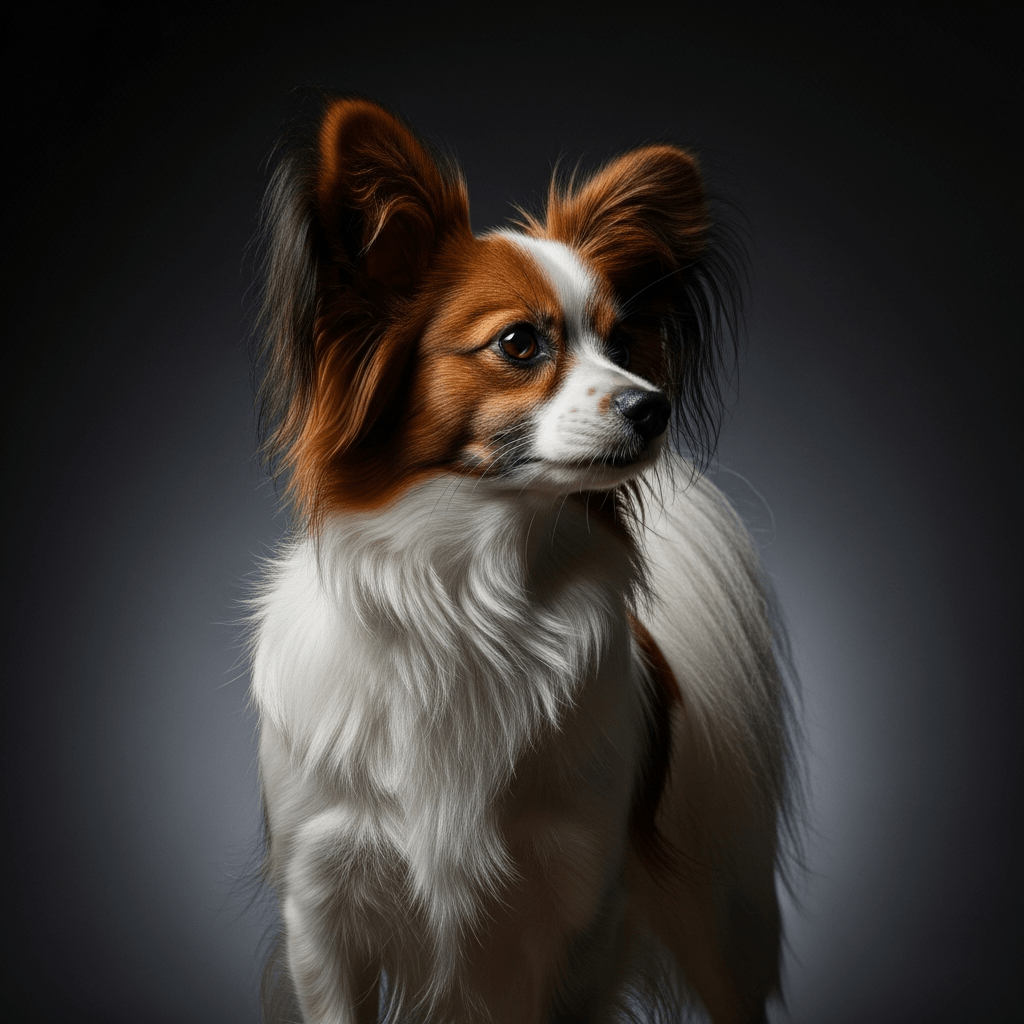
The Papillon is a refined toy dog breed celebrated for its elegant butterfly-like ears, lively disposition, and remarkable intelligence.
The Papillon is a refined toy dog breed celebrated for its elegant butterfly-like ears, lively disposition, and remarkable intelligence.
Originating in France and Belgium, the Papillon descends from continental toy spaniels depicted in European art from the 16th century. French and Belgian breeders refined the breed, and the modern Papillon emerged in the late 19th century. Its name, meaning "butterfly" in French, references the breed's signature upright, fringed ears. The drop-eared variant, known as the Phalène, is especially common in continental Europe. The Papillon was officially recognized by the American Kennel Club in 1915.
The Papillon belongs to the Toy Group as classified by the American Kennel Club and is grouped under Companion and Toy Dogs (FCI Group 9, Section 9) internationally. As a member of the species Canis lupus familiaris, it represents the refined lineage of small companion breeds within the broader family of domesticated dogs.
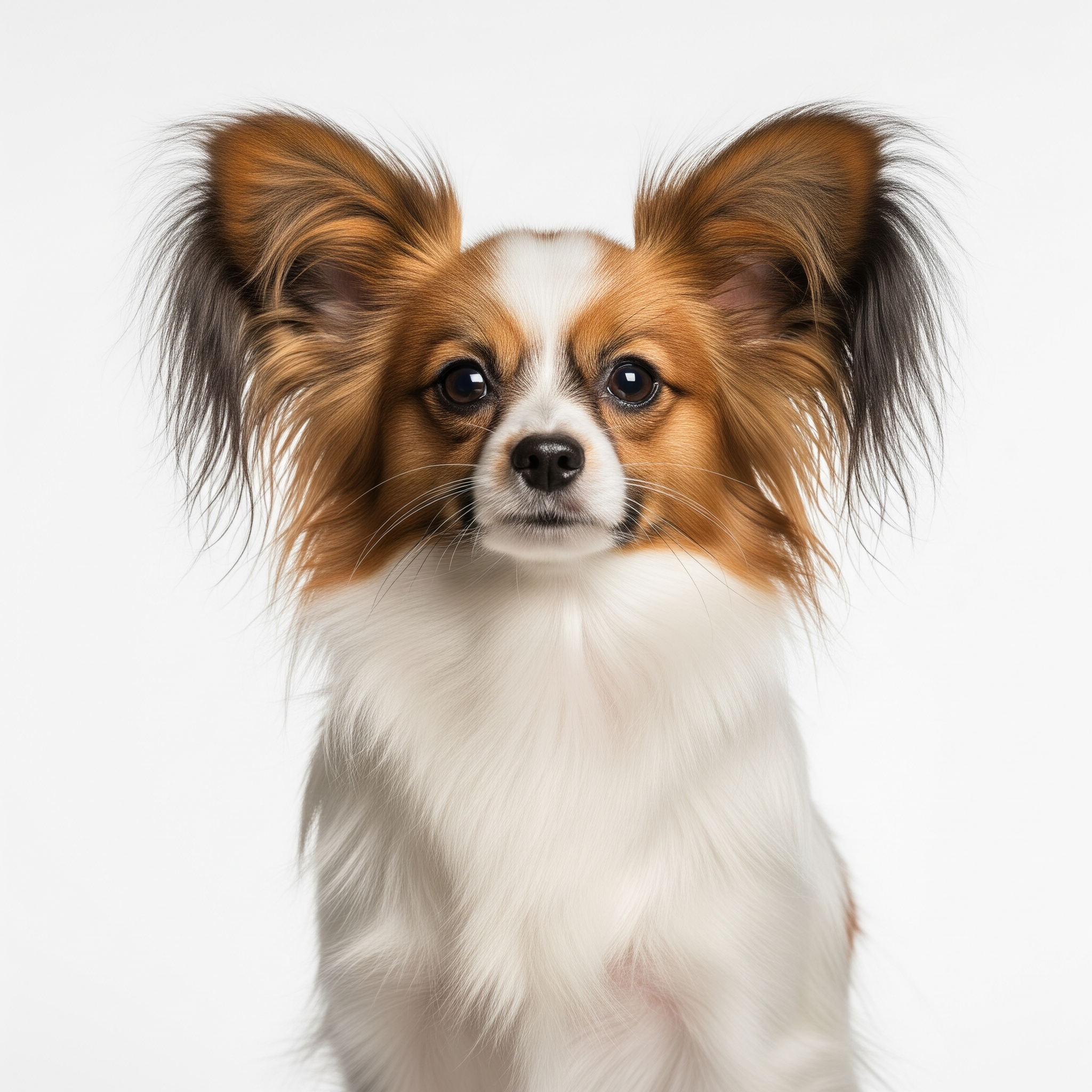
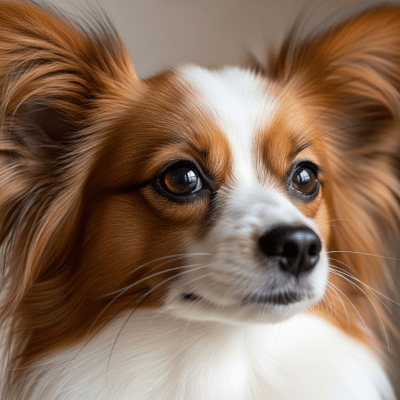
Papillons are small, fine-boned dogs with a dainty frame and a distinctively plumed tail carried gracefully over their back. Their hallmark feature is the large, upright, fringed ears that resemble butterfly wings, giving the breed its name. The coat is long, silky, and single-layered, flowing elegantly over their body. Papillons are always parti-colored—white with patches of black, red, sable, or other colors—creating a striking and refined appearance.
Papillons are energetic, alert, and highly intelligent, thriving as affectionate companions and excelling in obedience and agility competitions. Their adaptability makes them suitable for a variety of living environments, from city apartments to country homes. Papillons interact closely with humans, forming strong bonds and displaying a playful, curious nature. Their quick learning ability and eagerness to please make them favorites in canine sports and family settings alike.
Bring this kind into your world illustrated posters, mugs, and shirts.
Archival print, museum-grade paper
Buy Poster
Stoneware mug, dishwasher safe
Buy Mug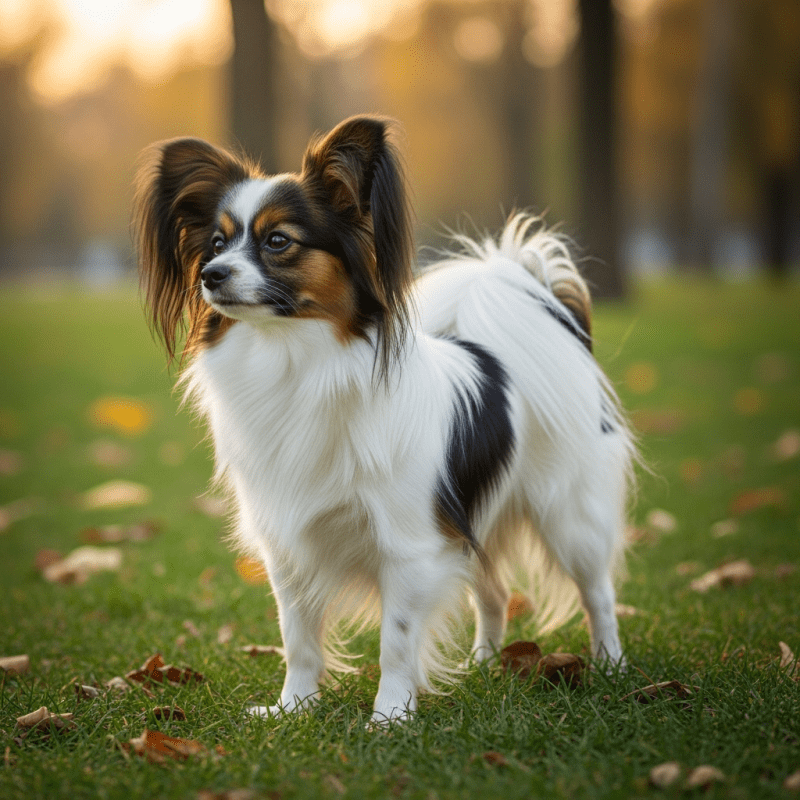
Soft cotton tee, unisex sizes
Buy ShirtThe Papillon has been immortalized in European art since the Renaissance, often appearing in portraits of nobility and royal families. Its elegant form and distinctive ears made it a symbol of refinement and companionship in aristocratic circles. Today, the breed continues to be celebrated in dog shows and as a beloved pet, embodying both historical prestige and modern versatility.
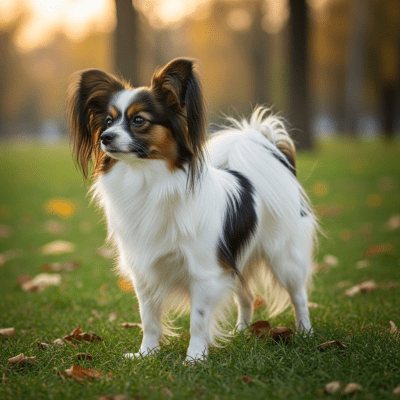

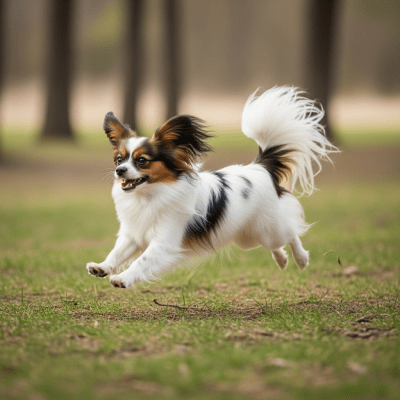

Papillons are classified as a small breed, typically standing 20–28 cm (8–11 inches) at the shoulder and weighing 2.3–4.5 kg (5–10 pounds). Their fine-boned structure and compact size make them ideal lap dogs and agile competitors.
The Papillon sports a long, silky, single-layer coat that flows elegantly. Common color patterns include white with black, red, or sable markings, and all Papillons are parti-colored—white with patches of any color. Their coat requires regular brushing to maintain its luster and prevent tangles.
Papillons are known for their alertness, lively spirit, and affectionate nature. Highly intelligent and eager to learn, they excel in obedience and agility training. Their adaptable temperament makes them suitable for a wide range of households, and they thrive on human interaction and mental stimulation.
Papillons are generally healthy dogs, though they can be prone to patellar luxation and dental issues due to their small size. With proper care, they enjoy a long lifespan, often living well into their teens.
Papillons are cherished as companion animals, show dogs, and competitors in agility and obedience sports. Their intelligence, agility, and affectionate demeanor make them versatile pets, suited for both families and individuals seeking an engaging and loyal friend.
The primary regional variant of the Papillon is the Phalène, distinguished by its drop ears rather than the upright, butterfly-like ears of the standard Papillon. The Phalène is more prevalent in continental Europe and is recognized as a subtype within the breed.