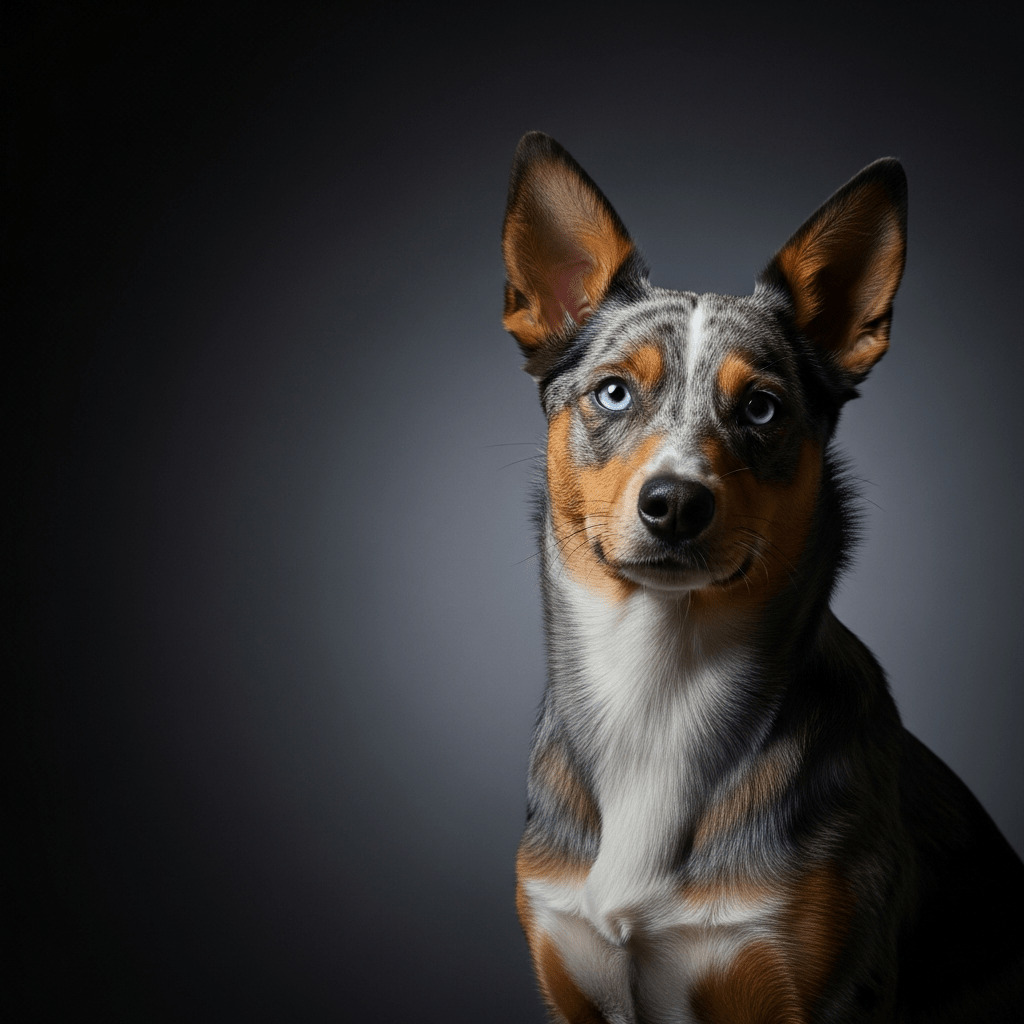
Miniature American Shepherd
The Miniature American Shepherd is a small, agile herding dog from the United States, celebrated for its intelligence, versatility, and close resemblance to the Australian Shepherd in a more compact form.
The Miniature American Shepherd is a small, agile herding dog from the United States, celebrated for its intelligence, versatility, and close resemblance to the Australian Shepherd in a more compact form.
Originating in California during the late 1960s and early 1970s, the Miniature American Shepherd was developed by selectively breeding smaller Australian Shepherds. The goal was to create a portable herding companion for traveling equestrians, retaining the working abilities and temperament of its larger ancestor. The breed achieved official recognition from the American Kennel Club in 2015, marking its distinct identity and pedigree.
The Miniature American Shepherd belongs to the herding group within the broader taxonomy of domestic dogs (Canis lupus familiaris). It is classified as a distinct breed by major authorities, most notably the AKC, and shares its lineage directly with the Australian Shepherd. Its functional classification is as a working and companion dog, prized for its herding instincts and trainability.
This breed is compact and athletic, standing 33–46 cm at the shoulder and weighing 9–18 kg. Its double coat is of medium length, either straight or wavy, and comes in striking colors such as black, blue merle, red (liver), and red merle, often accented with white or tan markings. The Miniature American Shepherd’s expressive eyes can be brown, blue, hazel, amber, or any combination, including heterochromia. Its overall look is a smaller version of the Australian Shepherd, with a balanced, agile build and a lively, alert expression.
Highly intelligent and energetic, the Miniature American Shepherd thrives in environments where it can work, play, and learn. It excels in herding, canine sports such as agility and obedience, and is an outstanding companion for active individuals or families. The breed is known for its responsiveness and adaptability, forming strong bonds with humans and requiring regular physical and mental stimulation to remain content.
Bring this kind into your world illustrated posters, mugs, and shirts.
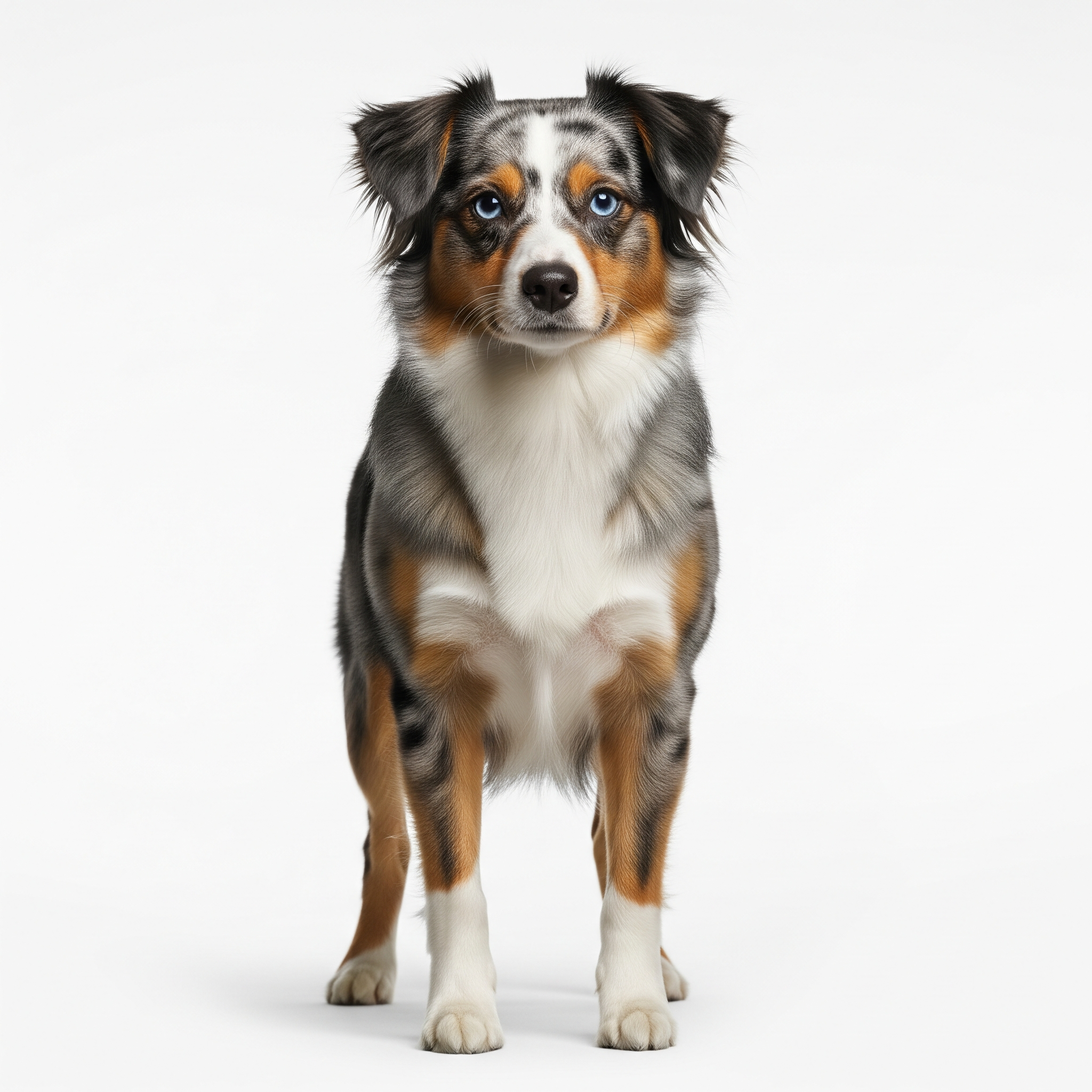
Archival print, museum-grade paper
Buy Poster
Stoneware mug, dishwasher safe
Buy Mug
Soft cotton tee, unisex sizes
Buy ShirtWhile not as widely depicted in art or literature as some older breeds, the Miniature American Shepherd has gained popularity in modern culture through its presence in canine sports and as a favored companion among equestrians. Its rise reflects contemporary preferences for versatile, portable dogs that can participate in a range of activities, from herding to family life.
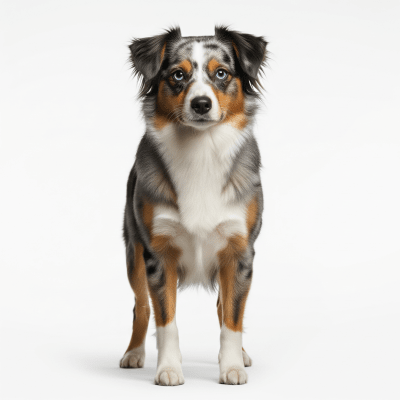

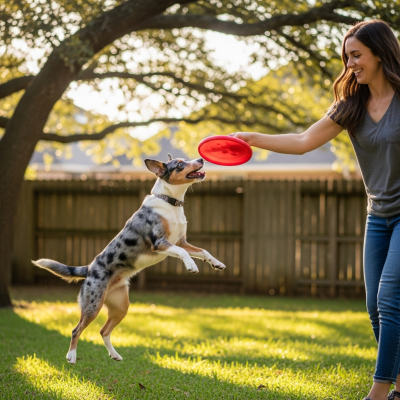
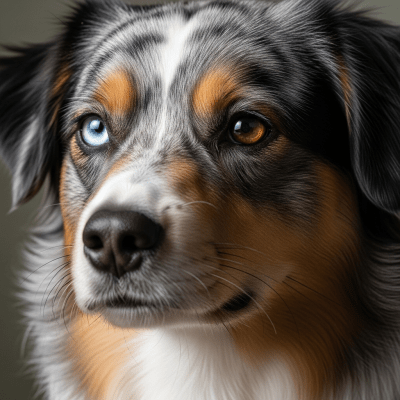
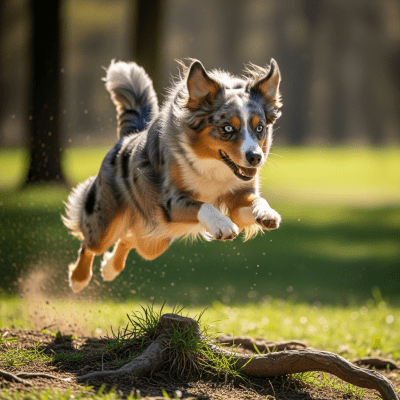
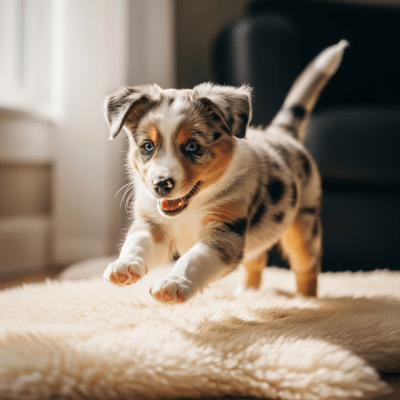
Classified as a small breed, the Miniature American Shepherd typically stands 33–46 cm (13–18 inches) at the shoulder and weighs 9–18 kg (20–40 pounds), with a compact, agile build ideal for active lifestyles.
The breed sports a double coat of medium length, which may be straight or wavy. Recognized colors include black, blue merle, red (liver), and red merle, all of which may feature white and/or tan markings. The coat is both practical and visually striking, offering protection and a distinctive appearance.
Miniature American Shepherds are renowned for their intelligence, agility, and versatility. They are highly trainable, excelling in obedience and canine sports, and are responsive to positive reinforcement. Their adaptable nature makes them excellent companions, but they require regular exercise and mental stimulation to avoid boredom.
The average lifespan is 12–13 years. Common health concerns include hip dysplasia, progressive retinal atrophy, and congenital deafness or blindness resulting from merle-to-merle breeding. Responsible breeding and regular veterinary care are essential to maintain health and longevity.
Regional variants are minimal, but some breed clubs outside the United States continue to use the older name "Miniature Australian Shepherd." Breed standards may vary slightly depending on registry, but the core traits remain consistent.