
Mastiff
The Mastiff is a giant, ancient breed renowned for its massive size, gentle temperament, and enduring legacy as a loyal guardian and companion.
The Mastiff is a giant, ancient breed renowned for its massive size, gentle temperament, and enduring legacy as a loyal guardian and companion.
Originating in ancient Britain, the Mastiff’s lineage dates back to Roman times and earlier, evolving from large molosser-type dogs bred for guarding estates, livestock, and serving as war dogs. The breed was refined in England, becoming known as the English Mastiff, with its modern standard established in the 19th century. Major recognition came in 1885 from the American Kennel Club, and British breeders and institutions like The Kennel Club (UK) played pivotal roles in shaping its pedigree.
The Mastiff belongs to the Canidae family, classified under the genus Canis and species Canis lupus familiaris. It is a member of the molosser group—large, muscular dogs historically bred for protection and working roles. Within breed organizations, the Mastiff is typically placed in the Working Group, recognized for its traditional duties as a guardian and protector.
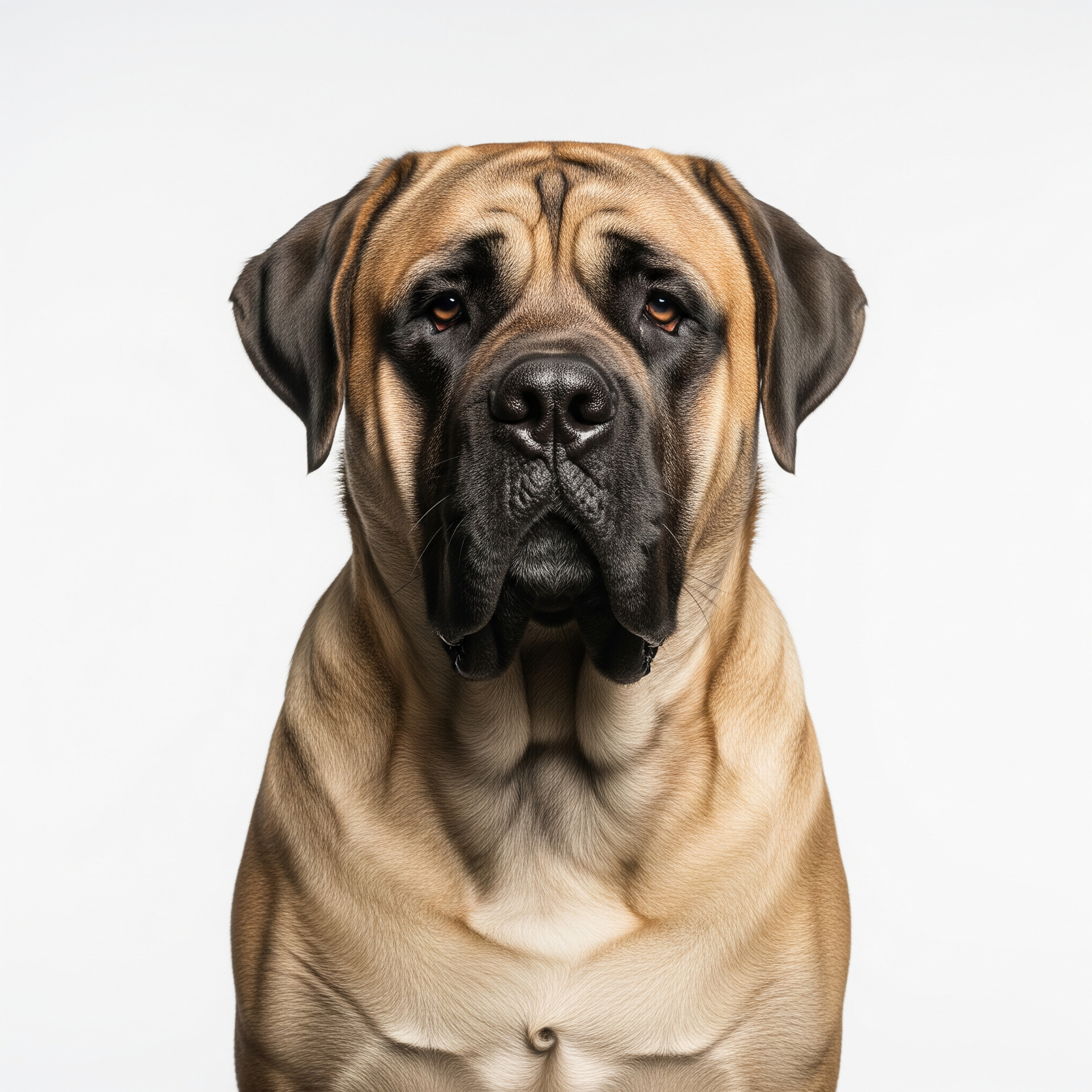
Imposing and dignified, the Mastiff features a broad, rectangular body, deep chest, and a massive, square head with a short muzzle and pronounced stop. Its short, dense coat comes in fawn, apricot, or brindle, often accented by a striking black mask and ears. The breed’s sheer size and muscular build convey both strength and gentleness, with males often standing 76 cm or taller at the shoulder and weighing up to 104 kg.
Mastiffs are celebrated for their calm, docile nature and unwavering loyalty. Historically, they served as estate guards, war dogs, and participated in bull-baiting, but today their primary role is as a devoted family guardian and companion. Their protective instincts are balanced by a gentle disposition, making them suitable for households seeking both security and affection. Early socialization and training are essential due to their size and strength.
Bring this kind into your world illustrated posters, mugs, and shirts.
Archival print, museum-grade paper
Buy Poster
Stoneware mug, dishwasher safe
Buy Mug
Soft cotton tee, unisex sizes
Buy ShirtThe Mastiff’s formidable presence and gentle character have made it a symbol of loyalty and protection in art, literature, and folklore. Revered in British history as a defender of castles and estates, the breed has appeared in countless works depicting noble guardianship. Today, Mastiffs are celebrated at dog shows and remain culturally significant for their role in shaping other molosser breeds.





In some regions, 'Mastiff' may refer broadly to molosser-type breeds, but the English Mastiff is the canonical standard in North America and the UK.
The Mastiff is classified as a giant breed. Males typically stand at least 76 cm (30 inches) at the shoulder and weigh between 73–104 kg (160–230 lbs), with females slightly smaller. Their robust build and substantial mass are defining traits.
Mastiffs have a short, dense coat that is easy to maintain. Common colors include fawn, apricot, and brindle, often accompanied by a distinctive black mask and black ears. The coat’s texture is smooth, offering both protection and a classic, understated elegance.
Known for their calm, gentle, and loyal disposition, Mastiffs are protective yet affectionate with their families. Early socialization and consistent training are important due to their size and natural guarding instincts. They mature slowly, requiring patience and positive reinforcement during training.
Mastiffs typically live 6–10 years. Common health issues include hip dysplasia, heart conditions, bloat, and sensitivity to heat. Responsible ownership involves regular veterinary care and attention to their unique health needs.
Historically, Mastiffs served as estate guards, war dogs, and participated in bull-baiting. Today, their primary roles are as companion animals, family guardians, and show dogs. Their imposing presence and gentle nature make them ideal for households seeking both protection and affection.
The English Mastiff is the recognized standard in North America and the UK. While 'Mastiff' may refer to various molosser breeds in some regions, the English Mastiff remains the canonical variant, distinguished by its refined physical and temperamental traits.