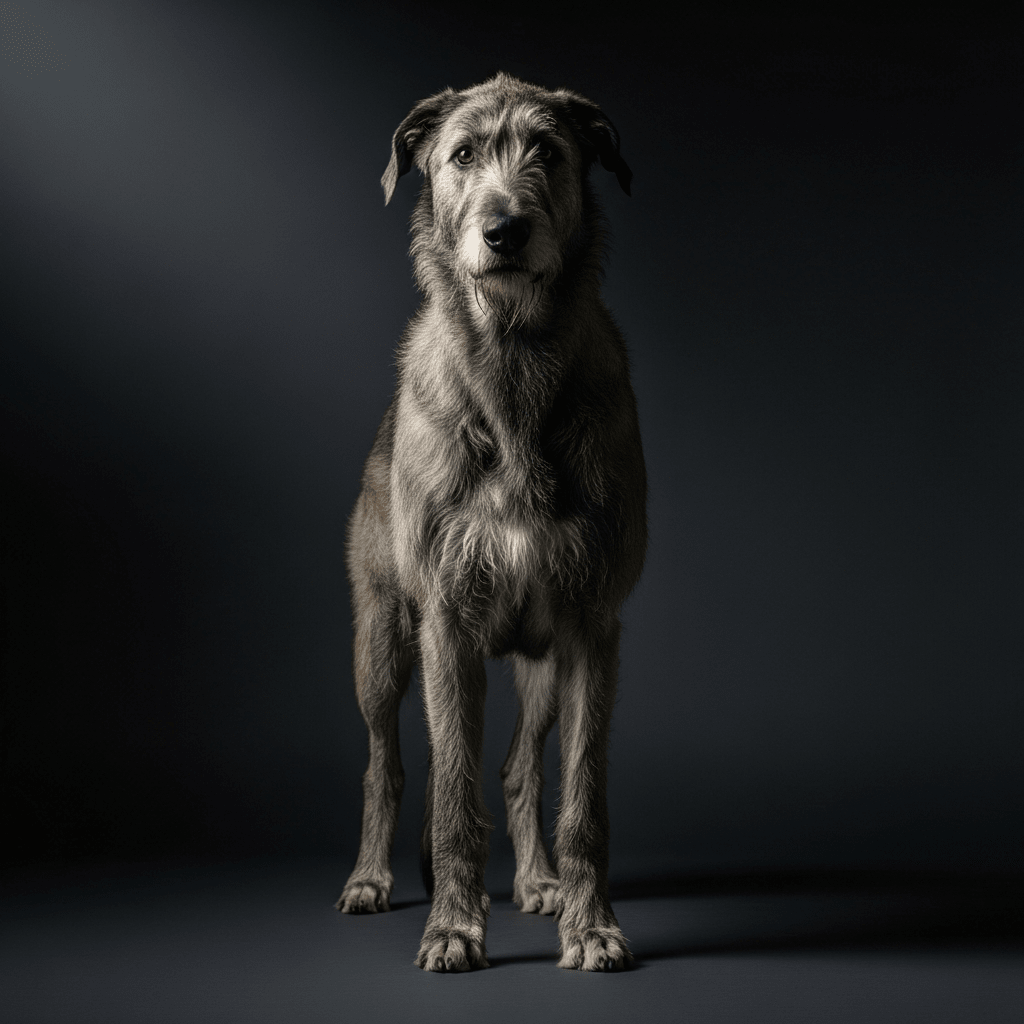
Irish Wolfhound
The Irish Wolfhound is a giant sighthound breed from Ireland, famed for its towering stature, gentle temperament, and storied history as a noble wolf hunter.
The Irish Wolfhound is a giant sighthound breed from Ireland, famed for its towering stature, gentle temperament, and storied history as a noble wolf hunter.
Originating in Ireland, the Irish Wolfhound traces its lineage back to ancient times. Once nearly extinct, the breed was revived in the late 19th century by Captain George Augustus Graham, who crossed native Irish hounds with Scottish Deerhounds to restore the breed’s grandeur. Traditionally, Irish Wolfhounds were reserved for nobility and prized for their prowess in hunting wolves and large game, cementing their place in Irish history and legend.
The Irish Wolfhound belongs to the sighthound group, a subset of the broader canine family (Canis lupus familiaris). Within major kennel clubs, it is classified as a hound breed, distinguished by its speed, keen vision, and hunting instincts. Its taxonomic path follows: Kingdom Animalia, Phylum Chordata, Class Mammalia, Order Carnivora, Family Canidae, Genus Canis, Species Canis lupus, Subspecies Canis lupus familiaris, Breed Irish Wolfhound.
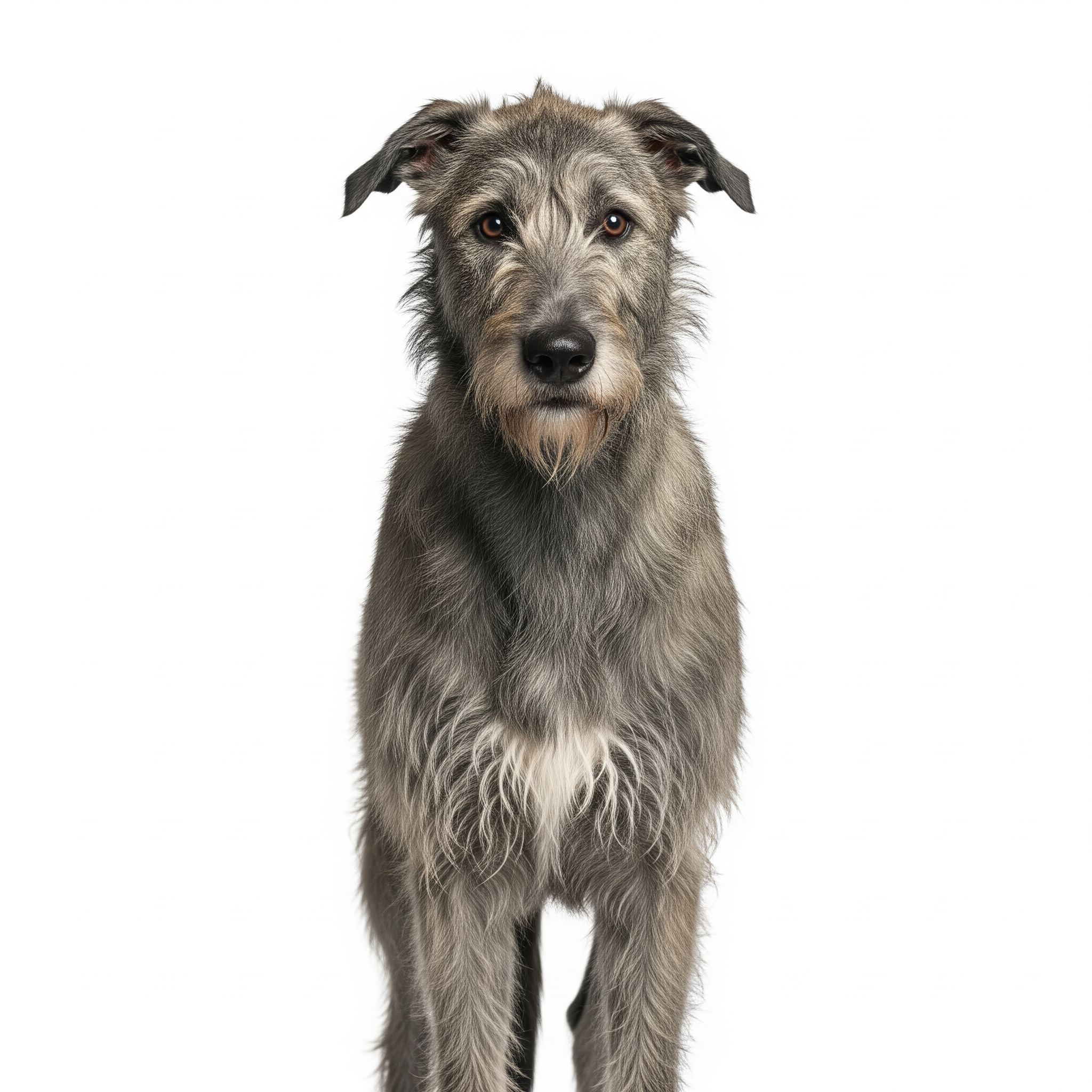
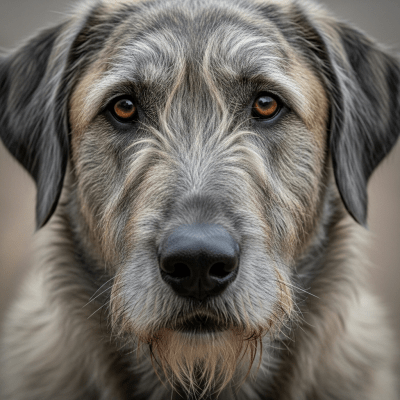
Imposing yet graceful, the Irish Wolfhound stands among the tallest of all dog breeds, with males reaching 81–89 cm at the shoulder. Its body is long and muscular, featuring a deep chest and strong, straight legs built for endurance. The breed’s rough, wiry double coat comes in shades of gray, brindle, red, black, white, or fawn. The head is elongated and slightly arched, with small ears and expressive eyes that convey a dignified, gentle presence.
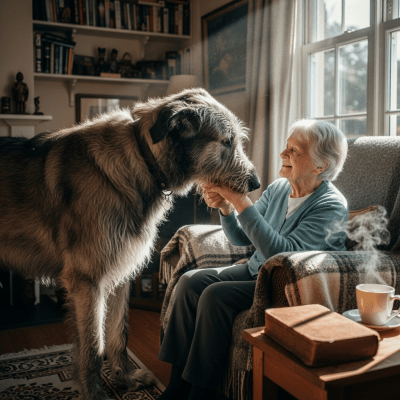
Historically, Irish Wolfhounds were valued for their ability to hunt wolves and large game, displaying remarkable speed and strength. Today, they are cherished as companion animals, show dogs, and therapy animals, known for their calm, friendly demeanor and adaptability to family life. Despite their imposing size, they are gentle and affectionate, thriving in environments where they can exercise and interact closely with humans.
Bring this kind into your world illustrated posters, mugs, and shirts.
Archival print, museum-grade paper
Buy Poster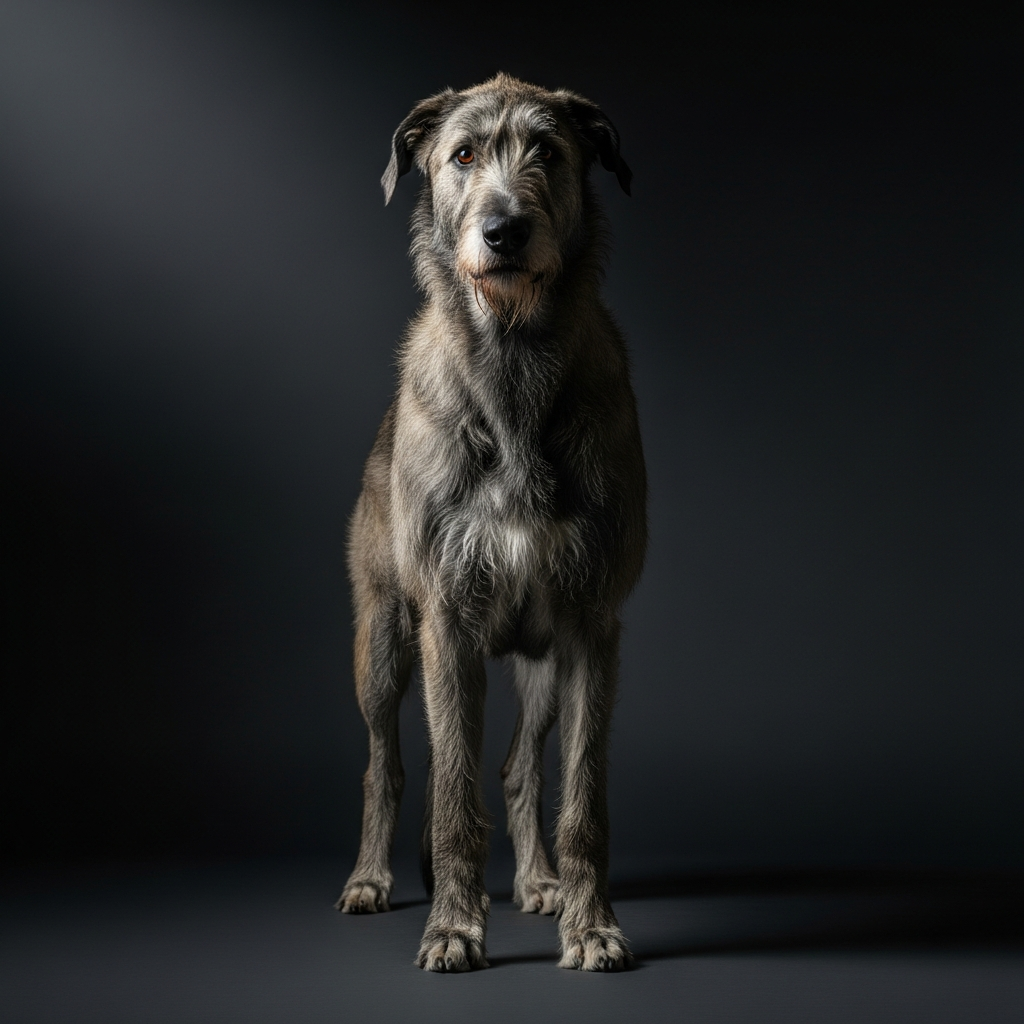
Stoneware mug, dishwasher safe
Buy Mug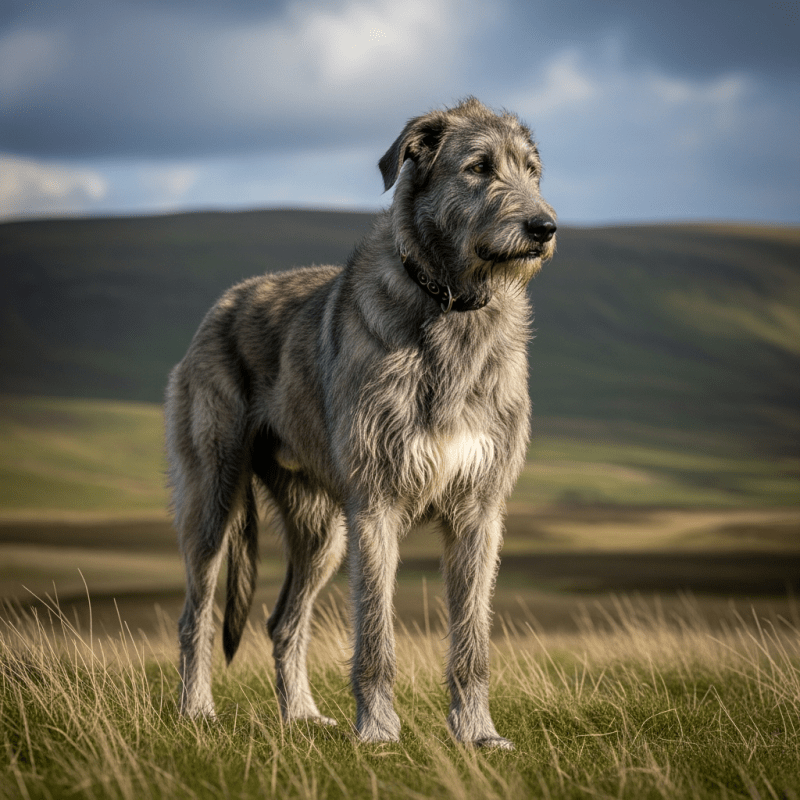
Soft cotton tee, unisex sizes
Buy ShirtThe Irish Wolfhound is deeply woven into Irish heritage and folklore, often symbolizing nobility, bravery, and loyalty. Revered in legends and featured in art, this breed has long represented the spirit of Ireland. Its image is frequently used in Irish iconography, and it remains a source of national pride, celebrated in literature, statuary, and modern dog shows worldwide.
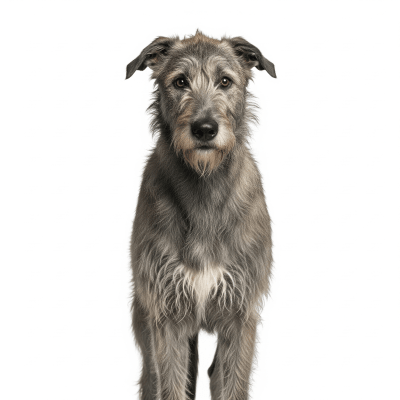
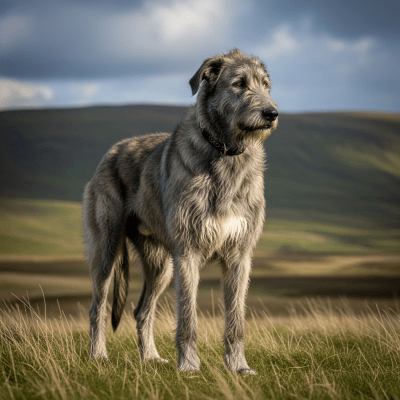
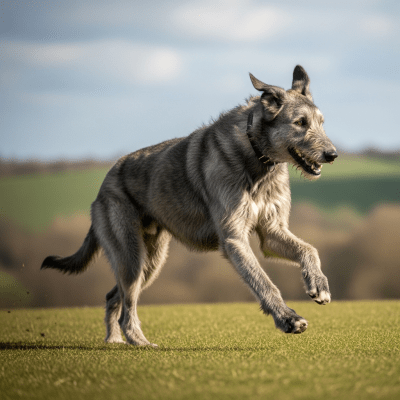
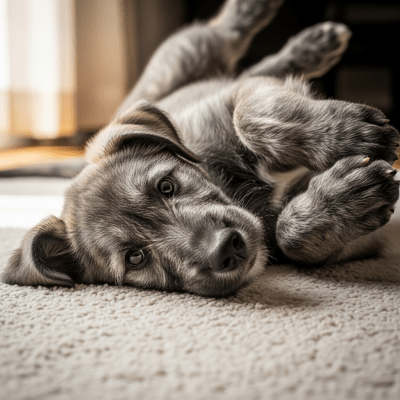
The Irish Wolfhound is classified as a giant breed. Males typically stand 81–89 cm (32–35 inches) at the shoulder and weigh between 64–82 kg (140–180 pounds), while females are slightly smaller. Their imposing size is matched by a long, muscular frame and deep chest.
The breed’s coat is rough and wiry, forming a protective double layer that is both functional and distinctive. Common colors include gray, brindle, red, black, white, and fawn, with subtle variations in shade and pattern across individuals.
Irish Wolfhounds are celebrated for their gentle, dignified, and friendly nature. They exhibit low aggression and are highly adaptable to family environments. While generally responsive and eager to please, they may show some independence, making early socialization and gentle, consistent training especially beneficial.
The typical lifespan of an Irish Wolfhound is 6–8 years, which is relatively short for dogs but common among giant breeds. They are prone to certain health issues, including cardiomyopathy, osteosarcoma (bone cancer), and bloat. Regular veterinary care and attention to diet and exercise are important for their well-being.
Historically, Irish Wolfhounds were bred for hunting wolves and large game, serving as both hunters and guardians. In modern times, their roles have shifted to companion animals, show dogs, and therapy animals. Their gentle disposition and impressive appearance make them highly valued in families and therapeutic settings, though their size and exercise needs mean they are less suited to urban living.
The Irish Wolfhound breed standard is internationally recognized, with minimal regional variants. While historical names and slight differences in lineage may exist, the breed’s appearance and temperament remain consistent worldwide.