
English Setter
The English Setter is a graceful, feather-coated sporting dog celebrated for its gentle nature and exceptional skill as a bird dog, making it both an elegant companion and a prized hunting partner.
The English Setter is a graceful, feather-coated sporting dog celebrated for its gentle nature and exceptional skill as a bird dog, making it both an elegant companion and a prized hunting partner.
Originating in England during the 19th century, the English Setter was developed by breeders Edward Laverack and R. Purcell Llewellin. Through careful crossing of early setting spaniels, pointers, and other setters, these pioneers refined the breed for superior scenting, pointing, and retrieving abilities. The Laverack and Llewellin lines remain foundational to the breed’s pedigree, with each contributing distinct qualities valued by enthusiasts and sportsmen.
The English Setter belongs to the Sporting Group, a category defined by breeds bred for fieldwork and hunting. As a member of the Canis lupus familiaris species, it shares ancestry with other setters and pointers, fitting squarely within the broader family of domestic dogs recognized for their working and companion roles.
English Setters are medium to large dogs, instantly recognizable by their long, lean head, expressive dark eyes, and moderately deep chest. Their hallmark is a silky, flat, and feathered coat, which flows elegantly as they move. The breed’s color patterns, known as "belton," include blue, orange, lemon, liver, and tricolor flecking on a white base. Their graceful, athletic build and flowing gait evoke both refinement and stamina.
Renowned for their keen scenting ability, English Setters excel in locating and "setting" game birds for hunters. Their gentle, sociable temperament makes them beloved family companions, while their intelligence and trainability ensure success in both the field and at home. Regular exercise and mental stimulation are essential, as these dogs thrive on activity and human interaction.
Bring this kind into your world illustrated posters, mugs, and shirts.

Archival print, museum-grade paper
Buy Poster
Stoneware mug, dishwasher safe
Buy Mug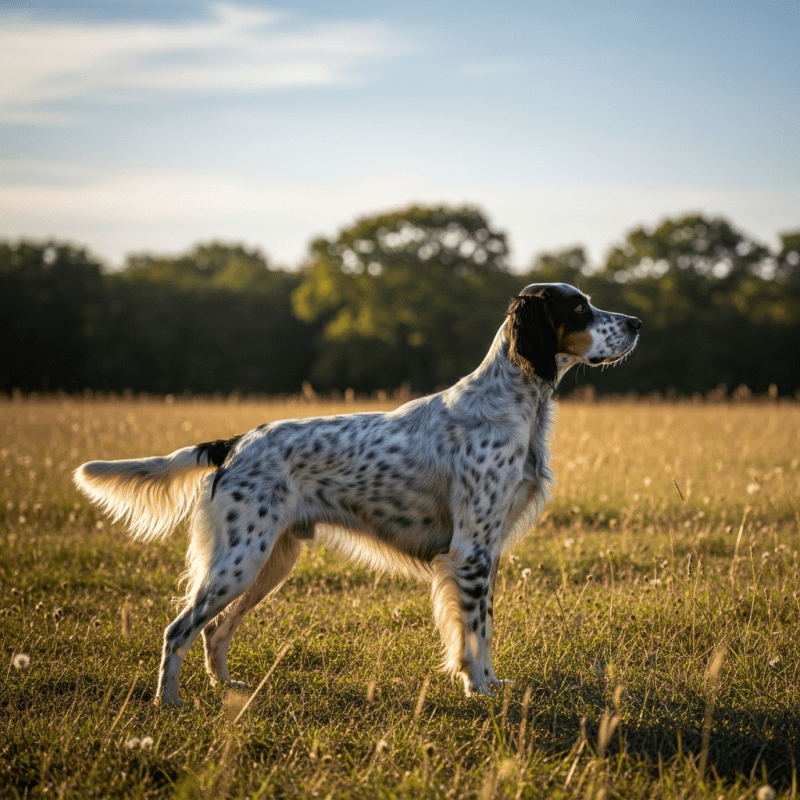
Soft cotton tee, unisex sizes
Buy ShirtThe English Setter has long been esteemed in British sporting culture, appearing in classic field trials, dog shows, and works of art depicting country life. Its elegant form and gentle demeanor have made it a symbol of refined companionship and sporting excellence, with the breed often featured in literature and media celebrating the traditions of upland hunting.
The English Setter is officially recognized by major kennel clubs worldwide.






These names may refer to the breed as a whole or to specific lines within the English Setter lineage.
English Setters are considered large dogs, typically standing 58–68 cm (23–27 inches) at the shoulder and weighing 20–36 kg (45–80 pounds). Their athletic build supports both stamina and grace.
The breed sports a silky, flat, and feathered coat, requiring regular grooming. Distinctive "belton" color patterns include blue, orange, lemon, liver, and tricolor—each featuring flecks or spots on a white base.
English Setters are gentle, friendly, and highly sociable, thriving in family environments. Their intelligence and eagerness to please make them highly trainable, especially in scenting, pointing, and retrieving tasks.
English Setters are generally healthy but may be predisposed to hip dysplasia, deafness, and hypothyroidism. Regular veterinary care and attention to exercise and diet help maintain their well-being.
The breed excels in both fieldwork and as a loving household member.
These lines reflect the breed’s dual heritage in both working and exhibition contexts.