
Dogue De Bordeaux
The Dogue de Bordeaux is a giant French mastiff breed celebrated for its imposing stature, massive head, and loyal, protective temperament.
The Dogue de Bordeaux is a giant French mastiff breed celebrated for its imposing stature, massive head, and loyal, protective temperament.
Originating in the Bordeaux region of France, the Dogue de Bordeaux boasts a lineage dating back to at least the 14th century. Developed primarily for guarding estates, pulling carts, and hunting large game, its ancestry is linked to ancient mastiff-type dogs introduced by Romans and shaped by local French breeds. The breed’s modern standard was formalized in the late 19th century, with the first official breed club established in 1924, cementing its place as one of France’s oldest and most distinguished native breeds.
The Dogue de Bordeaux belongs to the canine family, classified as a giant working breed within the mastiff group. Recognized by major authorities such as the American Kennel Club (AKC), Fédération Cynologique Internationale (FCI), and The Kennel Club (UK), it stands out for its robust build and historical utility as a guardian and protector. Its taxonomic placement is within Canis lupus familiaris, with breed-specific standards upheld internationally.
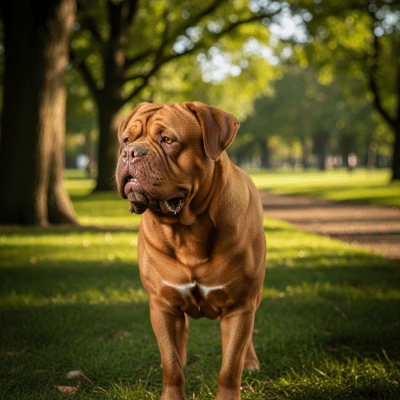
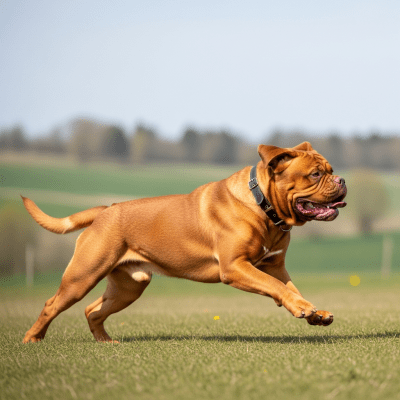
This breed is instantly recognizable for its massive, wrinkled head—the largest in proportion to body size among all dogs—paired with a broad, deep chest and thick, muscular neck. The Dogue de Bordeaux’s short, fine, and soft coat is typically a solid fawn, ranging from light to dark red, sometimes accented by subtle white markings on the chest and extremities. Loose skin, pronounced facial wrinkles, and an undershot jaw further distinguish its powerful, yet expressive appearance.
Renowned for its loyalty and protective instincts, the Dogue de Bordeaux excels as a guardian of homes and estates. Historically, it was tasked with pulling carts, driving livestock, and hunting large game such as boar. Today, the breed is cherished as a devoted family companion and show dog, but its size and strength demand experienced, confident handling. Its calm demeanor and steadfast nature make it a reliable protector and affectionate household member.
Bring this kind into your world illustrated posters, mugs, and shirts.

Archival print, museum-grade paper
Buy Poster
Stoneware mug, dishwasher safe
Buy Mug
Soft cotton tee, unisex sizes
Buy ShirtAs one of France’s oldest and most iconic breeds, the Dogue de Bordeaux has long symbolized strength and loyalty in French culture. Its imposing presence has featured in art, film, and literature, often representing steadfast guardianship and noble character. The breed’s popularity extends beyond France, with enthusiasts worldwide admiring its unique blend of power and gentleness.
All major organizations recognize the Dogue de Bordeaux, with breed clubs and standards established since the early 20th century.




In France, it is often simply called “Dogue.”
The Dogue de Bordeaux is classified as a giant breed. Adult males stand 58–68 cm at the shoulder and weigh 50–66 kg, with females slightly smaller. Its muscular frame and broad proportions contribute to its commanding presence.
The breed’s coat is short, fine, and soft to the touch. Most Dogues display solid fawn coloring, ranging from light to dark red, with occasional white markings on the chest and extremities. The coat requires minimal grooming but highlights the breed’s striking features.
Loyal, protective, and robust, the Dogue de Bordeaux is deeply family-oriented. While intelligent, it can be stubborn and independent, responding best to firm, consistent training. Early socialization and confident leadership are key to nurturing its gentle, reliable nature.
The typical lifespan for the Dogue de Bordeaux is 5–8 years. Common health concerns include hip dysplasia, cardiac issues, and skin fold infections. Owners should prioritize regular veterinary care and monitor joint and heart health closely.
Today, the breed is most valued for its loyalty, protective instincts, and unique appearance.
The Dogue de Bordeaux breed standard is tightly regulated, resulting in minimal regional variants. While minor differences may exist in individual lines, there are no formally recognized subtypes or regional distinctions.