
Boxer
The Boxer is a muscular, medium to large-sized breed of domestic dog, celebrated for its energetic temperament, loyalty, and versatility as both a companion and working dog.
The Boxer is a muscular, medium to large-sized breed of domestic dog, celebrated for its energetic temperament, loyalty, and versatility as both a companion and working dog.
Originating in Germany in the late 19th century, the Boxer was developed by crossing the powerful Bullenbeisser—a now-extinct German hunting dog—with English Bulldogs. German breeders, notably Friederun Stockmann and her husband, played a pivotal role in standardizing the breed, founding the first Boxer kennel, von Dom, in the early 1900s. The breed quickly gained recognition for its strength, intelligence, and adaptability, leading to its official acceptance by the American Kennel Club in 1904.
The Boxer belongs to the Canidae family, classified under the species Canis lupus familiaris. It is recognized globally as a working breed, often grouped with other robust, service-oriented dogs. Major kennel clubs, including the AKC, FCI, and The Kennel Club (UK), place the Boxer in their working or utility groups, reflecting its historic and modern roles in service, protection, and companionship.
Boxers are instantly recognizable for their athletic, square build, short back, and deep chest. Their short, smooth coat lies tight to the body and comes in fawn or brindle, frequently accented by striking white markings. The breed’s expressive face features a broad, blunt muzzle, dark brown eyes, and pronounced facial wrinkles, giving them a look of alert curiosity and warmth. Their overall appearance exudes strength, agility, and a playful elegance.
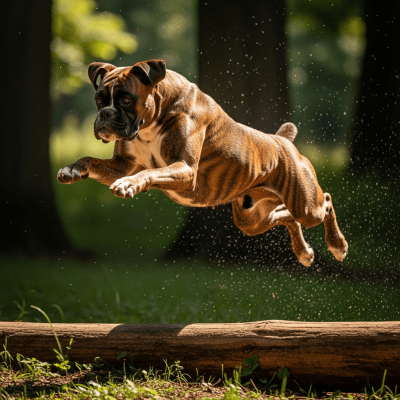
Boxers are renowned for their boundless energy, intelligence, and playful spirit. They thrive on regular exercise and mental stimulation, making them excellent companions for active families. Their loyalty and protective instincts suit them for roles as guard dogs, service animals, and working dogs in police and military settings. Boxers also excel in obedience and agility competitions, responding well to positive, consistent training.
Bring this kind into your world illustrated posters, mugs, and shirts.
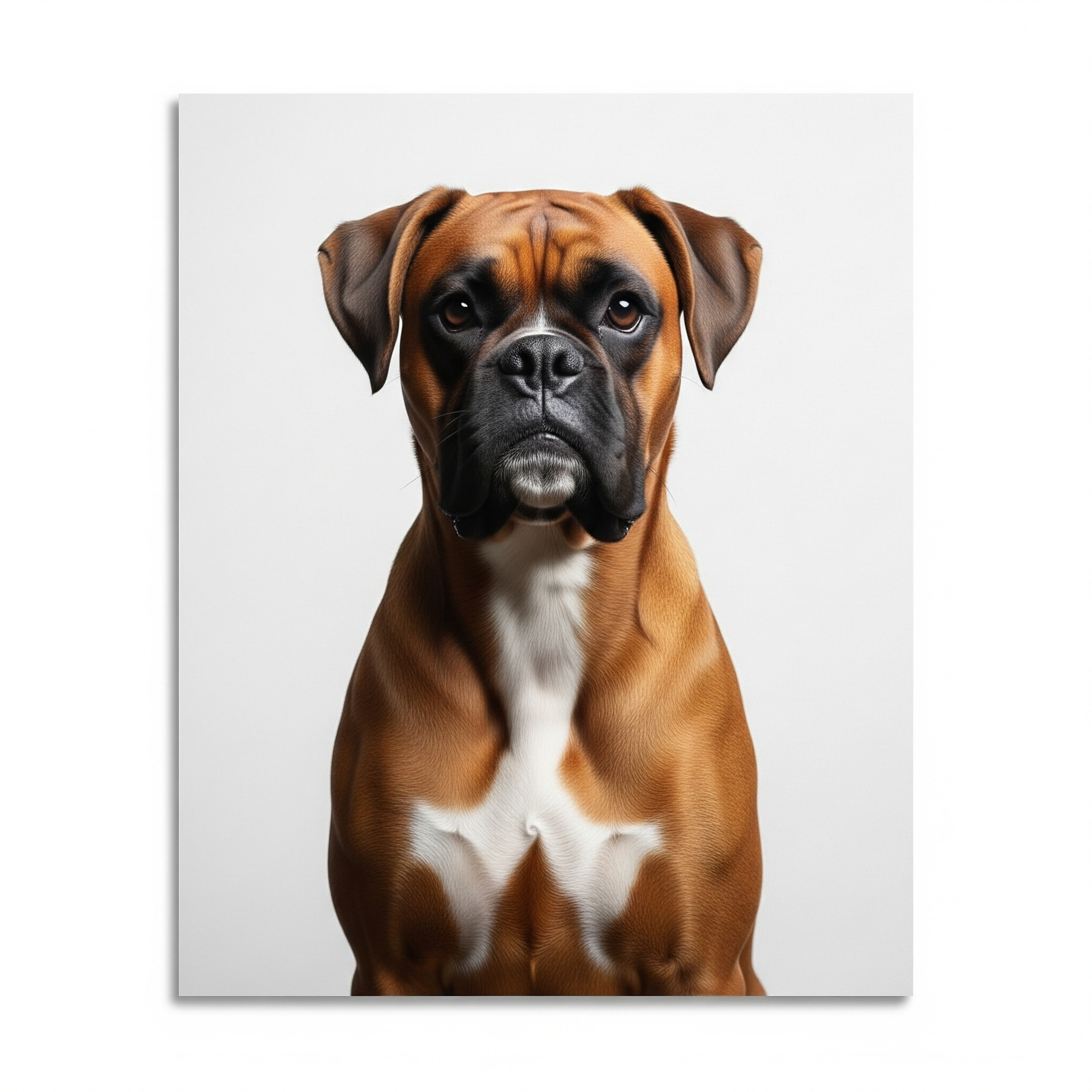
Archival print, museum-grade paper
Buy Poster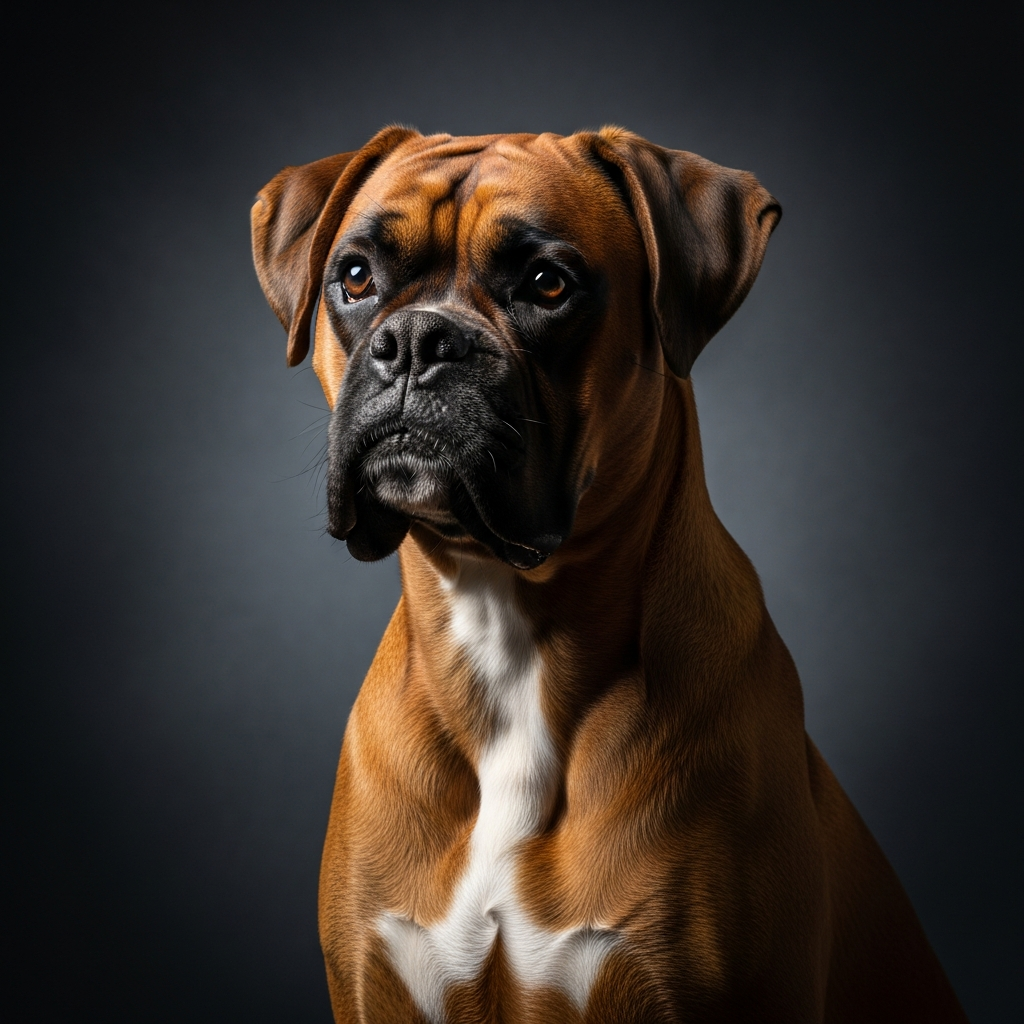
Stoneware mug, dishwasher safe
Buy Mug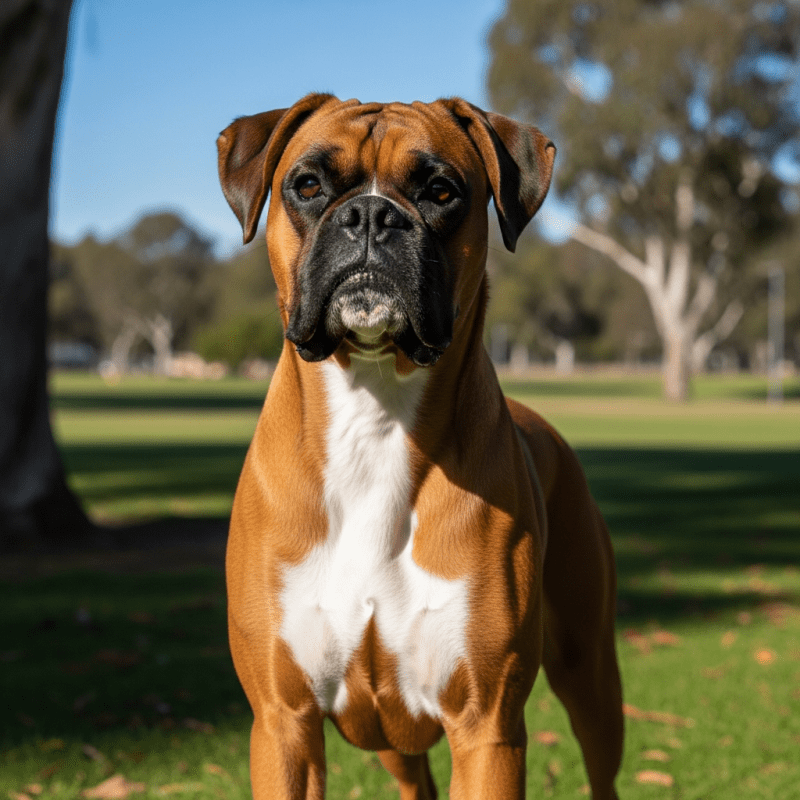
Soft cotton tee, unisex sizes
Buy ShirtThe Boxer has earned a place in popular culture as a symbol of strength, loyalty, and good-natured exuberance. Frequently featured in advertising, film, and art, Boxers are beloved for their expressive faces and playful antics. Their reputation as trustworthy family pets and reliable working dogs has made them a fixture in homes and service roles worldwide, embodying both companionship and courage.
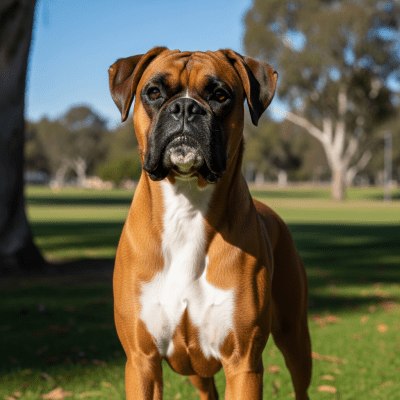



Boxers are classified as large dogs, typically standing 55–63.5 cm at the shoulder and weighing between 22–36 kg. Males are generally larger and more muscular than females, with a robust, athletic build suited for active lifestyles.
The Boxer’s coat is short, smooth, and tight to the body, offering a sleek and easy-to-maintain appearance. Common colors include fawn and brindle, often highlighted with distinctive white markings on the chest, feet, or face.
Boxers are energetic, playful, and highly intelligent. Their loyal and protective nature makes them devoted companions, while their responsiveness and eagerness to learn contribute to their reputation as highly trainable dogs. Boxers excel in obedience and agility, thriving on positive reinforcement and regular engagement.
Boxers typically live 10–12 years. While generally robust, they are prone to certain hereditary health issues, including hip dysplasia, heart conditions like aortic stenosis and cardiomyopathy, and some cancers. Regular veterinary care and responsible breeding practices help ensure a healthy, active life.
The Boxer breed maintains a consistent standard worldwide, with minimal regional variants. Breed standards are largely uniform across major kennel clubs, ensuring the Boxer’s distinctive traits and temperament remain recognizable wherever they are found.