
Basenji
The Basenji is a small, athletic hound breed from central Africa, famed for its elegant build, tightly curled tail, and unique yodel-like vocalizations.
The Basenji is a small, athletic hound breed from central Africa, famed for its elegant build, tightly curled tail, and unique yodel-like vocalizations.
Originating in the Congo Basin of central Africa, the Basenji was bred by indigenous tribes for hunting small game, particularly for flushing animals into nets. Its lineage is ancient, with genetic studies confirming its divergence from most modern breeds. The breed was introduced to Europe and North America in the early 20th century, with the first Basenjis arriving in England in the 1930s and soon after in the United States. Rather than being developed by a single breeder, Basenjis were established through generations of selective breeding among native African dogs.
The Basenji belongs to the hound group, recognized for its keen hunting instincts and agility. Within the broader taxonomy of dogs (Canis lupus familiaris), it is classified as a primitive breed, distinct for its ancient genetic lineage and unique behavioral traits. Major kennel clubs such as the AKC, FCI, and The Kennel Club (UK) place the Basenji in the hound or primitive breed group, highlighting its role as a hunting companion and its divergence from more modern breeds.
Basenjis are compact and fine-boned, standing 41–43 cm at the shoulder and weighing 10–11 kg. Their short, fine coat comes in red, black, tricolor, or brindle, always with distinctive white markings. Notable features include erect ears, almond-shaped eyes, and a tightly curled tail. The breed's elegant silhouette is matched by cat-like grooming habits and minimal odor. Their larynx shape gives rise to a unique vocalization—a yodel or "barroo"—instead of a typical bark.
Historically, Basenjis were used by African tribes for hunting small game, valued for their agility, intelligence, and strong prey drive. Today, they are cherished as companion animals, especially in active households. Their independent nature, high energy, and curiosity make them engaging pets, though they can be challenging to train. The breed is also known for its hypoallergenic qualities and minimal doggy odor, appealing to sensitive owners.
Bring this kind into your world illustrated posters, mugs, and shirts.

Archival print, museum-grade paper
Buy Poster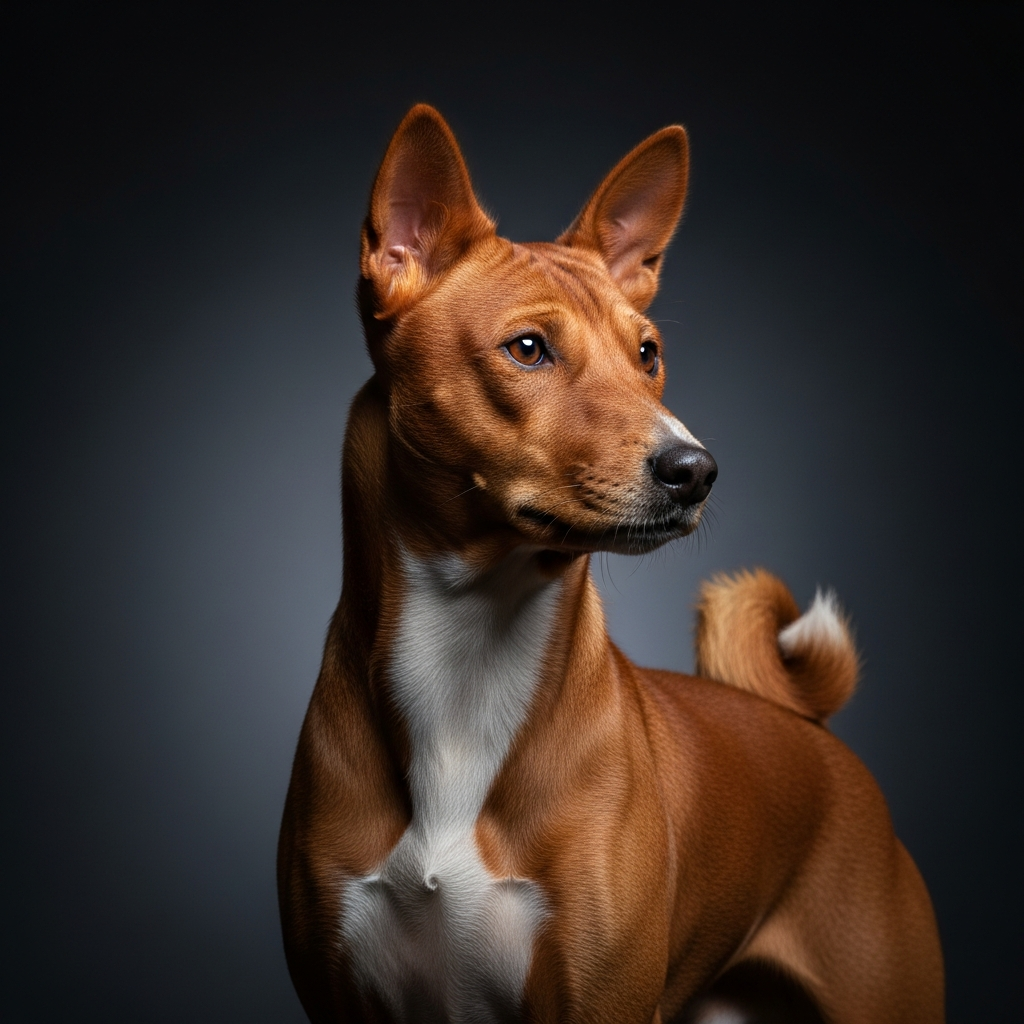
Stoneware mug, dishwasher safe
Buy Mug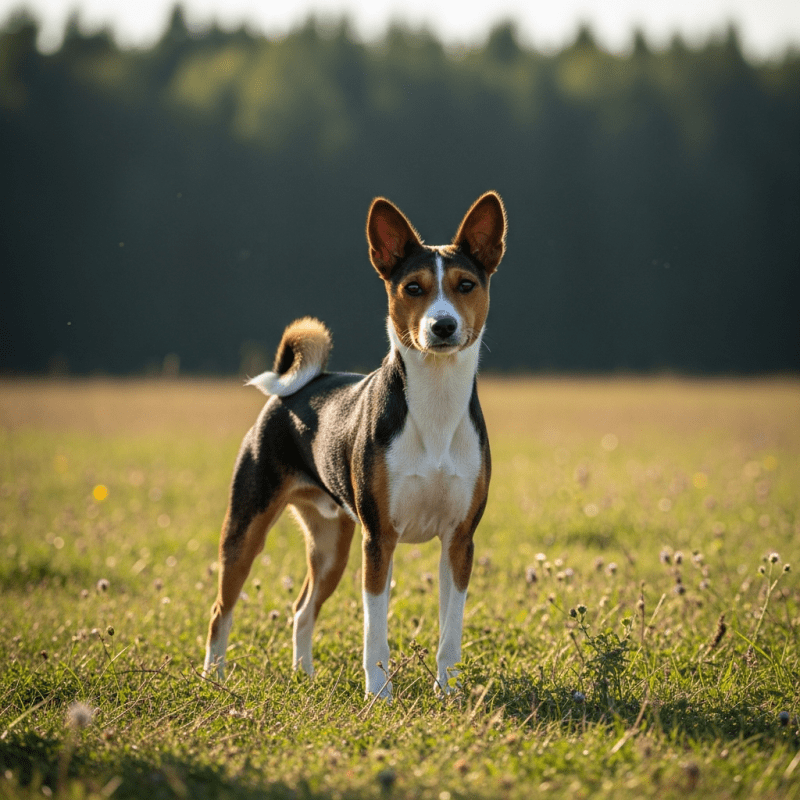
Soft cotton tee, unisex sizes
Buy ShirtThe Basenji holds a special place in African history and folklore, often regarded as the "African Barkless Dog." Its ancient origins have made it a subject of fascination in canine genetics and breed studies. In modern culture, the Basenji is celebrated for its distinctive yodel and elegant appearance, frequently featured in art, literature, and breed showcases. Its rarity and unique traits have earned it a devoted following among dog enthusiasts worldwide.





The Basenji is classified as a small breed, typically standing 41–43 cm (16–17 inches) at the shoulder and weighing between 10–11 kg (22–24 pounds).
Basenjis have a short, fine coat that lies close to the body. Common colorations include red, black, tricolor, and brindle, all featuring distinctive white markings. Their coat requires minimal grooming and contributes to their reputation for cleanliness.
Basenjis are highly energetic, intelligent, and independent. Their strong prey drive and curiosity make them lively companions, but their willful nature can present training challenges. While they learn quickly, consistent and patient training is essential due to their independent streak.
Basenjis are generally healthy, with an average lifespan of 12–16 years. Owners should be aware of breed-specific health concerns such as Fanconi syndrome (a kidney disorder) and progressive retinal atrophy. Regular veterinary care and genetic screening are recommended for optimal health.
Traditionally, Basenjis served as hunting dogs, adept at flushing small game into nets for local tribes in Africa. In contemporary settings, they are valued as companion animals, particularly for active individuals and families seeking an intelligent, hypoallergenic pet with unique traits.
While regional variants of the Basenji may exist in Africa, the breed is globally standardized under names such as African Barkless Dog, Congo Dog, and Zande Dog. Major kennel clubs recognize a single breed standard, with minor local differences not formally distinguished in Western registries.