Utahraptor
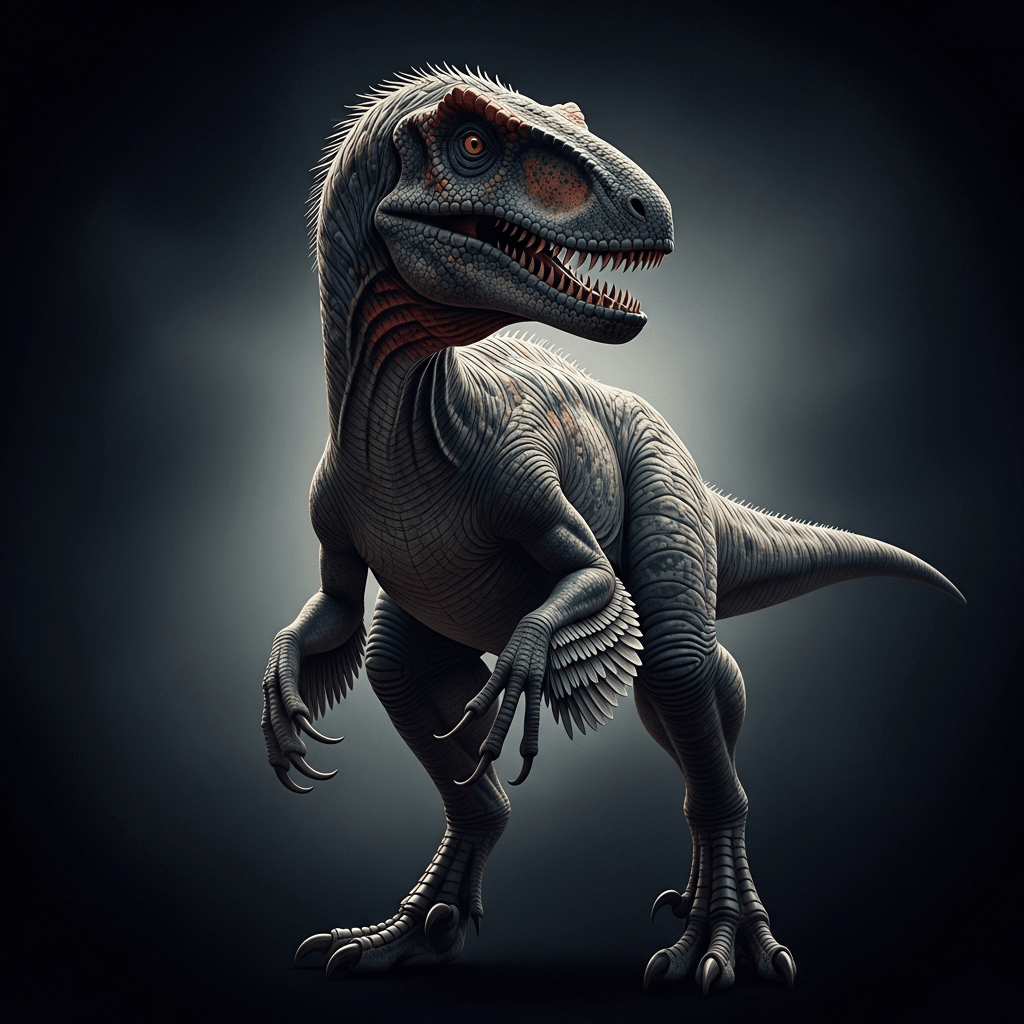
Utahraptor is the largest known dromaeosaurid, a formidable predatory dinosaur from the Early Cretaceous of North America, renowned for its robust build and oversized sickle-shaped toe claws.
Utahraptor is the largest known dromaeosaurid, a formidable predatory dinosaur from the Early Cretaceous of North America, renowned for its robust build and oversized sickle-shaped toe claws.
Utahraptor was unearthed in 1991 by paleontologist James Kirkland and his team in the Cedar Mountain Formation of Utah, USA. The holotype specimen, CEU 184v.86, was formally described in 1993, marking the discovery of a giant raptor that expanded scientific understanding of dromaeosaurid evolution. Its fossils are exclusive to this region, making Utahraptor a distinctly North American dinosaur with a story rooted in the red rocks of Utah.
Utahraptor is classified within the clade Dinosauria, order Saurischia, suborder Theropoda, and family Dromaeosauridae. This places it among the so-called "raptors," a group of agile, predatory dinosaurs closely related to Deinonychus and Velociraptor. As a dromaeosaurid, Utahraptor exemplifies the evolutionary traits of its family, with adaptations for hunting and swift movement.
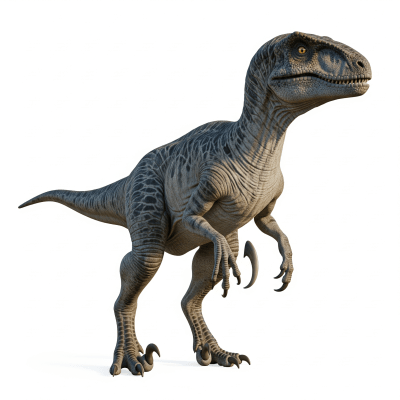
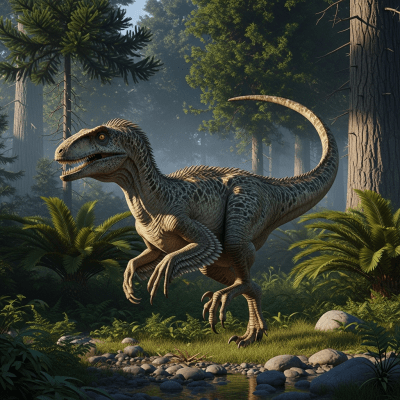
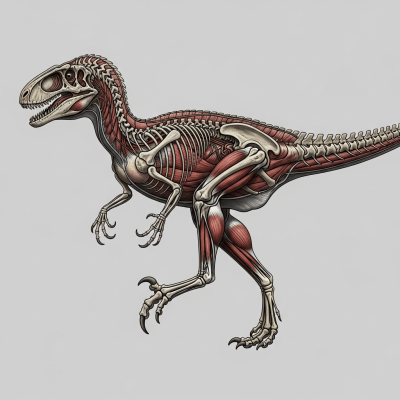
Utahraptor was an imposing bipedal predator, measuring 5–7 meters long and weighing up to 700 kg. Its most striking feature was the massive, curved sickle claw on each second toe, used for grasping prey. The elongated skull housed serrated teeth, while strong forelimbs bore large claws. Fossil evidence suggests it was feathered, lending a dynamic and somewhat bird-like appearance, though no direct impressions have been found. Its stiffened tail provided balance during rapid movement, and its overall form was built for power and agility.
Utahraptor was a carnivorous predator, likely hunting with agility and strength. Its oversized sickle claws were probably used to slash or pin down prey, and its build suggests it could pursue or ambush other dinosaurs. While its behavior can only be inferred from fossils, Utahraptor's adaptations indicate an active lifestyle, with possible social interactions among individuals. In modern times, its fossils serve scientific research and are featured in museum exhibits, helping educate the public about raptor evolution.
Bring this kind into your world illustrated posters, mugs, and shirts.
Archival print, museum-grade paper
Buy Poster
Stoneware mug, dishwasher safe
Buy Mug
Soft cotton tee, unisex sizes
Buy ShirtUtahraptor holds a prominent place in paleontological research and public imagination. It has appeared in documentaries, educational materials, and museum displays, often depicted as the archetype of the "giant raptor." Its discovery helped reshape popular and scientific views of predatory dinosaurs, and it continues to inspire fascination through its dramatic size and features. Utahraptor's legacy endures in media and educational outreach, contributing to the broader understanding of dinosaur evolution.
Utahraptor lived during the Early Cretaceous, a span of geological time roughly 135 to 125 million years ago, when dinosaurs flourished across the globe.

The first Utahraptor fossils were discovered in 1991 in the Cedar Mountain Formation, Utah. The holotype specimen, CEU 184v.86, is housed at the Natural History Museum of Utah. These finds revealed a previously unknown giant raptor, and subsequent discoveries have confirmed its unique status among dromaeosaurids. All known material comes from this region, making Utahraptor a local paleontological treasure.
Utahraptor inhabited what is now the western United States, specifically the area preserved in the Cedar Mountain Formation of Utah. Its environment would have been semi-arid, with floodplains, forests, and lakes, supporting a diverse range of Early Cretaceous life. Utahraptor's fossils are only found in this region, indicating a limited geographic distribution.
Utahraptor was a carnivore, equipped with serrated teeth and powerful claws for hunting. Its diet likely consisted of large herbivorous dinosaurs and other vertebrates, which it could ambush or overpower using its sickle-shaped claws and muscular limbs. The anatomical features of Utahraptor suggest a highly effective predatory strategy within its ecosystem.
Details about Utahraptor's growth and life cycle remain uncertain due to limited fossil evidence. While its large size suggests a lengthy developmental period, specific data on growth rates, juvenile stages, or lifespan are currently unavailable. Like other theropods, it likely hatched from eggs and underwent rapid growth in its early years.
Utahraptor, along with all non-avian dinosaurs, became extinct at the close of the Cretaceous Period, around 66 million years ago. The prevailing theory attributes this mass extinction to a catastrophic asteroid impact and subsequent environmental upheaval, which dramatically altered Earth's climate and ecosystems.
Utahraptor is a key species in paleontology, providing insight into the evolution of large-bodied raptors and the adaptive diversity of dromaeosaurids. Its discovery expanded scientific understanding of predatory dinosaurs and has informed research on dinosaur anatomy, behavior, and evolutionary relationships. Utahraptor continues to be a focal point in studies of theropod biology and the broader narrative of dinosaur evolution.