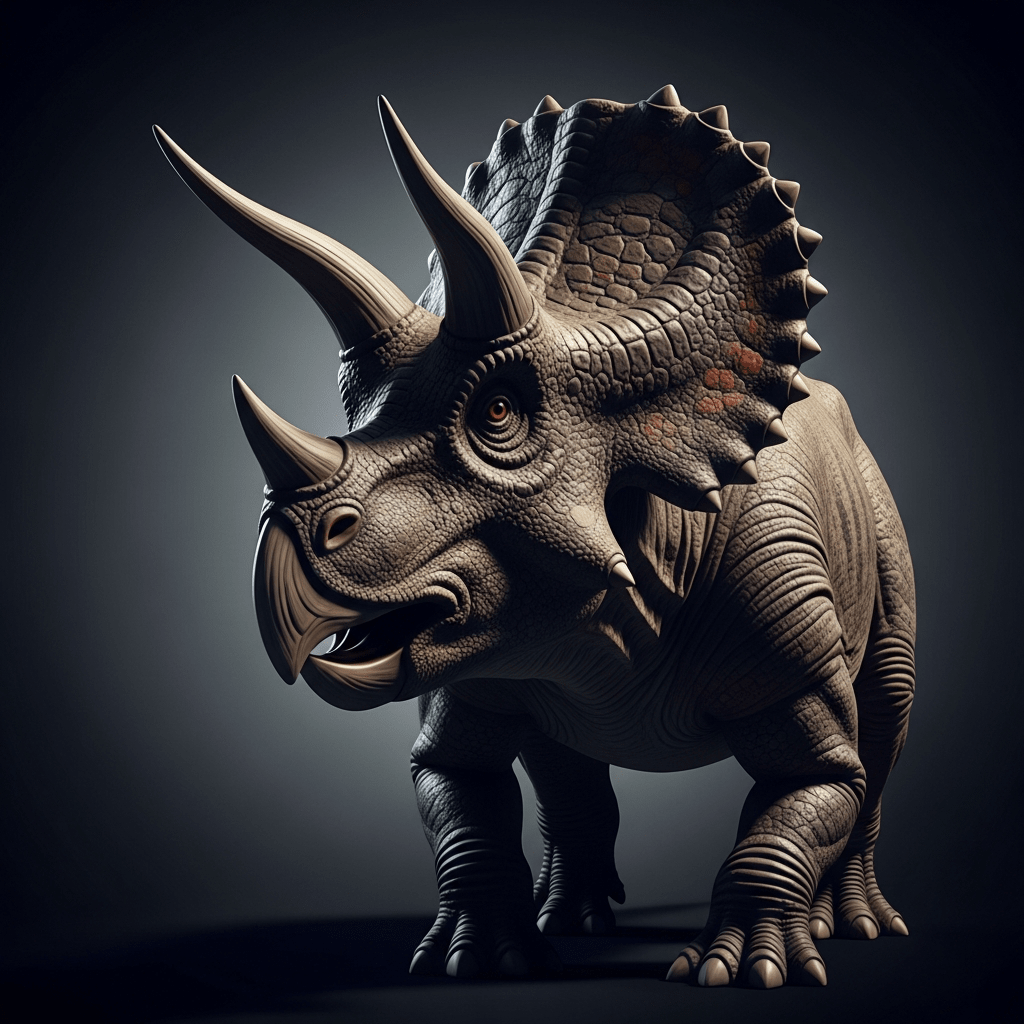
Triceratops
Triceratops is a legendary ceratopsian dinosaur, instantly recognized by its three facial horns and expansive bony frill, which made it one of the most iconic herbivores of the Late Cretaceous.
Triceratops is a legendary ceratopsian dinosaur, instantly recognized by its three facial horns and expansive bony frill, which made it one of the most iconic herbivores of the Late Cretaceous.
Triceratops was first described in 1889 by Othniel Charles Marsh, following fossil discoveries in Wyoming's Lance Formation. Its name, meaning "three-horned face" in Greek, reflects its distinctive skull. The holotype specimen, Triceratops horridus (YPM 1820), resides at the Yale Peabody Museum. All confirmed fossils originate from western North America, with no recognized regional variants.
Triceratops belongs to the clade Dinosauria, order Ornithischia, family Ceratopsidae, and subfamily Chasmosaurinae. As a ceratopsian, it shares close evolutionary ties with genera like Torosaurus and Chasmosaurus, all characterized by elaborate cranial ornamentation and herbivorous adaptations.
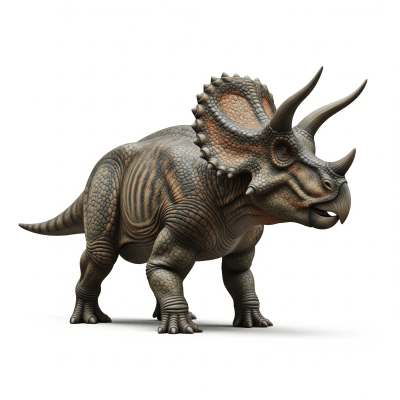
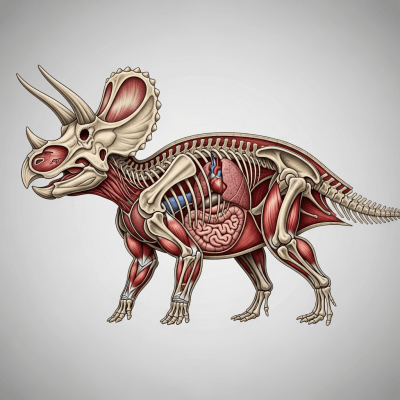
Triceratops was a massive, quadrupedal dinosaur, reaching up to 9 meters (30 feet) in length and weighing 6–12 metric tons. Its skull featured a broad, solid frill and three prominent horns—two above the eyes and one on the nose. The beak was parrot-like, suited for cropping vegetation, and its jaws housed rows of shearing teeth. Sturdy limbs supported a sprawling posture, and skin impressions reveal a rough, scaly texture, though coloration remains unknown.
As a herbivore, Triceratops likely spent its days foraging for tough plants, using its beak and specialized teeth. Morphological evidence suggests rapid juvenile growth and possible changes in horn and frill shape as individuals matured. While direct evidence of social behavior is limited, its robust build and cranial features hint at potential defensive strategies and interactions within its environment.
Bring this kind into your world illustrated posters, mugs, and shirts.
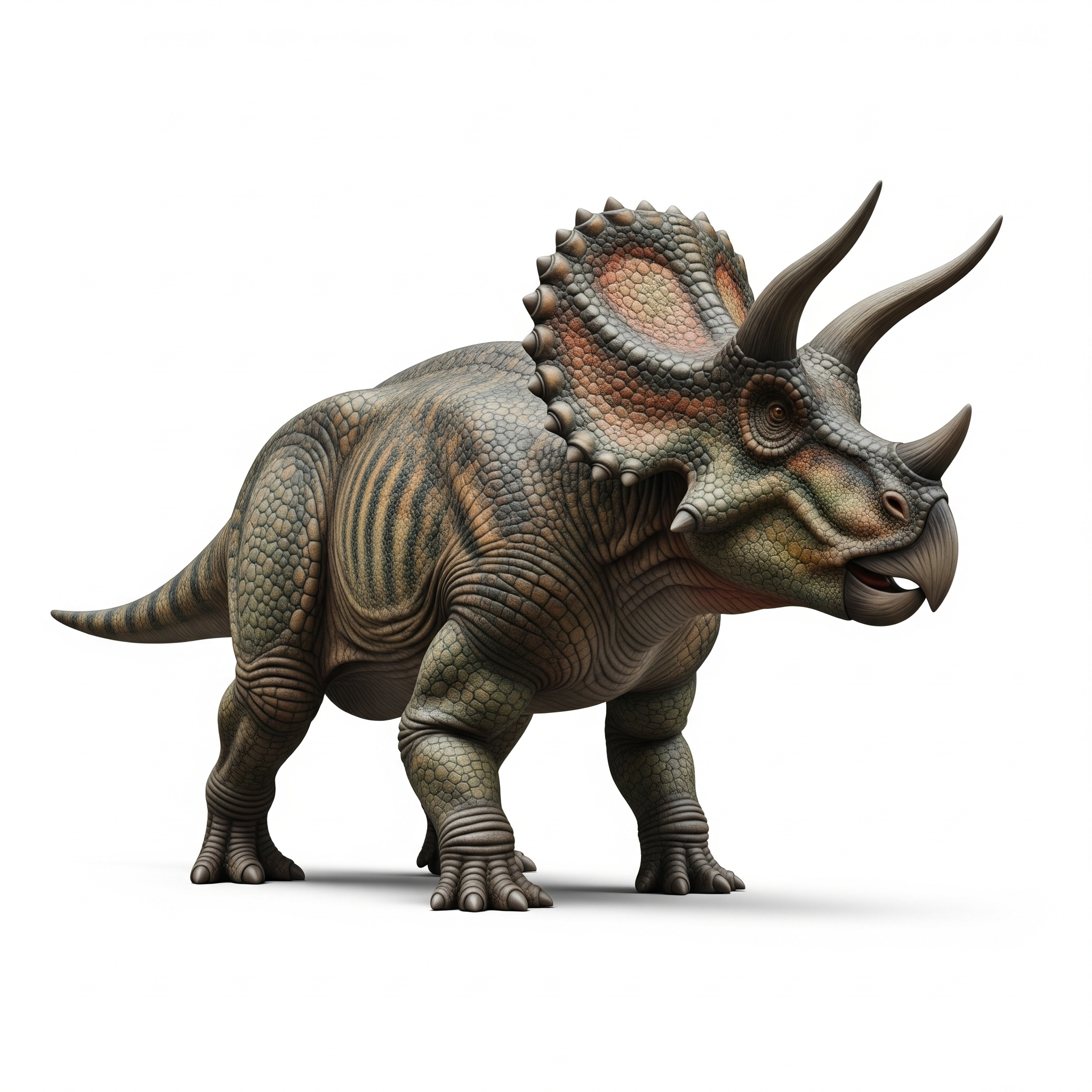
Archival print, museum-grade paper
Buy Poster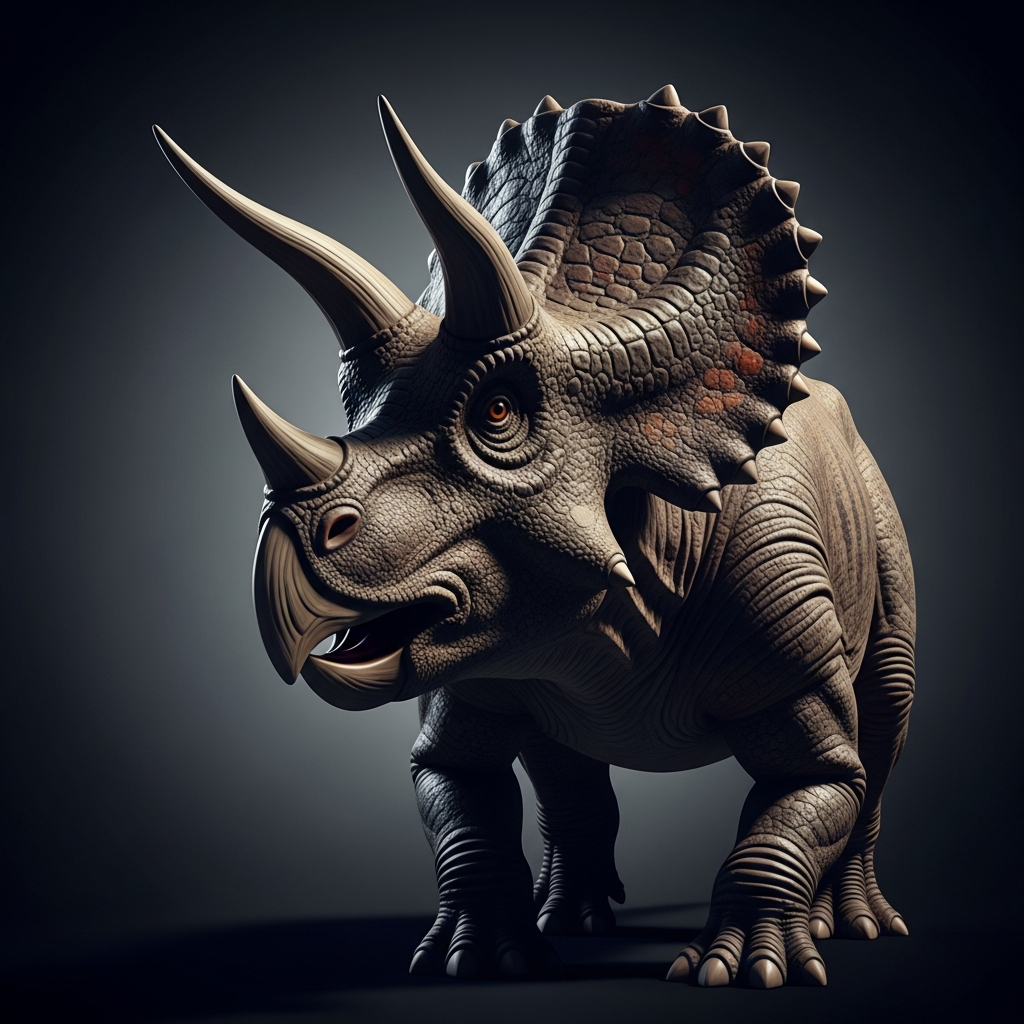
Stoneware mug, dishwasher safe
Buy Mug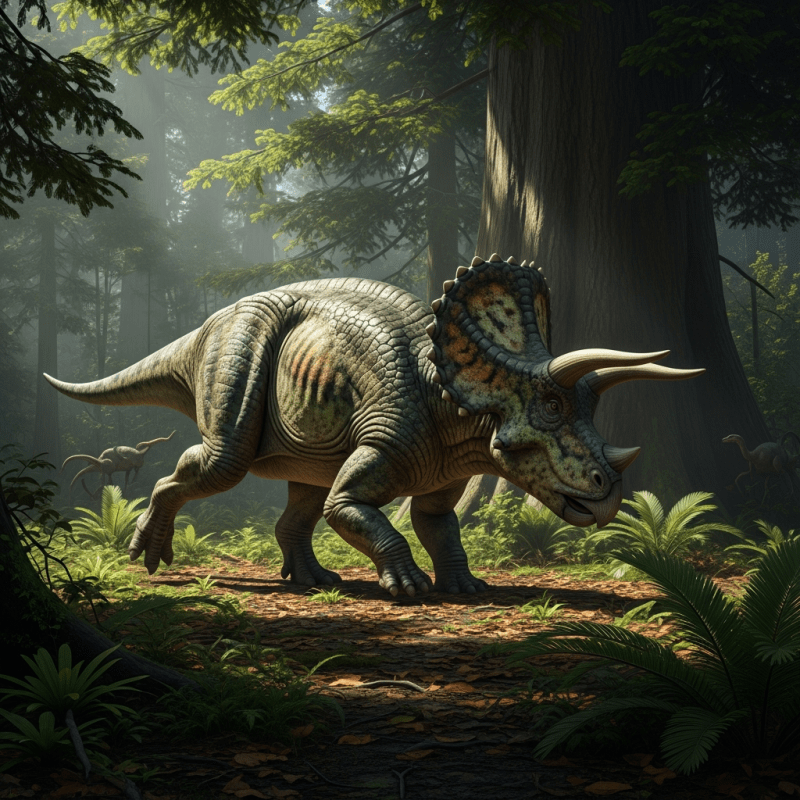
Soft cotton tee, unisex sizes
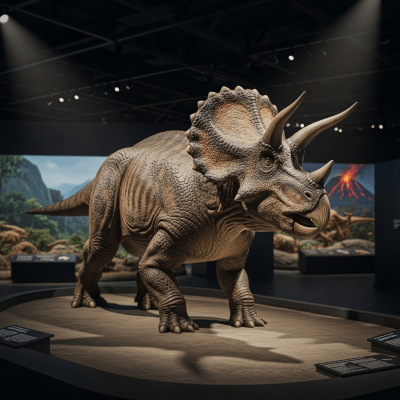
Buy ShirtTriceratops stands as a symbol of prehistoric life, captivating audiences in museums, documentaries, and popular media. Its distinctive look has made it a staple in educational materials and a favorite among dinosaur enthusiasts, contributing to paleontological tourism and inspiring countless toys, artworks, and stories.
Triceratops lived during the Late Cretaceous period, approximately 68–66 million years ago, near the very end of the age of dinosaurs.
Major Triceratops fossils have been unearthed in the Lance Formation of Wyoming and other sites across Montana, South Dakota, Colorado, Alberta, and Saskatchewan. The holotype, Triceratops horridus (YPM 1820), is preserved at the Yale Peabody Museum. These fossils have provided extensive insights into ceratopsian anatomy and evolution.
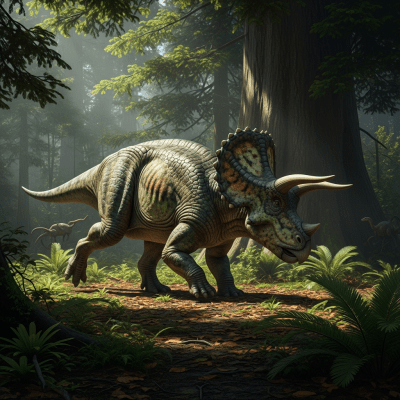
Triceratops inhabited the floodplains and subtropical environments of western North America. Its fossils are found exclusively in regions that today comprise Montana, Wyoming, South Dakota, Colorado, Alberta, and Saskatchewan, indicating a relatively localized distribution during the Late Cretaceous.
Triceratops was a dedicated herbivore, equipped with a parrot-like beak and rows of shearing teeth for slicing through tough, fibrous plants. Its jaw mechanics and dental battery allowed it to efficiently process vegetation, making it well-adapted to its ecosystem's flora.
Studies of Triceratops fossils reveal rapid growth rates in juveniles, with significant changes in horn and frill shape as individuals matured. These ontogenetic shifts suggest a dynamic life cycle, though precise lifespan estimates remain uncertain due to incomplete fossil data.
Triceratops, like all non-avian dinosaurs, vanished during the mass extinction event at the end of the Cretaceous, approximately 66 million years ago. The prevailing theory attributes this extinction to a catastrophic asteroid impact, which led to dramatic environmental changes and the collapse of global ecosystems.
Triceratops is a cornerstone of paleontological research, offering critical insights into ceratopsian evolution, dinosaurian diversity, and Late Cretaceous ecosystems. Its well-preserved fossils have helped refine taxonomic classifications and inform studies of growth, behavior, and anatomy.