Styracosaurus
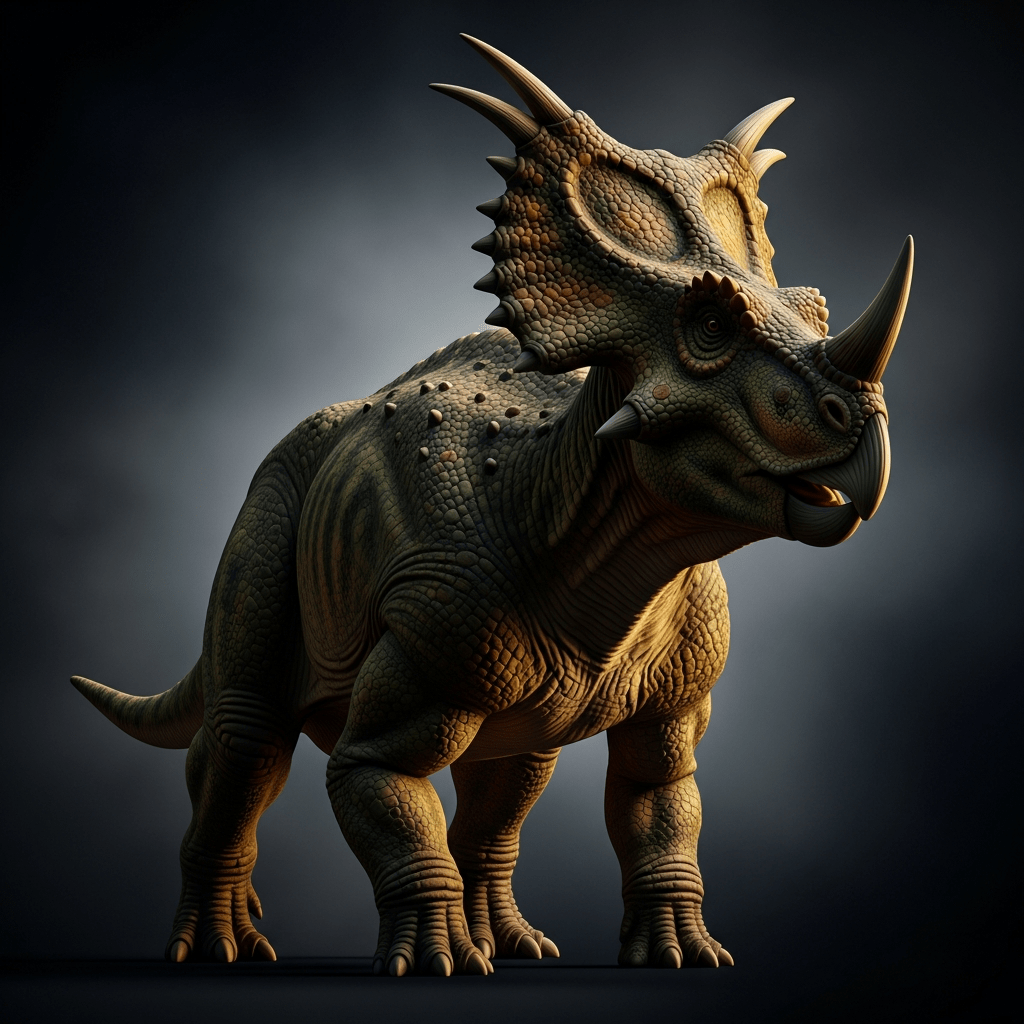
Styracosaurus is a striking ceratopsian dinosaur famed for its dramatic frill lined with long spikes and a prominent nasal horn, making it one of the most visually distinctive herbivores of the Late Cretaceous.
Styracosaurus is a striking ceratopsian dinosaur famed for its dramatic frill lined with long spikes and a prominent nasal horn, making it one of the most visually distinctive herbivores of the Late Cretaceous.
Styracosaurus originated in the Late Cretaceous period, around 75.5–75 million years ago, in what is now Alberta, Canada. Its fossils were first uncovered in the Dinosaur Park Formation and formally described by Lawrence Lambe in 1913. The holotype specimen, NMC 344, marked the beginning of scientific recognition for this genus, which has since become a symbol of North America's ancient landscapes.
Styracosaurus belongs to the clade Dinosauria, within the order Ornithischia, family Ceratopsidae, and subfamily Centrosaurinae. This places it among the horned dinosaurs, closely related to genera such as Centrosaurus and Pachyrhinosaurus. Its classification reflects both its evolutionary lineage and its unique anatomical features, distinguishing it from other ceratopsians.
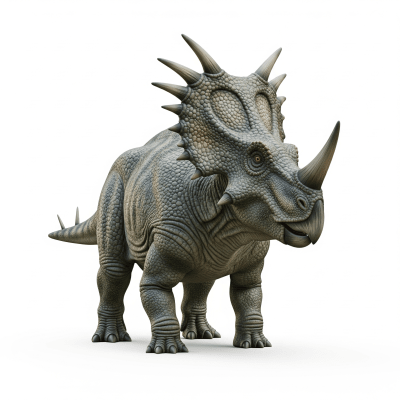
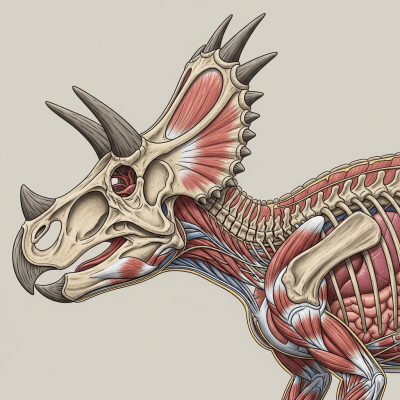
Styracosaurus was a large, quadrupedal dinosaur measuring up to 5.5 meters (18 feet) long and weighing approximately 2.7 metric tons. Its most remarkable features were a broad, robust skull adorned with a frill bearing six long, outward-projecting spikes and several smaller hornlets, along with a single, impressive nasal horn reaching up to 60 centimeters (24 inches). The body was barrel-shaped, supported by sturdy limbs, and skin impressions suggest a scaly texture, though its coloration remains unknown.
Evidence from bonebeds indicates that Styracosaurus likely lived and moved in herds, suggesting complex social behavior and group dynamics. As a herbivore, it would have used its beaked mouth to crop vegetation. While Styracosaurus had no direct interaction with humans, its fossils play a vital role in scientific research and public education, frequently featured in museum displays and outreach programs.
Bring this kind into your world illustrated posters, mugs, and shirts.
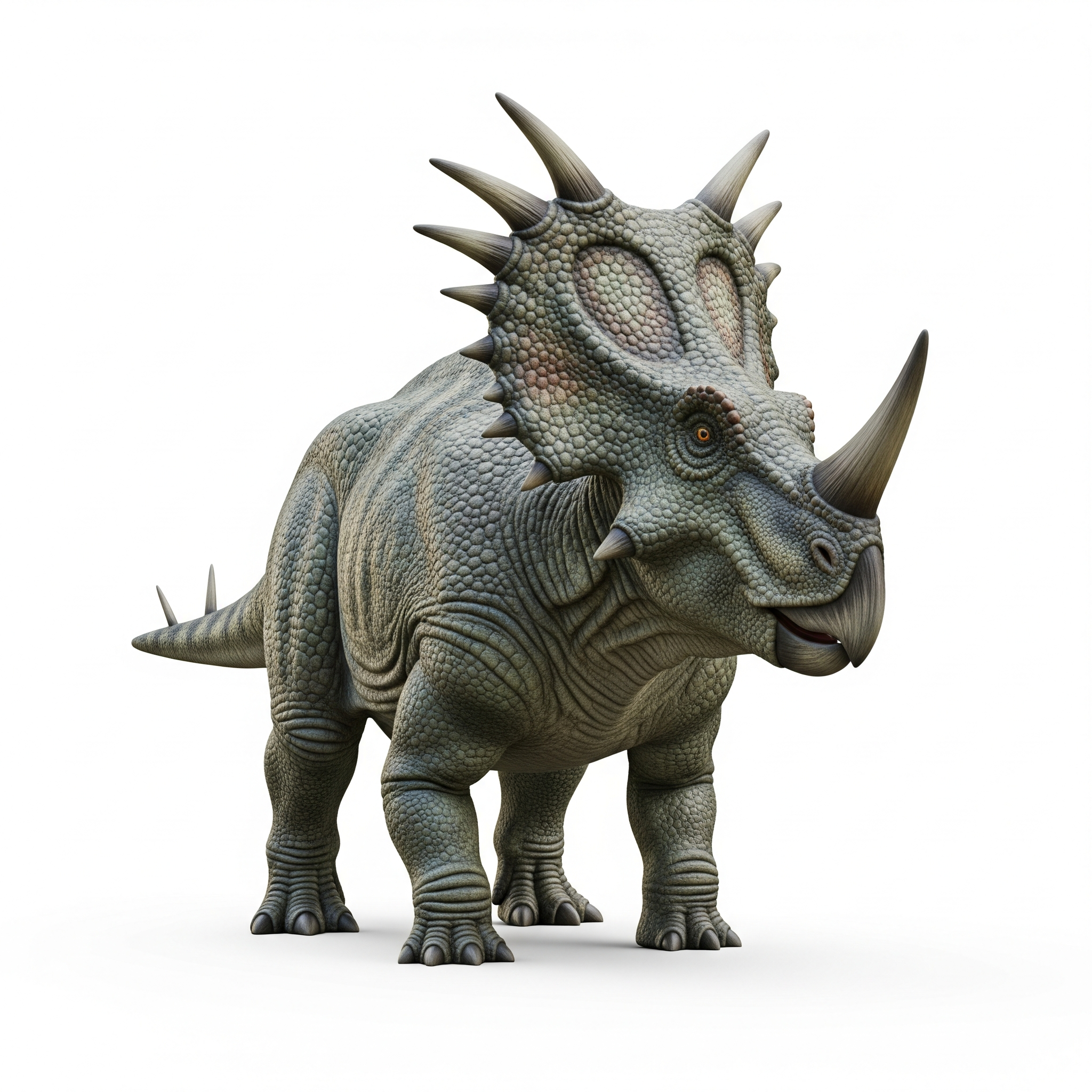
Archival print, museum-grade paper
Buy Poster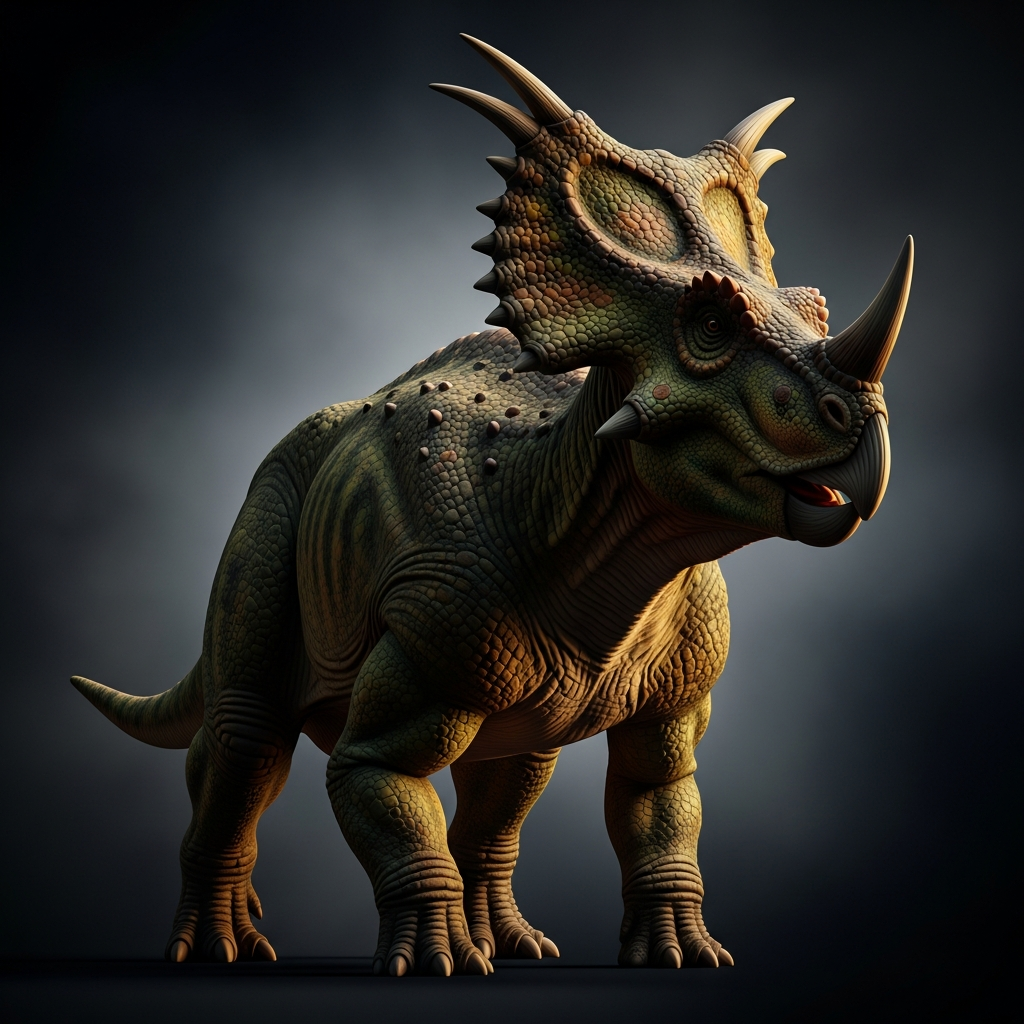
Stoneware mug, dishwasher safe
Buy Mug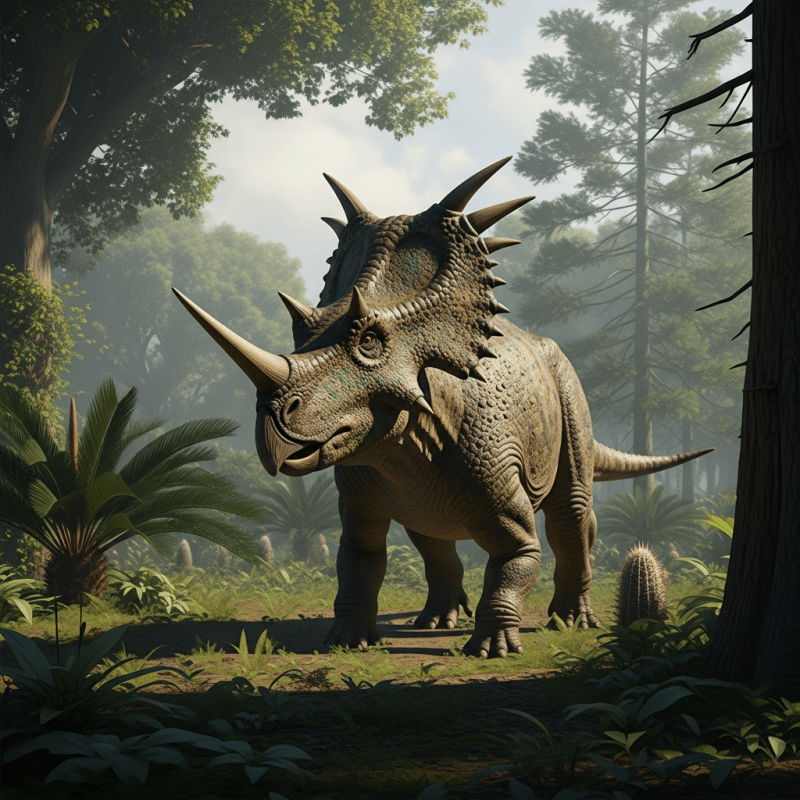
Soft cotton tee, unisex sizes
Buy ShirtStyracosaurus has captured the public imagination through its dramatic appearance, making it a popular subject in books, documentaries, toys, and museum exhibits. Its spiked frill and horned face have become iconic symbols of prehistoric life, contributing to educational efforts and inspiring generations of dinosaur enthusiasts.
Styracosaurus lived during the Late Cretaceous period, specifically the Campanian age, approximately 75.5–75 million years ago—a time when dinosaurs flourished across ancient North America.
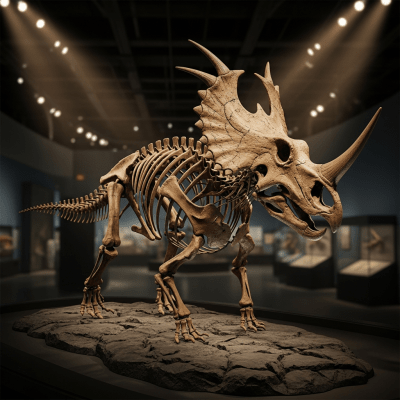
The first Styracosaurus fossils were discovered in Alberta, Canada, within the Dinosaur Park Formation. The holotype specimen, NMC 344, was described by Lawrence Lambe in 1913. Additional fossils have been found in bonebeds, providing evidence of herd behavior, and possible remains have been reported from Montana, USA. These discoveries have enriched our understanding of ceratopsian diversity and paleoecology.
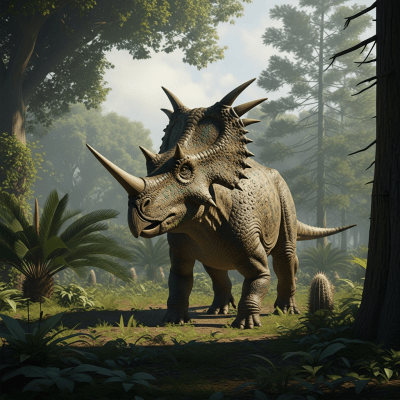
Styracosaurus inhabited the lush floodplains and river valleys of Late Cretaceous North America, primarily in what is now Alberta, Canada. The region's rich vegetation and seasonal climate supported large herds of herbivorous dinosaurs, with Styracosaurus thriving alongside other ceratopsians and contemporaneous fauna. Its distribution may have extended into Montana, USA, though Alberta remains its principal fossil locality.
As a dedicated herbivore, Styracosaurus fed on low-growing plants, using its strong beak to crop vegetation. Its dental and jaw structure was adapted for processing tough plant material, making it well-suited to the rich flora of its Cretaceous environment.
While direct evidence of Styracosaurus's growth and ontogeny is limited, bonebed discoveries suggest herd living, which may have influenced its development and social structure. Like other ceratopsians, it likely hatched from eggs and underwent significant growth before reaching adult size, with robust skeletal features developing as it matured.
Styracosaurus, along with all non-avian dinosaurs, disappeared during the mass extinction event at the end of the Cretaceous period, around 66 million years ago. Theories for this extinction include catastrophic asteroid impact, volcanic activity, and climate change, which together led to the rapid decline of dinosaur populations worldwide.
Styracosaurus is a key genus for understanding ceratopsian evolution, social behavior, and cranial ornamentation. Its well-preserved fossils provide insights into dinosaur diversity, paleoecology, and the dynamics of herd-living species. The genus continues to inform paleontological research and evolutionary studies, serving as a reference point for comparative anatomy and systematics within Dinosauria.