Stegosaurus
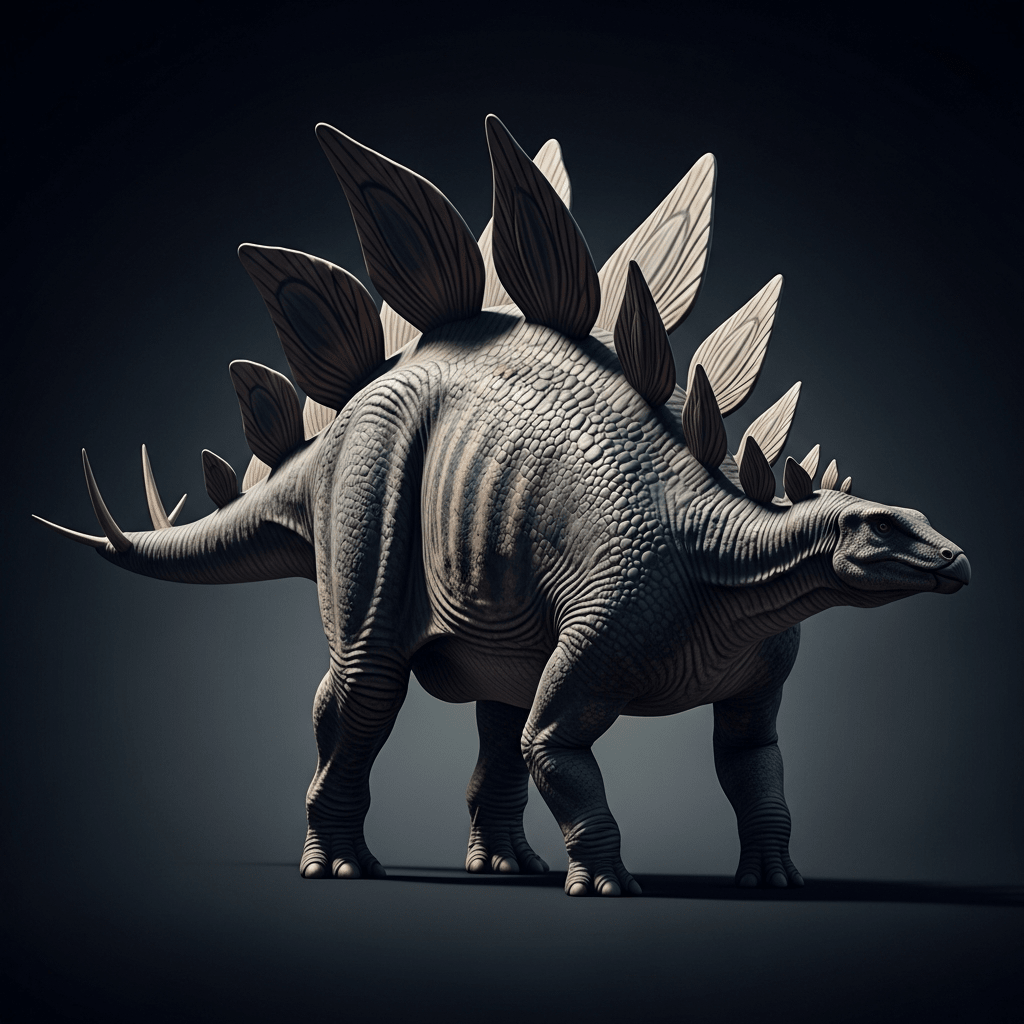
Stegosaurus is a large, herbivorous dinosaur instantly recognized by its double row of bony plates along its back and formidable spiked tail, making it one of the most iconic prehistoric animals.
Stegosaurus is a large, herbivorous dinosaur instantly recognized by its double row of bony plates along its back and formidable spiked tail, making it one of the most iconic prehistoric animals.
Stegosaurus was first unearthed in the Morrison Formation near Morrison, Colorado, and formally described by Othniel Charles Marsh in 1877. Its holotype specimen, Stegosaurus armatus, resides at the Yale Peabody Museum. These fossils date to the Late Jurassic period, revealing Stegosaurus as a native of western North America, with notable discoveries in Colorado, Wyoming, and Utah.
Stegosaurus belongs to the family Stegosauridae within the order Ornithischia, a major branch of the clade Dinosauria. Ornithischians are distinguished by their bird-like hips and herbivorous adaptations, and Stegosaurus stands out as the archetype of plated dinosaurs. Its scientific classification places it firmly among the armored giants of the Jurassic, separate from the carnivorous theropods and long-necked sauropods.
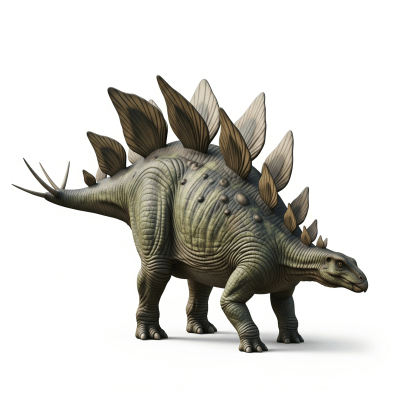
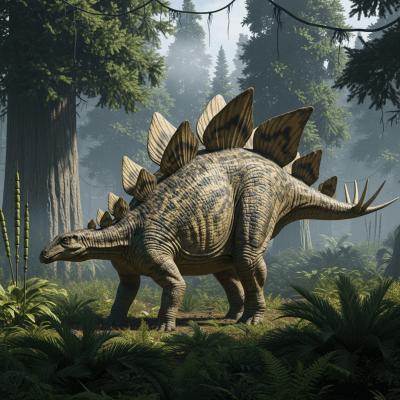
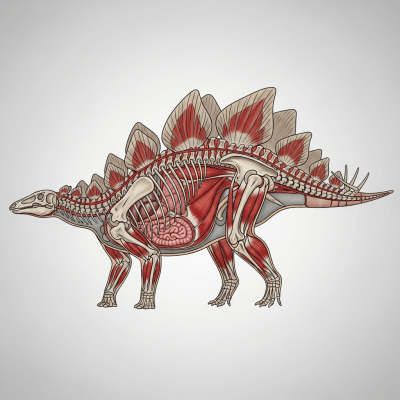
Stegosaurus was a robust, quadrupedal dinosaur reaching up to 9 meters (30 feet) in length and weighing around 2–3 metric tons. Its most striking features are two staggered rows of upright, kite-shaped plates running along its back and four long, sharp spikes—known as the thagomizer—projecting from its tail. The animal had a small, beaked skull suited for cropping vegetation, powerful limbs with longer hind legs than forelimbs, and a distinctive sloped posture. While its coloration remains unknown, the dramatic silhouette of Stegosaurus is instantly recognizable.
Stegosaurus was a slow-moving, quadrupedal herbivore, likely feeding on low-lying plants. Its tail spikes served as a formidable defense against predators, while the function of its plates—whether for display, thermoregulation, or protection—remains a subject of scientific debate. There is little direct evidence of social behavior, but bone studies suggest relatively slow growth rates. As an extinct animal, Stegosaurus has no practical use, but its fossils are invaluable for research, education, and public display.
Bring this kind into your world illustrated posters, mugs, and shirts.
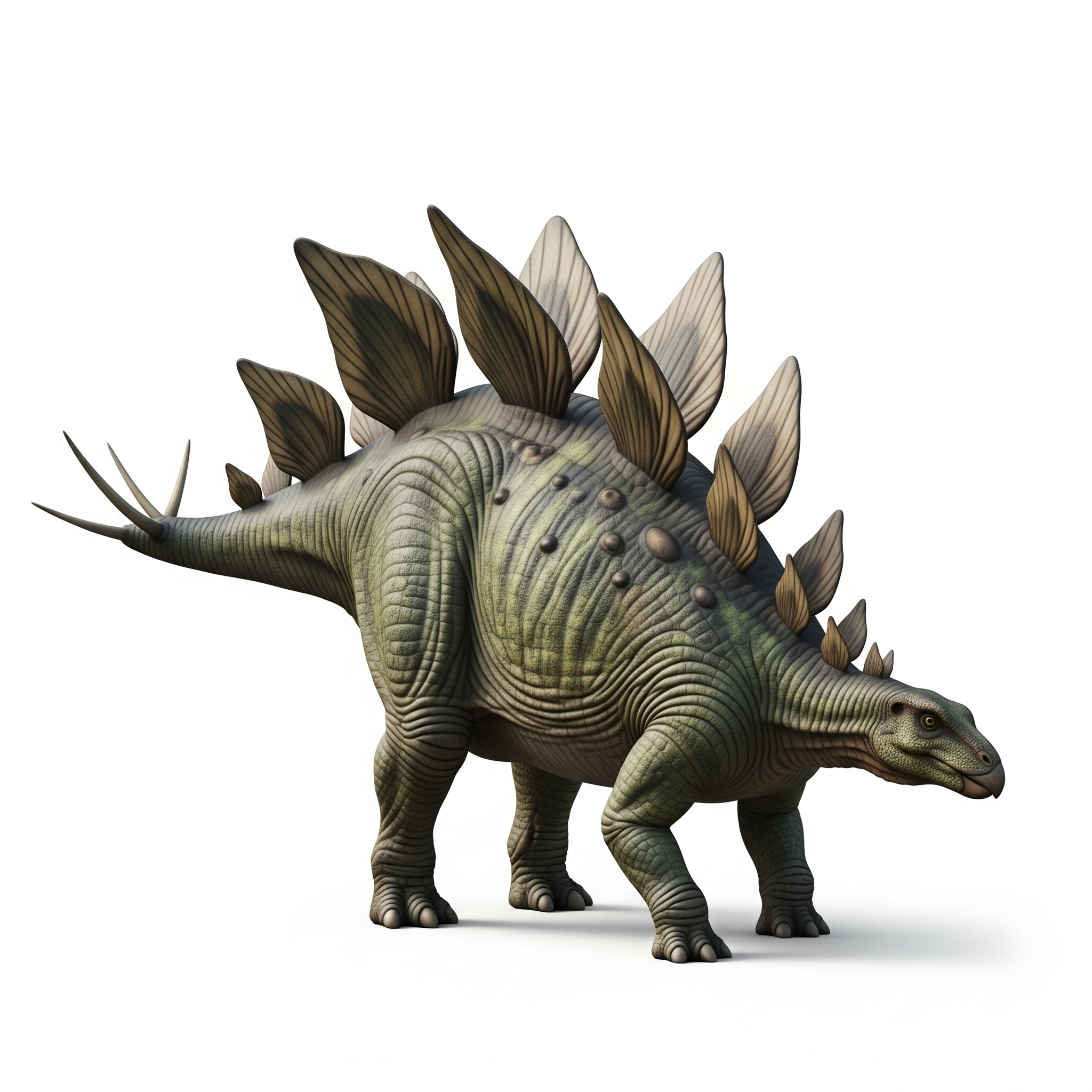
Archival print, museum-grade paper
Buy Poster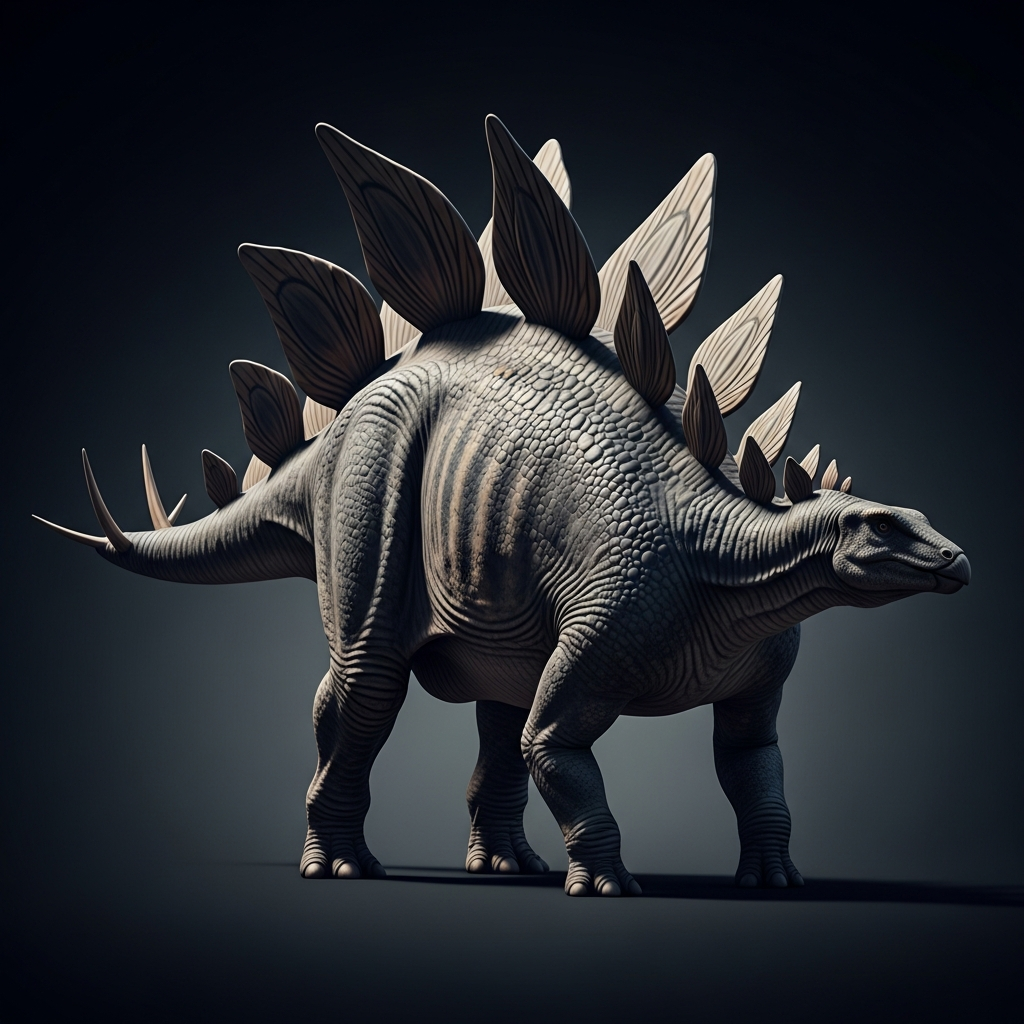
Stoneware mug, dishwasher safe
Buy Mug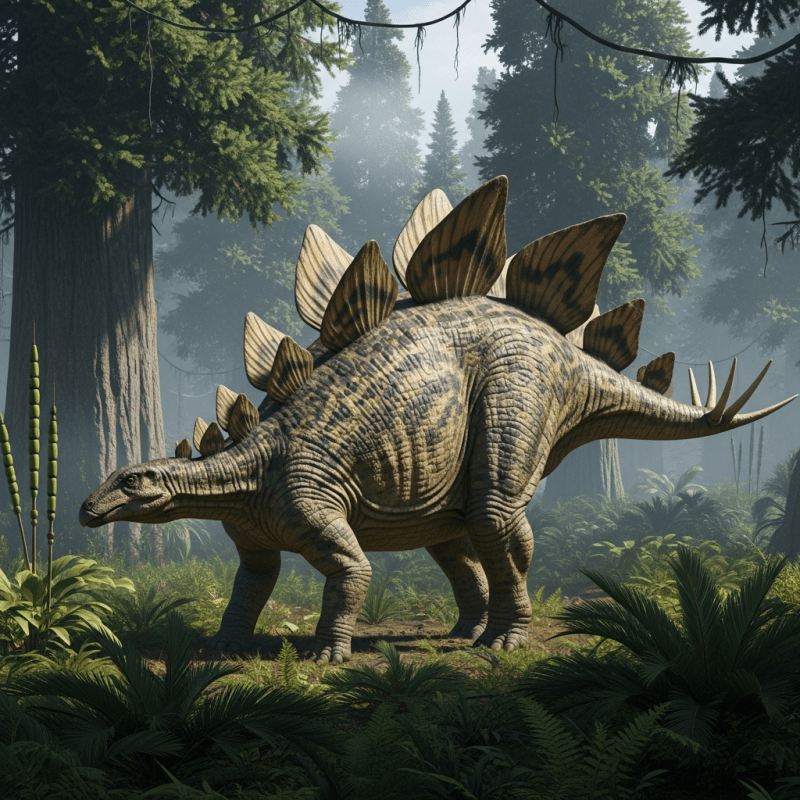
Soft cotton tee, unisex sizes
Buy ShirtFew dinosaurs are as celebrated in popular culture as Stegosaurus. Its distinctive appearance has made it a staple of museums, children’s books, toys, and films. Stegosaurus is often featured as the quintessential "plated dinosaur," symbolizing prehistoric life in educational materials and media. Its image fosters fascination and curiosity about Earth’s distant past, making it a key ambassador for paleontology worldwide.
Stegosaurus lived during the Late Jurassic period, approximately 155 to 150 million years ago—a time when dinosaurs flourished across the globe.
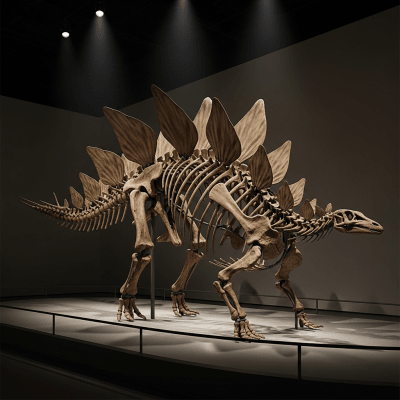
The first Stegosaurus fossils were discovered in the late 19th century in the Morrison Formation of Colorado. The holotype specimen, Stegosaurus armatus, was collected by Marsh’s team and is housed at the Yale Peabody Museum. Additional finds in Wyoming and Utah have expanded our understanding of its anatomy and diversity. Stegosaurus remains are among the most studied and displayed dinosaur fossils in museums worldwide.
Stegosaurus inhabited semi-arid floodplains and woodland environments in what is now western North America. Fossil evidence points to a distribution concentrated in the Morrison Formation, with sites in Colorado, Wyoming, and Utah, suggesting it thrived in lush, riverine landscapes during the Late Jurassic.
As a herbivore, Stegosaurus fed on ferns, cycads, and other low-growing vegetation. Its beak-like mouth and small teeth were adapted for cropping and chewing tough plant material. The animal’s posture and limb structure indicate it foraged close to the ground, making use of its robust body to process large amounts of plant matter.
Studies of Stegosaurus bone histology reveal a relatively slow growth rate compared to some other dinosaurs. Juveniles likely underwent gradual development, with the iconic plates and tail spikes becoming more pronounced as they matured. Details of its lifespan remain uncertain, but fossil evidence suggests a life cycle marked by steady, incremental growth.
Stegosaurus, like all non-avian dinosaurs, disappeared at the end of the Mesozoic Era. While Stegosaurus itself became extinct well before the Cretaceous-Paleogene extinction event, its demise is attributed to changing climates, evolving ecosystems, and competition with other herbivores, rather than a single catastrophic event.
Stegosaurus is a cornerstone of paleontological research, providing vital insights into dinosaur anatomy, defense mechanisms, and evolutionary adaptations. Its fossils help scientists understand the diversity of Jurassic ecosystems and the evolutionary history of Ornithischian dinosaurs. Stegosaurus also plays a central role in public education, inspiring generations to explore Earth’s prehistoric past.