Spinosaurus
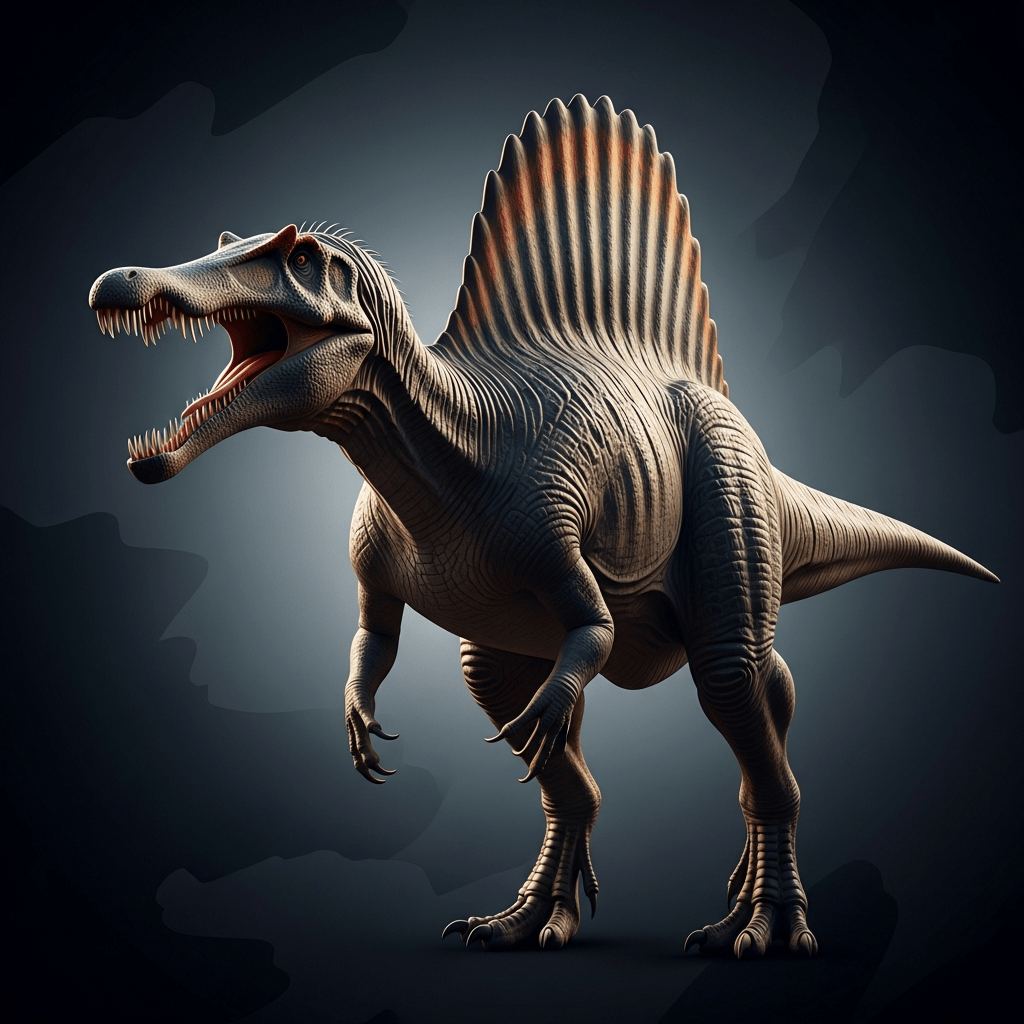
Spinosaurus is a massive, sail-backed theropod dinosaur from the Cretaceous period of North Africa, renowned for its elongated neural spines and semi-aquatic adaptations.
Spinosaurus is a massive, sail-backed theropod dinosaur from the Cretaceous period of North Africa, renowned for its elongated neural spines and semi-aquatic adaptations.
Spinosaurus aegyptiacus was first described in 1915 by German paleontologist Ernst Stromer, following the discovery of fossils in Egypt's Bahariya Oasis. The original holotype specimen, once housed in Munich, was tragically destroyed during World War II, but subsequent finds in Morocco and Algeria have broadened our understanding of this remarkable genus and its extensive range across northern Africa.
Spinosaurus belongs to the family Spinosauridae within the order Saurischia, clade Dinosauria. It is closely related to other spinosaurids such as Baryonyx and Suchomimus, sharing distinctive traits like elongated neural spines and crocodilian-like skulls. As a theropod, Spinosaurus is part of a group that includes many of the largest carnivorous dinosaurs.
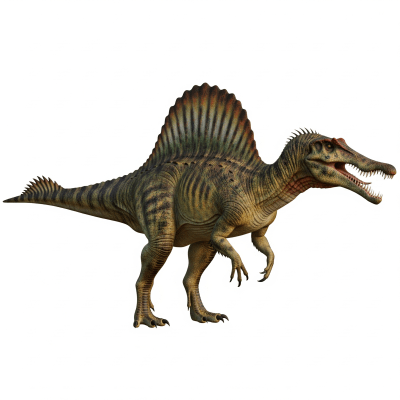
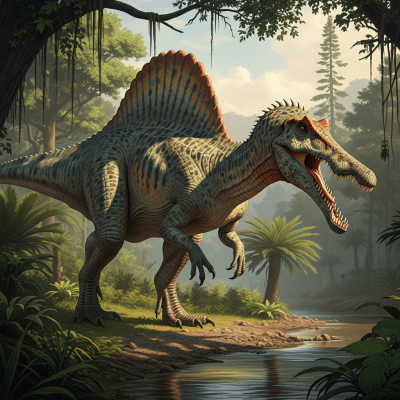
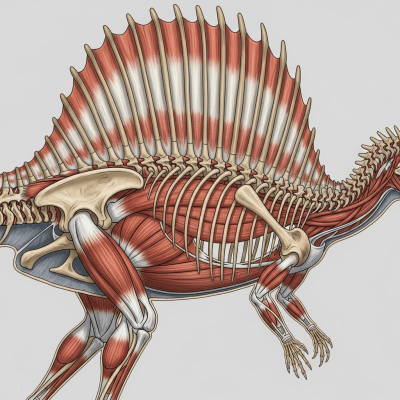
Spinosaurus was an imposing creature, stretching 15–18 meters in length and weighing up to 20 metric tons. Its most striking feature was the sail on its back, created by tall neural spines. The skull was long, narrow, and filled with conical teeth, resembling a modern crocodile. Its forelimbs were robust with large claws, hind limbs were relatively short, and evidence suggests the feet may have been webbed—adaptations hinting at a life spent partly in water. Reconstructions of its coloration remain speculative due to the lack of direct fossil evidence.
Spinosaurus is believed to have led a semi-aquatic lifestyle, using its powerful limbs and possibly webbed feet for swimming and hunting in rivers and lakes. Its adaptations suggest it was less agile on land but highly effective in aquatic environments, likely hunting fish and other prey. In modern times, Spinosaurus fossils serve as invaluable resources for scientific research, education, and museum exhibitions, fueling public fascination and paleontological inquiry.
Bring this kind into your world illustrated posters, mugs, and shirts.
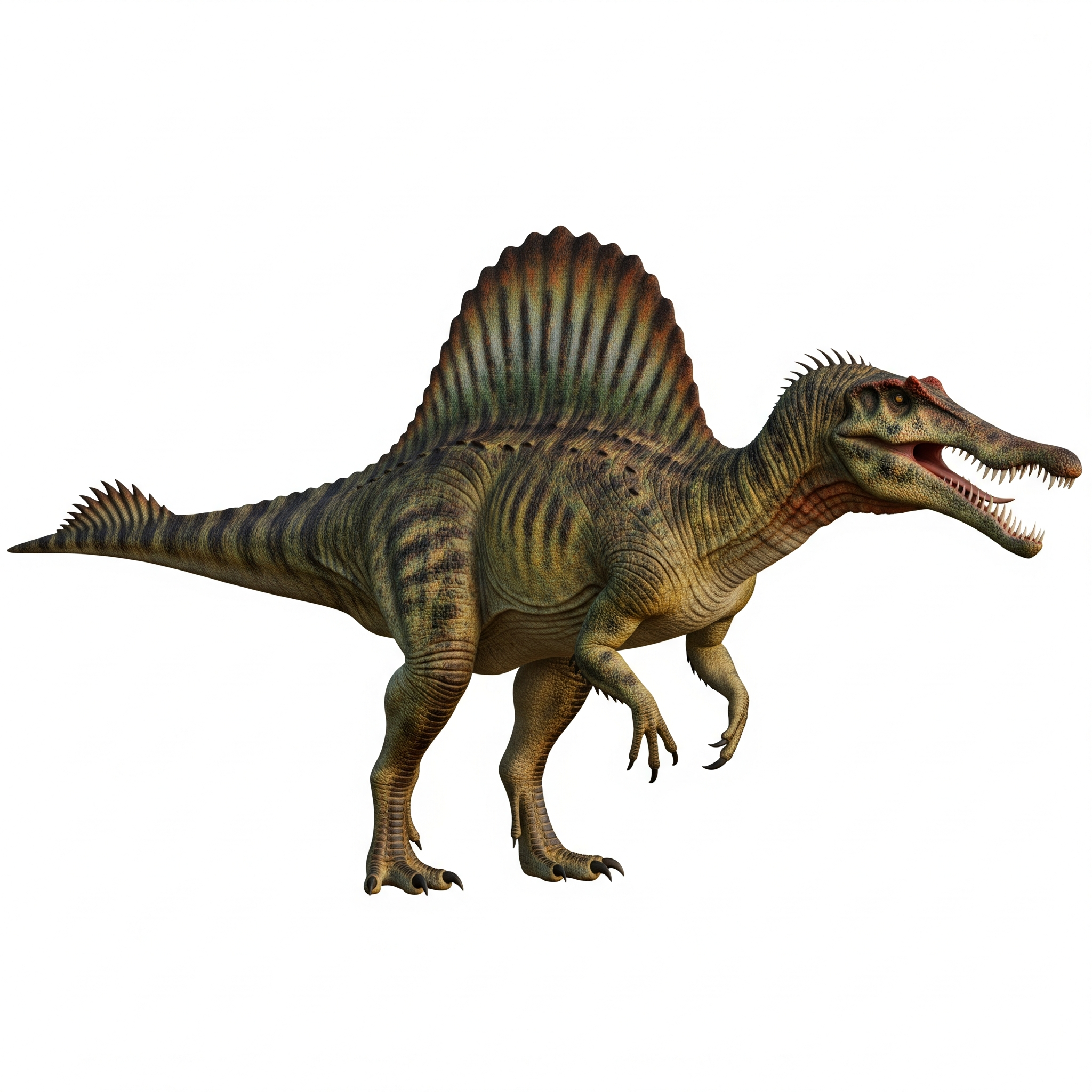
Archival print, museum-grade paper
Buy Poster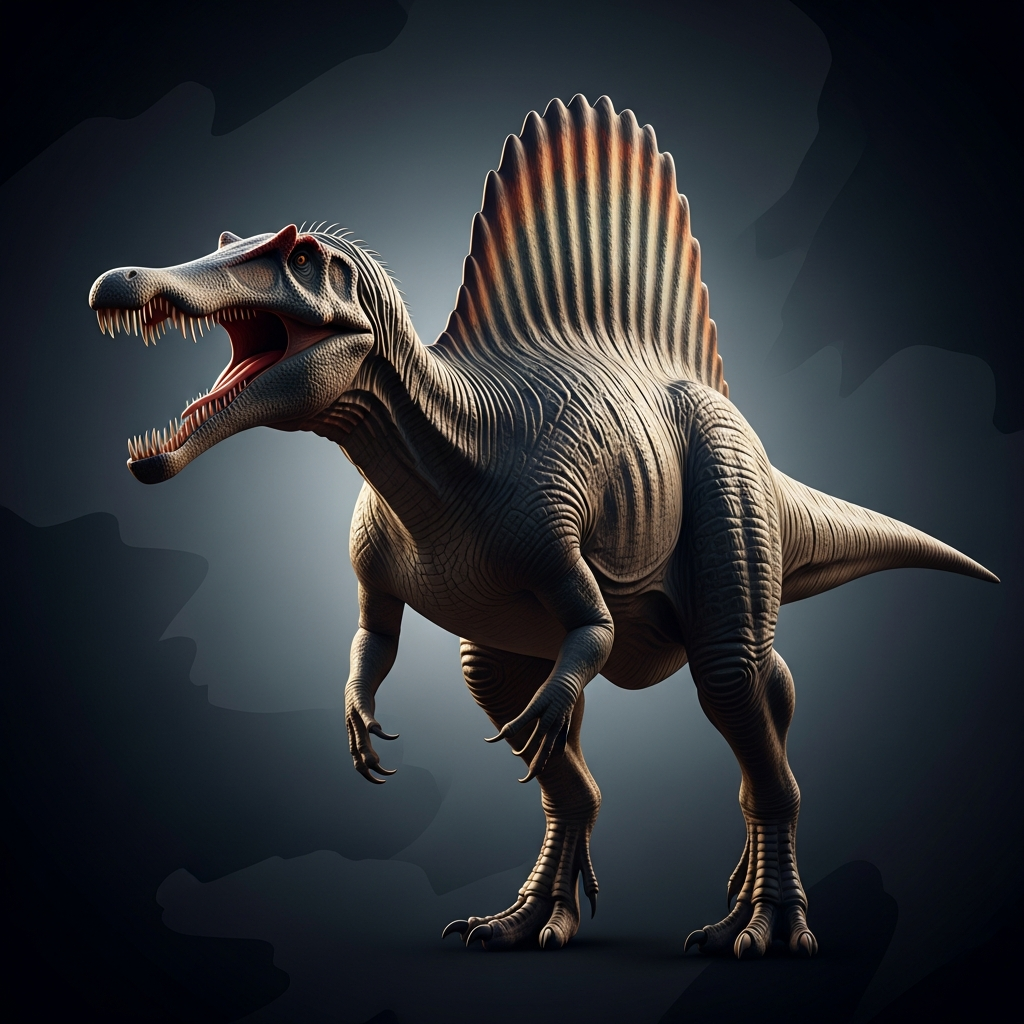
Stoneware mug, dishwasher safe
Buy Mug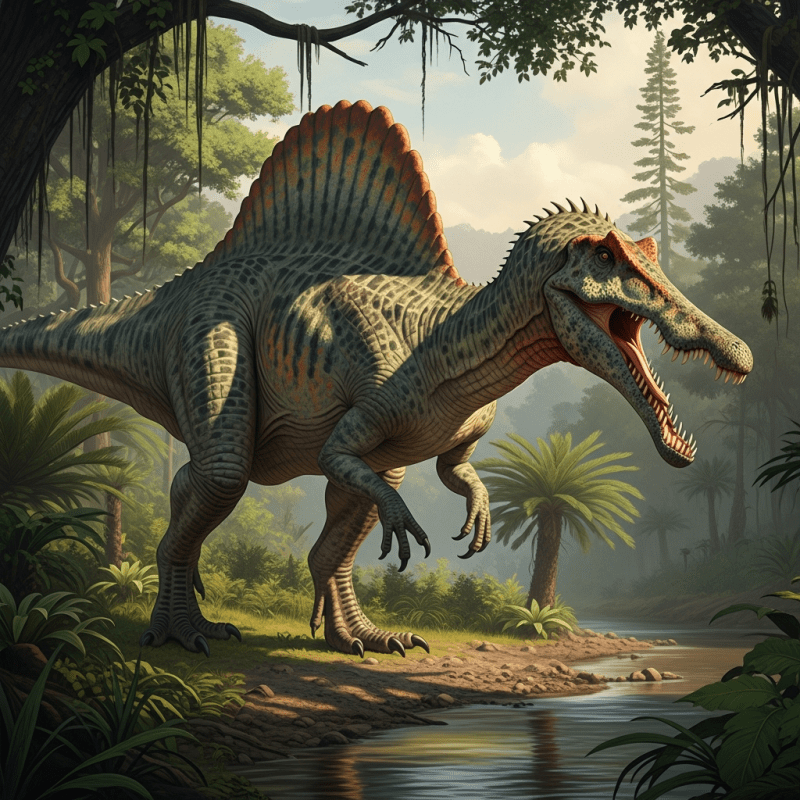
Soft cotton tee, unisex sizes
Buy ShirtFew dinosaurs capture the imagination like Spinosaurus. Its dramatic sail and immense size have made it a fixture in documentaries, museum displays, and popular media, often depicted as a rival to Tyrannosaurus rex. Spinosaurus is a favorite among dinosaur enthusiasts and children alike, appearing in toys, films, and educational materials, and symbolizing the diversity and mystery of prehistoric life.
Spinosaurus lived during the Late Cretaceous, specifically the Cenomanian to Turonian stages, approximately 99–93 million years ago.
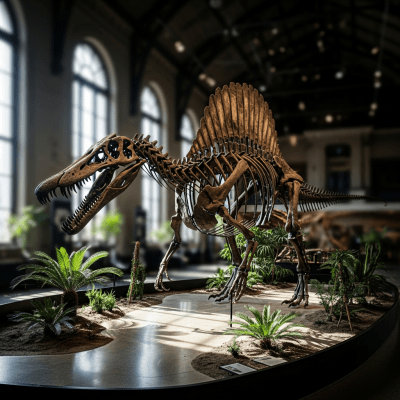
The first Spinosaurus fossils were unearthed in Egypt's Bahariya Oasis and described in 1915. Although the original specimen was lost during WWII, further discoveries in Morocco and Algeria have enriched our understanding of its anatomy and distribution. These fossils are central to ongoing research and are featured in major museum collections and scientific studies.
Spinosaurus inhabited the lush river systems and wetlands of what is now North Africa, with fossils found across Egypt, Morocco, Algeria, and Tunisia. Its adaptations indicate a preference for aquatic environments, where it could exploit abundant fish and other prey.
Spinosaurus was primarily a piscivore, equipped with conical teeth and a crocodilian-like snout ideal for catching fish. Its semi-aquatic lifestyle suggests it also preyed on other aquatic and possibly terrestrial animals, making it a versatile predator in its ecosystem.
Details of Spinosaurus's growth and life cycle remain uncertain due to limited fossil material. While its massive size suggests a lengthy developmental period, specifics about its juvenile stages, growth rates, and lifespan are still being investigated by paleontologists.
Like all non-avian dinosaurs, Spinosaurus disappeared during the mass extinction event at the end of the Cretaceous period, around 66 million years ago. Theories point to dramatic climate changes, asteroid impact, and ecological disruption as contributing factors.
Spinosaurus is a cornerstone of paleontological research, offering insights into dinosaur diversity, adaptation, and evolution. Its unique semi-aquatic traits challenge traditional views of theropod ecology and highlight the complexity of prehistoric life. Ongoing discoveries continue to reshape our understanding of dinosaur biology and behavior.