
Sauropelta
Sauropelta is a genus of large, heavily armored nodosaurid dinosaur from the Early Cretaceous of North America, renowned for its extensive body armor and dramatic shoulder spikes.
Sauropelta is a genus of large, heavily armored nodosaurid dinosaur from the Early Cretaceous of North America, renowned for its extensive body armor and dramatic shoulder spikes.
Sauropelta was first described in 1970 by paleontologist John H. Ostrom, based on fossils unearthed in the Cloverly Formation of Montana and Wyoming. The holotype specimen, AMNH 3032, was originally collected in 1932 by Barnum Brown and later formally named by Ostrom. These discoveries established Sauropelta as one of the earliest and best-known nodosaurids, providing a window into the evolution of armored dinosaurs during the Early Cretaceous period.
Sauropelta belongs to the clade Dinosauria, within the order Ornithischia and family Nodosauridae. As a basal nodosaurid, it represents an early branch of the ankylosaurian lineage, distinguished from its relatives by the absence of a tail club and the presence of prominent shoulder spines. Its classification reflects evolutionary relationships based on skeletal anatomy and fossil evidence, placing it among the armored herbivores that thrived during the Mesozoic Era.
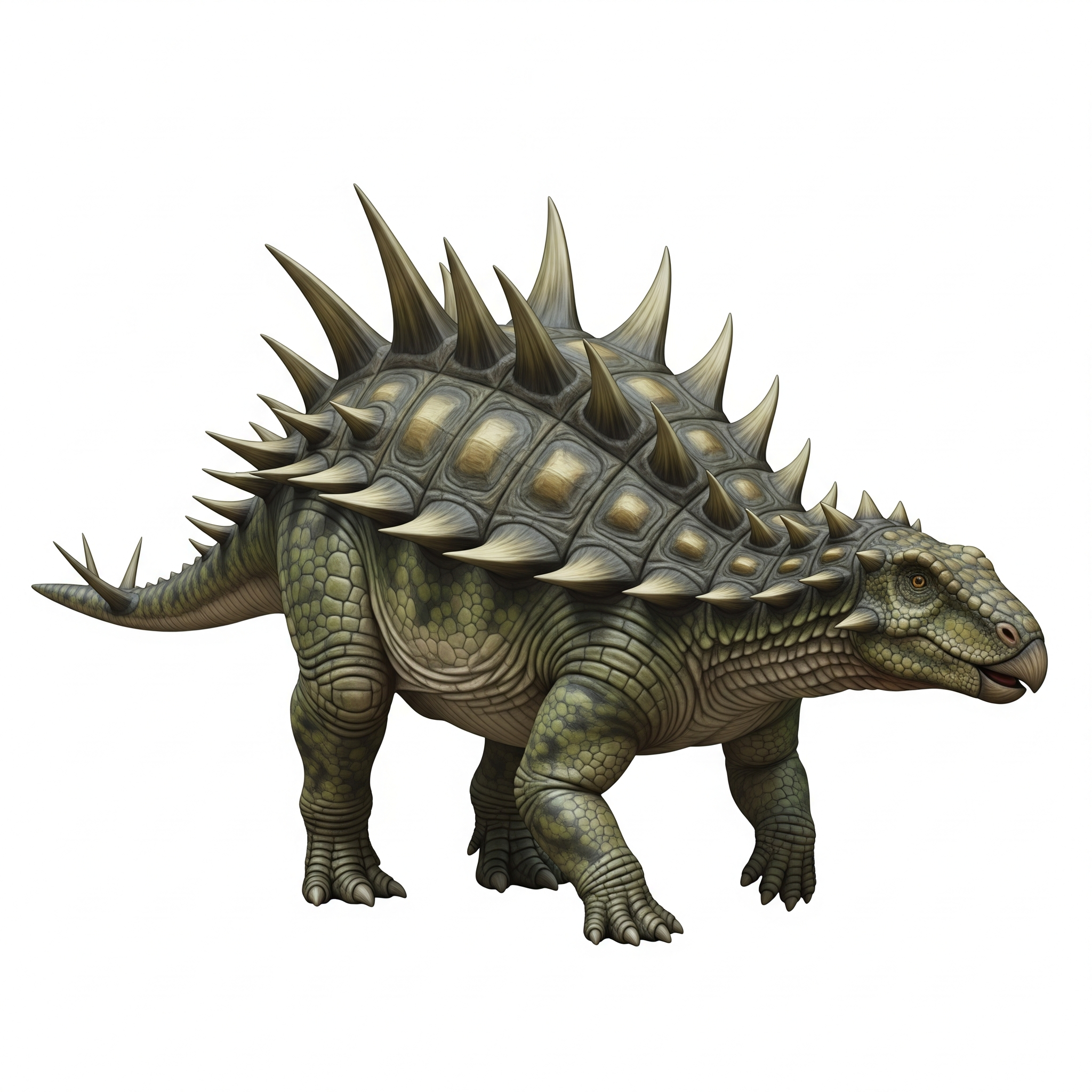
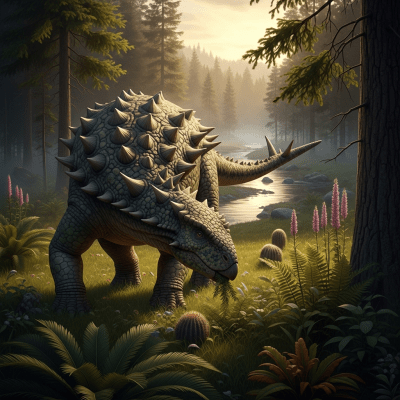
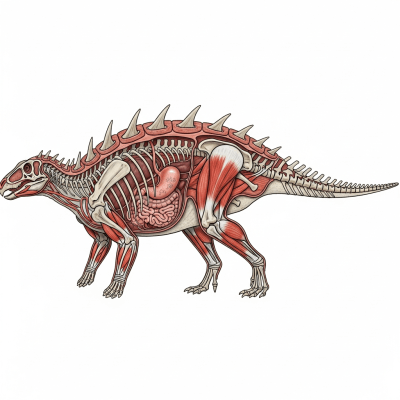
Sauropelta was a medium to large quadrupedal dinosaur, measuring between 5 and 7.6 meters in length and weighing up to 2 tonnes. Its body was low-slung and robust, supported by sturdy limbs. The most striking features were its extensive dermal armor—bony osteoderms covering the back and sides—and large, backward-curving shoulder spines that offered formidable protection. The elongated skull ended in a beak-like mouth, ideal for cropping vegetation. Its tail was long and flexible, armored with smaller osteoderms, but lacked the club seen in later ankylosaurids. The skin texture and coloration remain unknown due to a lack of soft tissue preservation.
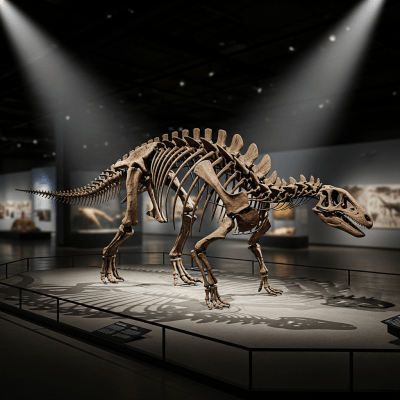
Sauropelta was a slow-moving, quadrupedal herbivore. Inferred from related species, it likely matured slowly and may have exhibited herd behavior for protection. Its extensive armor and spikes served primarily as defense against predators, particularly large theropods. While not interacting with humans, Sauropelta’s fossils are highly valued for scientific study and museum display, enhancing our understanding of dinosaur ecology and evolution.
Bring this kind into your world illustrated posters, mugs, and shirts.
Archival print, museum-grade paper
Buy Poster
Stoneware mug, dishwasher safe
Buy Mug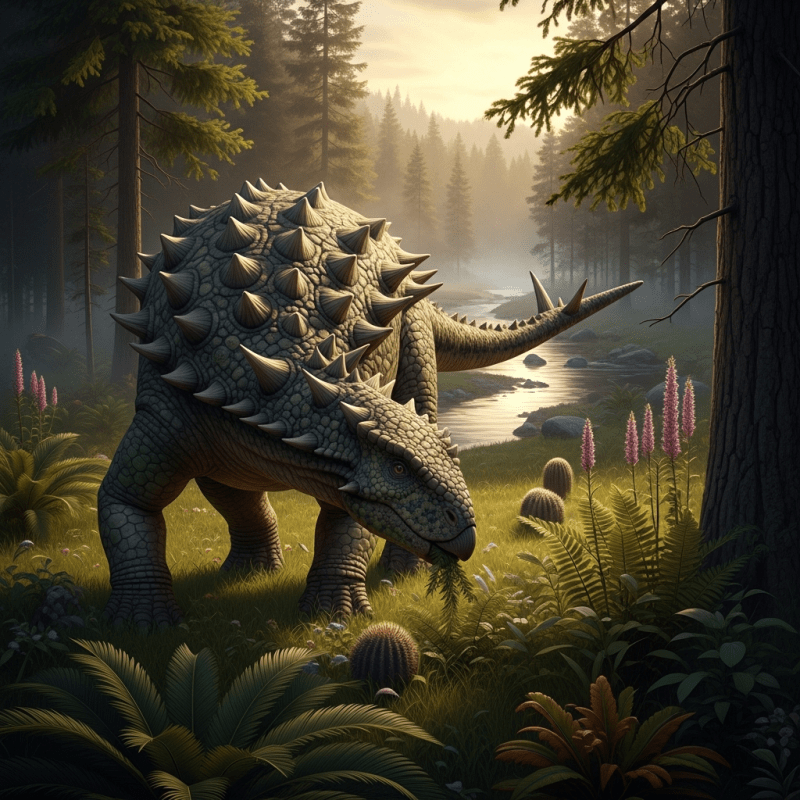
Soft cotton tee, unisex sizes
Buy ShirtSauropelta holds a prominent place in paleontological research and public education. Its fossils are featured in museums, captivating visitors with their dramatic armor and spikes. The genus occasionally appears in popular media and educational materials, symbolizing the diversity and ingenuity of prehistoric life. Sauropelta’s distinctive form makes it a favorite among dinosaur enthusiasts and a key representative of early armored dinosaurs.
Sauropelta lived during the Early Cretaceous period, approximately 108 to 104 million years ago, a time when armored dinosaurs were diversifying across prehistoric North America.
The first Sauropelta fossils were discovered in the Cloverly Formation of Montana and Wyoming, with the holotype specimen (AMNH 3032) collected by Barnum Brown in 1932. Subsequent finds have confirmed its presence in other Early Cretaceous deposits across North America. These well-preserved remains have enabled detailed studies of Sauropelta’s anatomy and armored adaptations.
Sauropelta inhabited floodplain environments and open woodlands of what is now Montana and Wyoming, USA. Fossil evidence suggests it was widespread in Early Cretaceous North America, thriving in regions with abundant vegetation and suitable cover for a large, slow-moving herbivore.
Sauropelta was a dedicated herbivore, using its beak-like mouth to crop low-growing plants. Its elongated skull and robust jaw structure were well-suited for feeding on ferns, cycads, and other prehistoric flora, supporting its bulk and armored frame.
Growth and life history in Sauropelta are inferred from related nodosaurids. It likely experienced slow maturation, growing steadily over many years to reach its full size. Evidence suggests possible herd behavior, which may have offered protection to juveniles and facilitated survival in predator-rich environments.
Sauropelta, like all non-avian dinosaurs, became extinct at the end of the Cretaceous period. The prevailing theory attributes this mass extinction to a catastrophic asteroid impact and subsequent environmental upheaval, which dramatically altered global ecosystems and led to the disappearance of many dinosaur lineages.
Sauropelta is a cornerstone in the study of armored dinosaur evolution. Its well-preserved fossils provide crucial insights into the development of dermal armor, defensive adaptations, and the early diversification of nodosaurids. Research on Sauropelta informs broader understanding of dinosaur morphology, paleoecology, and evolutionary history.