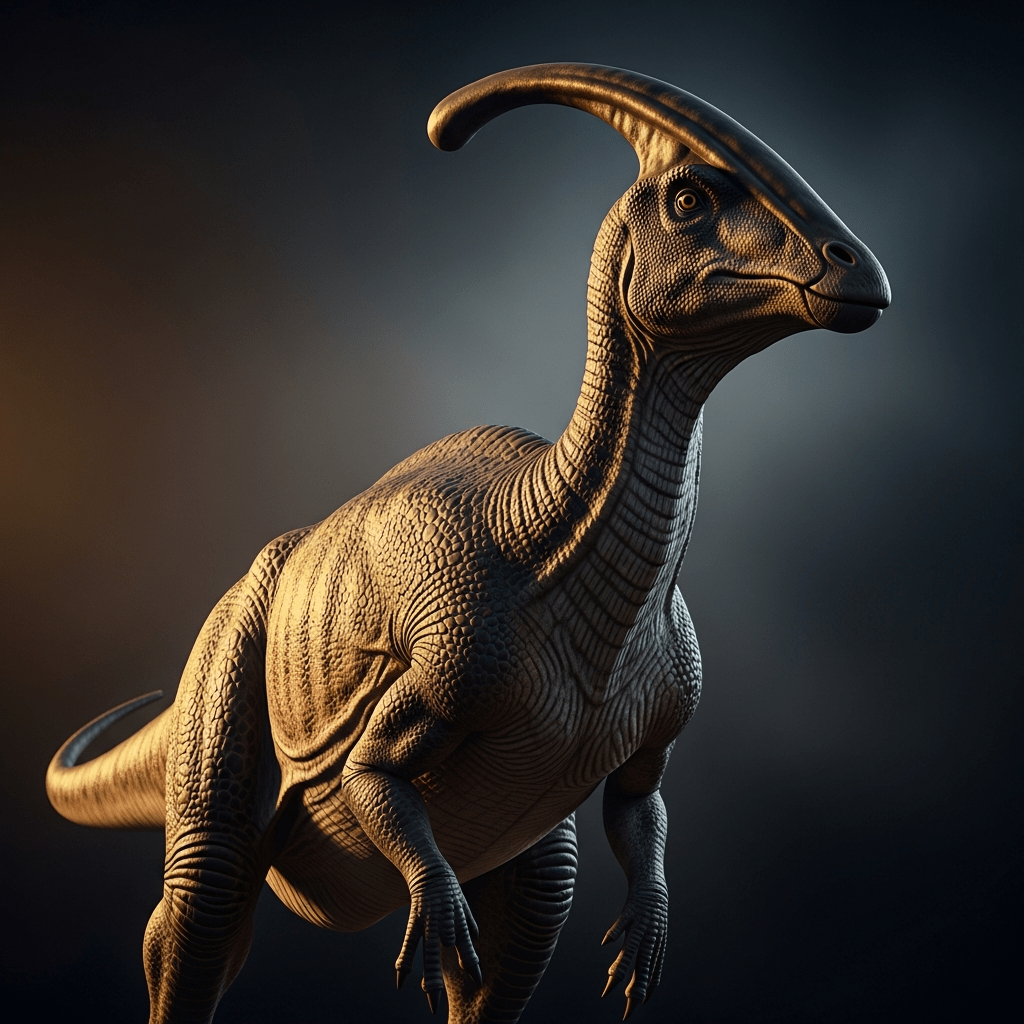
Parasaurolophus
Parasaurolophus is a genus of crested hadrosaurid dinosaur best known for its striking, backward-curving cranial crest and its prominence among Late Cretaceous North American dinosaurs.
Parasaurolophus is a genus of crested hadrosaurid dinosaur best known for its striking, backward-curving cranial crest and its prominence among Late Cretaceous North American dinosaurs.
Parasaurolophus was first described in 1922 by William Parks, following the discovery of its holotype specimen (ROM 768) in Alberta, Canada’s Dinosaur Park Formation. This genus emerged during the Late Cretaceous period, with fossils later found in both Alberta and New Mexico, USA. Its evolutionary lineage places it within the Lambeosaurinae subfamily of Hadrosauridae, tracing back through Ornithischia to the broader clade Dinosauria.
Parasaurolophus belongs to the kingdom Animalia, phylum Chordata, class Reptilia, clade Dinosauria, order Ornithischia, family Hadrosauridae, and subfamily Lambeosaurinae. It is closely related to other crested hadrosaurs such as Lambeosaurus and Corythosaurus, sharing the distinctive cranial crest that characterizes lambeosaurines. This classification reflects both anatomical and evolutionary relationships within the diverse world of dinosaurs.
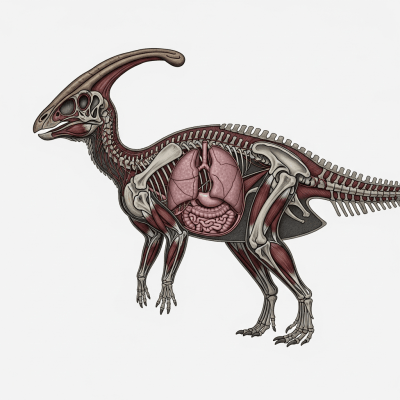
Parasaurolophus was a large herbivore, reaching lengths of 9–10 meters and weighing up to 2.5 metric tons. Its most remarkable feature is the elongated, tubular crest arching backward from its skull, thought to function in sound resonance and display. The animal had a broad, duck-billed snout, hundreds of tightly packed teeth for grinding plant material, and robust limbs suited for both bipedal and quadrupedal movement. Skin impressions indicate a scaly texture, though its coloration remains unknown.
Parasaurolophus is believed to have been a social dinosaur, likely living in herds. Its crest may have enabled complex vocalizations for communication, visual signaling, and species recognition. While direct evidence of reproductive or growth behaviors is limited, these traits are inferred from related hadrosaurids. Today, Parasaurolophus fossils serve vital roles in scientific research, education, and museum displays, offering insights into dinosaur physiology and behavior.
Bring this kind into your world illustrated posters, mugs, and shirts.
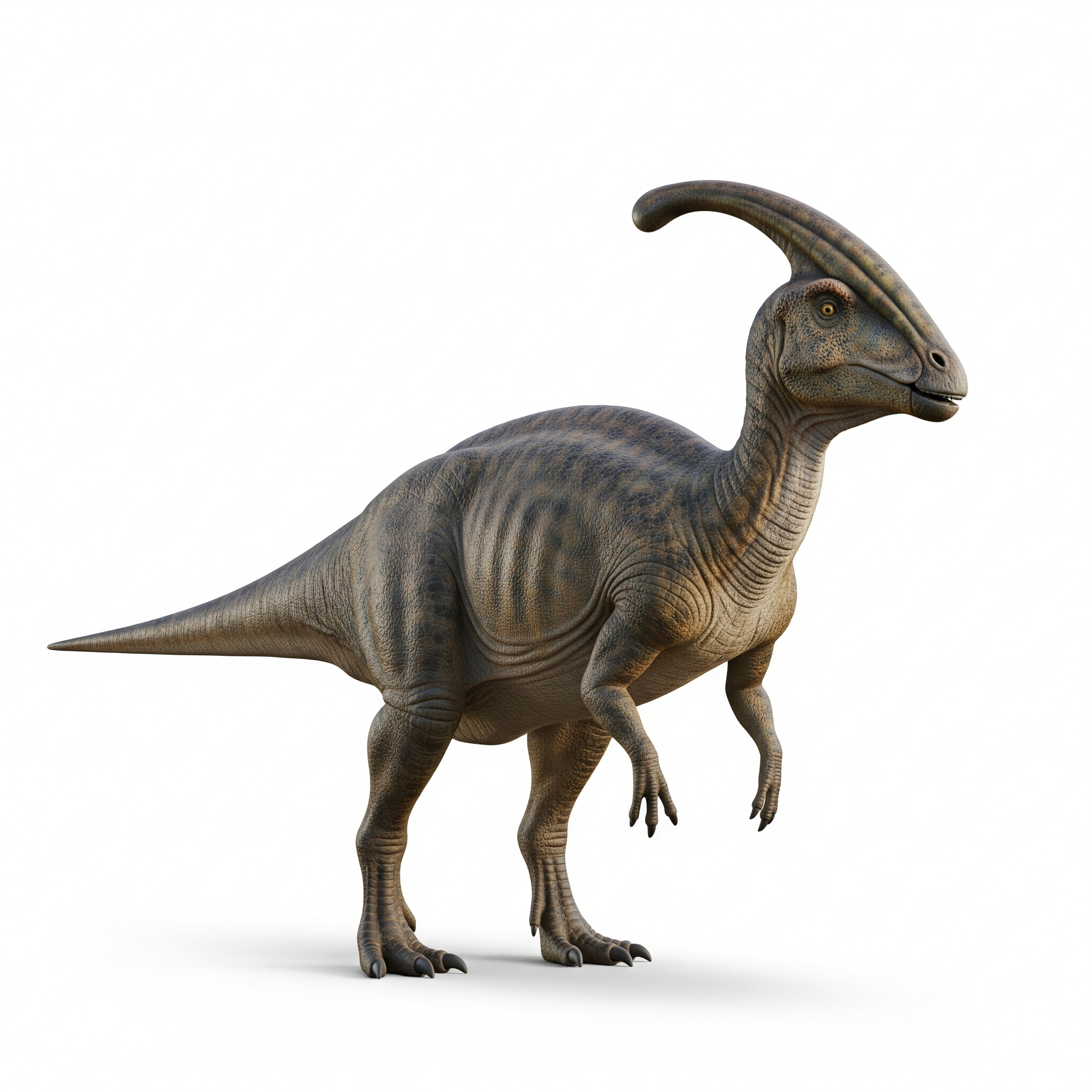
Archival print, museum-grade paper
Buy Poster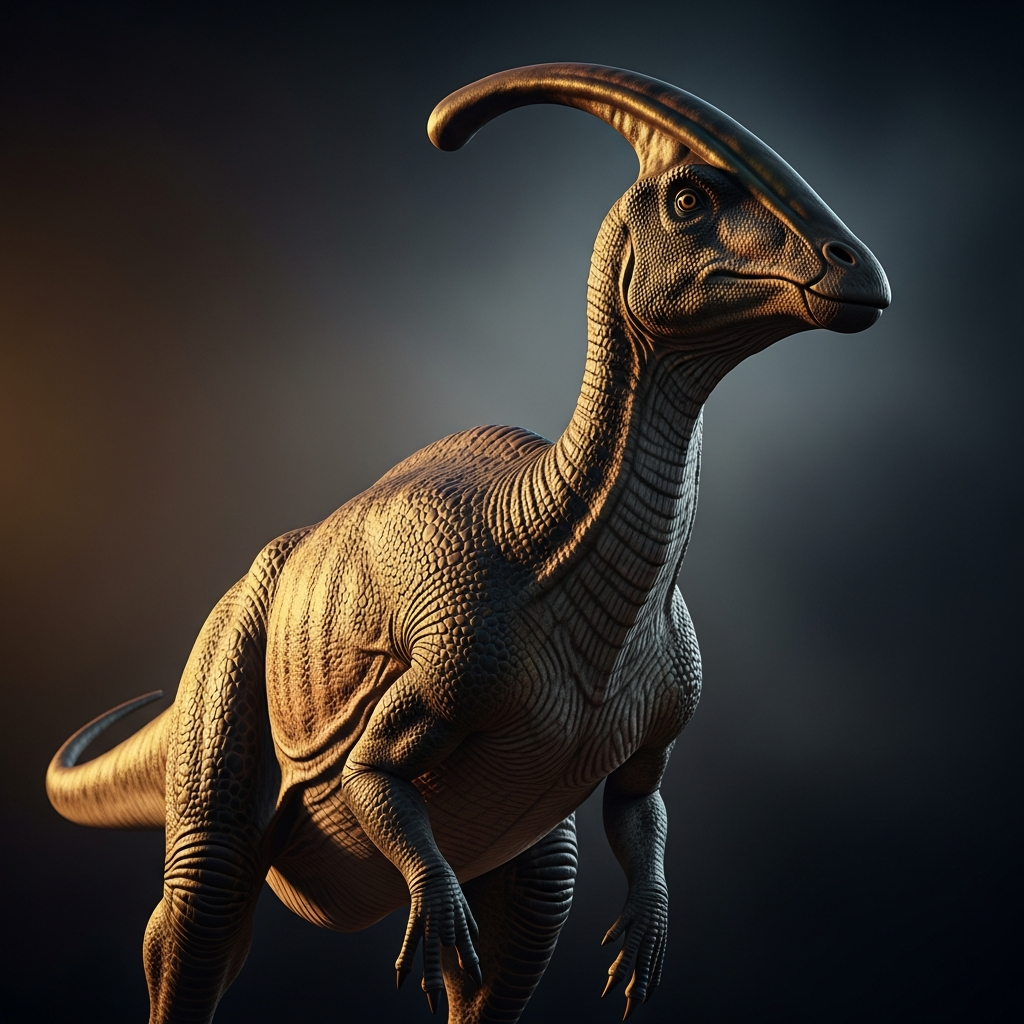
Stoneware mug, dishwasher safe
Buy Mug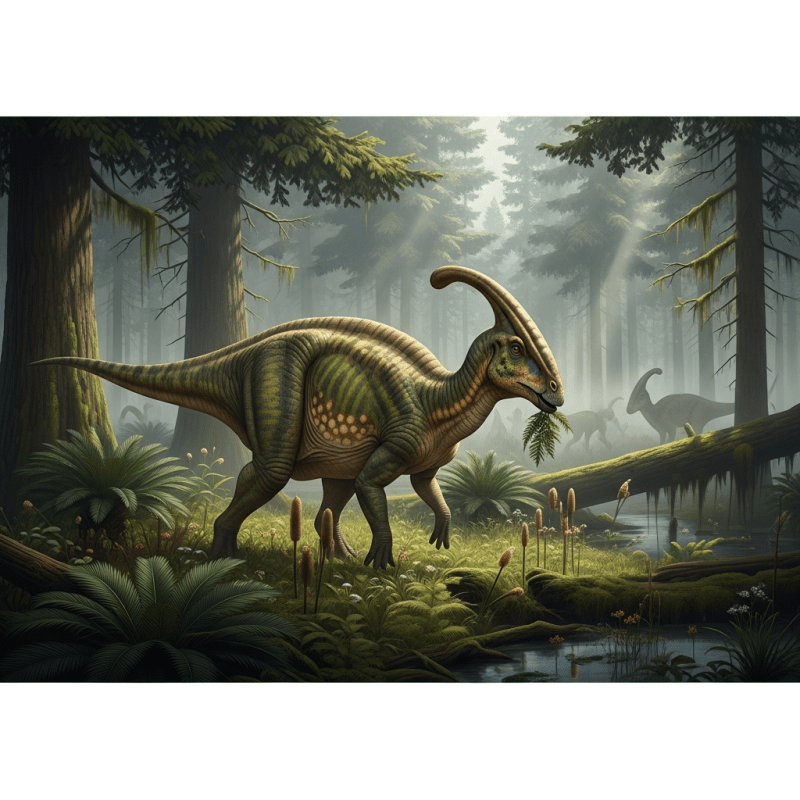
Soft cotton tee, unisex sizes
Buy ShirtParasaurolophus has become an iconic dinosaur in museums, paleontological studies, and popular media. Its distinctive crest makes it instantly recognizable, appearing in educational materials, documentaries, and films. The genus is celebrated for its contribution to our understanding of dinosaur anatomy and communication, and its fossils are prized for both their completeness and their scientific value.
Parasaurolophus lived during the Late Cretaceous period, approximately 76–73 million years ago, a time when hadrosaurids flourished across North America.
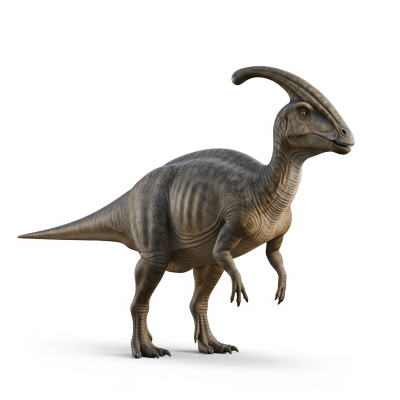
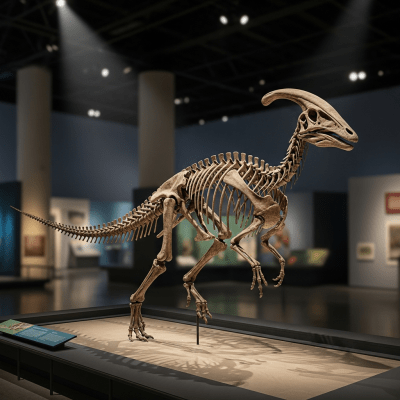
The first Parasaurolophus fossil was discovered in Alberta, Canada, and described by William Parks in 1922. Subsequent finds in New Mexico, USA, have revealed additional species and provided well-preserved specimens, including complete skulls and crests. The holotype specimen, ROM 768, is housed at the Royal Ontario Museum. These fossils have greatly enhanced our understanding of lambeosaurine anatomy and paleobiology.
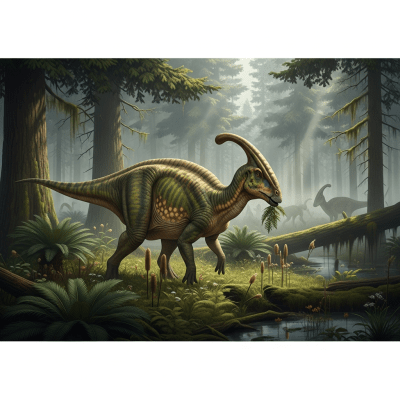
Parasaurolophus inhabited what is now North America, specifically regions in Alberta and New Mexico. Its environments were likely lush floodplains and river valleys, supporting diverse plant life and other dinosaur species. The genus’s distribution reflects the widespread success of hadrosaurids in Late Cretaceous ecosystems.
As a herbivore, Parasaurolophus fed on a variety of plant materials, using its broad, duck-billed snout and hundreds of dental batteries to grind tough vegetation. Its jaws and teeth were highly adapted for efficient processing of leaves and stems, supporting its large size and active lifestyle.
While specific details of Parasaurolophus’s growth and life cycle remain uncertain, studies of related hadrosaurids suggest rapid juvenile growth and continual tooth replacement. It likely hatched from eggs and grew quickly to adult size, with herd behavior providing protection for young individuals. Lifespan estimates are based on bone histology from similar dinosaurs, but direct data for Parasaurolophus is limited.
Parasaurolophus, like all non-avian dinosaurs, disappeared during the mass extinction event at the end of the Cretaceous period, approximately 66 million years ago. The leading theory attributes this extinction to a combination of catastrophic asteroid impact and volcanic activity, which dramatically altered global climates and ecosystems.
Parasaurolophus is a cornerstone genus for paleontological research, especially in studies of dinosaur communication, physiology, and social behavior. Its well-preserved fossils, particularly the cranial crest, have enabled scientists to explore sound production and evolutionary relationships among hadrosaurids. The genus continues to inform our understanding of dinosaur diversity and adaptation in the Late Cretaceous.