Pachycephalosaurus
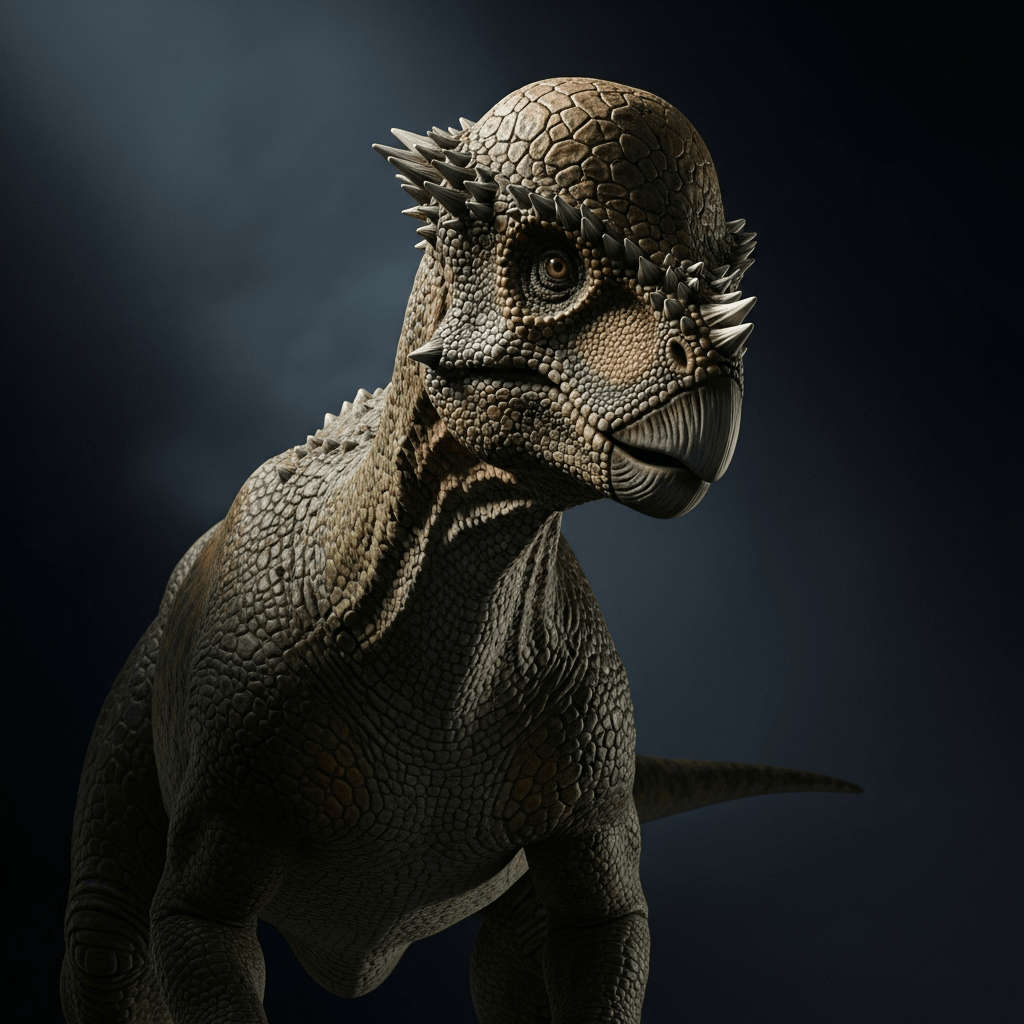
Pachycephalosaurus is a dome-headed dinosaur from the Late Cretaceous, famed for its thick skull and debated head-butting behavior.
Pachycephalosaurus is a dome-headed dinosaur from the Late Cretaceous, famed for its thick skull and debated head-butting behavior.
Pachycephalosaurus was first described in 1931 by Charles W. Gilmore, based on fossils discovered in Montana’s Hell Creek Formation. Its name, meaning "thick-headed lizard" in Greek, reflects its most distinctive anatomical trait. The holotype specimen, USNM 12031, resides at the Smithsonian Institution. All confirmed remains originate from the Western Interior of North America, particularly Montana, South Dakota, and Wyoming, placing Pachycephalosaurus in the heart of Late Cretaceous ecosystems.
Pachycephalosaurus belongs to the clade Dinosauria, within the order Ornithischia and the family Pachycephalosauridae. This group is characterized by bipedal, herbivorous dinosaurs with thickened skull roofs. Closely related genera include Stygimoloch and Dracorex, which may represent juvenile or subadult forms of Pachycephalosaurus itself. Its placement among ornithischians distinguishes it from the carnivorous theropods and long-necked sauropods of the same era.
Pachycephalosaurus was a medium-sized dinosaur, reaching up to 4.5 meters (15 feet) in length and weighing between 350 and 450 kilograms. Its most striking feature was a cranial dome of solid bone, up to 25 centimeters (10 inches) thick, surrounded by small bony knobs and short spikes. The body was robust and compact, with powerful hind limbs for bipedal movement and shorter forelimbs. Its leaf-shaped teeth suggest a diet of vegetation, and reconstructions typically show it with muted earth-toned skin, though coloration remains speculative.
Pachycephalosaurus is best known for the hypothesis that it engaged in head-butting contests, possibly for dominance or mating rights. While the thick dome supports this idea, some paleontologists suggest alternative behaviors, such as flank-butting or visual display. As an extinct dinosaur, it had no direct interaction with humans, but its fossils are invaluable for scientific study and public education, often featured in museum exhibits and media.
Bring this kind into your world illustrated posters, mugs, and shirts.
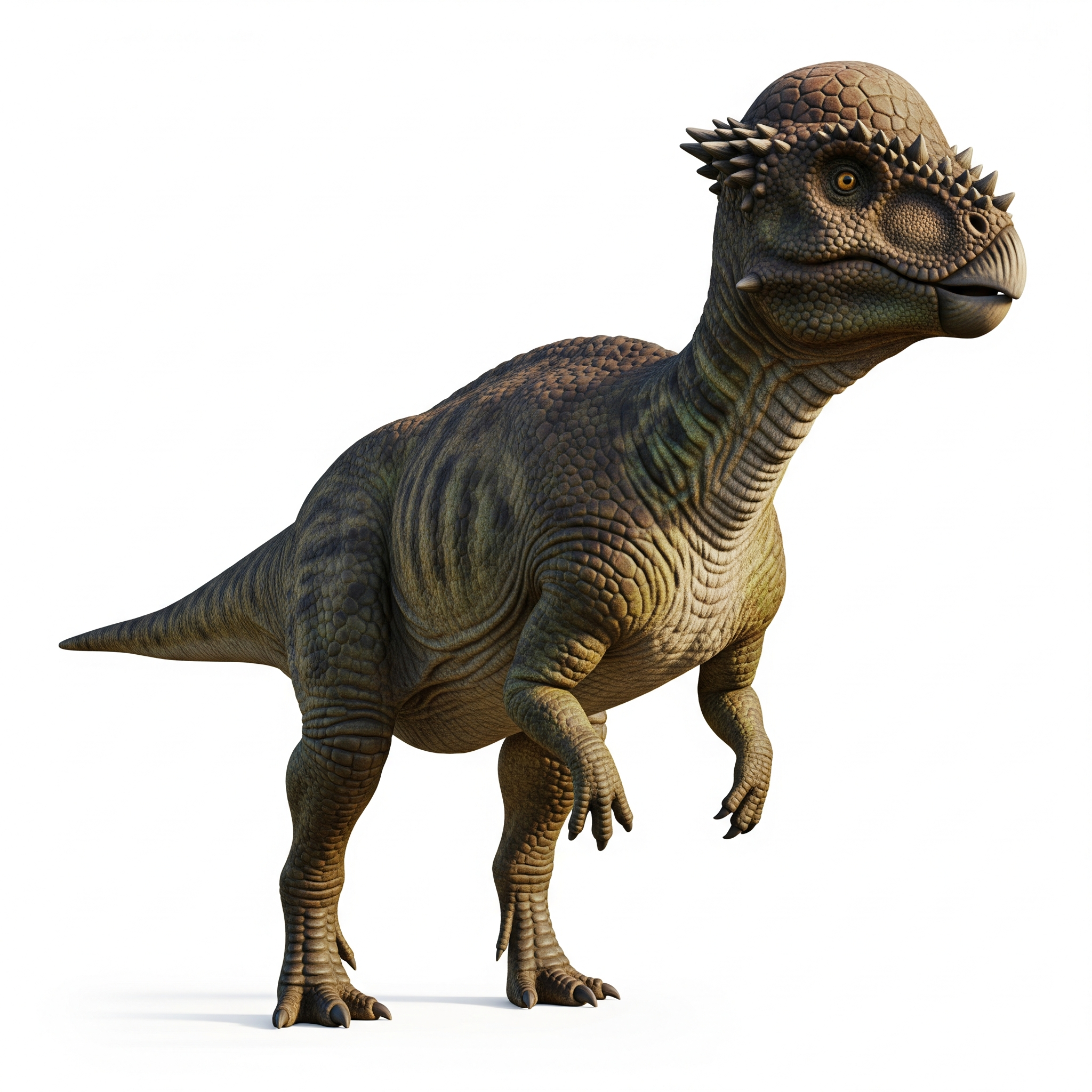
Archival print, museum-grade paper
Buy Poster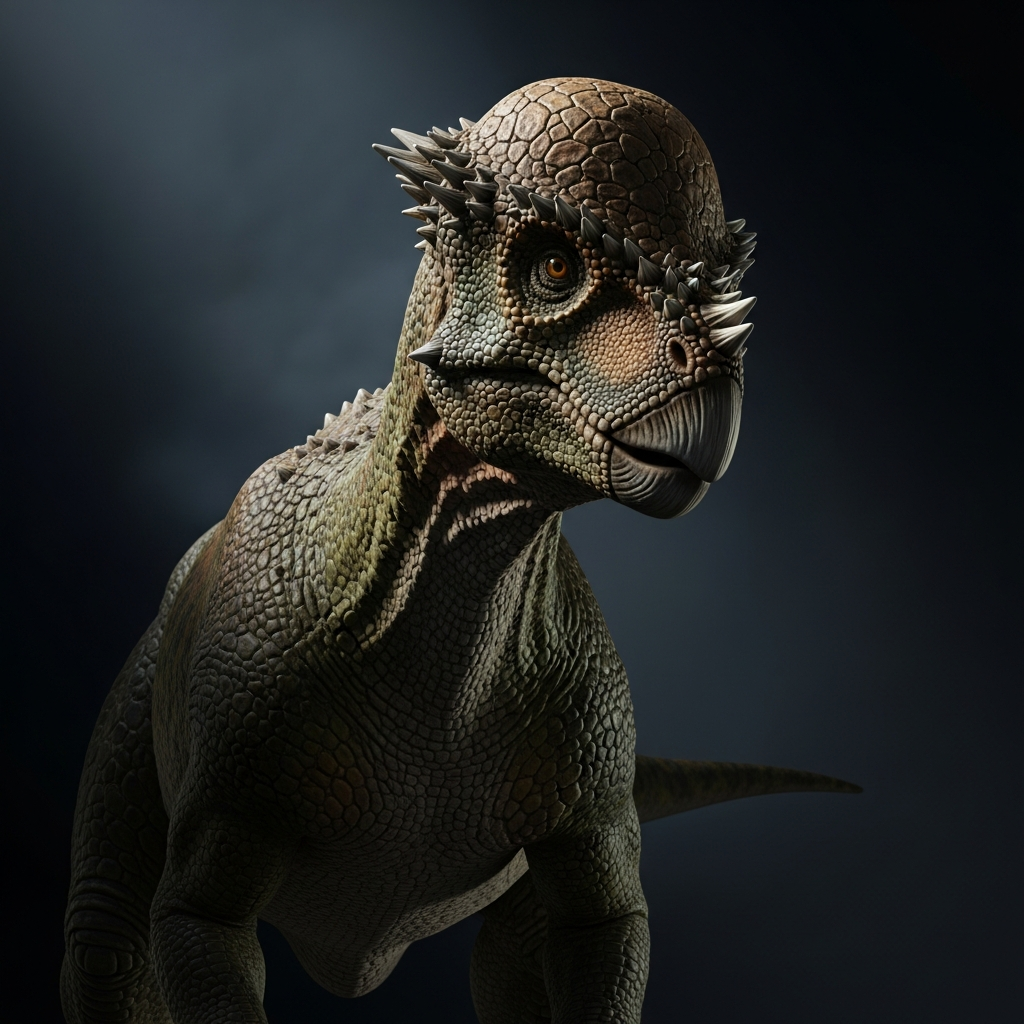
Stoneware mug, dishwasher safe
Buy Mug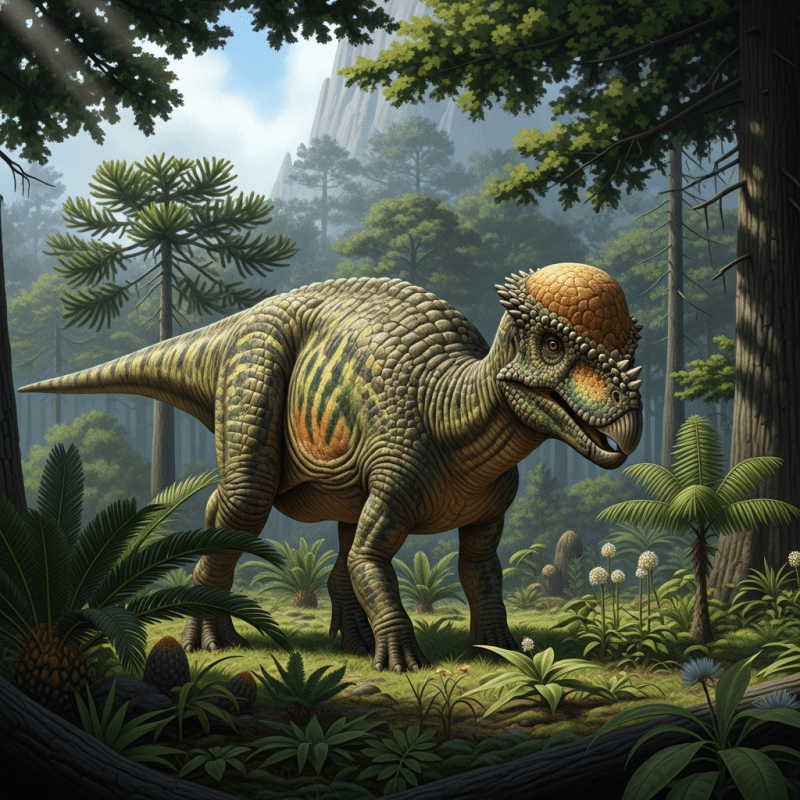
Soft cotton tee, unisex sizes
Buy ShirtPachycephalosaurus has captured the public imagination through its unique skull and the dramatic idea of dinosaurian head-butting. It frequently appears in documentaries, books, and films, often depicted as a combative or social creature. Its fossils are popular attractions in museums, and its debated behavior inspires ongoing scientific and popular discussion, making it an icon of dinosaur diversity and intrigue.
Pachycephalosaurus lived during the Late Cretaceous period, approximately 70 to 66 million years ago, just before the mass extinction that ended the age of dinosaurs.

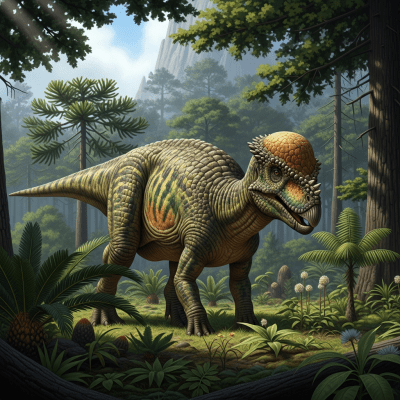
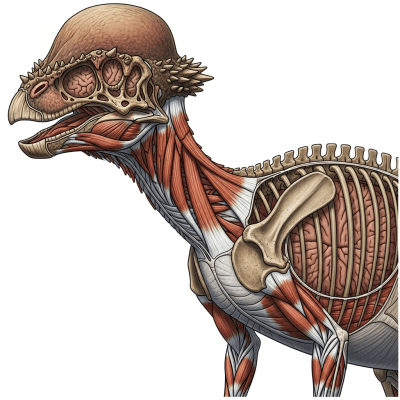
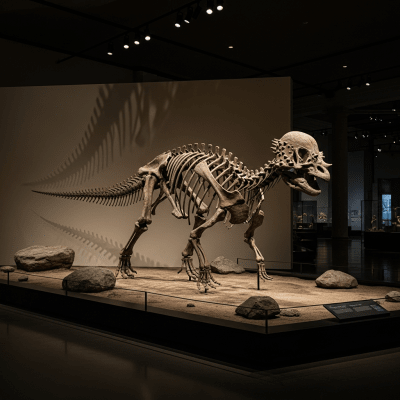
The first Pachycephalosaurus fossils were uncovered in the Hell Creek Formation of Montana and formally described in 1931. The holotype specimen, USNM 12031, is housed at the Smithsonian Institution. Additional fossils have been found in South Dakota and Wyoming. Most remains consist of skull fragments, with complete skeletons remaining elusive, but the distinctive dome has made identification straightforward.
Pachycephalosaurus inhabited the floodplains and woodlands of Late Cretaceous North America. Its fossils are restricted to the Western Interior, suggesting a relatively limited geographic range. The environment would have been lush and dynamic, supporting a variety of plant life and other dinosaur species.
Pachycephalosaurus was primarily a herbivore, equipped with leaf-shaped teeth for processing vegetation. Some evidence hints at possible omnivory, but plant material was likely its main food source. Its jaws and teeth were suited for cropping and chewing soft plants found in its environment.
Bone studies suggest Pachycephalosaurus experienced rapid growth as a juvenile, with significant changes in skull shape as it matured. The possibility that related genera represent younger growth stages highlights dramatic ontogenetic shifts. Lifespan estimates are uncertain, but its robust bones indicate a well-adapted life cycle for its environment.
Pachycephalosaurus, like all non-avian dinosaurs, disappeared during the mass extinction event at the end of the Cretaceous period, approximately 66 million years ago. The leading theory attributes this extinction to a catastrophic asteroid impact, which caused rapid environmental changes and collapse of ecosystems worldwide.
Pachycephalosaurus is a key genus for understanding dinosaurian social behavior, cranial evolution, and ontogeny. Its thick skull has fueled debates about dinosaur interactions, while its fossils help clarify the diversity and development of ornithischian dinosaurs. The genus also illustrates the challenges of species identification and growth-stage classification in paleontology.