Ornitholestes
Ornitholestes is a small, agile theropod dinosaur from the Late Jurassic of North America, renowned for its lightly built body and swift, predatory lifestyle.
Ornitholestes is a small, agile theropod dinosaur from the Late Jurassic of North America, renowned for its lightly built body and swift, predatory lifestyle.
First described by Henry Fairfield Osborn in 1903, Ornitholestes entered scientific literature after its holotype specimen (AMNH 619) was unearthed at Bone Cabin Quarry, Wyoming, in 1900. The fossil, collected by the American Museum of Natural History team, anchors Ornitholestes to the Morrison Formation—a rich Late Jurassic deposit that has revealed many iconic dinosaurs. Its name, meaning "bird robber," reflects early speculation about its diet and behavior.
Ornitholestes belongs to the clade Dinosauria, within the order Saurischia and suborder Theropoda. More specifically, it is considered a basal member of the infraorder Coelurosauria, a group that includes many small, agile, and often feathered carnivorous dinosaurs. Its evolutionary position offers insight into the early diversification of coelurosaurian theropods.
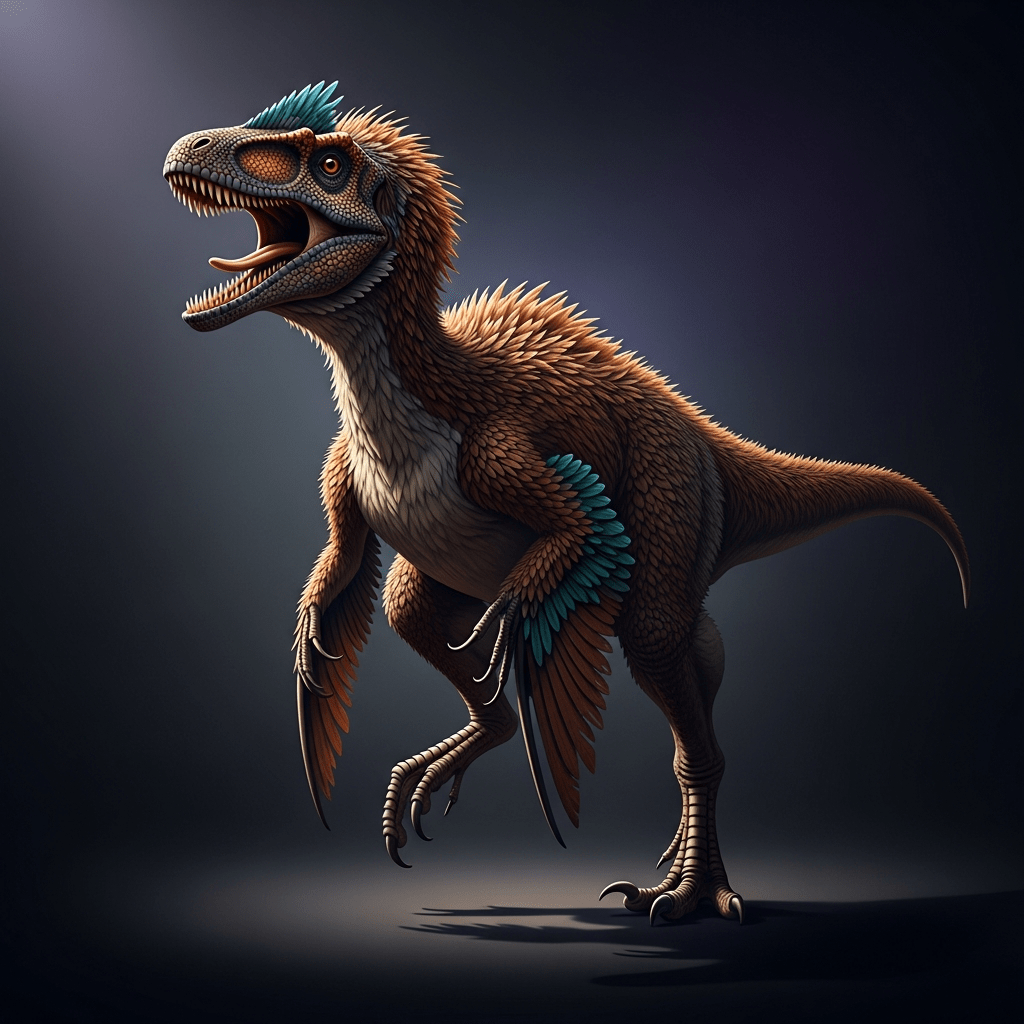
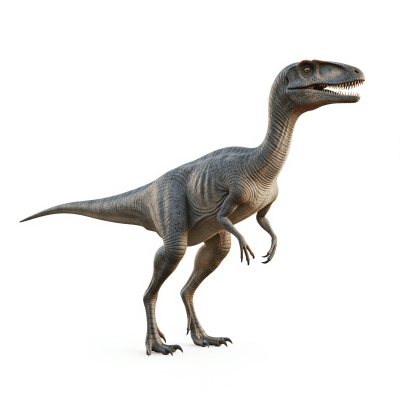
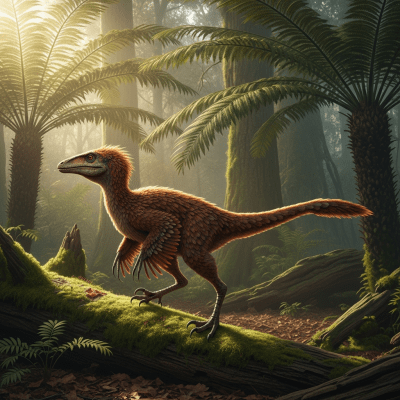
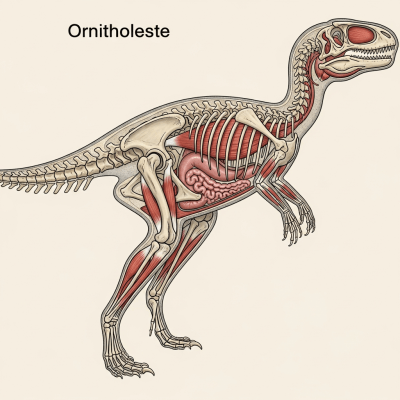
Ornitholestes was a compact, bipedal carnivore, measuring about 2 meters (6.6 feet) long and weighing up to 15 kilograms (33 lbs). Its body was lightly built, with a short snout, large eyes, and a proportionally large head. The forelimbs were long and robust, ending in three clawed fingers well-suited for grasping prey. Hind limbs were adapted for running, supported by elongated metatarsals and balanced by a long, slender tail. While no direct evidence of skin texture or coloration exists, some scientists infer the possibility of primitive feather-like structures based on its evolutionary relationships.
Ornitholestes is inferred to have been an agile, active predator, capable of swift movement and precise grasping. Its anatomical features suggest a lifestyle centered on hunting small vertebrates, possibly including early mammals, reptiles, or even young dinosaurs. There is no evidence of social behavior or interaction with humans, but its fossils play a vital role in scientific research and educational displays.
Bring this kind into your world illustrated posters, mugs, and shirts.
Archival print, museum-grade paper
Buy Poster
Stoneware mug, dishwasher safe
Buy Mug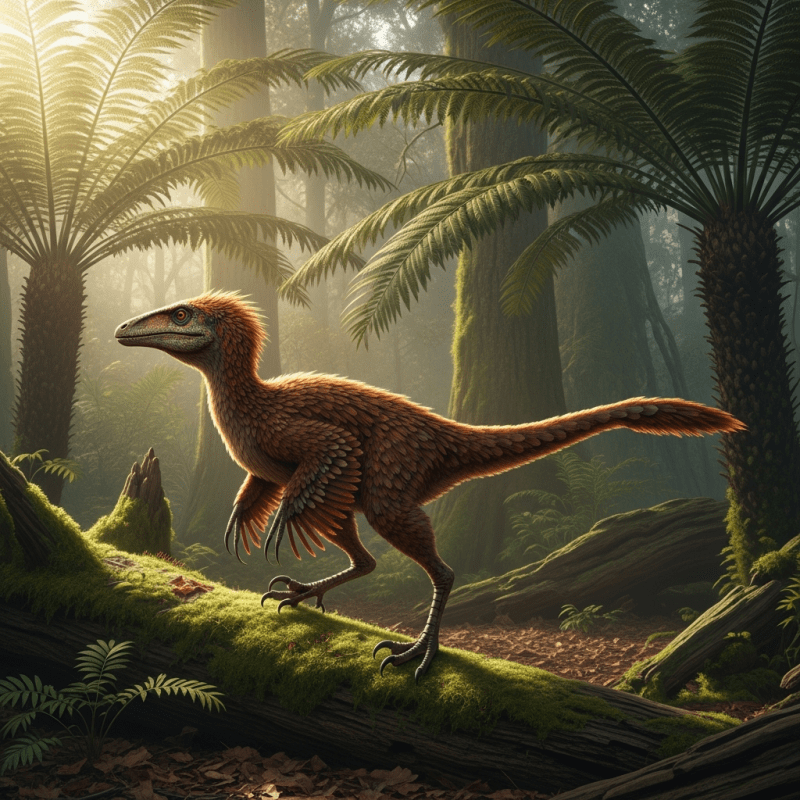
Soft cotton tee, unisex sizes
Buy ShirtOrnitholestes has captured public imagination as a classic example of a small Jurassic predator. It appears in museum exhibits, textbooks, and popular media, often depicted as a nimble hunter among the giants of its era. Its scientific value and evocative name have made it a staple in educational materials and paleontological discussions.
Ornitholestes lived during the Late Jurassic period, approximately 150 million years ago—a time when dinosaurs flourished across the globe.
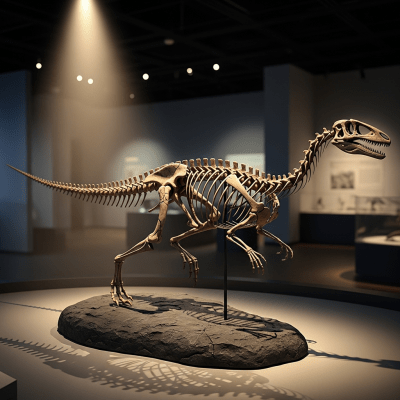
The holotype specimen of Ornitholestes (AMNH 619) was discovered in 1900 at Bone Cabin Quarry, Wyoming, and described in 1903. All known fossils originate from the Morrison Formation, making it a regionally distinctive dinosaur. Its remains are curated at the American Museum of Natural History, where they continue to inform research and public exhibits.
Ornitholestes inhabited what is now the western United States, specifically the lush floodplains and forests of the Morrison Formation in Wyoming. This environment supported a diverse array of dinosaurs, providing abundant prey and cover for a small, agile predator.
As a carnivore, Ornitholestes likely hunted small vertebrates using its grasping forelimbs and swift running ability. Its anatomical features suggest it was well-adapted for capturing agile prey, though direct evidence of its diet is lacking.
No direct fossil evidence exists regarding the growth rates, reproductive behavior, or lifespan of Ornitholestes. Its life history remains largely speculative, inferred from related theropods and its small body size.
Ornitholestes, like all non-avian dinosaurs, disappeared at the close of the Mesozoic Era. The prevailing theory attributes this mass extinction to catastrophic events such as asteroid impact, volcanic activity, and climate change, which dramatically altered global ecosystems.
Ornitholestes is pivotal in paleontology for illuminating the diversity and evolutionary pathways of small theropod dinosaurs. Its fossils help researchers understand the anatomy, adaptations, and ecological roles of early coelurosaurians, bridging gaps between primitive and more derived carnivorous dinosaurs.