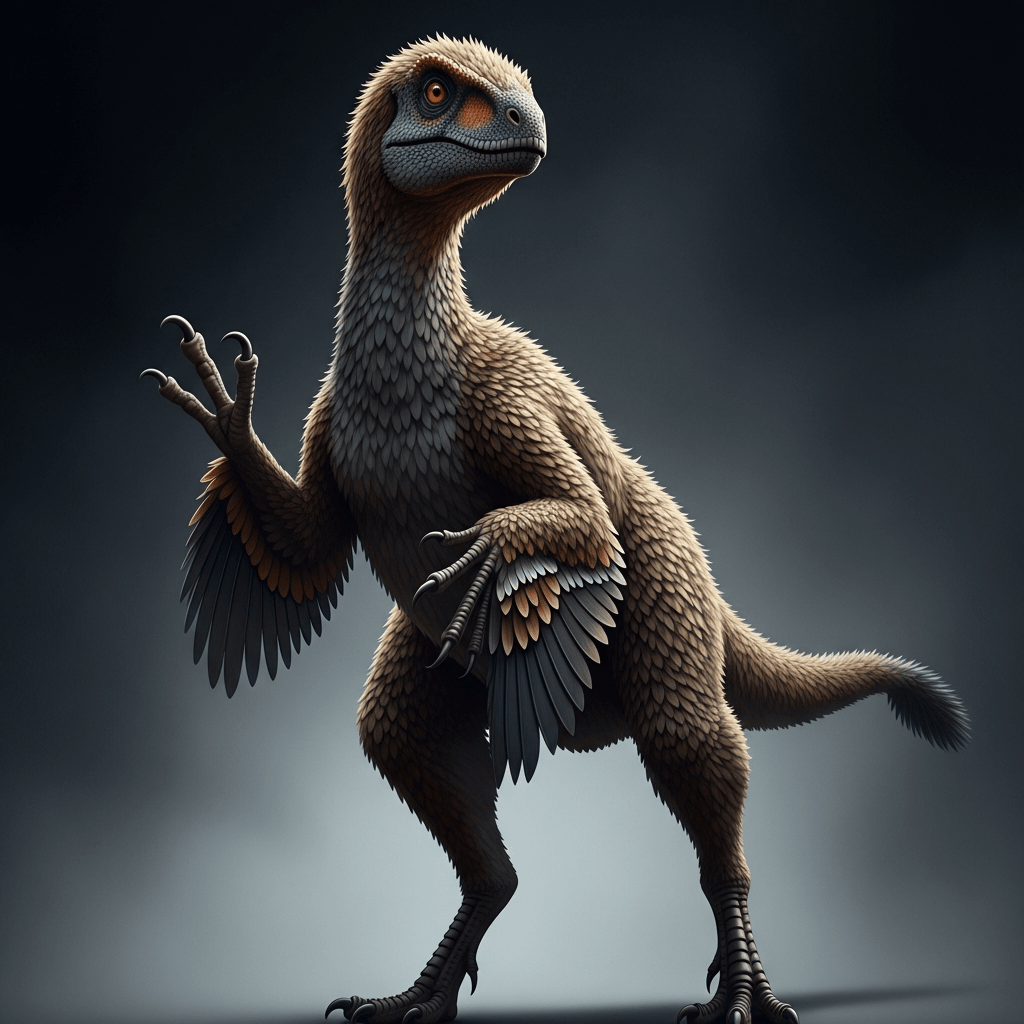
Mononykus
Mononykus is a small, highly specialized theropod dinosaur from the Late Cretaceous, instantly recognized by its single robust claw on each forelimb and its pivotal role in understanding bird-like dinosaur evolution.
Mononykus is a small, highly specialized theropod dinosaur from the Late Cretaceous, instantly recognized by its single robust claw on each forelimb and its pivotal role in understanding bird-like dinosaur evolution.
Mononykus was first described in 1993 by Perle, Norell, Chiappe, and Clark, following the discovery of fossils in the Nemegt Formation of Mongolia's Gobi Desert. The holotype specimen, MPC-D 107/6, resides at the Mongolian Paleontological Center. Its name, derived from Greek for "single claw," highlights its most distinctive anatomical trait and marks it as a unique inhabitant of Central Asia during the Late Cretaceous period.
Belonging to the clade Dinosauria, Mononykus is classified within the order Saurischia and suborder Theropoda, specifically in the family Alvarezsauridae. This group is characterized by small, cursorial dinosaurs with bird-like features, and Mononykus stands out as a key representative, bridging evolutionary gaps between classic theropods and early avian forms.
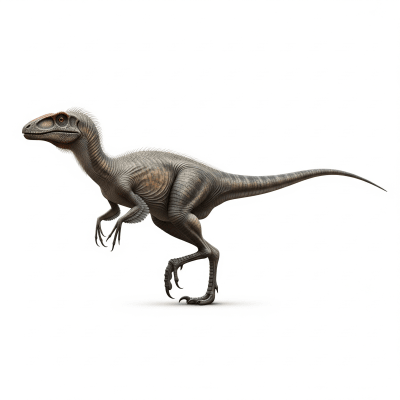
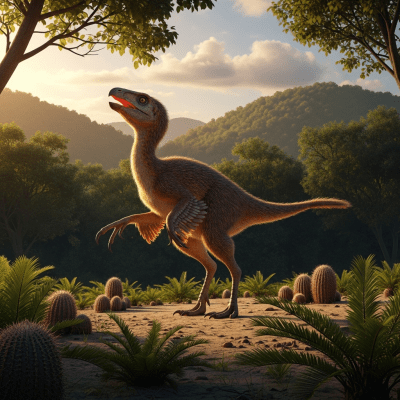
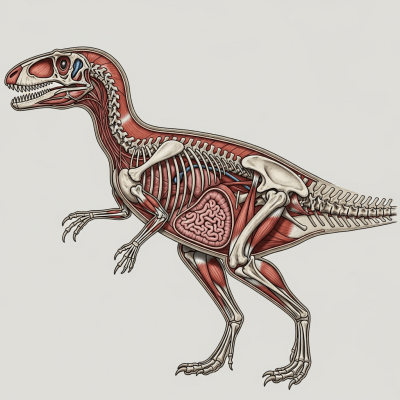
Mononykus measured about 1 meter in length and weighed between 3 and 5 kilograms. Its body was lightly built and bipedal, featuring long hind limbs for swift running and a short tail for balance. The forelimbs were highly reduced but powerfully muscled, each ending in a single large claw—an adaptation likely used for digging into insect nests. Its skull was small, with a pointed snout and reduced teeth, and while direct evidence of feathers is lacking, their presence is inferred from close relatives.
Mononykus was a fast-moving, ground-dwelling dinosaur, with forelimbs adapted for specialized tasks such as breaking into insect nests. Its cursorial lifestyle and anatomical features suggest it was an active insectivore, using its single claw for digging or tearing. As an extinct species, it has no direct interaction with humans, but its fossils are invaluable for scientific research and public education.
Bring this kind into your world illustrated posters, mugs, and shirts.
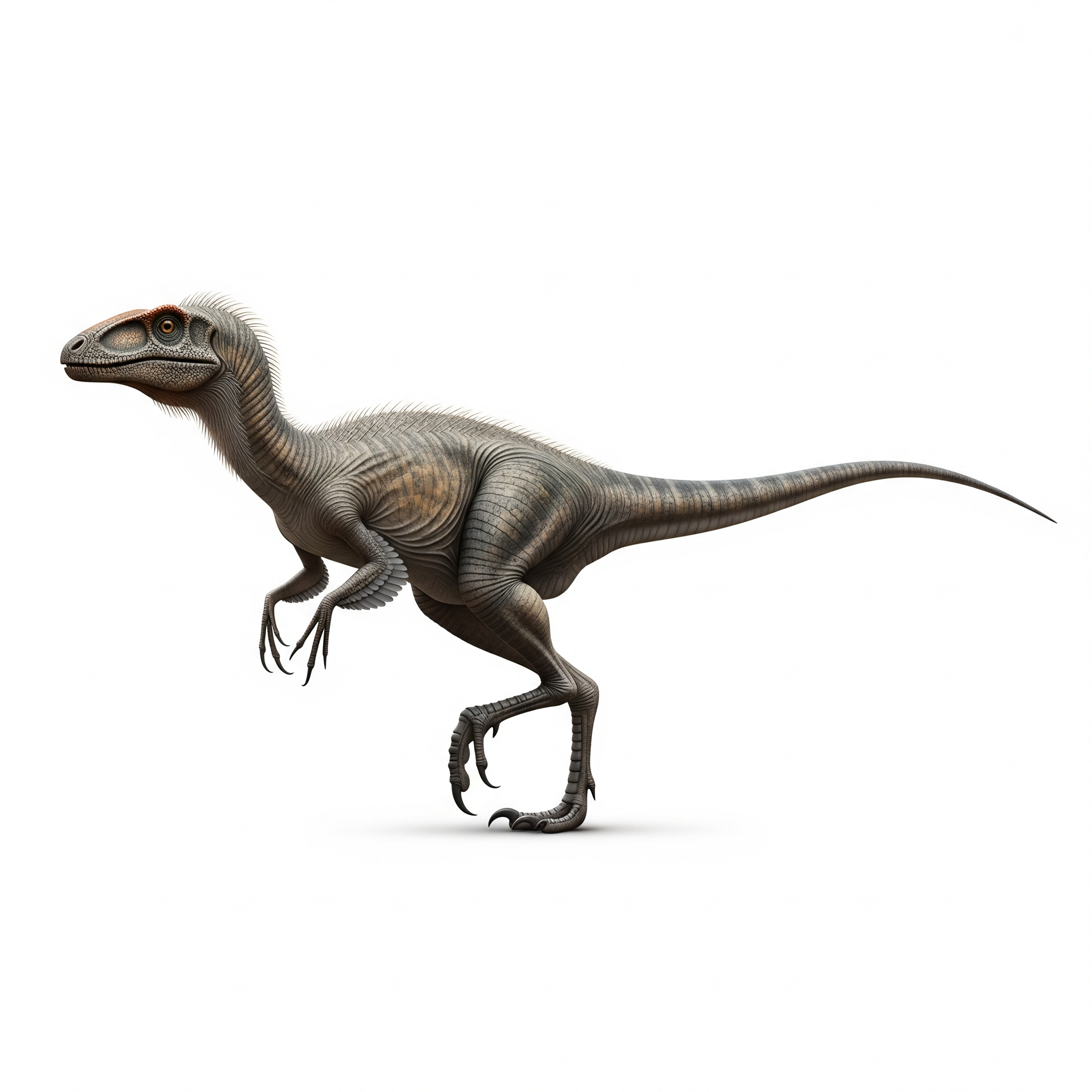
Archival print, museum-grade paper
Buy Poster
Stoneware mug, dishwasher safe
Buy Mug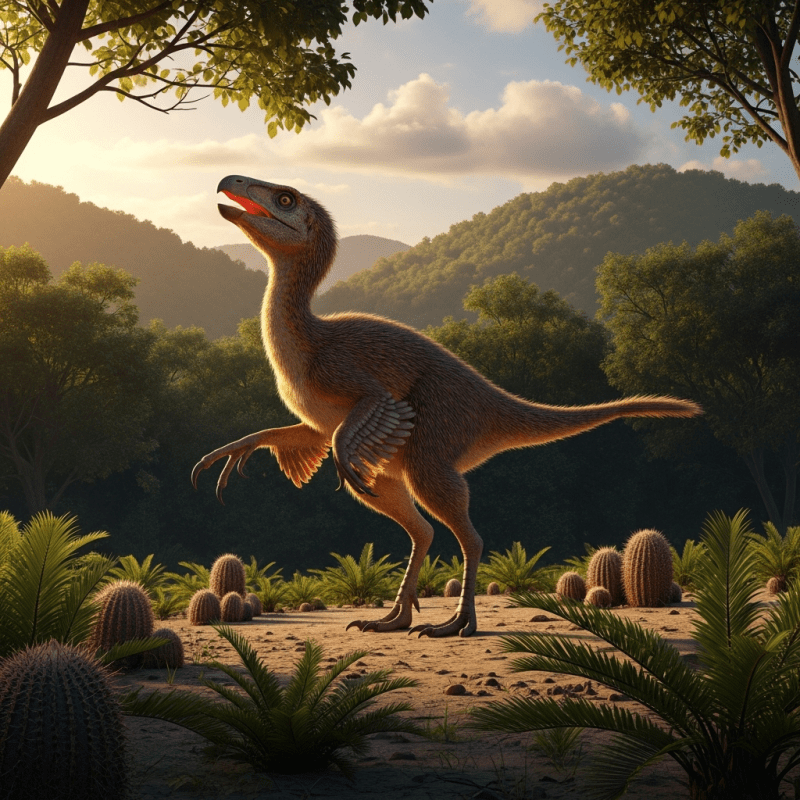
Soft cotton tee, unisex sizes
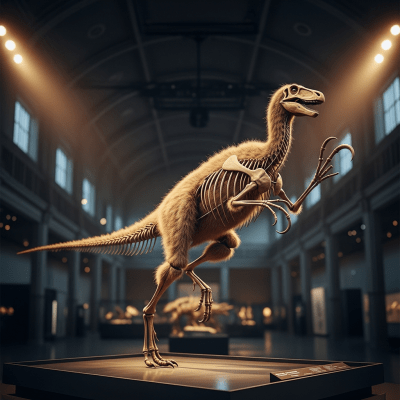
Buy ShirtThough not as universally recognized as some larger dinosaurs, Mononykus holds a special place in museum exhibits and educational materials, often showcased for its unusual anatomy and its evolutionary links to birds. Its story enriches our understanding of dinosaur diversity and adaptation, sparking curiosity in both scientific and public spheres.
Mononykus lived during the Late Cretaceous period, a time when dinosaurs flourished across the globe and evolutionary experimentation was at its peak.
The first fossils of Mononykus were unearthed in the Nemegt Formation of Mongolia's Gobi Desert, with the holotype specimen cataloged as MPC-D 107/6. These remains, described in 1993, have been central to studies of theropod diversity and the evolutionary transition toward birds.
Mononykus inhabited the arid, sandy environments of the Nemegt Formation in Central Asia. Its known distribution is limited to this region, suggesting a specialized ecological niche within the Late Cretaceous landscape of Mongolia.
With a pointed snout, reduced teeth, and powerful single-clawed forelimbs, Mononykus was adapted for an insectivorous diet. It likely used its claw to dig into nests or burrows, extracting insects as its primary food source.
Specific details about Mononykus's growth and life cycle remain unknown. However, as with other small theropods, it likely hatched from eggs and matured rapidly, with a lifespan suited to its active, ground-dwelling lifestyle.
Mononykus, like all non-avian dinosaurs, became extinct at the close of the Cretaceous period, likely due to global environmental upheavals such as asteroid impact and volcanic activity that dramatically altered ecosystems.
Mononykus is a cornerstone in paleontological research, illuminating the evolutionary pathways between classic theropods and early birds. Its anatomy challenges and refines our understanding of functional morphology, adaptation, and the diversity of dinosaurian life in the Late Cretaceous.