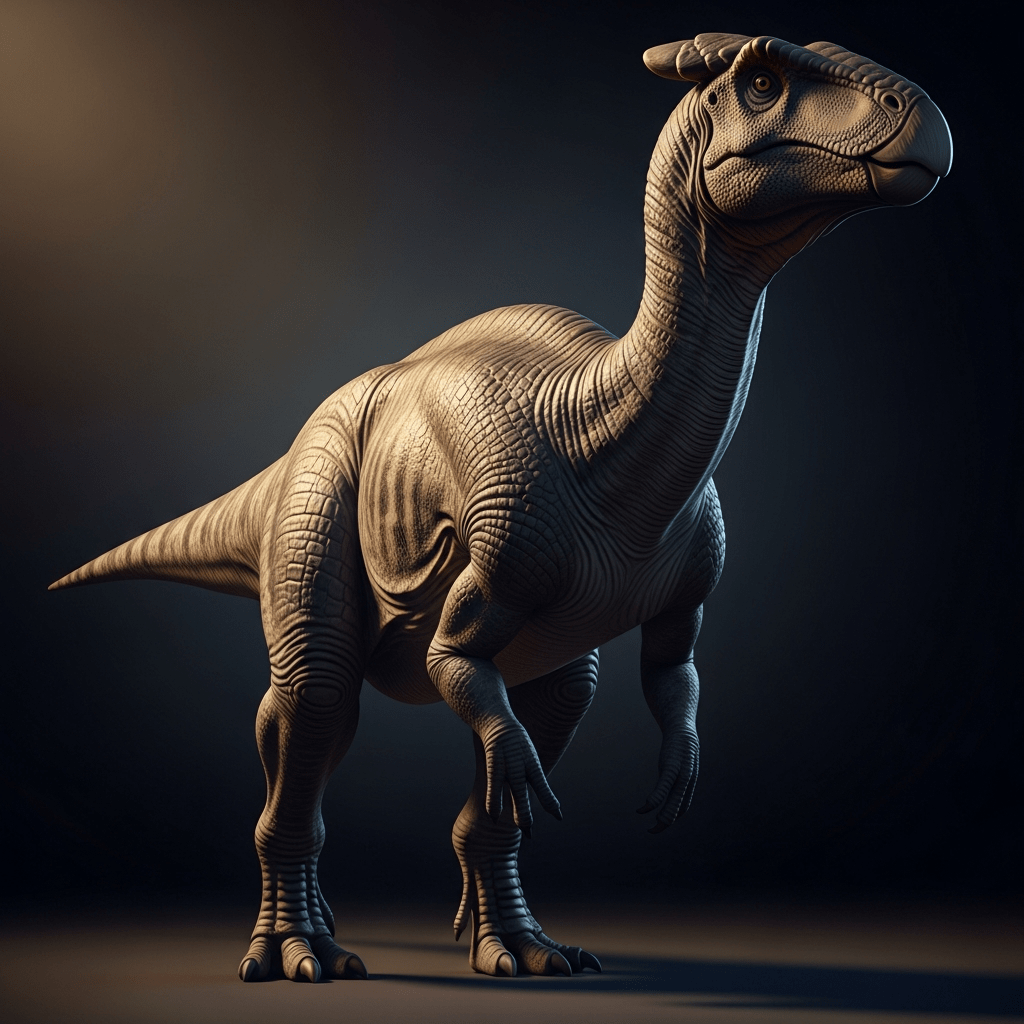
Hadrosaurus
Hadrosaurus is a genus of ornithischian dinosaur, renowned as the type genus for the duck-billed Hadrosauridae family and celebrated for its pivotal role in North American paleontology.
Hadrosaurus is a genus of ornithischian dinosaur, renowned as the type genus for the duck-billed Hadrosauridae family and celebrated for its pivotal role in North American paleontology.
Hadrosaurus foulkii was first described in 1858 by Joseph Leidy, following the discovery of its fossils in Haddonfield, New Jersey. The holotype specimen, unearthed by William Parker Foulke, marked a milestone as one of the earliest nearly complete dinosaur skeletons found in North America. This discovery not only illuminated the anatomy of dinosaurs but also established Hadrosaurus as a foundational reference for future paleontological research.
Hadrosaurus belongs to the clade Dinosauria, within the order Ornithischia and suborder Ornithopoda. It is the type genus of the family Hadrosauridae, which encompasses the iconic duck-billed dinosaurs. This lineage is distinguished by specialized dental batteries and adaptations for herbivory, setting them apart from other ornithischians and marking their evolutionary significance.
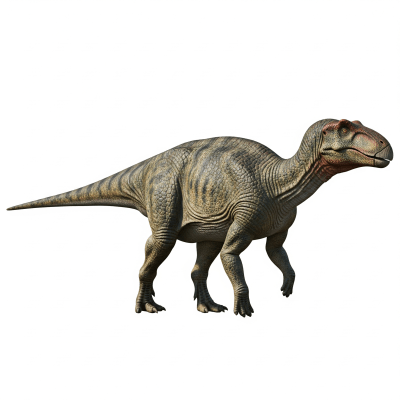
Hadrosaurus was a large dinosaur, measuring approximately 7–8 meters in length and weighing up to 2–4 metric tons. Its most striking feature was a broad, flattened snout resembling a duck's bill, ideal for cropping vegetation. The creature stood primarily on its hind legs but could also walk on all fours, with shorter forelimbs and a long, stiffened tail supported by ossified tendons for balance. While direct evidence of its skin is lacking, related hadrosaurids suggest a scaly texture, though coloration remains unknown.
As a herbivorous dinosaur, Hadrosaurus likely spent its days foraging for plant material, using its complex dental batteries to grind tough vegetation. Its facultative quadrupedal stance allowed it to move efficiently through its environment, possibly shifting between bipedal and quadrupedal locomotion as needed. Hadrosaurus has no direct interaction with humans but serves as a cornerstone in scientific study and museum education.
Bring this kind into your world illustrated posters, mugs, and shirts.
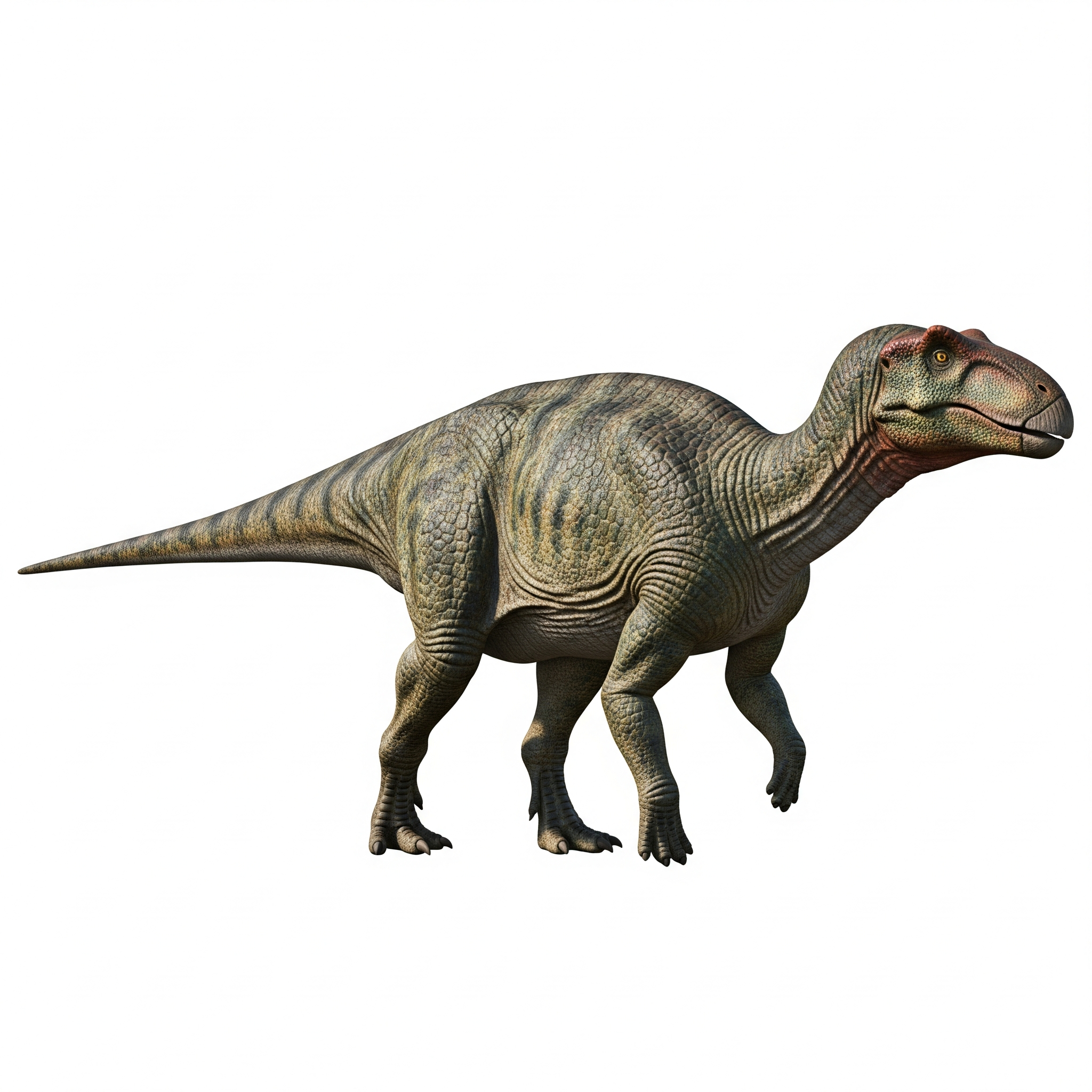
Archival print, museum-grade paper
Buy Poster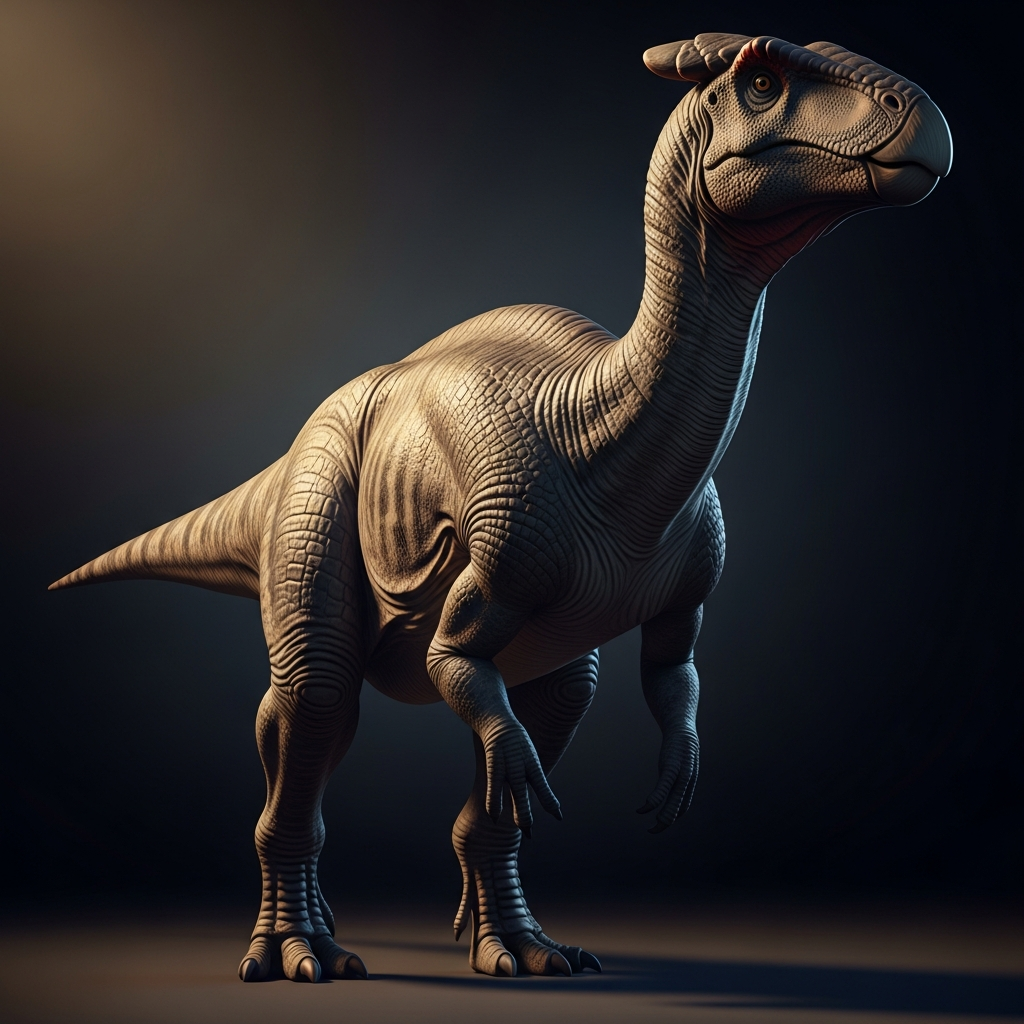
Stoneware mug, dishwasher safe
Buy Mug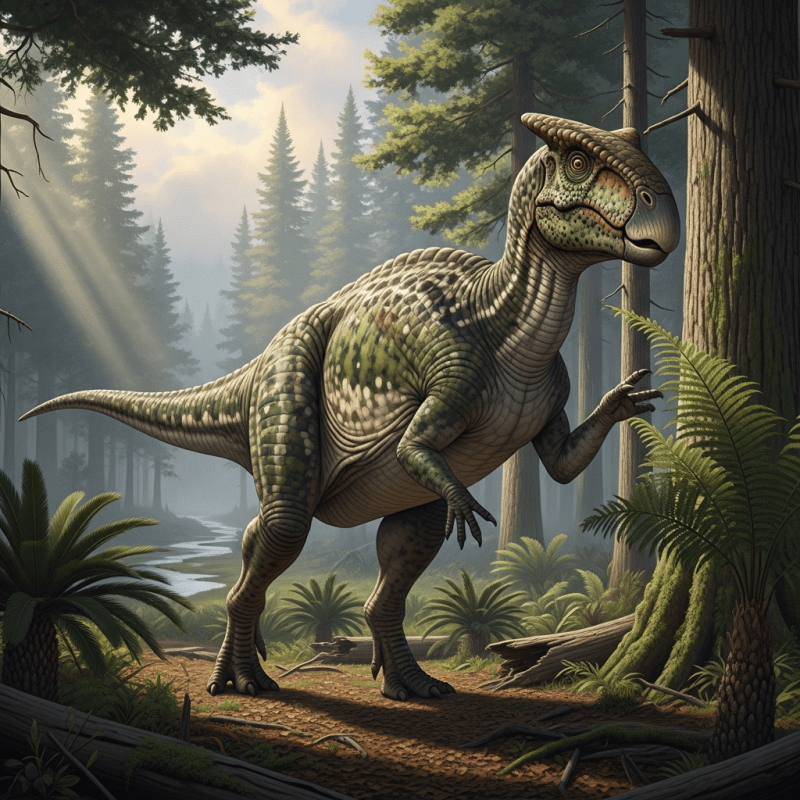
Soft cotton tee, unisex sizes
Buy ShirtHadrosaurus foulkii holds a special place in American paleontology and public imagination. It is honored as the official state dinosaur of New Jersey and remains a popular exhibit in museums, inspiring generations of students and enthusiasts. Its discovery helped ignite interest in dinosaurs across North America and continues to symbolize scientific curiosity and regional pride.
Hadrosaurus lived during the Late Cretaceous period, a time when dinosaurs flourished across the globe before their eventual extinction.
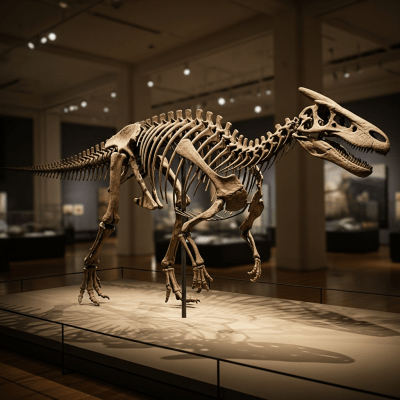
The major fossil discovery of Hadrosaurus occurred in 1858 in Haddonfield, New Jersey. The holotype specimen, ANSP 10005, is preserved at the Academy of Natural Sciences of Philadelphia. This find was groundbreaking for its completeness and has served as a reference point for subsequent dinosaur discoveries in North America.
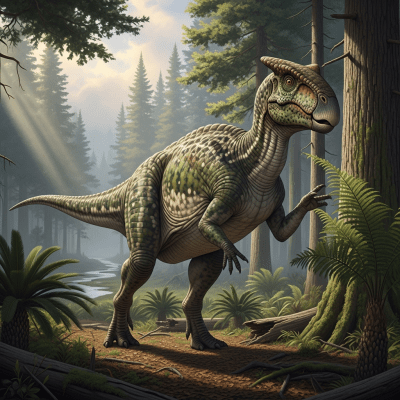
Hadrosaurus fossils are known exclusively from the Woodbury Formation in New Jersey, suggesting a relatively limited geographic distribution. Its habitat likely consisted of lush, temperate environments rich in vegetation, supporting its herbivorous lifestyle.
Hadrosaurus was a dedicated herbivore, equipped with intricate dental batteries designed for grinding tough plant material. Its duck-billed snout allowed it to crop a variety of vegetation, making it well-adapted to the abundant flora of its Cretaceous environment.
Direct data on Hadrosaurus's growth rates and life cycle are unavailable, but inferences from related hadrosaurids suggest a pattern of rapid juvenile growth followed by slower maturation. Like its relatives, Hadrosaurus likely hatched from eggs and underwent significant changes as it aged, though specific details remain unknown.
Hadrosaurus, along with all non-avian dinosaurs, disappeared during the mass extinction event at the end of the Cretaceous period. Theories for this extinction center on catastrophic events such as asteroid impacts and volcanic activity, which dramatically altered Earth's climate and ecosystems.
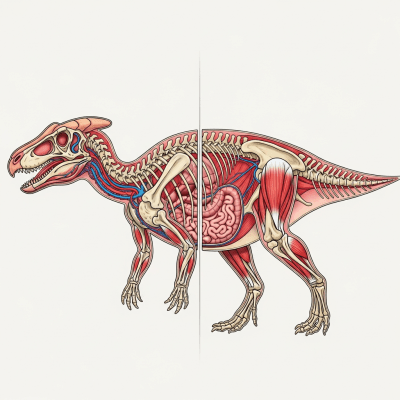
Hadrosaurus is a foundational genus in paleontology, offering crucial insights into dinosaur anatomy, evolution, and biogeography. Its well-preserved skeleton has informed scientific understanding of ornithischian dinosaurs and continues to be a reference point for research and education worldwide.