Gallimimus
Gallimimus is a swift, ostrich-like theropod dinosaur from the Late Cretaceous of Mongolia, renowned for its speed and distinctive toothless beak.
Gallimimus is a swift, ostrich-like theropod dinosaur from the Late Cretaceous of Mongolia, renowned for its speed and distinctive toothless beak.
Gallimimus was first described in 1972 by Halszka Osmólska, Ewa Roniewicz, and Rinchen Barsbold, following discoveries made during the Polish-Mongolian expeditions to the Nemegt Formation in the Gobi Desert. Its holotype specimen, ZPAL MgD-I/1, was collected in 1963 and is curated at the Institute of Paleobiology, Polish Academy of Sciences. All known fossils originate from this region, marking Gallimimus as a uniquely Mongolian dinosaur.
Gallimimus belongs to the family Ornithomimidae within the clade Theropoda, order Saurischia, class Reptilia, phylum Chordata, kingdom Animalia. Ornithomimids are often called "ostrich-mimic" dinosaurs, and Gallimimus shares close evolutionary ties with genera such as Struthiomimus and Ornithomimus.
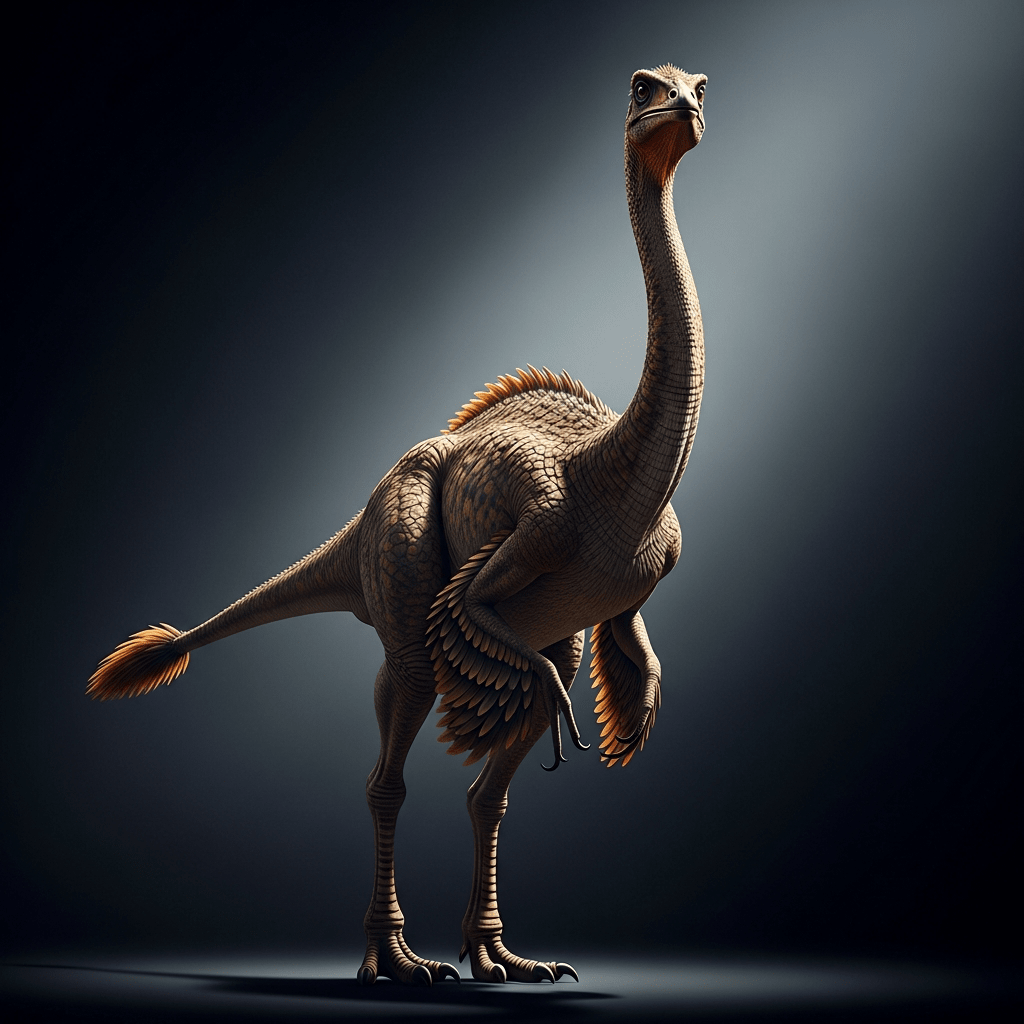
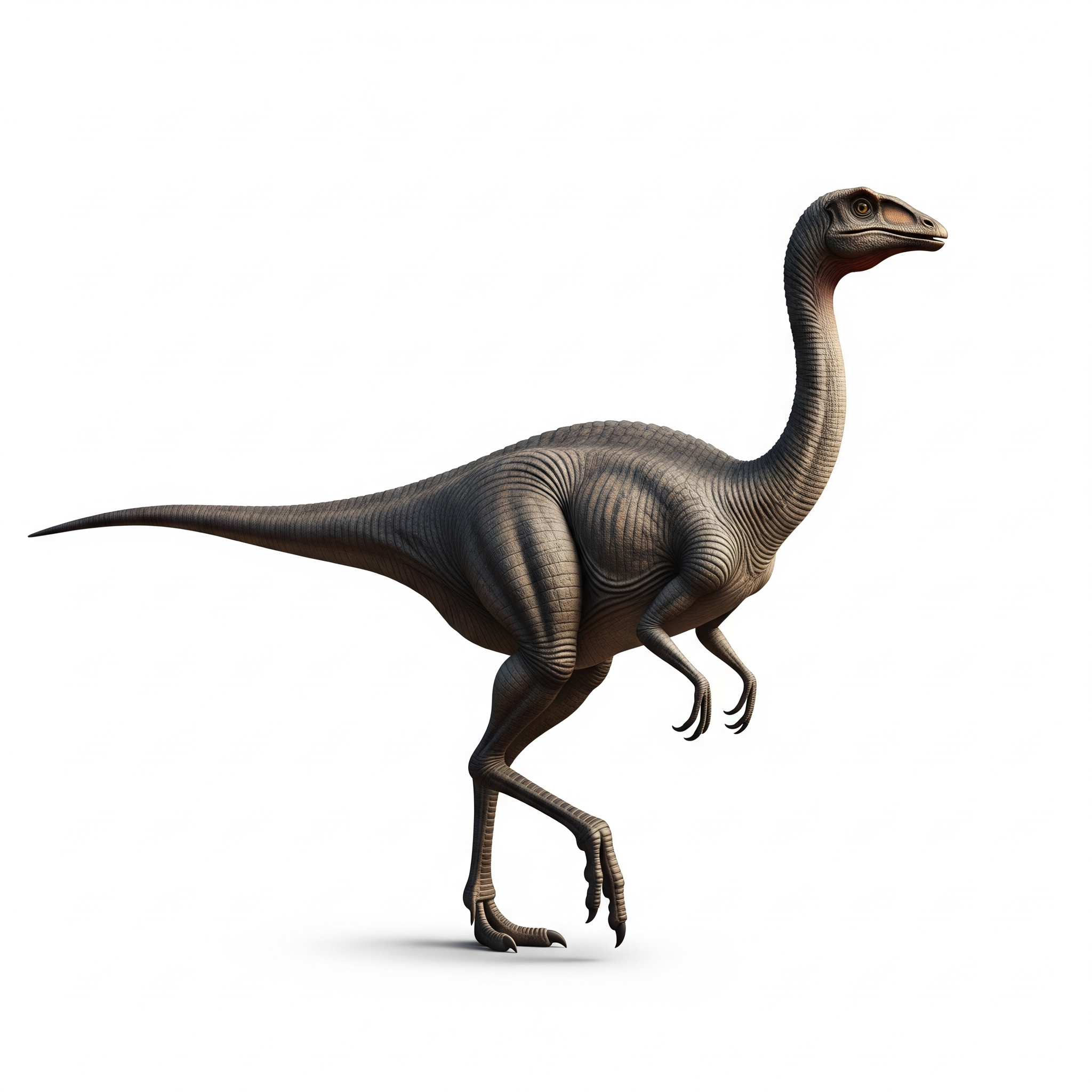
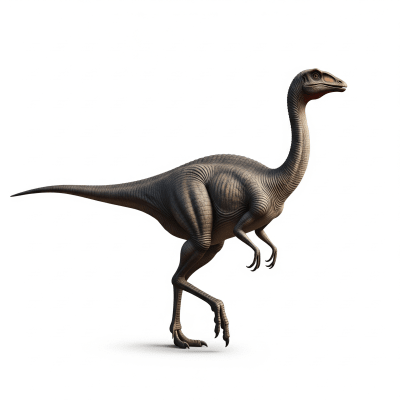
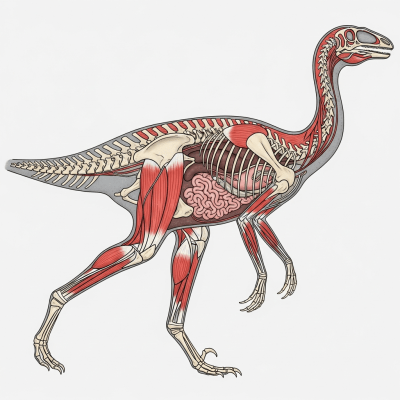
Gallimimus was a large, lightly built biped measuring up to 6 meters (20 feet) long and weighing around 440 kg (970 lbs). Its body was streamlined for running, featuring long, slender hind limbs and three-toed feet ideal for rapid movement. The skull was small with large eyes and a long, toothless beak, while the neck was elongated and flexible. Its forelimbs were short, and the stiff tail provided balance at high speeds. Fossilized skin impressions reveal scales, but no evidence of feathers; coloration remains unknown.
Gallimimus is thought to have been one of the fastest dinosaurs, using its powerful legs for swift, agile movement across open landscapes. Its toothless beak and flexible neck suggest an omnivorous or herbivorous diet, possibly feeding on plants, insects, or small vertebrates. Social behavior is uncertain, but its anatomical adaptations indicate a life spent foraging and evading predators. In modern times, Gallimimus fossils are valuable for scientific study, offering insights into dinosaur biomechanics and evolution.
Bring this kind into your world illustrated posters, mugs, and shirts.
Archival print, museum-grade paper
Buy Poster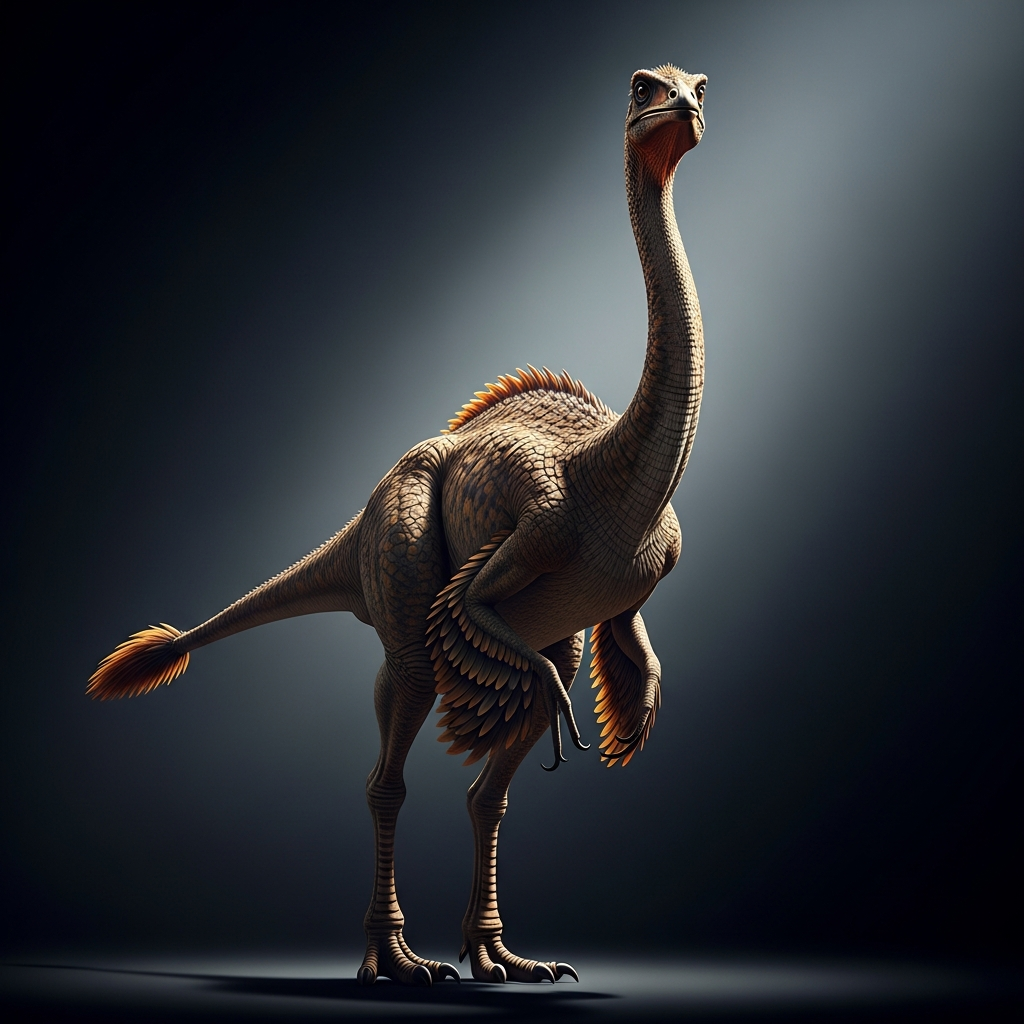
Stoneware mug, dishwasher safe
Buy Mug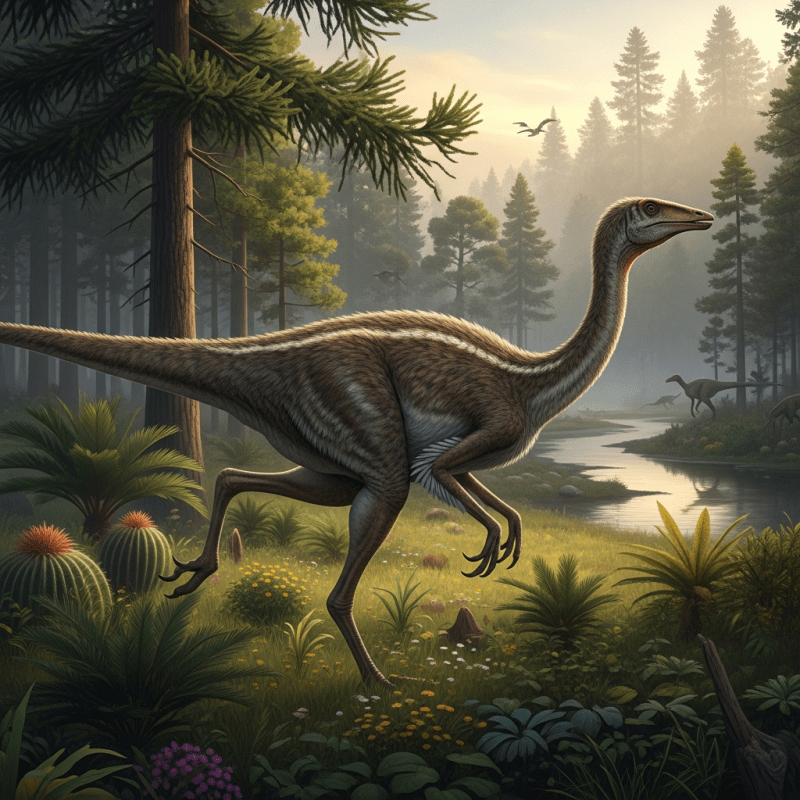
Soft cotton tee, unisex sizes
Buy ShirtGallimimus achieved widespread recognition through its memorable appearance in the film "Jurassic Park," where it was depicted as a flocking, fleet-footed dinosaur. This portrayal, though dramatized, helped cement Gallimimus as an iconic representative of fast-running dinosaurs in popular culture. Its likeness is frequently featured in educational exhibits, books, and media, inspiring curiosity about prehistoric life and paleontology.
Gallimimus lived during the Late Cretaceous period, approximately 70 million years ago, a time when dinosaurs flourished across diverse ecosystems.
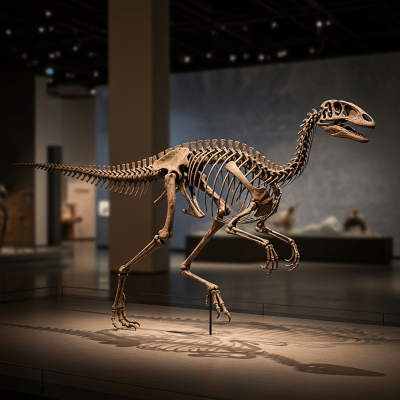
Gallimimus fossils were first unearthed during the Polish-Mongolian expeditions to the Nemegt Formation in the Gobi Desert. The holotype specimen, ZPAL MgD-I/1, was collected in 1963 and described in 1972. All known fossils are from Mongolia, providing a rich source of anatomical and ecological data for paleontologists.
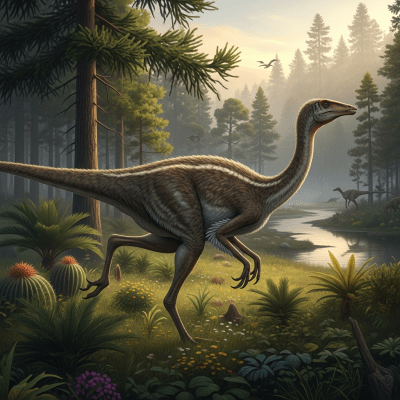
Gallimimus inhabited the semi-arid floodplains of the Nemegt Formation in what is now Mongolia. This environment featured river channels, mudflats, and sparse vegetation, offering open spaces ideal for a fast-running dinosaur. Its distribution appears limited to this region, with no evidence of Gallimimus fossils elsewhere.
Gallimimus is believed to have been omnivorous or herbivorous, using its toothless beak to forage for plants, seeds, insects, and possibly small vertebrates. Its flexible neck and large eyes suggest it was an active, opportunistic feeder, well-adapted to a varied diet in its Late Cretaceous habitat.
Gallimimus exhibited rapid juvenile growth, a trait common among theropods. While details of its full life cycle remain uncertain, fossil evidence indicates that young individuals developed quickly, reaching adult size in a relatively short time. Lifespan and reproductive habits are not directly preserved in the fossil record.
Like all non-avian dinosaurs, Gallimimus became extinct at the end of the Cretaceous period, approximately 66 million years ago. The prevailing theory attributes this mass extinction to a catastrophic asteroid impact, which triggered global environmental upheaval and the collapse of dinosaur ecosystems.
Gallimimus holds significant value for paleontologists, offering insights into theropod evolution, dinosaur biomechanics, and paleoecology. Its well-preserved fossils help researchers understand adaptations for speed, dietary diversity, and the evolutionary links between dinosaurs and birds. Gallimimus also serves as a reference point for studying the diversity of ornithomimid dinosaurs.