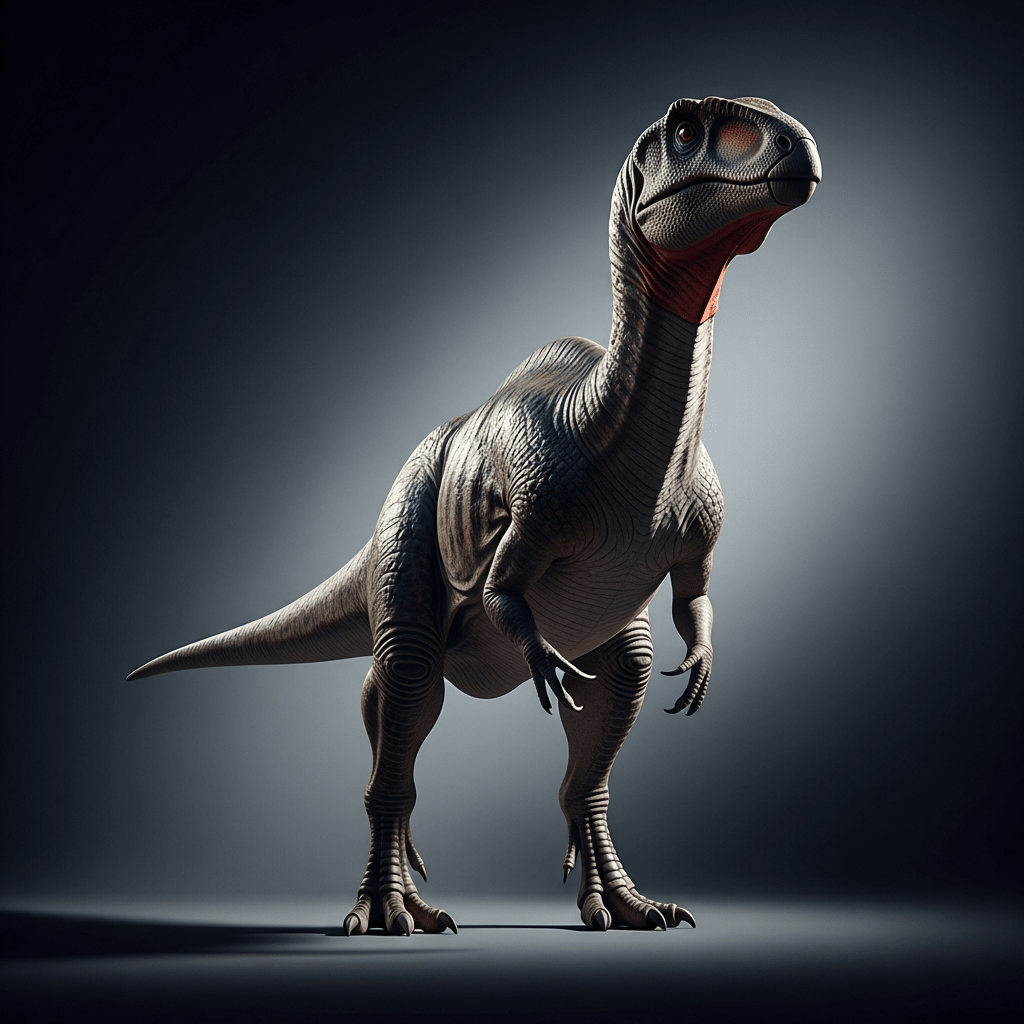
Dryosaurus
Dryosaurus is a small, swift ornithopod dinosaur from the Late Jurassic, recognized for its lightweight build, long legs, and herbivorous lifestyle.
Dryosaurus is a small, swift ornithopod dinosaur from the Late Jurassic, recognized for its lightweight build, long legs, and herbivorous lifestyle.
Dryosaurus was first described in 1878 by paleontologist Othniel Charles Marsh after fossils were unearthed in the Morrison Formation of Colorado, USA. The holotype specimen, YPM 1876, is preserved at the Yale Peabody Museum. Its discovery marked an important step in understanding the evolution of early ornithopods in North America.
Dryosaurus belongs to the clade Dinosauria, within the order Ornithischia and suborder Ornithopoda. It is closely related to other basal iguanodontians, representing an early branch of bipedal, herbivorous dinosaurs that played a key role in the evolutionary history of ornithopods.
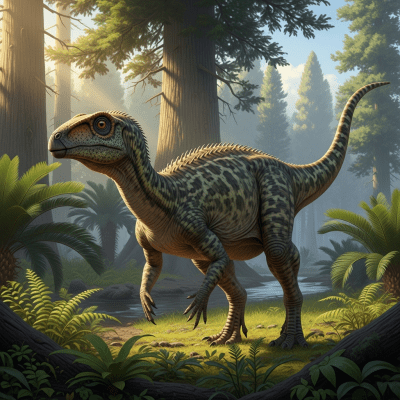
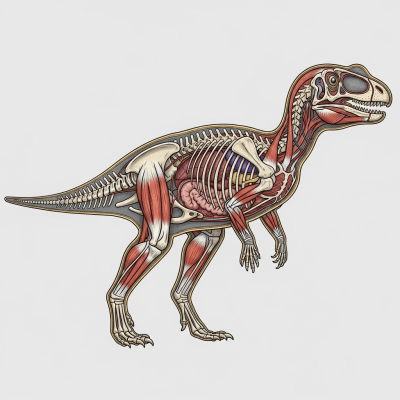
Dryosaurus was a lightly built dinosaur, measuring approximately 2–4 meters in length and weighing between 30–80 kg. It featured a small, beaked head with large eyes, a long, stiff tail for balance, and short forelimbs with five fingers. Its hindlimbs were long and muscular, perfectly adapted for rapid running. Fossilized skin impressions suggest a scaly texture, though its coloration remains unknown.
Dryosaurus was a fast, agile runner, likely relying on speed to escape predators in its environment. As a strict herbivore, it used its beaked mouth and specialized teeth to crop vegetation. While it had no direct interaction with humans, its fossils are invaluable for scientific research and museum displays, helping to educate the public about dinosaur evolution and ecology.
Bring this kind into your world illustrated posters, mugs, and shirts.

Archival print, museum-grade paper
Buy Poster
Stoneware mug, dishwasher safe
Buy Mug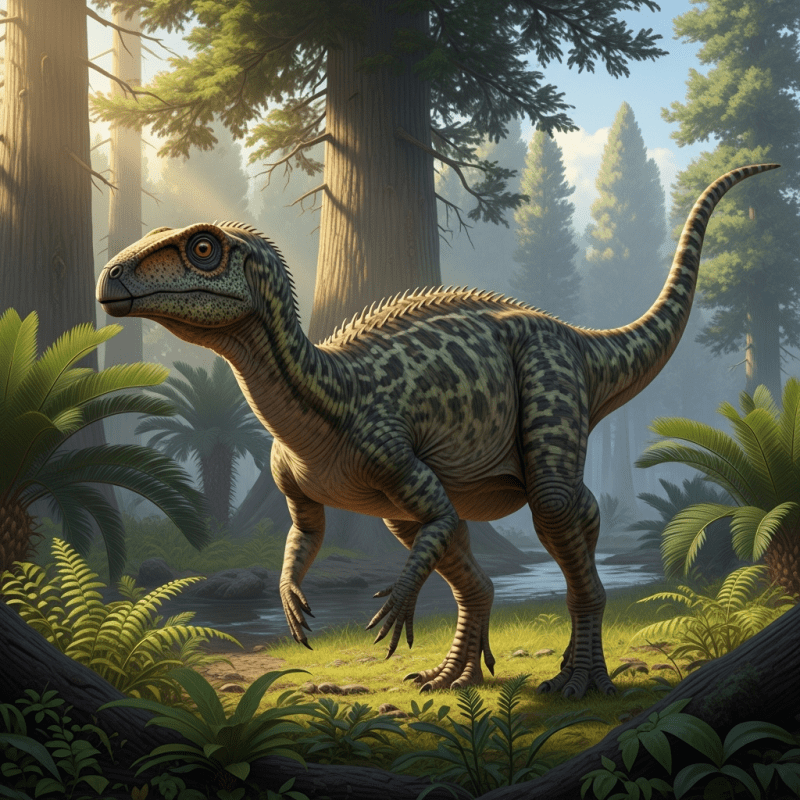
Soft cotton tee, unisex sizes
Buy ShirtAlthough not as famous as some larger dinosaurs, Dryosaurus holds a steady presence in museum exhibits and educational materials. Its fossils serve as a window into the diversity of Jurassic herbivores and contribute to public understanding of prehistoric life. Through these displays, Dryosaurus helps inspire interest in paleontology and natural history.
Dryosaurus lived during the Late Jurassic period, a time when dinosaurs dominated terrestrial ecosystems and the planet’s continents were beginning to drift apart.
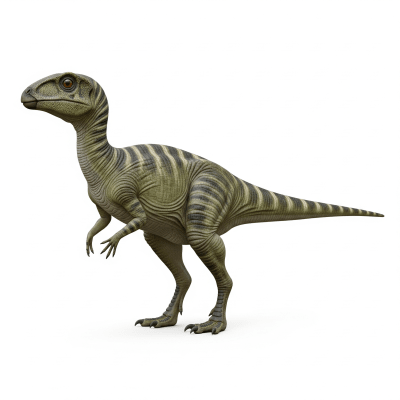
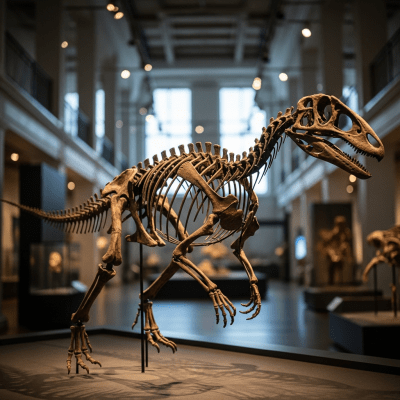
The first Dryosaurus fossils were discovered in the Morrison Formation of Colorado and described in 1878. The holotype specimen, YPM 1876, resides at the Yale Peabody Museum. Additional finds in North America have helped clarify its anatomy and evolutionary relationships, making Dryosaurus a well-documented member of Jurassic fauna.
Dryosaurus inhabited floodplains and forested regions of what is now western North America. The Morrison Formation, rich in dinosaur fossils, suggests a landscape of rivers, lakes, and lush vegetation, providing ample food and cover for this agile herbivore.
Dryosaurus was a dedicated herbivore, using its beaked mouth and specialized teeth to crop and process tough Jurassic plants. Its feeding strategy centered on agility and selective browsing, allowing it to exploit a range of vegetation in its habitat.
Studies of Dryosaurus bone structure reveal rapid juvenile growth, with evidence of seasonal patterns in development. This fast growth likely aided survival, enabling young Dryosaurus to quickly reach a size less vulnerable to predators. Its life cycle reflects the adaptability and resilience of early ornithopods.
Dryosaurus, like all non-avian dinosaurs, disappeared at the end of the Mesozoic Era. While its own extinction likely resulted from gradual environmental changes in the Late Jurassic, the broader extinction of dinosaurs is attributed to catastrophic events at the close of the Cretaceous, including asteroid impact and volcanic activity.
Dryosaurus is a cornerstone genus for understanding ornithopod evolution and dinosaur growth dynamics. Its well-preserved fossils illuminate the transition from small, agile herbivores to the larger, more complex iguanodontians and hadrosaurs that followed. Dryosaurus continues to inform research in paleobiology, functional anatomy, and evolutionary studies.