Deinonychus
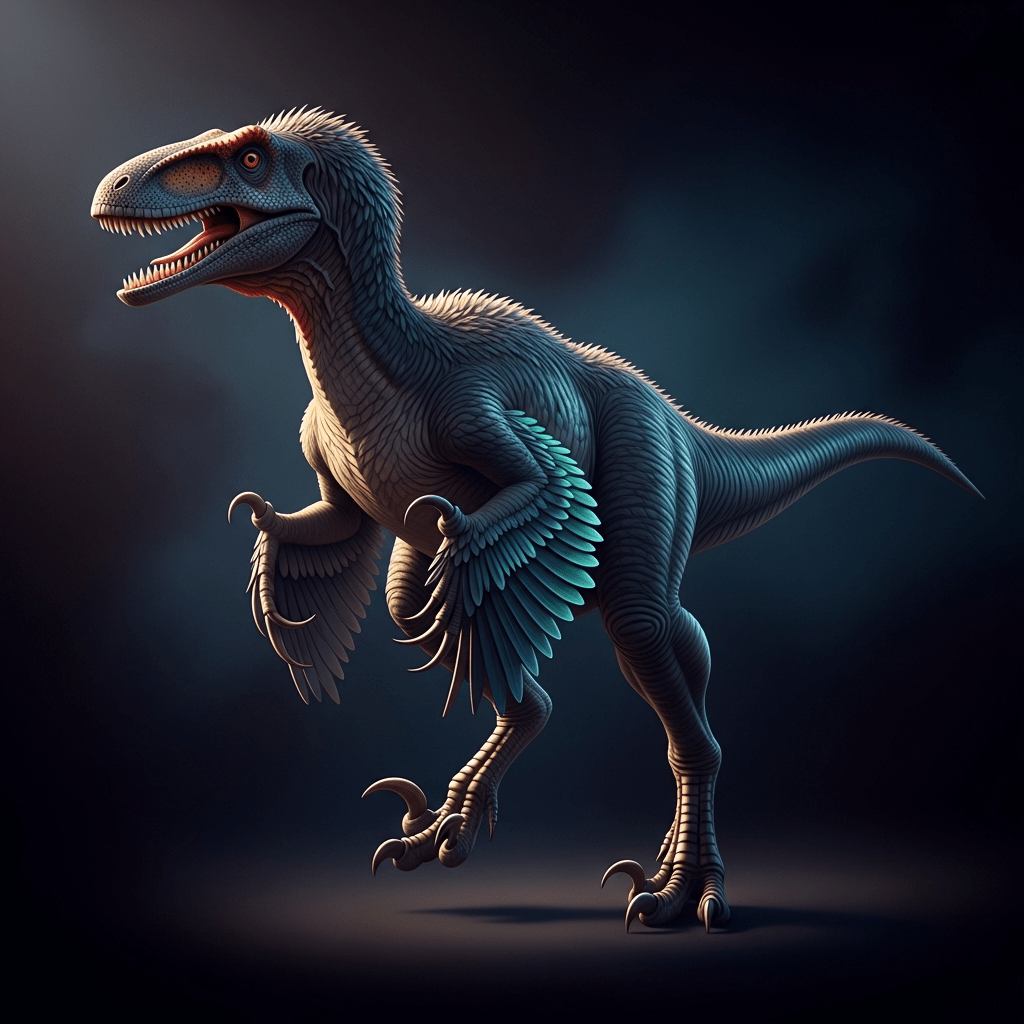
Deinonychus is a genus of agile, medium-sized dromaeosaurid theropod dinosaur from the Early Cretaceous, renowned for its large sickle-shaped claw and its transformative impact on our understanding of dinosaur behavior.
Deinonychus is a genus of agile, medium-sized dromaeosaurid theropod dinosaur from the Early Cretaceous, renowned for its large sickle-shaped claw and its transformative impact on our understanding of dinosaur behavior.
Deinonychus was first described in 1969 by paleontologist John H. Ostrom, following discoveries in the Cloverly Formation of Montana, USA. The holotype specimen, YPM 5205, resides at the Yale Peabody Museum. Ostrom's research on Deinonychus played a pivotal role in reviving the theory that birds evolved from theropod dinosaurs, owing to its bird-like anatomy and inferred active lifestyle.
Deinonychus belongs to the clade Dinosauria, within the order Saurischia and suborder Theropoda. It is a member of the family Dromaeosauridae, a group of predatory dinosaurs often referred to as "raptors." This lineage is characterized by their bipedal stance, grasping forelimbs, and distinctive sickle-shaped claws, placing Deinonychus among the most dynamic carnivores of its era.
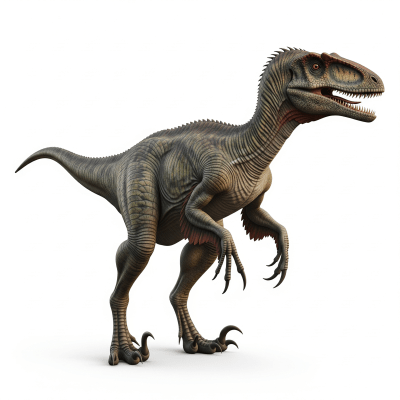
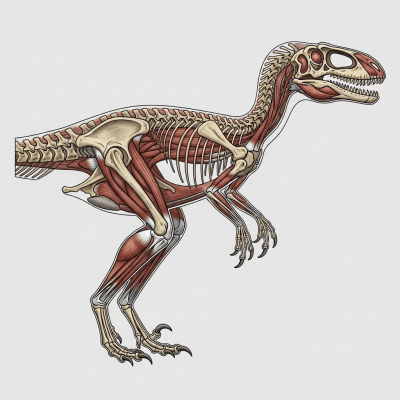
Deinonychus was a medium-sized, bipedal predator measuring about 3.4 meters (11 feet) in length and standing roughly 0.9 meters (3 feet) tall at the hip. Its most striking feature was the enlarged, recurved claw on the second toe of each hind foot, reaching up to 13 cm (5 inches). The dinosaur had a long, stiffened tail for balance, three clawed fingers on each forelimb, and a skull equipped with serrated teeth and forward-facing eyes for binocular vision. While direct evidence of feathers is lacking, related dromaeosaurids suggest Deinonychus likely had a feathered integument, possibly with cryptic or countershaded coloration.
Deinonychus was an agile and highly predatory dinosaur, with anatomical adaptations for swift movement and effective hunting. Its large sickle claw was likely used for slashing or gripping prey. Some paleontologists propose it may have hunted in coordinated groups, though this behavior remains debated. Deinonychus interacted with its environment as a top predator, shaping the dynamics of Early Cretaceous ecosystems.
Bring this kind into your world illustrated posters, mugs, and shirts.
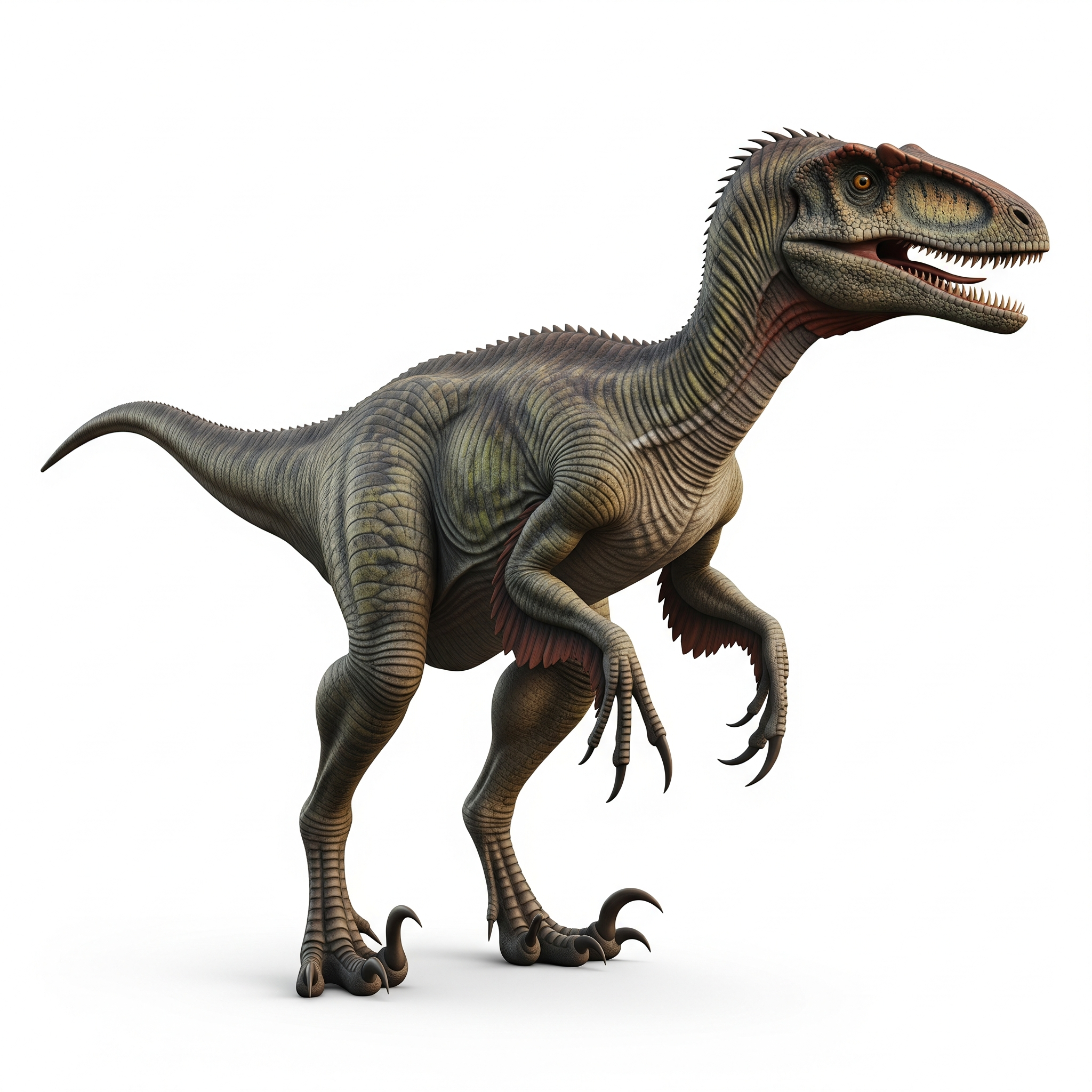
Archival print, museum-grade paper
Buy Poster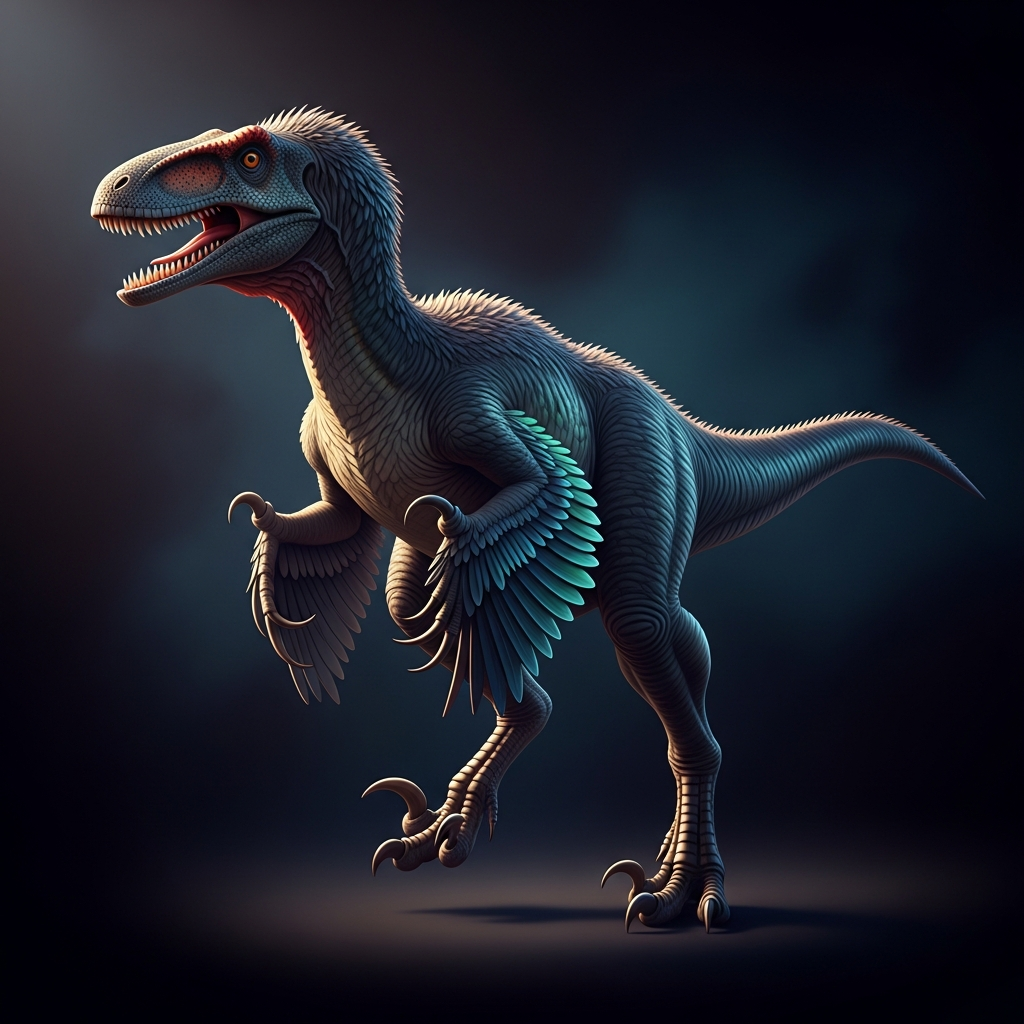
Stoneware mug, dishwasher safe
Buy Mug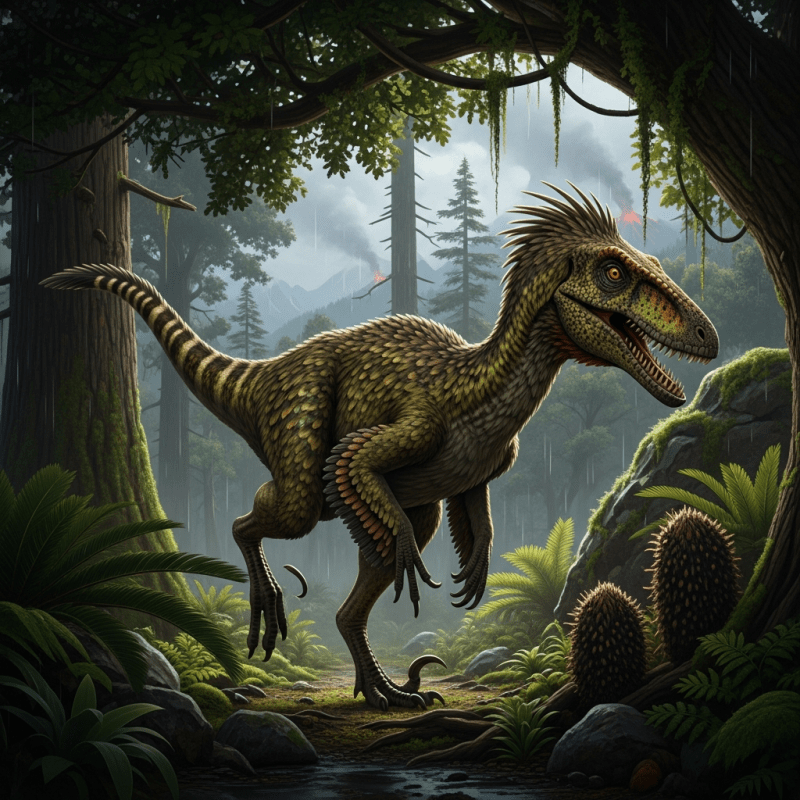
Soft cotton tee, unisex sizes
Buy ShirtDeinonychus has left a lasting mark on both science and popular culture. Its discovery helped reshape scientific views on dinosaur activity and physiology, fueling the debate over bird origins. In media, Deinonychus inspired the iconic "raptor" characters in films like Jurassic Park, influencing how dinosaurs are portrayed in books, documentaries, and museums worldwide.
Deinonychus lived during the Early Cretaceous period, approximately 115–108 million years ago, a time when dinosaurs dominated terrestrial ecosystems.

The first Deinonychus fossils were unearthed in the Cloverly Formation of Montana, Wyoming, and Oklahoma. The holotype specimen, YPM 5205, is curated at the Yale Peabody Museum. These discoveries, described by John H. Ostrom in 1969, provided crucial evidence for the dinosaur's anatomy and behavior, and remain among the most significant finds in North American paleontology.
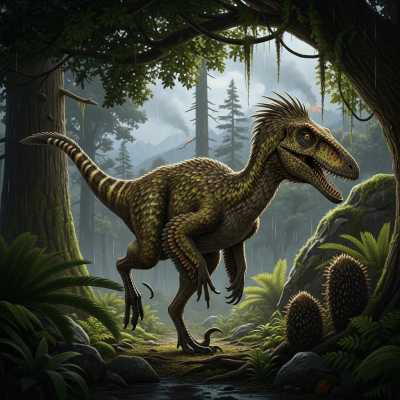
Deinonychus inhabited what is now the western United States, with fossil remains concentrated in the Cloverly Formation. Its environment was likely composed of floodplains, forests, and river systems, providing a rich ecosystem for both prey and predators during the Early Cretaceous.
As a carnivore, Deinonychus preyed on other dinosaurs and small vertebrates. Its sharp teeth, grasping forelimbs, and formidable sickle-shaped claws suggest it was an active hunter, capable of ambush and possibly coordinated attacks, though solitary hunting is also plausible.
Details about the growth and life cycle of Deinonychus remain uncertain due to limited fossil evidence. While its relatives indicate rapid growth rates and complex development, direct data for Deinonychus are unavailable. Lifespan and ontogeny are inferred but not well constrained.
Deinonychus, like all non-avian dinosaurs, became extinct at the end of the Cretaceous period, likely due to catastrophic environmental changes such as asteroid impact, volcanic activity, and resulting climate shifts. These events led to the collapse of ecosystems and the disappearance of many prehistoric species.
Deinonychus holds a special place in paleontology, as its discovery and study were instrumental in shifting scientific perspectives on dinosaur physiology and behavior. It provided compelling evidence for the evolutionary link between dinosaurs and birds, and continues to inform research on theropod anatomy, predation strategies, and the dynamics of prehistoric ecosystems.