Carnotaurus
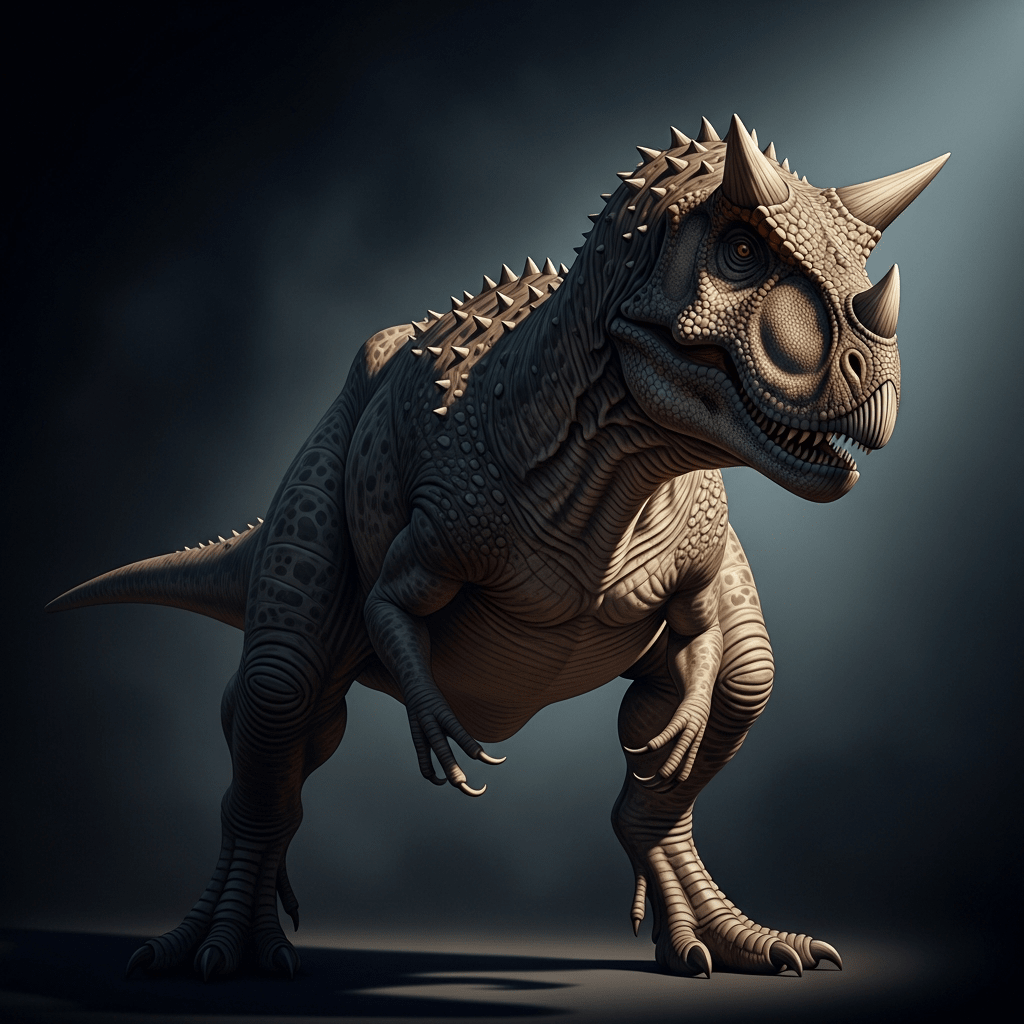
Carnotaurus is a large, predatory dinosaur instantly recognized by its striking horns above the eyes and its lightly built, bipedal frame.
Carnotaurus is a large, predatory dinosaur instantly recognized by its striking horns above the eyes and its lightly built, bipedal frame.
Carnotaurus was discovered in Patagonia, Argentina, with its nearly complete skeleton unearthed in the La Colonia Formation. Described by Argentine paleontologist José Bonaparte in 1985, this remarkable find remains the only known specimen and has provided crucial insights into South American theropods of the Late Cretaceous.
Carnotaurus belongs to the clade Abelisauridae, a family of ceratosaurian theropods that thrived on the ancient southern continents. Within the broader dinosaur taxonomy, it is classified as follows: Kingdom Animalia, Phylum Chordata, Class Reptilia, Order Saurischia, Clade Dinosauria, Family Abelisauridae, Genus Carnotaurus. Its specialized anatomy places it among the most distinctive abelisaurids known.
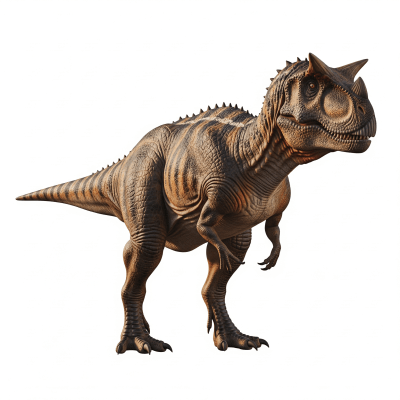
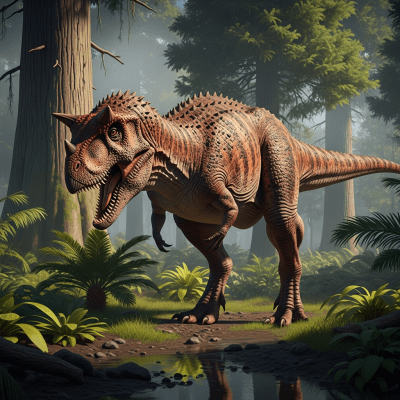
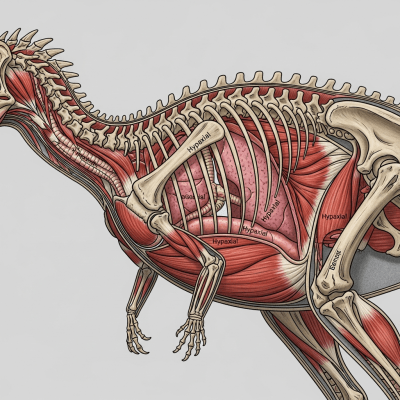
Carnotaurus was a visually arresting dinosaur, measuring roughly 7.5–9 meters long and weighing up to 2 metric tons. Its most notable features include thick, conical horns above the eyes, a deep but short skull, and extremely reduced, vestigial forelimbs lacking functional fingers. The body was slender and built for speed, with long, muscular hind limbs. Remarkably, skin impressions reveal a mosaic of non-overlapping scales and rows of larger bumps (tubercles), giving Carnotaurus a rough, textured appearance unlike most other theropods.
As an apex predator, Carnotaurus likely hunted medium-sized dinosaurs and was capable of rapid bursts of speed thanks to its powerful hind limbs. Its reduced forelimbs suggest a hunting style reliant on its jaws and agility, rather than grasping prey. While it has no direct interaction with humans, its fossils and reconstructions play a vital role in scientific research, museum displays, and public education.
Bring this kind into your world illustrated posters, mugs, and shirts.
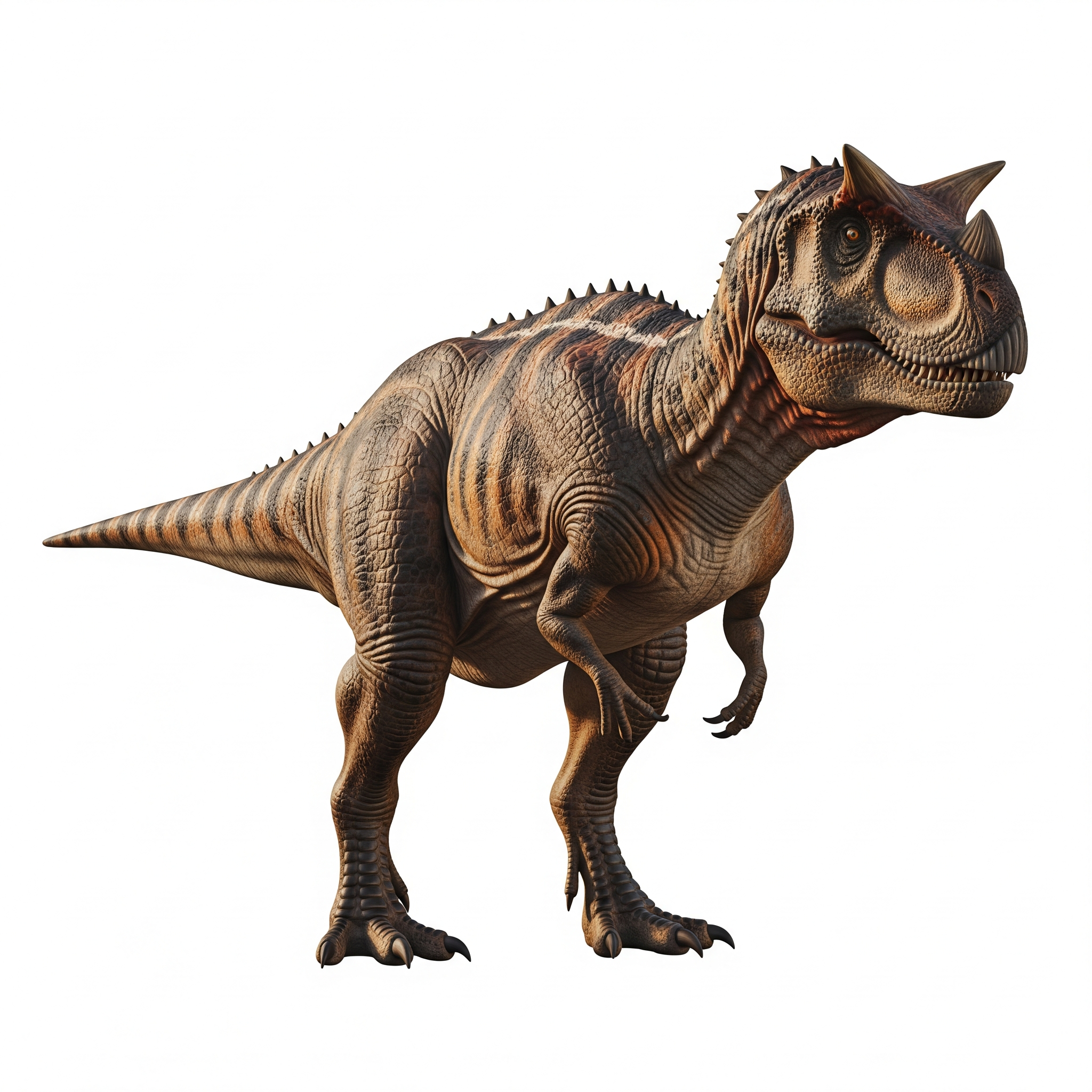
Archival print, museum-grade paper
Buy Poster
Stoneware mug, dishwasher safe
Buy Mug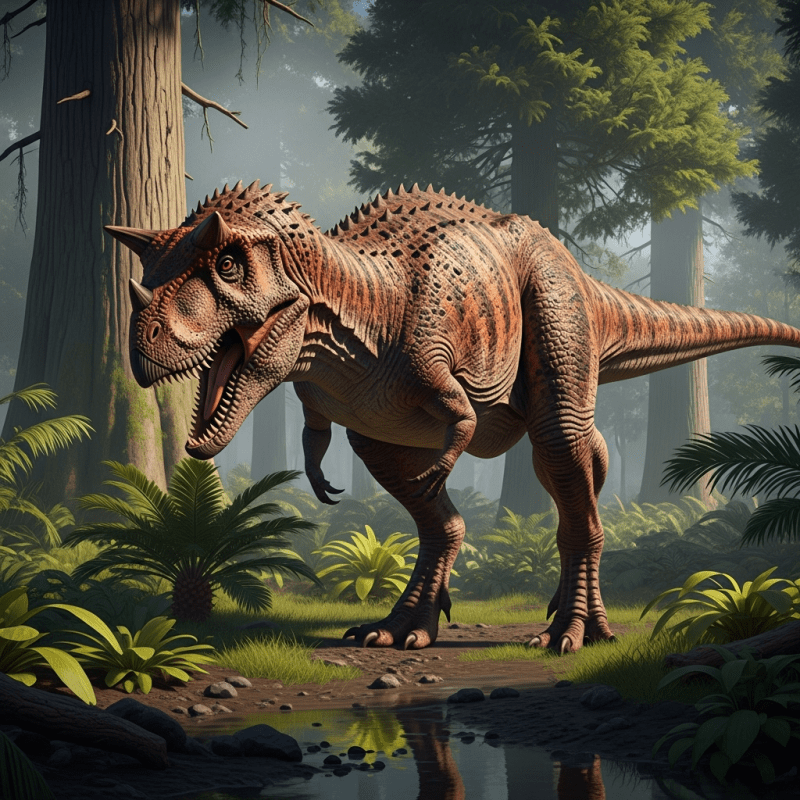
Soft cotton tee, unisex sizes
Buy ShirtCarnotaurus has captured the imagination of paleontologists and the public alike, frequently appearing in museum exhibitions and popular media as a symbol of prehistoric ferocity. Its unusual horns and sleek build make it a favorite among dinosaur enthusiasts, often depicted as a formidable predator in documentaries, films, and educational materials.
Carnotaurus lived during the Late Cretaceous period, approximately 72 to 69 million years ago, a time when dinosaurs dominated terrestrial ecosystems.
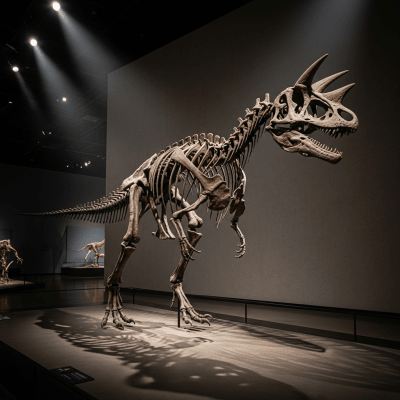
The holotype of Carnotaurus, designated MACN-CH 894, was discovered in the La Colonia Formation of Chubut Province, Patagonia, Argentina. This nearly complete skeleton, described in 1985, remains the only specimen and is notable for its exceptional preservation, including rare skin impressions. The find has been instrumental in understanding abelisaurid anatomy and South American dinosaur diversity.
Carnotaurus inhabited what is now Patagonia, Argentina, during the Late Cretaceous. Its environment likely consisted of semi-arid landscapes with open plains and sparse vegetation, supporting a range of dinosaur fauna. Fossil evidence suggests Carnotaurus had a restricted geographic distribution, known only from southern South America.
Carnotaurus was a carnivorous predator, equipped with a powerful jaw and sharp teeth suited for hunting. Its slender, agile build and long hind limbs suggest it could chase down prey, relying on speed and bite force rather than grasping with its vestigial forelimbs. It likely preyed on medium-sized dinosaurs and may have also scavenged when opportunities arose.
Bone histology studies indicate Carnotaurus experienced relatively rapid growth rates, a trait common among large theropods. While detailed life cycle data is limited, it is inferred that juveniles grew quickly to reach adult size, with development stages paralleling those of other abelisaurids. Lifespan estimates remain speculative due to the scarcity of fossil material.
Carnotaurus, like all non-avian dinosaurs, vanished during the mass extinction event at the end of the Cretaceous period, approximately 66 million years ago. The leading theories attribute this extinction to catastrophic environmental changes triggered by a massive asteroid impact and subsequent volcanic activity, which dramatically altered global ecosystems and food chains.
Carnotaurus is a cornerstone of abelisaurid research, offering rare insights into theropod anatomy, skin texture, and evolutionary specialization. Its well-preserved skeleton and unique features have advanced paleontological understanding of Gondwanan dinosaurs, predator adaptations, and the diversity of Cretaceous ecosystems. The genus continues to inform studies on dinosaur growth, biomechanics, and phylogenetic relationships.