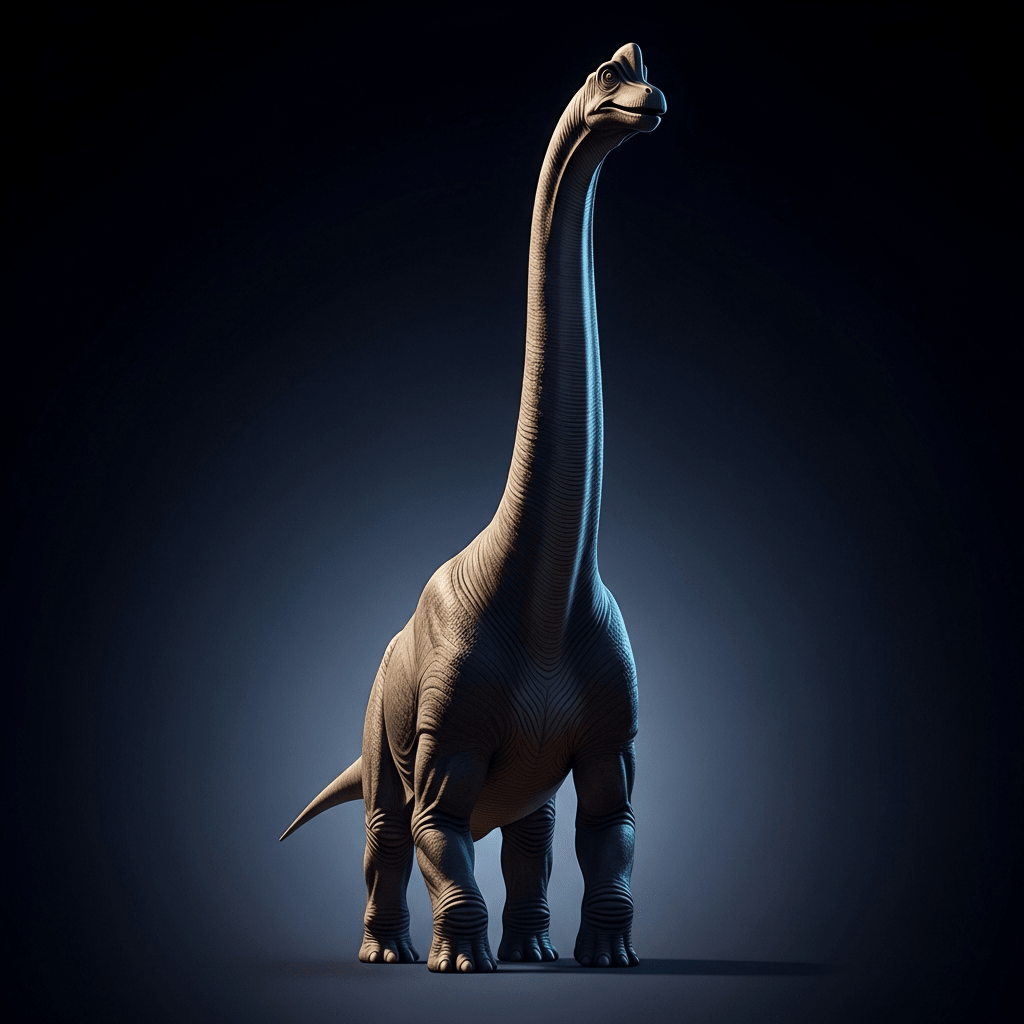
Brachiosaurus
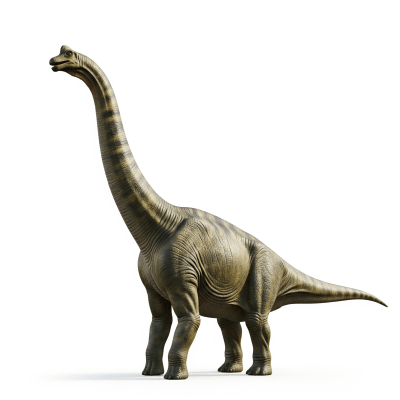
Brachiosaurus is a colossal, upright sauropod dinosaur renowned for its long neck, towering shoulders, and distinctive forelimbs that are longer than its hindlimbs, making it one of the most iconic giants of the Jurassic period.
Brachiosaurus is a colossal, upright sauropod dinosaur renowned for its long neck, towering shoulders, and distinctive forelimbs that are longer than its hindlimbs, making it one of the most iconic giants of the Jurassic period.
Brachiosaurus was first described in 1903 by paleontologist Elmer S. Riggs, following the discovery of fossils in Colorado's Grand River Valley. The holotype specimen, FMNH P 25107, resides at the Field Museum of Natural History in Chicago. Its name, meaning "arm lizard" in Greek, reflects its unusually long forelimbs—a trait that set it apart from other sauropods. The only widely recognized species, Brachiosaurus altithorax, lived during the Late Jurassic in what is now North America.
Brachiosaurus belongs to the clade Dinosauria, within the order Saurischia and suborder Sauropodomorpha. It is a member of the family Brachiosauridae, distinguished by its high-shouldered stance and elongated forelimbs. This genus is part of the broader group of sauropods, which includes other long-necked herbivores, but Brachiosaurus is unique for its upright posture and browsing adaptations.
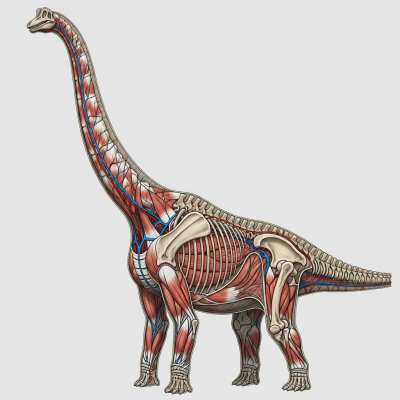
Brachiosaurus was a massive quadruped, stretching up to 25 meters in length and weighing as much as 58 metric tons. Its forelimbs were noticeably longer than its hindlimbs, resulting in an elevated shoulder line and a sloping back. The long, upright neck allowed it to reach vegetation at heights of 9 meters or more. Its small skull featured nostrils positioned atop the head, and its spoon-shaped teeth were ideal for stripping foliage. No evidence of armor or defensive structures has been found, and skin impressions are rare, leaving its coloration unknown.
Brachiosaurus was a slow-moving, high-browsing herbivore, feeding primarily on conifers and other tall plants. Its towering neck enabled it to access food sources unavailable to most other dinosaurs. While it had no direct interaction with humans, its fossils are invaluable for scientific research, museum displays, and educational outreach, inspiring awe and curiosity about prehistoric life.
Bring this kind into your world illustrated posters, mugs, and shirts.
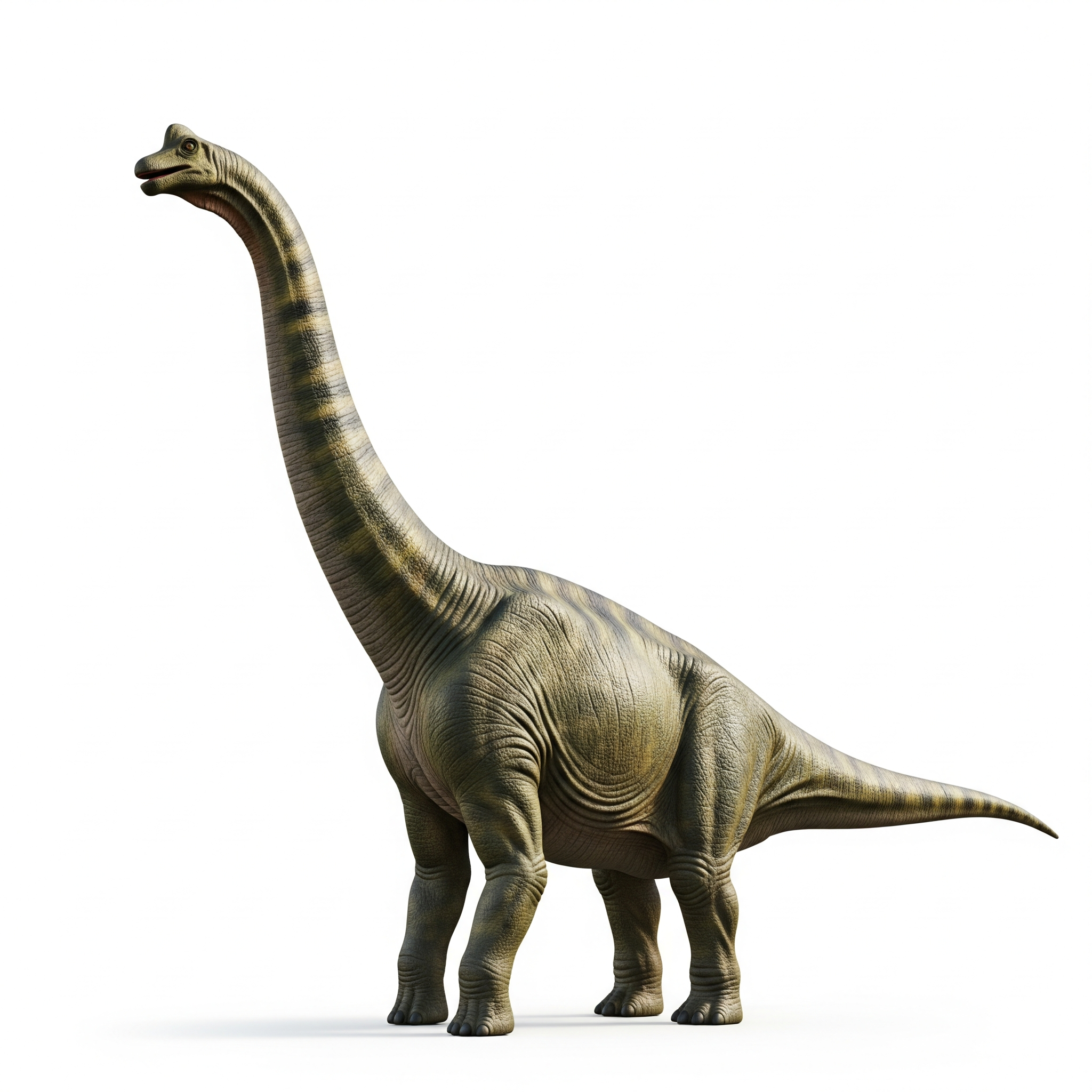
Archival print, museum-grade paper
Buy Poster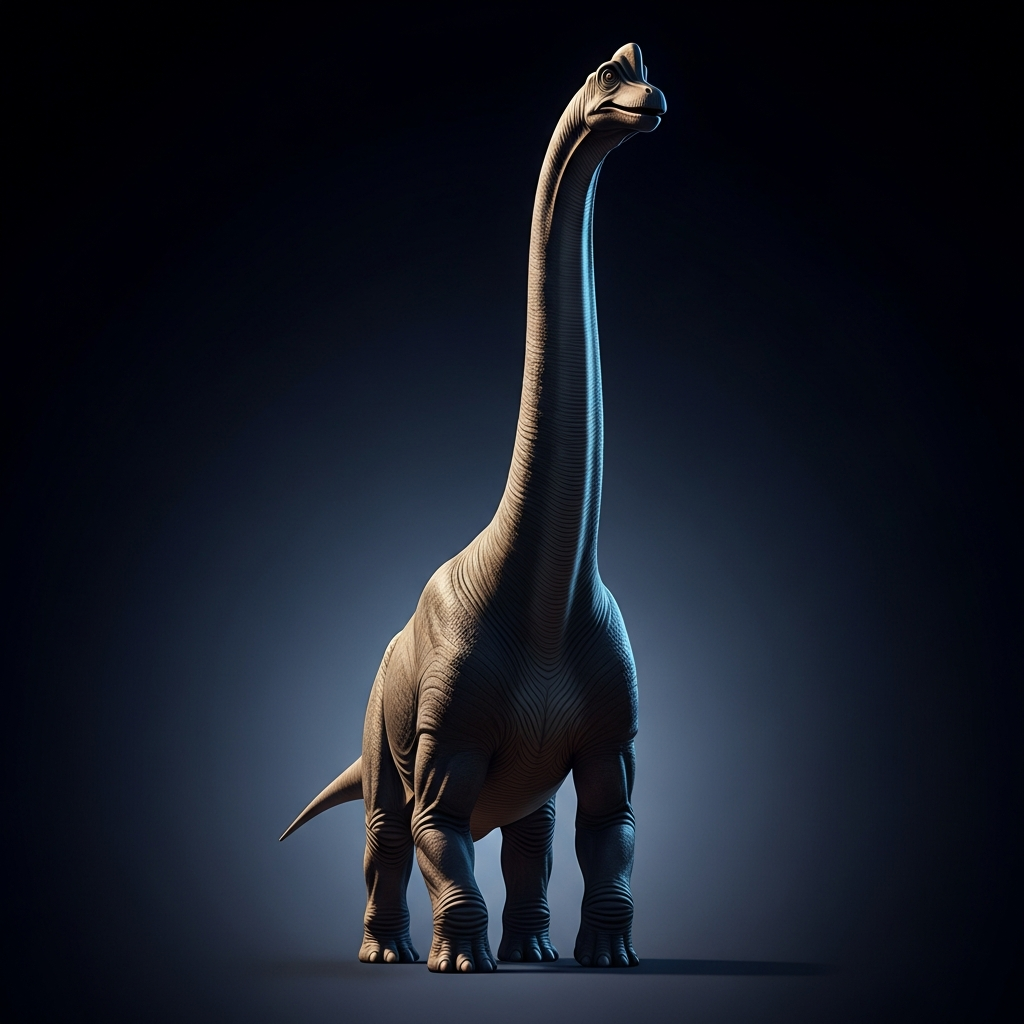
Stoneware mug, dishwasher safe
Buy Mug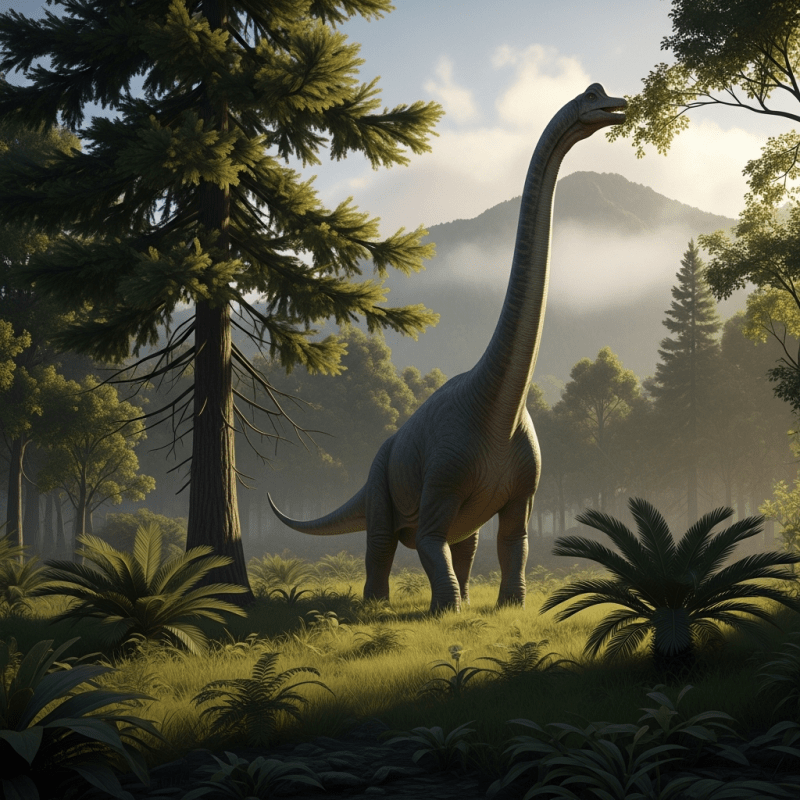
Soft cotton tee, unisex sizes
Buy ShirtBrachiosaurus holds a prominent place in popular culture, frequently appearing in documentaries, museum exhibits, educational materials, and entertainment. Its distinctive silhouette and gentle giant reputation have made it a favorite among dinosaur enthusiasts and a symbol of the grandeur of prehistoric life, contributing significantly to public interest in paleontology.
Brachiosaurus lived during the Late Jurassic period, approximately 154–153 million years ago, a time when dinosaurs dominated terrestrial ecosystems.
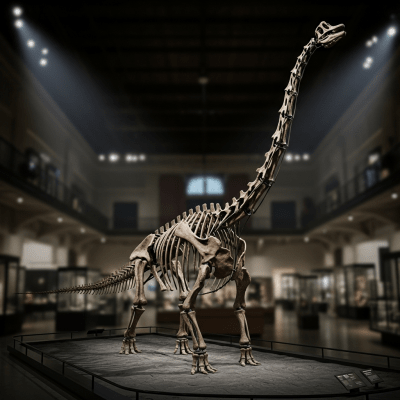
The first Brachiosaurus fossils were discovered in the Grand River Valley of Colorado and described in 1903. The holotype specimen, FMNH P 25107, is housed at the Field Museum of Natural History in Chicago. Most remains are found in the Morrison Formation, with additional brachiosaurid relatives known from Africa and Europe, though these are not classified within Brachiosaurus itself.
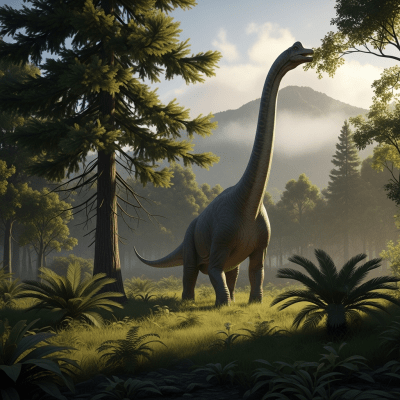
Brachiosaurus inhabited floodplains and semi-arid environments of what is now North America, particularly the region covered by the Morrison Formation. Its fossils suggest it lived in areas rich in tall vegetation, supporting its high-browsing lifestyle. While similar brachiosaurids are known from other continents, Brachiosaurus itself is primarily North American.
Brachiosaurus was a dedicated herbivore, using its long neck to feed on conifers and other tall plants. Its spoon-shaped teeth were adapted for stripping foliage rather than chewing, and its elevated browsing height allowed it to exploit food sources inaccessible to most other herbivorous dinosaurs.
Details about Brachiosaurus's growth rates and life cycle remain uncertain due to limited fossil evidence. Like other sauropods, it likely hatched from eggs and underwent rapid growth in its early years, reaching enormous size as an adult. Precise lifespan and developmental stages are not well documented.
Brachiosaurus, like all non-avian dinosaurs, became extinct at the end of the Cretaceous period, likely due to catastrophic events such as asteroid impact, volcanic activity, and resulting environmental changes. These events led to mass extinctions, reshaping Earth's ecosystems and paving the way for the rise of mammals.
Brachiosaurus is a cornerstone of sauropod research, providing key insights into dinosaur anatomy, biomechanics, and evolutionary adaptations. Its unique body plan has helped paleontologists understand sauropod diversity, feeding strategies, and the ecological roles of giant herbivores in prehistoric environments. The genus remains a focal point in museum displays and scientific outreach.