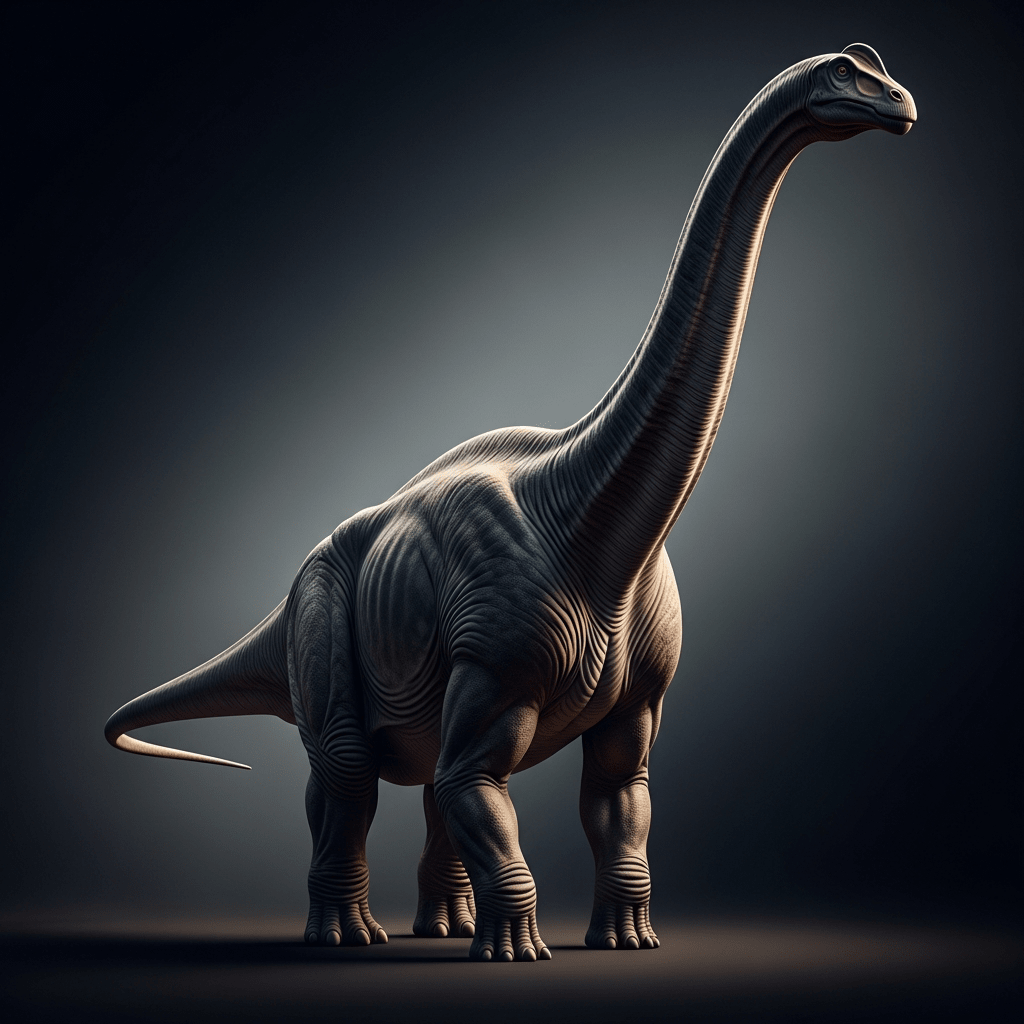
Apatosaurus
Apatosaurus is a colossal, long-necked sauropod dinosaur from the Late Jurassic period, renowned for its massive body, whip-like tail, and its pivotal role in paleontological research.
Apatosaurus is a colossal, long-necked sauropod dinosaur from the Late Jurassic period, renowned for its massive body, whip-like tail, and its pivotal role in paleontological research.
First described in 1877 by Othniel Charles Marsh, Apatosaurus was discovered in the Morrison Formation of Colorado, USA. Its holotype specimen, YPM 1860, resides at the Yale Peabody Museum. The genus name means "deceptive lizard," reflecting early confusion with other sauropods. Fossils have since been unearthed across Colorado, Wyoming, Utah, and Oklahoma, painting a vivid picture of its Late Jurassic origins.
Apatosaurus belongs to the family Diplodocidae within the suborder Sauropodomorpha, order Saurischia, class Reptilia, phylum Chordata, and kingdom Animalia. As a diplodocid, it shares close evolutionary ties with genera like Diplodocus and Brontosaurus, all characterized by their elongated necks and tails. Its placement in Dinosauria highlights its role among the largest terrestrial vertebrates of the Mesozoic Era.
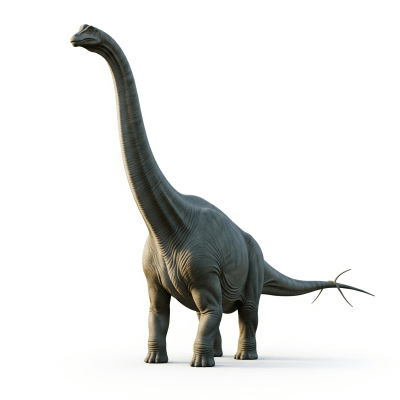
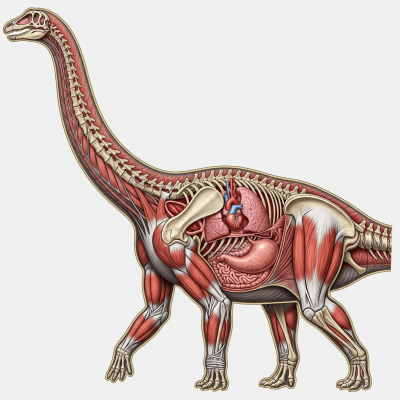
With a body stretching up to 22.8 meters (75 feet) and weighing as much as 22 metric tons, Apatosaurus was a true giant. Its long, muscular neck supported a relatively small head, while its tail extended in a whip-like fashion. The limbs were thick and columnar, designed to bear immense weight. Teeth were peg-like, ideal for stripping foliage, and skin impressions suggest a rough, scaly texture, though coloration remains unknown.
Apatosaurus was a quadrupedal herbivore, likely living in herds for protection and social interaction. Rapid juvenile growth suggests a strategy to quickly outpace predators, while its robust skeleton provided structural support for its massive frame. Though extinct, its fossils are invaluable for scientific study, museum displays, and educational outreach, deepening our understanding of sauropod biology and evolution.
Bring this kind into your world illustrated posters, mugs, and shirts.
Archival print, museum-grade paper
Buy Poster
Stoneware mug, dishwasher safe
Buy Mug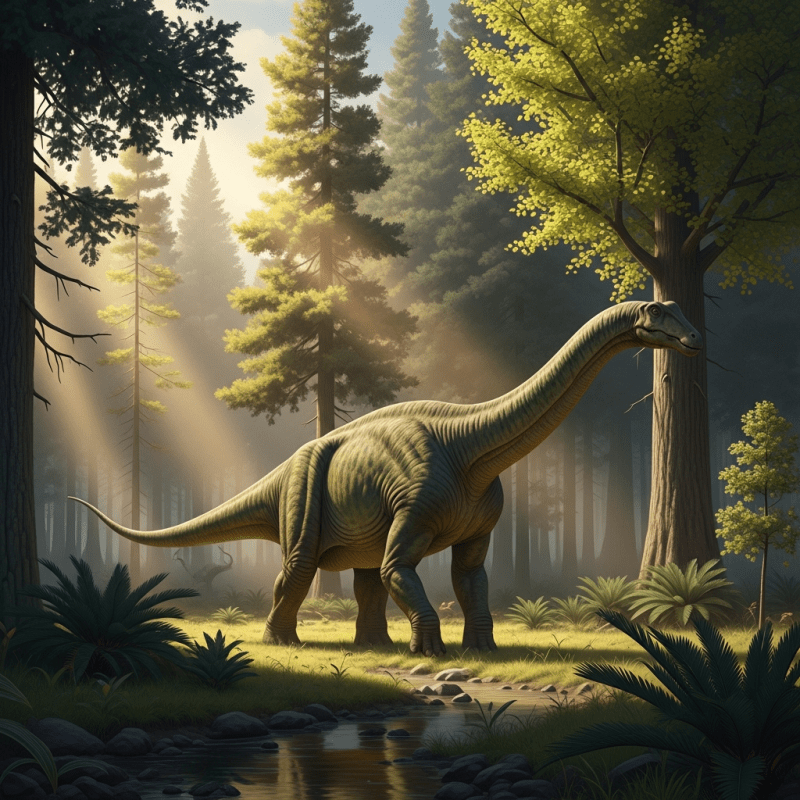
Soft cotton tee, unisex sizes
Buy ShirtApatosaurus stands as one of the most recognizable dinosaurs in popular culture, frequently featured in museums, documentaries, and educational materials. Its historical confusion with Brontosaurus has sparked public fascination and debate, making it a central figure in paleontological exhibitions and media. The genus continues to inspire curiosity and wonder, bridging science and imagination for audiences worldwide.
Apatosaurus lived during the Late Jurassic period, approximately 152 to 151 million years ago, a time when giant sauropods dominated the landscapes of North America.
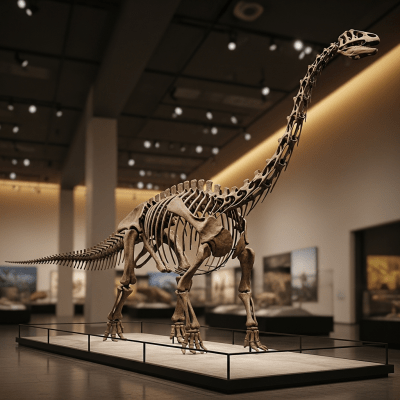
The first Apatosaurus fossils were discovered in the Morrison Formation of Colorado in 1877. Subsequent finds in Wyoming, Utah, and Oklahoma have provided a wealth of specimens, including the holotype YPM 1860 at Yale Peabody Museum. These discoveries have been instrumental in reconstructing sauropod anatomy and understanding their evolutionary relationships.
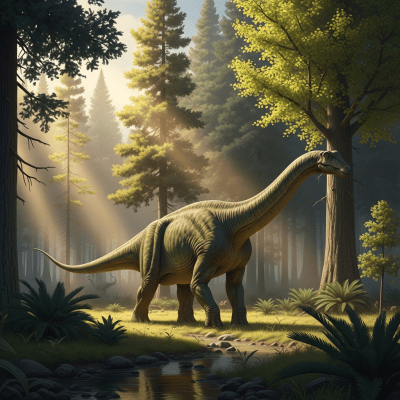
Apatosaurus inhabited floodplains and semi-arid environments in what is now the western United States. Fossil evidence from Colorado, Wyoming, Utah, and Oklahoma suggests it thrived in regions rich with vegetation, supporting its massive size and dietary needs.
As a dedicated herbivore, Apatosaurus fed on conifers, cycads, and other prehistoric plants. Its peg-like teeth were adapted for stripping foliage rather than chewing, and its long neck enabled it to reach high and low vegetation, maximizing its feeding range in Jurassic forests.
Apatosaurus experienced rapid growth during its juvenile years, reaching maturity in about 10–15 years. This accelerated development likely helped young individuals avoid predation. Adults lived in herds, and their immense size offered protection and stability within their environment.
Apatosaurus, like all non-avian dinosaurs, became extinct at the end of the Cretaceous period, around 66 million years ago. Theories for this mass extinction include catastrophic asteroid impact, volcanic activity, and dramatic climate shifts, which led to the collapse of ecosystems that supported large dinosaurs.
Apatosaurus fossils have greatly advanced the study of sauropod anatomy, biomechanics, and evolutionary history. Its well-preserved skeletons are central to paleontological research, providing insights into gigantism, growth rates, and the diversity of Jurassic ecosystems. The genus remains a touchstone in vertebrate paleontology and evolutionary biology.