Ankylosaurus
Ankylosaurus is a large, heavily armored dinosaur best known for its bony plates and iconic tail club, which provided formidable defense against predators during the Late Cretaceous period.
Ankylosaurus is a large, heavily armored dinosaur best known for its bony plates and iconic tail club, which provided formidable defense against predators during the Late Cretaceous period.
Ankylosaurus was first described in 1908 by Barnum Brown, following fossil discoveries in the Hell Creek Formation of Montana, USA. Its holotype specimen, AMNH 5895, is housed at the American Museum of Natural History. Fossils have also been unearthed in Wyoming and Alberta, Canada, placing Ankylosaurus in western North America during the closing chapters of the Cretaceous.
Belonging to the clade Dinosauria, Ankylosaurus is part of the order Ornithischia, suborder Ankylosauria, and family Ankylosauridae. It stands as the type genus of its family, representing one of the last and largest armored dinosaurs. Ornithischians are characterized by their herbivorous diets and unique hip structures, while ankylosaurids are renowned for their extensive body armor and tail weaponry.
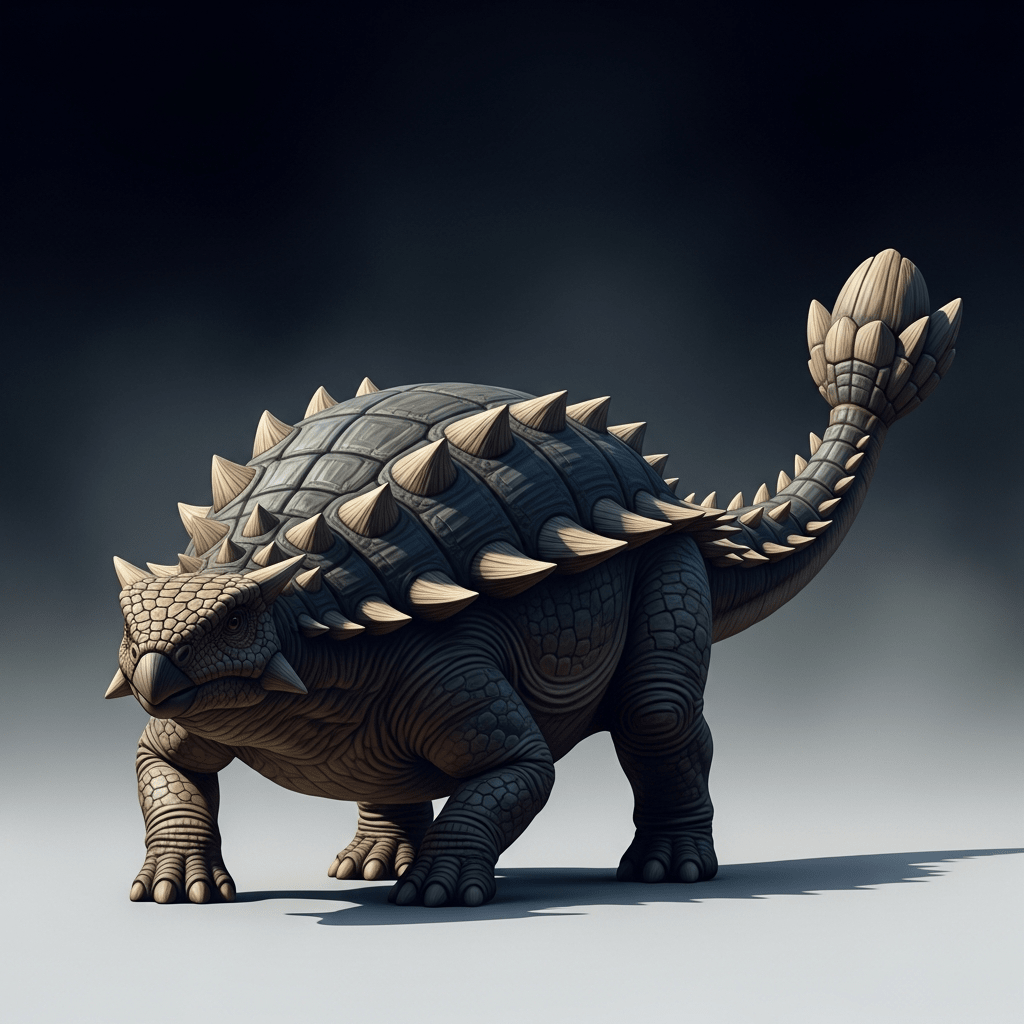
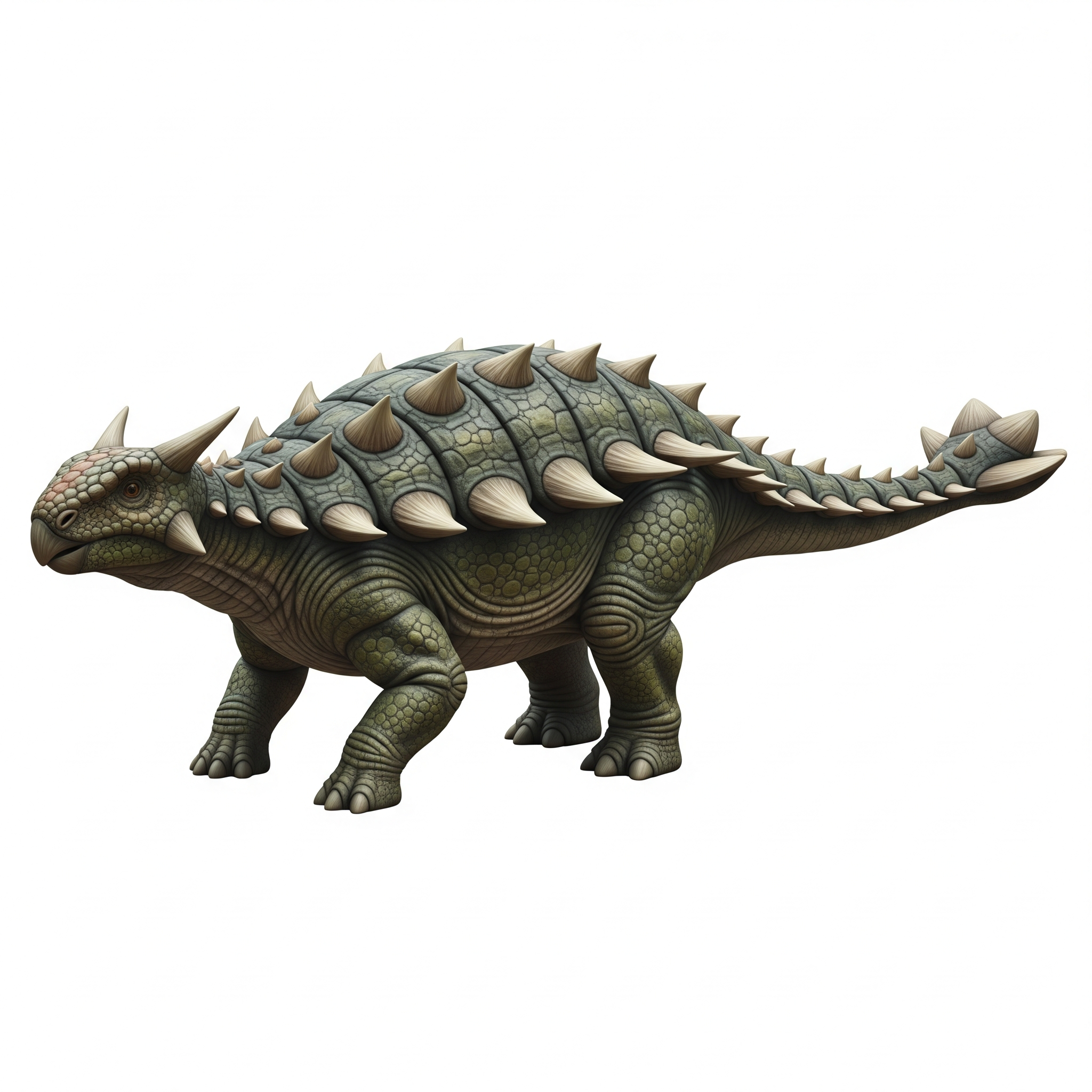
Ankylosaurus was a massive quadruped, measuring up to 6–8 meters long and weighing 4–8 metric tons. Its body was enveloped in thick, interlocking osteoderms—bony plates embedded in the skin—creating a near-impenetrable shield. The most striking feature was its tail club, a fusion of vertebrae and large osteoderms, capable of delivering powerful blows. Its skull was low and broad, equipped with a beak-like snout and small leaf-shaped teeth for cropping vegetation. While its true coloration remains unknown, reconstructions suggest muted earth tones that may have helped it blend into its environment.
Ankylosaurus was a solitary herbivore, moving on all fours and relying on its armor and tail club for protection. Its defensive adaptations made it a challenging target for predators, and there is no evidence of complex social behaviors or group living. In modern times, Ankylosaurus serves as a subject of scientific study, educational outreach, and museum exhibitions, captivating the public with its unique anatomy and evolutionary story.
Bring this kind into your world illustrated posters, mugs, and shirts.
Archival print, museum-grade paper
Buy Poster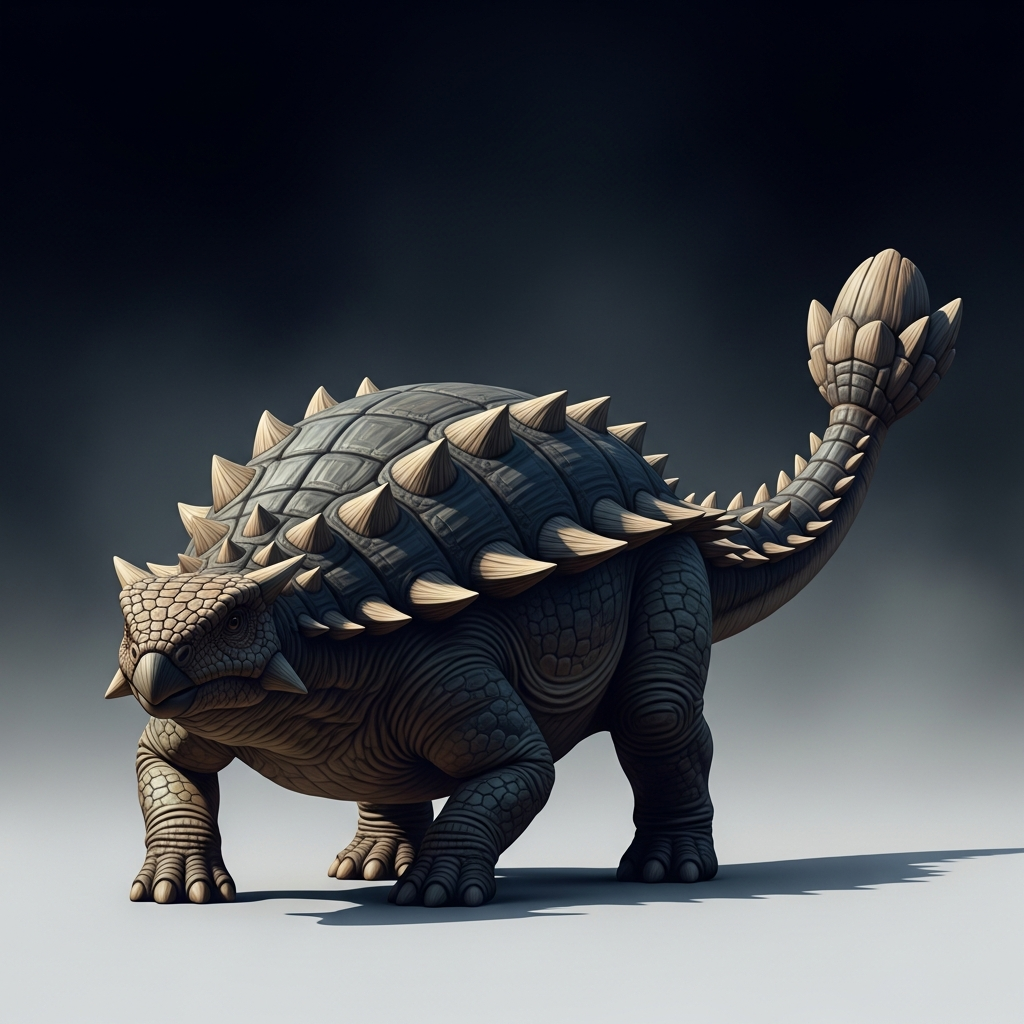
Stoneware mug, dishwasher safe
Buy Mug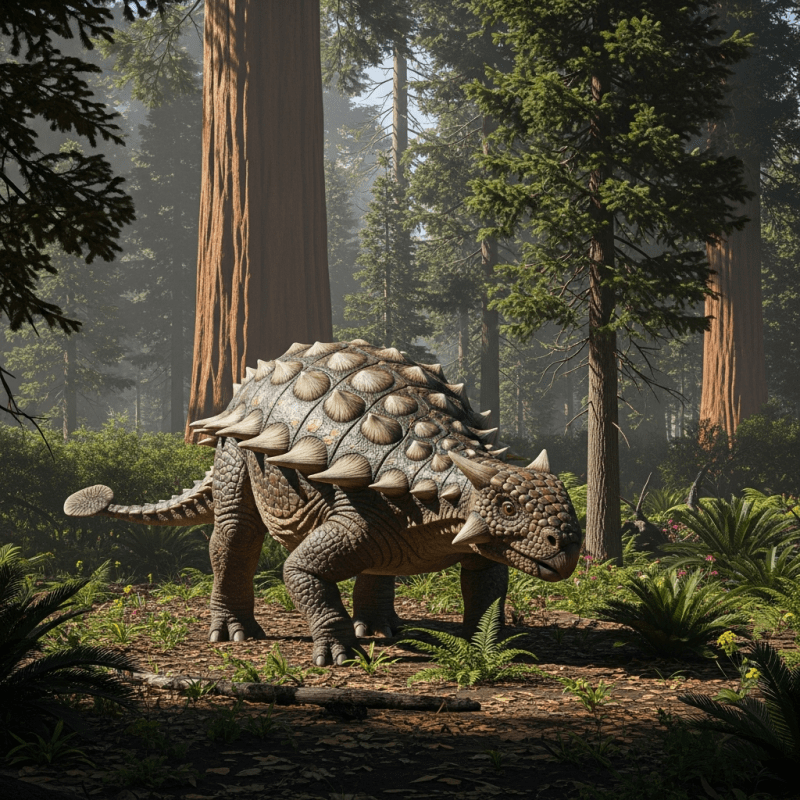
Soft cotton tee, unisex sizes
Buy ShirtAnkylosaurus has become an icon in paleontology, frequently featured in documentaries, books, and popular media. Its distinctive armored form and tail club have inspired countless reconstructions, toys, and artworks, making it a favorite among dinosaur enthusiasts. Museum displays of Ankylosaurus fossils help foster public interest in prehistoric life and evolutionary science.
Ankylosaurus lived during the Late Cretaceous period, approximately 68–66 million years ago, just before the mass extinction that ended the age of dinosaurs.

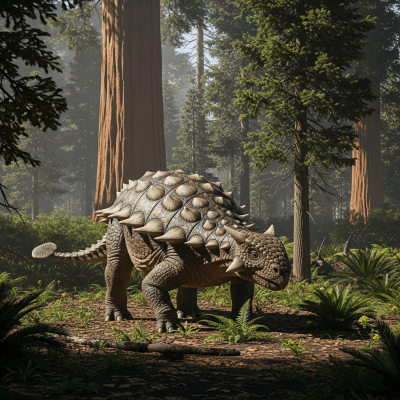
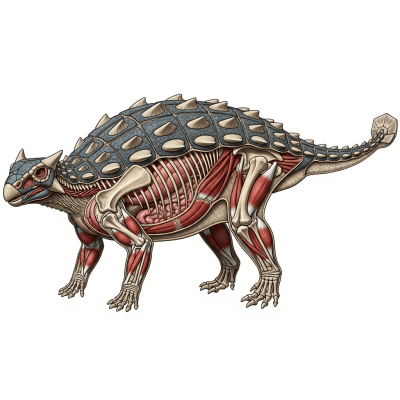
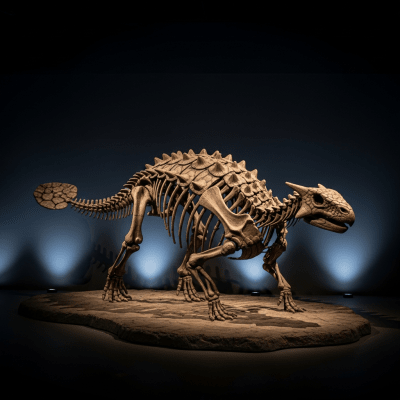
The first Ankylosaurus fossils were discovered in Montana's Hell Creek Formation and described by Barnum Brown in 1908. Additional remains have been found in Wyoming and Alberta, though complete skeletons are rare. The holotype specimen, AMNH 5895, remains a centerpiece at the American Museum of Natural History, and fragmentary fossils continue to inform scientific understanding of this armored dinosaur.
Ankylosaurus inhabited the floodplains and forests of western North America, thriving in regions that are now Montana, Wyoming, and Alberta. Its environment was rich in vegetation, providing ample food for this large herbivore, and it shared its habitat with other Late Cretaceous giants.
A strict herbivore, Ankylosaurus fed on low-growing plants, using its beak-like snout to crop vegetation and its small, leaf-shaped teeth to process tough foliage. Its feeding strategy was well suited to the dense undergrowth of its Cretaceous habitat.
Little is known about the growth and life cycle of Ankylosaurus due to limited fossil evidence. While juveniles and subadults have not been clearly identified, it is likely that Ankylosaurus grew slowly to reach its massive adult size. Lifespan and developmental stages remain uncertain in current scientific literature.
Ankylosaurus, along with all non-avian dinosaurs, vanished during the mass extinction event at the end of the Cretaceous period. The most widely accepted theory attributes this extinction to a catastrophic asteroid impact, which caused dramatic climate changes and disrupted ecosystems worldwide.
Ankylosaurus is a key subject in paleontology, offering insights into defensive adaptations, herbivorous lifestyles, and dinosaur evolution. Its unique armor and tail club help scientists understand the evolutionary arms race between predators and prey during the Mesozoic Era. Fossil specimens are invaluable for research, education, and public engagement.